Where to buy
Check the latest price, availability and delivery on Amazon. Orders are placed on Amazon. We may earn a commission from qualifying purchases.
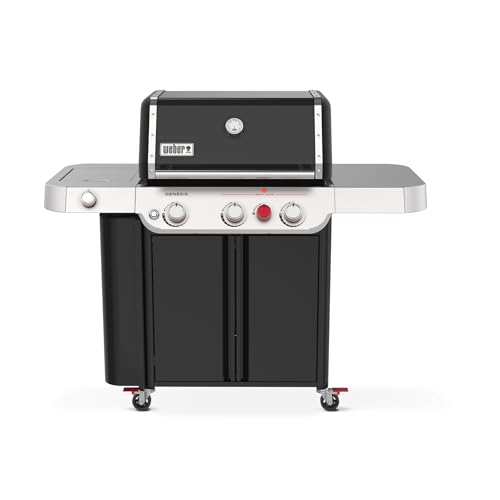
- Best entertainer’s grill overall: Weber Genesis E-335 Liquid Propane Gas Grill — Check on Amazon
- Best for large parties: Monument Grills 77352 6-Burner Gas Grill — Check on Amazon
- Best for brunch and griddle entertaining: Charbroil Pro Series Amplifire 4-Burner Gas Grill — Check on Amazon
- Best for steady, even cooking for a crowd: Weber Genesis E-415 Liquid Propane Gas Grill — Check on Amazon
- Best for intimate dinner parties: Weber Genesis E-325s Liquid Propane Gas Grill — Check on Amazon
- Best rotisserie showpiece (dealer pick, no Amazon link): Broil King Baron 590 Pro — see the review below
Read the full guide ↓
Disclosure: As an Amazon Associate, dailyhomedecorating.com earns from qualifying purchases. Links to Amazon on this page are affiliate links; they cost you nothing extra. Listing details such as price and availability change often, so check the current Amazon listing before you buy.
The best gas grill for outdoor entertaining under $1500 is judged by a different standard than a weeknight grill: it is judged at 7 p.m. with twelve people in the yard, drinks in hand, asking when the food is ready. Entertaining exposes weaknesses that solo cooking never finds. Capacity matters, but so does timing — the ability to sear the steaks for the first seating while vegetables hold warm for the second. A side burner stops being an accessory and becomes the sauce station that keeps the cook at the party instead of in the kitchen. Even heat stops being a specification and becomes the difference between serving everyone at once and apologizing to the four people whose burgers came off the cold corner. And the cook’s workload matters most of all, because a grill that demands constant firefighting turns the host into staff. This guide ranks the premium tier by how each grill performs as party equipment: how much it holds, how gracefully it holds food warm, how much of the meal it can cook without the kitchen, and how calm it keeps the person running it.
The field divides into three entertaining styles. The station style — the Genesis E-335 above all — builds the whole meal at the grill: sear zone, main grate, side burner, warming space, each doing a job simultaneously. The capacity style — the six-burner Monument and the four-burner E-415 — bets on grate area and zoning, feeding a crowd in one or two confident waves. The theater style — the Broil King’s rotisserie and the Charbroil’s griddle — entertains by doing something guests gather around: a chicken turning over the rear burner, or a flat-top full of smash burgers and peppers cooked to order. Every style is legitimate; the right pick is the one that matches the parties you actually throw, and the reviews below are organized to make that match obvious. As in the rest of this series, linked picks carry verified Amazon listings checked against the $1500 ceiling, and the one dealer-only grill is labeled prose-only rather than given a link we could not verify.
In this guide
Quick Picks: best gas grill for outdoor entertaining under $1500
| Pick | Best for | Burners | Primary cooking area | Link |
|---|---|---|---|---|
| Weber Genesis E-335 | Whole-meal entertaining | 3 + sear + side | 513 sq in | Check on Amazon |
| Monument Grills 77352 | Large parties, one-wave cooking | 6 + side | 634 sq in | Check on Amazon |
| Charbroil Pro Series 4-Burner | Griddle brunches, flare-free crowds | 4 + side | 802.9 sq in total per listing | Check on Amazon |
| Weber Genesis E-415 | Even heat for a full grate | 4 | 646 sq in | Check on Amazon |
| Weber Genesis E-325s | Intimate dinner parties | 3 + sear zone | 513 sq in | Check on Amazon |
| Broil King Baron 590 Pro | Rotisserie as the main event | 5 + side + rear rotisserie | 570 sq in | Prose-only — dealer sales, no verified Amazon listing |
The short version: hosts who cook complete meals outside should take the E-335 — no other pick runs a sauce, a sear and a main course at once in this footprint. Hosts whose parties run to fifteen or twenty should take the Monument and its six burners. Brunch hosts and flat-top fans should take the Charbroil and its included griddle. Hosts who value composure above features should take the E-415. Hosts of six-person dinner parties should take the E-325s and spend the savings on better ingredients. And hosts who want the meal itself to be the entertainment should take the Baron’s rotisserie.
How we chose these entertaining grills
Entertaining imposed its own filters on top of this series’ verification rules. We scored holding ability — warming racks, expandable top grates, and burners that can idle low without blowing out — because party food is served in waves whether the host plans it or not. We scored simultaneous cooking: a side burner that fits a real saucepan, a sear zone that works while the main grate is loaded, a griddle that swaps in without tools. We scored the cook’s attention budget, favoring flare-resistant systems and even heat that forgives a five-minute conversation. And we scored evening practicality — lit knobs, lid windows, shelf space for trays and drinks — because outdoor entertaining happens at dusk more often than at noon.
We also considered how each grill ages as an entertainer. Party duty is hard duty: more grease per cook, more lid cycles per hour, more seasons spent outdoors because the grill is the yard’s social center. Models with front-access grease systems, widely stocked wear parts and covers that actually fit earned their places partly on this basis — an entertaining grill that is down for a part during your busiest month has failed at its one job, whatever its specifications promised in spring.
The verification standard is unchanged: a linked pick has a verified ASIN and a price sighting for that exact model at or under the $1500 ceiling; the Broil King, sold through dealers, is prose-only; and the Napoleon Prestige 500 RSIB is excluded entirely, because its current retail pricing sits above the ceiling and its infrared side-burner grid was the subject of a manufacturer safety notice. Recall checks on every included pick found no open recall on the grill itself. Specifications come from manufacturer data; where a listing’s headline area includes the warming rack, we say so.
The 6 best gas grills for outdoor entertaining under $1500, reviewed
1. Weber Genesis E-335 — best entertainer’s grill overall
Who it suits: hosts who cook the entire party meal at the grill — appetizers, mains, sauces and sides — and want to stay in the conversation while doing it.
The E-335 is the most complete entertaining station in this guide because every burner has a party job. The 13,000 BTU sear zone crusts steaks and chops to order, in small batches as guests are ready, instead of forcing one giant sear at the start. The three PureBlu main burners (39,000 BTU) under 513 square inches of cast-iron grate run the main course, with one zone dropped low to hold finished food warm without drying it. The 12,000 BTU side burner is the quiet hero: chimichurri warming, onions caramelizing, a pot of beans or corn staying at a simmer, a skillet of mushrooms finishing — all the dishes that otherwise send the host indoors at the exact moment the party peaks. The grill locker swallows the tools and the griddle insert, keeping the shelves clear for trays, which is where entertaining is actually won or lost.
Pros: the most simultaneous-cooking ability in the guide; sear-on-demand suits staggered guests; side burner sized for real cookware; Genesis evenness and parts support; a footprint that leaves room on the patio for the party itself.
Honest limitation: for a standing party of twenty, 513 square inches means a visible queue — this is a dinner-party grill more than a block-party grill. The side burner also needs a lidded pot on breezy evenings to hold a low simmer, and the sear zone’s brilliance depends on the cook working in batches, which some hosts will experience as labor rather than theater.
Choose it if your parties are meals. Skip it if your parties are crowds — the Monument below was built for you. Check on Amazon
2. Monument Grills 77352 — best for large parties
Who it suits: hosts of the big ones — team celebrations, extended-family Sundays, the annual party the street talks about — and anyone who has ever watched a line form at a too-small grill.
Six burners and 634 square inches of primary grate (900 total) change the politics of a party: everything cooks in one wave, everyone eats together, and the cook rejoins the group while the food is still hot. The zoning is the entertainer’s version of staff — two burners running the burger line, one holding sausages warm, one under a vegetable basket, one off entirely as a resting zone with the lid’s residual heat. The included rotisserie kit adds a second, hands-off main course that cooks itself while the grate works, and the LED-lit knobs plus the clear-view lid window are genuinely useful at the hour parties actually happen. The side burner handles the beans or the corn without negotiating for grate space.
Pros: one-wave capacity for a crowd; zoning that separates cooking, holding and resting; rotisserie kit in the box; evening-friendly lighting and lid window; remarkable capacity per dollar at this tier.
Honest limitation: a young brand’s parts network, as noted across this series — fine today, a consideration in year nine. The big firebox is also slower to preheat and thirstier than the three-burners, so the same grill that shines on Saturday is mildly extravagant for a Tuesday for two. And its scale dominates a small patio: this is a grill for a yard or a generous deck.
Choose it if your guest lists run long. Skip it if your parties are eight people who all know each other — the E-335 will make you look better with less steel. Check on Amazon
3. Charbroil Pro Series 4-Burner — best for brunch and griddle entertaining
Who it suits: hosts whose signature events are weekend brunches, taco nights and burger bars — and any host whose parties involve children, conversation and a cook who cannot stand guard over flare-ups.
Two features make the Pro Series an entertainer. The first is the included griddle insert: drop it in and the grill becomes a flat-top station — pancakes and bacon for a brunch crowd, smash burgers cooked to order, peppers and onions for a fajita bar, quesadillas for the kids’ table. Flat-top cooking is inherently theatrical and social; guests gather, watch and customize, and the cook performs instead of laboring. The second is the Amplifire infrared system, whose emitter plates stop flare-ups before they start. At a party, flare-ups are not just a cooking problem — they are the moment the host disappears into smoke and fire management while the food waits. Here, fatty burgers and chicken cook calmly, and the host stays a host. Four burners, a side burner and a listed 802.9 square inches of total cooking area complete a package aimed squarely at gatherings.
Pros: griddle included, turning one grill into two party formats; flare-up control that frees the host; even infrared heat; the Gas2Coal tray option for charcoal nights; cabinet storage for party gear.
Honest limitation: the emitter plates need regular cleaning, and party cooking is greasy cooking — build the plate cleaning into the post-party routine or performance fades by the third event. Infrared heat is also less forgiving of walk-away cooking at high settings; delicate items want attention. The split warranty (burners long, firebox shorter) deserves a read before purchase.
Choose it if your entertaining is brunch-heavy, kid-heavy or flare-plagued. Skip it if you want the lowest-maintenance premium grill — take a Genesis and a standalone griddle accessory instead. Check on Amazon
4. Weber Genesis E-415 — best for steady, even cooking for a crowd
Who it suits: composed hosts who serve a sit-down dinner for eight to twelve and want every plate to come off the grill at the same standard.
The E-415’s entertaining virtue is uniformity: 646 square inches of primary grate over four PureBlu burners, with heat even enough that a full load of chicken thighs finishes together instead of in a sequence of apologies. For a dinner party — as opposed to a grazing party — that evenness is the feature: the host plates twelve portions that match. The heavy lid holds low temperatures steadily for a long, relaxed first course of ribs or a whole fish, and the Crafted accessory frame lets the same grill run a pizza night with the stone insert. What it does not do is multiply stations: there is no side burner and no separate sear burner, so the meal is cooked in sequence on one excellent surface rather than in parallel on several good ones.
Pros: the largest, most even Weber grate in the guide; dinner-party consistency; long warranty and universal parts; an enclosed cart that presents beautifully in a designed outdoor room.
Honest limitation: parallel cooking is limited — sauces and sides compete for grate space or go indoors. It also sits near the ceiling of this tier, so confirm the live price, and its size plus assembly effort are the largest in the Genesis group here.
Choose it if your parties are dinners. Skip it if your parties are productions with sauces, sides and sears running at once — that is the E-335’s design brief. Check on Amazon
5. Weber Genesis E-325s — best for intimate dinner parties
Who it suits: hosts whose entertaining means six people, good wine and a menu with courses — the grill as bistro kitchen rather than catering line.
Everything the E-325s does suits the small, deliberate party. The sear zone gives steakhouse crusts on the two or three steaks that matter, cooked to individual temperatures in sequence without rushing. The expandable top grate holds asparagus, bread and resting meat above the main action, staging courses the way a small kitchen does. Three burners at 39,000 BTU preheat quickly, so the grill is ready when the guests are, not twenty minutes after. And because the grill itself costs meaningfully less than the flagship picks, the entertaining budget migrates to where dinner guests actually notice it: better meat, better wine, the pizza stone or griddle from the Crafted line for a themed evening.
Pros: sear quality for small-batch, to-order cooking; fast preheat; expandable second level for course staging; the friendliest Genesis price, freeing budget for the party itself.
Honest limitation: no side burner, so sauces ride the grate’s edge or the kitchen stove; and the intimate-party brief is a real boundary — a grazing party of fifteen will expose the 513 square inches quickly.
Choose it if your parties are dinners for four to eight. Skip it if you host standing crowds — capacity first, Monument or E-415. Check on Amazon
6. Broil King Baron 590 Pro — best rotisserie showpiece (prose-only)
Who it suits: hosts who build the party around a centerpiece — a rotisserie chicken, a prime rib, a leg of lamb — and let the grill provide the evening’s theater and timetable in one.
A dedicated rear rotisserie burner changes entertaining in a way no grate statistic captures: the main course cooks itself, slowly and visibly, for hours, filling the yard with exactly the aroma a host would order if aroma could be ordered, and finishing with a ceremony — the carving — that gathers everyone at the right moment. The Baron’s rotisserie hardware is the serious kind: a heavy-duty kit driven by a rear burner sized for the job, not an afterthought rod over the main burners. Meanwhile the five Dual-Tube burners and 570 square inches of primary grate handle the sides and starters, the heavy cast-iron grates sear the appetizers, and the side burner minds the gravy. It is the oldest style of entertaining in this guide and, at the right house, the best.
Pros: a genuine rotisserie system that turns dinner into an event; heavy grates and lid; five-burner flexibility; dealer assembly and service, which party hosts short on time should value honestly.
Honest limitation: dealer-only purchasing — no verified Amazon listing, so no link here — and Pro IR pricing that can press the ceiling, so confirm the configuration’s price. Rotisserie cooking is also a commitment to a long, planned cook; it does not suit spontaneous gatherings.
Choose it if your parties have a centerpiece. Skip it if your entertaining is spontaneous and grazing-style — the E-335 or Charbroil will serve you better.
Comparison table
| Grill | Entertaining style | Parallel cooking | Holding space | Watch out for |
|---|---|---|---|---|
| Weber Genesis E-335 | Whole-meal station | Sear zone + side burner + grate | Warming rack, low zone | Queues at 20 guests |
| Monument 77352 | Capacity and zoning | Six zones + side burner + rotisserie | 900 sq in total, cold corner | Young brand; big footprint |
| Charbroil Pro Series 4-Burner | Griddle theater, calm cooking | Griddle + grate + side burner | 802.9 sq in total per listing | Emitter plate cleaning |
| Weber Genesis E-415 | Even, composed dinners | One large surface, in sequence | 646 sq in primary | No side or sear burner |
| Weber Genesis E-325s | Intimate courses | Sear zone + grate | Expandable top grate to 787 total | No side burner |
| Broil King Baron 590 Pro | Rotisserie centerpiece | Rear rotisserie + grate + side burner | 820 sq in total | Dealer-only purchase |
Hosts building the full outdoor room around the grill should read our Best Fire Pit For Outdoor Entertaining Under $1500 guide for the after-dinner half of the evening, and the Best Patio Umbrella Under $1500 guide for the shade that makes afternoon parties survivable.
How to choose a gas grill for outdoor entertaining
Start with your real guest count and serving style. Sit-down dinners reward evenness and a sear zone; grazing parties reward capacity and holding space; brunch and taco-night formats reward a griddle. Write down your three most common events and match the grill to them — not to the largest party you have ever thrown, which is the entertaining version of buying for the exception.
Count parallel stations, not just burners. A party meal runs on parallel tracks: protein, sauce, sides, holding. The E-335 runs four tracks; the E-415 runs two very well. Ask where the beans, the onions and the finished steaks will be at the same moment, and let the answer pick the grill.
Plan the holding strategy. Food for a crowd is never all ready at once, so the grill must hold finished items warm without cooking them further: a warming rack, an expandable top grate, a low-idling zone or a cold corner. Every pick here has at least one; the Monument’s six-zone layout has the most forgiving version, which is a large part of why big-party hosts love it.
Protect the host’s attention. Flare-resistant cooking systems, even heat and reliable ignition are hospitality features: they return the host to the party. If you know you will be talking while cooking — every host is — weight the Charbroil’s calm and the Genesis models’ evenness above raw capacity.
Think about the hour after sunset. Lit knobs, a lid window, a yard light over the grill station and shelf space for trays and a drink make evening events work. Position the grill where your outdoor lighting reaches, keep a clear path to the kitchen, and stage a landing table beside the grill before the first guest arrives. Readers setting up the whole scene can find the seating in our Best Adirondack Chair For Small Patios Under $1500 guide and storage for party gear in the Best Deck Box For Small Patios Under $1500 guide.
Common mistakes when buying a grill for entertaining
Buying for the annual maximum. The twenty-person party happens once; the eight-person dinner happens twenty times. A grill bought for the maximum is oversized, slow to preheat and hungry for propane at every ordinary event. Rent or borrow capacity for the annual outlier.
Ignoring the side dishes until the party. Hosts discover at 6 p.m. that the corn, beans and onions have nowhere to go. If your menus have sides — all menus have sides — a side burner or a griddle plan is not optional equipment.
Letting the grill become a bottleneck with no landing space. Trays of raw food arriving and cooked food leaving need surfaces. A grill with full shelves and no side table creates a juggling act at the exact moment guests cluster. Stage a table; it costs little and changes everything.
Serving the first wave and cooking the second in silence. A holding strategy — rack, low zone, cold corner — means the whole party eats together. Hosts who skip it spend the event apologizing in shifts.
Forgetting the post-party grease reality. Party cooking is fatty cooking. A grease tray filled by a crowd cook is a fire risk at the next lighting, and emitter plates left coated after a big event corrode early. Put the ten-minute clean on the party checklist, next to the leftover containers.
Final recommendation
For most hosts, the Weber Genesis E-335 is the entertaining grill to buy under $1500: it cooks a complete meal in parallel, sears to order, and keeps the host at the party. For hosts of large gatherings, the Monument 77352 removes the queue entirely. For hosts whose parties are brunches and burger bars, the Charbroil’s griddle and calm infrared cooking are the most fun per dollar in the guide. Pick the grill that matches your guest list, and the entertaining takes care of itself.
The entertainer’s workflow: running a party on any of these grills
Whatever you buy, the workflow that separates relaxed hosts from frantic ones is the same. Stage before guests arrive: proteins portioned and seasoned, sides prepped, trays for raw and cooked food kept separate, tongs and thermometer at the grill, a drink for the cook within reach. Preheat with intention — light the zones you will use, not the whole firebox, and let cast iron come fully to temperature before the first item lands. Cook in the order of holding tolerance: items that hold well (sausages, chicken thighs, corn) go first and move to the holding zone; items that do not (steaks to order, fish, burgers for the table) go last and go straight to plates. Announce waves instead of apologizing for them — “burgers in five, steaks to order after” turns a queue into a program. And close the loop while the grill is still warm: burn off, brush, and empty nothing tonight that will be worse tomorrow — the ten-minute reset is what makes the next party feel easy to say yes to.
Menu engineering: three party formats and the grill each one demands
The sit-down dinner for eight. Courses arrive in sequence, so the grill’s job is precision in small batches: a sear zone for the main, a low zone for resting, a rack for the vegetables and bread. The E-335 and E-325s are built for this format — the cook plates each course from a grill that is never crowded, and the side burner carries the sauce that ties the menu together. Capacity beyond 513 square inches is wasted here; what is not wasted is evenness, because eight identical plates are a stricter test than twenty forgiving ones.
The grazing party for sixteen. Food appears in waves over two hours, guests eat standing, and the grill becomes a production line with a holding problem. This is the Monument’s format: zones assigned like staff, a cold corner for finished items, the rotisserie turning a second main course without supervision. The E-415 handles it in two disciplined waves; the three-burners handle it only if the menu is chosen for holding tolerance — sausages, thighs, kebabs and corn, yes; steaks to order for sixteen, no. The honest host picks the menu the grill can serve, or the grill the menu demands, before the invitations go out.
The brunch and the burger bar. Interactive formats — guests assembling, customizing, watching — belong to the Charbroil’s griddle and, secondarily, to any Genesis fitted with the Crafted griddle insert. A flat-top produces food at a steady, visible rhythm that suits a crowd milling around it, and its forgiving surface handles eggs, pancakes, onions and smash burgers in rotation. The planning number for griddle formats is not area but throughput: a 4-burner flat-top turns out smash burgers in batches of eight to ten every few minutes, which feeds a standing crowd faster than the same area of grate feeds a seated one.
Evening and seasonal entertaining: light, warmth and timing
Most outdoor entertaining happens in the shoulder hours, and the grill station should be planned for dusk. The Monument’s LED knobs and lid window help the cook; a fixed light over the station — from the house, a pergola or a grill-mounted lamp — helps more, because judging doneness by color is the cook’s main instrument and porch bulbs lie. Keep the grill out of the traffic path between house and seating, but close enough that the cook hears the conversation; a host exiled to a dark corner is a design failure, not a cooking one. In the cooler seasons, the party compresses toward the grill’s warmth and a fire pit’s — one more reason the fire pit guide linked above belongs in the same plan — and the grill’s role shifts to shorter, richer cooks: seared mains, roasted vegetables, food that eats well standing up with a drink in the other hand.
Timing is the seasonal variable hosts underestimate. A premium grill preheats in roughly ten to fifteen minutes in summer and noticeably longer in cold or wind, and cast-iron grates repay the patience by holding their temperature through a full load. Build the preheat into the invitation time, light the grill when the first guests are expected rather than when they arrive, and let the holding zone — not the dining table — absorb the difference between the plan and the party. The hosts who look effortless are running this arithmetic invisibly; the grill picks in this guide were chosen to make the arithmetic forgiving.
After the party: the reset that protects the next one
Party cooking loads a grill with more grease in one evening than a week of family dinners, and the reset is part of the event, not a chore for another day. While guests are still at dessert, run the burners high for ten minutes to burn off the grates, brush them warm, and let the grill cool with the lid open. Next morning — not next weekend — empty the grease tray, wipe the emitter plates if yours is the Charbroil, check the tank level by weight so the next event does not start on fumes, and return the cover once the grill is fully cool and dry. Rotisserie users should wash the rod and forks with the dishes rather than discovering them at the next party. This fifteen-minute discipline is the difference between a grill that is always ready to entertain and one that needs an hour of archaeology before it can be lit — and readiness, more than any feature, is what makes people entertain often.
What guests notice, what they don’t, and the two-grill question
Hosts shopping at this tier sometimes imagine guests admiring the grill. Guests, in practice, notice exactly four things: whether the food arrives together, whether it is cooked as promised, whether the host is present or imprisoned, and whether there is somewhere comfortable to stand and sit. Every high-scoring feature in this guide maps to one of those four — holding space and evenness to the first, the sear zone and thermometer-worthy consistency to the second, flare control and parallel burners to the third, and the patio left over after the grill’s footprint to the fourth. Guests do not notice burner metallurgy, brand badges or the difference between 48,000 and 52,000 BTU, and a host who buys for the audience’s actual experience will consistently out-entertain a host who buys for the specification sheet. This is also why the E-325s, the smallest grill here, wins its category outright: at a six-person dinner, everything guests notice is already perfect.
Finally, the two-grill question, which large-party hosts eventually ask: is one premium grill better than a premium grill plus an inexpensive second unit? For most households, one grill, well chosen, wins — a second grill doubles the cleaning, the covers and the tank management, and sits idle fifty weeks a year. The exceptions are real, though: the household that hosts twenty-plus several times a year, and the cook who wants charcoal’s flavor beside gas’s convenience — a pairing our Best Charcoal Grill For Outdoor Entertaining Under $1500 guide explores at this same tier. If a second unit is in your future, buy the primary grill for your ordinary parties first, exactly as this guide ranks them, and let experience, not anticipation, make the case for a second fire.
Fuel, spares and the entertainer’s shelf
Entertaining failures are rarely about the grill; they are about the consumables around it. The entertainer’s shelf — a covered box or a cabinet near the grill — should hold the items whose absence has ended more parties than any burner failure: a full spare propane tank (or the knowledge that the natural gas line needs no such thing), a backup igniter battery or module for the grill’s electronic ignition, a long-reach lighter that works, a spare set of tongs because one pair always walks away with a helpful guest, an instant-read thermometer plus its spare battery, foil, a spray bottle of water for the cook’s hands rather than the fire, and a roll of paper towels sealed against the weather. Add a headlamp or grill light for the season when dinner moves past sunset, and a marker for labeling the vegetarian tray — a small thing that guests remember disproportionately.
Fuel deserves its own sentence because it is the only failure that cannot be improvised around: weigh or lift the tank the morning of the party, not during it, and treat the spare tank as part of the grill’s purchase price from day one. Hosts who entertain monthly burn through propane at a rate that surprises weeknight cooks — a six-burner at full party throttle is a serious appliance — and the two-tank rotation (one in use, one full) converts an emergency into a ninety-second swap performed between courses. If your entertaining calendar is heavy and your grill station permanent, this is also the strongest argument for the natural gas versions of these grills: the fuel simply stops being a variable, and one whole category of party risk retires.
FAQ
What size grill do I need for a party of twelve?
About 500–650 square inches of primary cooking area with a warming rack or holding zone covers twelve in one to two waves — the E-335, E-415 and Monument all qualify, with the Monument doing it in a single wave. Menu matters: burgers for twelve need less choreography than a mixed grill of chicken, corn and vegetables.
Is a side burner worth it for entertaining?
For hosts, it is often the highest-value feature on the grill: sauces, sides and kettles stay at the party instead of sending the cook indoors. If your menus are grate-only — burgers, dogs, kebabs — it matters less, and the E-415’s bigger surface is the better spend.
Griddle or grate for a crowd?
Both, ideally: the Charbroil includes a griddle insert, and the Genesis models accept one through the Crafted system. Griddles excel at breakfasts, smash burgers and anything small or delicate; grates excel at steaks, chicken pieces and anything that wants open-flame flavor. Party hosts use the griddle more than they expect.
How do I keep food warm without overcooking it?
Use the grill’s holding architecture: the warming rack, an expandable top grate, a burner turned to its lowest stable setting, or an unlit corner warmed by its neighbors. Rest meat tented on a warm tray, and hold vegetables and corn on the rack rather than the grate.
Propane planning for a big party — how do I avoid running out?
Start the event with a known-full tank — lift it; a full 20-pound tank is noticeably heavier — and keep a second tank as the standing spare. Hosts who entertain monthly should treat the spare tank as part of the grill’s price, not an accessory.
Why is the Broil King reviewed without an Amazon link?
It is sold through dealers in the US, and we could not verify a standard Amazon listing and price for it. We review it as a prose-only pick and say so plainly, rather than invent a link.
How early should I light the grill before guests arrive?
Light it as the first guests are expected, not when the doorbell rings: a premium grill with cast-iron grates needs a full preheat to cook its first load evenly, and a grill already at temperature lets the host greet people instead of apologizing to them. Use the waiting time to bring the holding zone up and to set the side burner under its pot, so the station is complete before the first tray of raw food appears.
What is the best grill here for a wedding-reception-style backyard event?
For a one-off large event, honestly, rental or catering beats any purchase — but if the event is the peak of a regular entertaining calendar, the Monument 77352 is the pick: six zones, a rotisserie turning a centerpiece, and the holding space to serve a crowd in waves without stress. Pair it with a rehearsed menu of holding-tolerant dishes and a designated second pair of hands at the grill.
Should I choose a grill with a window in the lid?
It is a convenience, not a performance feature — the Monument’s clear-view window lets you check a rotisserie or a tray of vegetables without dumping heat, which matters during a party when the lid opens constantly. Windows fog and grease over with use and need cleaning to stay useful, so treat it as a pleasant extra on a grill you already want, never as the reason to buy it.
How do I handle guests with different dietary needs at one grill?
Zone discipline solves most of it: dedicate one zone — ideally the upper rack or a defined grate section — to vegetarian items, cook them first or on foil or a grill basket to avoid contact with meat drippings, and use separate tongs for that zone, kept in a different color if your kitchen supports it. Announce the arrangement when serving; guests with dietary needs judge the care more than the menu, and a host who planned their food into the grill layout has already made the point.
What should I cook for the first party on a new grill?
Something forgiving that you have cooked before: chicken thighs, sausages and vegetables forgive timing errors, hold well, and let you learn the grill’s hot spots with guests who are enjoying themselves anyway. Save the expensive steaks and the whole fish for the second or third event, when the grill’s zones are familiar and your attention is free for the details that show.
How do I keep the grill station from becoming the party’s traffic jam?
Give the cook a working triangle that guests can orbit without crossing: grill at one point, landing table at the second, drinks and seating outside the triangle entirely. Serve the first round away from the grill — an appetizer station across the yard pulls the crowd out of the cooking zone — and let guests come to the grill in small groups for the theater rather than camping around it. The hosts who enjoy their own parties arrange the space so the grill is a destination, not a doorway.


