Where to buy
Check the latest price, availability and delivery on Amazon. Orders are placed on Amazon. We may earn a commission from qualifying purchases. Before you buy anything in this guide, read the rules section below — in many apartment buildings, no balcony grill is allowed at all, and the right purchase is the one your lease and local fire code permit.
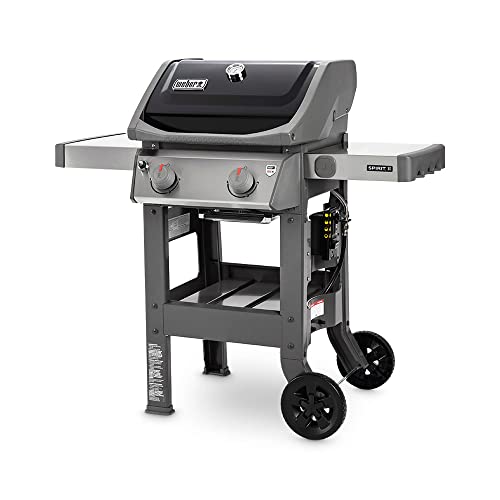
- Best if your building allows a cart grill: Weber Spirit II E-210 2-Burner Liquid Propane Grill — Check on Amazon
- Best three-burner for a ground-floor patio: Weber Spirit II E-310 3-Burner Liquid Propane Grill — Check on Amazon
- Best value four-burner for a large terrace: Char-Broil Performance Series 4-Burner Gas Grill Cabinet with Side Burner — Check on Amazon
- Most cooking area in a cart: Monument Grills Mesa 410MBZ 4-Burner Propane Gas Grill — Check on Amazon
Two more picks covered below (prose-only — buy through the maker or a grill retailer; we could not confirm current Amazon US listings inside this budget for these exact models):
- Dyna-Glo Smart Space Living 3-Burner (DGB390SNP-D) — designed for small spaces, collapsible shelves
- Napoleon Freestyle 425 (F425DPGT) — four burners that fold down narrow for storage
Read the full guide ↓
Disclosure: As an Amazon Associate, dailyhomedecorating.com earns from qualifying purchases. Links to Amazon on this page are affiliate links; they cost you nothing extra. Listing details such as price and availability change often, so check the current Amazon listing before you buy.
The search for the best gas grill for apartments under $700 starts with a question no product page can answer: are you actually allowed to have one? This guide will not pretend otherwise. In a large share of apartment buildings — especially wood-framed buildings with combustible balconies — open-flame grills are restricted or banned outright by the lease, the HOA or condo rules, the local fire code, or all three. Propane storage is often restricted separately, which can make even a permitted grill impractical. So this article does two jobs. First, it explains the rules honestly, in plain language, so you can find out in one phone call or one lease re-read whether a gas grill is even an option where you live. Second, for the many renters and condo owners who can grill — ground-floor patios, concrete terraces, sprinklered balconies where the code allows it, buildings whose leases permit gas but not charcoal — it ranks the under-$700 grills that make sense in apartment-sized spaces: compact footprints, folding shelves, manageable weight, and cooking area matched to households of two to four rather than a suburban backyard party.
Nothing in this guide is a suggestion to work around a ban. A grill used against a lease or a fire code risks your deposit, your tenancy, your insurance coverage and — the reason the codes exist — your neighbors’ safety, because balcony fires spread upward fast. If your building says no, the honest alternatives are the building’s shared grill area if it has one, or an electric grill where those are permitted, and we say so plainly below. If your building says yes, read on: the six grills here are the same verified pool as our main Best Gas Grill Under $700 roundup, re-judged through the apartment lens of footprint, storage, fuel logistics and neighborliness. Renters working with a smaller budget will also find the apartment picks in our Best Gas Grill Under $500 guide worth a look.
First, the rules: can you grill where you live?
Your lease or HOA rules come first. Many leases ban grills on balconies entirely; others ban charcoal but allow gas; others allow grilling only on ground-floor patios. Condo and HOA documents often have their own clause, separate from the lease. If you rent, both documents can apply at once. The clause you are looking for may be under “balcony,” “patio,” “fire safety” or “hazardous materials” rather than the word “grill.” If the documents are silent, ask the property manager in writing and keep the answer — a verbal yes from the leasing office is hard to prove later.
Fire codes are the second layer, and they can ban what your lease allows. Widely adopted US fire codes (the International Fire Code and NFPA 1, in the versions many states and cities use) generally prohibit charcoal burners and open-flame cooking devices on combustible balconies or within about ten feet of combustible construction in multi-family buildings, with common exceptions for buildings protected by automatic sprinklers and for one- and two-family homes. Details vary by jurisdiction and code edition — some cities are stricter, some draw the line at building size or balcony material — which is why the local fire marshal’s office or your city’s website is the only source that settles it for your address. A concrete balcony on a sprinklered high-rise and a wooden balcony on a three-story walk-up are different legal worlds, even on the same street.
Propane storage is the third layer, and it is the one renters miss. Even where grilling is allowed, rules commonly restrict where LP-gas cylinders can be stored and how large they can be: full-size 20-pound tanks are frequently prohibited from being stored inside living spaces, garages or enclosed balconies, and some buildings and codes limit balcony cylinders to small sizes or require tanks to be kept outdoors away from doors, windows and ignition sources. Elevator rules in some buildings complicate even getting a tank upstairs. Practical translation: if your building allows a grill but bans 20-pound tank storage, a full-size cart grill may be unusable in practice, and a smaller grill — or the communal grill area — is the real answer.
Insurance and liability are the fourth layer. If a grill fire damages the building and the grill was prohibited, the renter’s liability can be severe and their renter’s insurance may not respond the way they expect. This is not a reason to panic about legal grilling — it is a reason the ten minutes spent checking documents is the best-spent ten minutes of this entire purchase.
If gas is a no, what are the honest options? Electric grills are permitted in many (not all) buildings that ban open flame, because there is no flame and no fuel storage; check that your lease’s wording bans “open flame” rather than “grills” generally. Many complexes also maintain shared gas grills near the pool or courtyard, which cost nothing and carry none of the storage problems. And if your unit has a ground-floor patio on a concrete slab, set back from the building, you may find you are allowed a proper cart grill after all — which is exactly the situation the picks below are chosen for.
In this guide
Best gas grill for apartments under $700: quick picks
| Pick | Apartment angle | Burners | Output | Primary area | Where to check |
|---|---|---|---|---|---|
| Weber Spirit II E-210 | Smallest quality footprint; fold-down table | 2 | 26,500 BTU | 360 sq in (450 total) | Amazon |
| Dyna-Glo Smart Space Living (prose-only) | Built for small spaces; collapsible shelves | 3 | 36,000 BTU | 390 sq in (507 total) | Maker / retailers |
| Napoleon Freestyle 425 (prose-only) | Both shelves fold; premium grates | 4 | 38,000 BTU | 425 sq in | Maker / retailers |
| Weber Spirit II E-310 | Ground-floor patios; family size | 3 | 30,000 BTU | 424 sq in (529 total) | Amazon |
| Monument Mesa 410MBZ | Big terraces; most total area | 4 | 39,000 BTU | 570 sq in total | Amazon |
| Char-Broil Performance 4-Burner (463253925) | Cabinet hides the tank; casters roll easily | 4 + side | See listing | 435 sq in | Amazon |
Read this table with the rules section in mind. On a small permitted balcony or terrace, the ranking is really about folded footprint and how the grill behaves in a space you also live in — a balcony is a room, not a yard. On a ground-floor patio with room to spare, the ranking flips toward cooking area. Both readings are covered in the reviews.
How picks were chosen
We started from the six-grill verified pool of our main under-$700 roundup — every linked model checked by exact model number and ASIN, with a recent price sighting for that ASIN inside the budget, and a CPSC recall check that found no current recall on any model here (Char-Broil’s recalls concern unrelated electric and older Patio Bistro models, not the Performance Series). We then re-ranked for apartment life on four criteria the base guide weighs less: footprint with shelves folded, because storage is the apartment constraint; weight and wheel design, because the grill may need to move for cleaning, storms or a lease-end exit; fuel practicality, favoring grills that cook efficiently on a standard tank for small households; and neighborliness — even heat at moderate temperatures and good grease management, because smoke and flare-ups through a neighbor’s window are how permissions get revoked. Two picks are prose-only: the Dyna-Glo, whose specifications we verified but for which we could not confirm a current Amazon ASIN, and the Napoleon Freestyle 425, whose confirmed US pricing sits inside the budget at grill retailers but whose Amazon US listing we could not verify. We do not print prices or star ratings in this guide; both change too fast to be honest in print.
A word on what did not make this list, because apartment shoppers will meet these products everywhere. Tabletop and portable grills look like the obvious apartment answer, and for tailgating they are — but most run on small disposable cylinders, cook a handful of burgers at a time, and still count as open-flame devices under the same rules, so they solve the storage problem only partially while giving up most of the cooking experience; if your building permits them specifically, they live in a different budget tier than this guide. Pellet grills are worse apartment citizens — more smoke, more storage, more rules problems. And full-size five- and six-burner carts, however good, fail the apartment test on footprint alone. The six picks above are the ones that survive an honest apartment audit: permitted-size, storable, and good enough that you will not wish you had bought bigger every time you cook.
The best gas grill for apartments under $700 picks, reviewed in detail
Weber Spirit II E-210 — the apartment default, where grilling is allowed
Who it suits: Renters and condo owners with a permitted balcony, terrace or small patio, cooking for one to four. This is the pick for the classic apartment scenario: limited width, a door the grill had to come through, and a strong preference for quality over size.
The E-210 (model 44010001) earns the top apartment spot on dimensions and manners. Two burners and 26,500 BTU over 360 square inches of primary cooking area (450 total with the warming rack) is genuinely enough for apartment households — a dozen burgers at once, or a weeknight load of chicken thighs and vegetables — while the fold-down left table shrinks the grill’s width for storage against a railing or wall. The porcelain-enameled cast-iron grates sear properly, the GS4 ignition lights reliably, the grease tray system is the tidiest in this guide (which matters when your grill lives three feet from your sliding door), and Weber’s ten-year warranty plus unmatched parts availability suit renters who do not want a disposable appliance. On two wheels it tip-rolls like a hand truck, so moving it for balcony cleaning or a storm is a one-person job.
Apartment-specific honesty: the E-210 still runs on a standard 20-pound propane tank, so it only works where tank storage is permitted, and at roughly four feet wide with the table up it is not a tabletop — measure your balcony depth with the lid’s opening arc included, because the lid swings back, not up. If your space is a narrow Juliet balcony, no cart grill in this guide fits your life, and the building’s shared grills are your answer.
Honest limitation: Two burners make a small indirect zone, and the open cart shows the tank. Neither matters much at apartment scale; the price of Weber quality in a small box might — it costs like a Weber, because it is one.
Choose it if your documents allow a cart grill and your space is modest. Skip it if tanks are banned where you live (no gas grill solves that) or you regularly cook for six-plus — see the E-310. Check on Amazon
Dyna-Glo Smart Space Living 3-Burner — designed for exactly this problem (prose-only)
Who it suits: Apartment and condo cooks who need three burners in the floor space of two, and who are buying on a budget well inside this guide’s ceiling.
Dyna-Glo’s Smart Space Living line (model DGB390SNP-D in stainless) was designed around the apartment problem before it was fashionable: three stainless tube burners at 12,000 BTU each — 36,000 BTU total — under 390 square inches of primary cooking area and 507 total, in a body about 49 inches wide and 76 pounds, with collapsible side shelves that fold away so the grill parks tight. The porcelain-enameled cast-iron grates and stainless heat tents are real-grill hardware, not camping gear, and the whole thing assembles and moves like the compact appliance it is. For a renter who wants to cook a whole meal — protein, vegetables, corn — in zones, on a patio that also has to hold a chair and a plant, this footprint-to-area ratio is the best in the guide.
Why prose-only: we verified the model’s specifications across the manufacturer ecosystem and multiple retailers, but we could not confirm a current Amazon ASIN for it, so it carries no link. Buy it from a home-center or grill retailer and confirm the model number on the box.
Honest limitation: The build is budget-grade — thinner steel than the Webers, a grease pan that owners report rusts early if neglected, and a tendency to flare with very fatty food. It is a smart-space tool, not a decade appliance, and its searing ceiling is lower than the Monument’s or Napoleon’s.
Choose it if space is your binding constraint and you want three burners. Skip it if you want ten-year build quality — that is the E-210 or E-310.
Napoleon Freestyle 425 — four burners that fold away (prose-only)
Who it suits: Condo owners and townhome renters with a real terrace — enough room to cook for six, but a storage corner that demands the grill fold down narrow.
The Freestyle 425 (F425DPGT) is the apartment guide’s premium answer: four burners, 38,000 BTU, 425 square inches of main grilling area, porcelain-coated cast-iron WAVE grids, Napoleon’s JETFIRE instant ignition — and both side shelves fold down, which transforms its storage footprint in a way fixed-shelf four-burners cannot match. The graphite porcelain-enamel finish also suits apartment life: it hides the dust and pollen that settle on a balcony grill between cooks better than raw stainless. US grill retailers price it inside this budget; we could not verify a current Amazon US listing for the exact model, so it is prose-only here — buy from Napoleon or a grill retailer and confirm F425DPGT on the box.
Honest limitation: Folded or not, this is a full four-burner cart — it needs a terrace or ground patio, not a small balcony, and its tank is the same 20-pound question as every other pick. Napoleon’s US parts network is also thinner than Weber’s.
Choose it if you have terrace room and storage discipline. Skip it if your permitted space is a small balcony — the E-210 is your grill.
Weber Spirit II E-310 — for ground-floor patios and townhome renters
Who it suits: Apartment dwellers whose “balcony” is actually a ground-floor patio or a generous terrace, and families of three to six in rental homes and townhomes where a mid-size grill is permitted.
Everything said about the E-310 in our main guide applies — three burners, 30,000 BTU, 424 square inches primary and 529 total, GS4 ignition and grease management, fold-down left table, ten-year warranty — and in apartment settings its manners stand out: even, controllable heat means less smoke drama at moderate temperatures, and the grease system keeps the patio slab cleaner than open-tray rivals. It is the largest grill we would suggest for a shared-wall setting without thinking twice, and for rental houses it is simply the best buy in the tier.
Honest limitation: At full width it overwhelms a small balcony, and it is heavy enough that moving apartments with it is a two-person, plan-ahead job — a real consideration for renters who move every year or two.
Choose it if you have ground-floor or terrace space and a family to feed. Skip it if your space is a true small balcony. Check on Amazon
Monument Grills Mesa 410MBZ — for big terraces only
Who it suits: Renters in townhomes and large-terrace condos who host — the apartment minority with genuine entertaining space.
The Mesa 410MBZ brings the guide’s biggest total cooking area (570 square inches) and strongest searing setup (four burners, 39,000 BTU, ThermSear broil zone) at a value price, which makes it the pick when the “apartment” is really a townhome with a terrace. In that setting its size is a feature and its high-heat talent earns its keep on steak nights for six.
Honest limitation: It is the wrong grill for a small balcony in every way — width, heat output near railings and siding, and storage. Stainless panels at this price also show weather faster, and apartment storage rarely includes a garage, so the cover is mandatory, not optional.
Choose it if your terrace is genuinely large and you host. Skip it if you are measuring your balcony in inches. Check on Amazon
Char-Broil Performance Series 4-Burner — the cabinet hides the tank
Who it suits: Patio-home and townhome renters who want maximum cooking area per dollar and prefer the propane tank hidden behind cabinet doors — with the storage rules checked first.
The Performance 4-Burner (463253925) offers 435 square inches of primary area, a side burner and a closed cabinet on four casters. The cabinet cuts both ways in apartment life: it looks tidier on a patio that doubles as your outdoor living room, and it rolls more easily than two-wheel carts when you need to pull it out for cleaning. But be clear-eyed: a cabinet does not change the propane rules — the tank inside it is still a stored LP cylinder under your building’s and city’s rules, and “hidden” is not the same as “permitted.” Four burners is also more grill than most apartment households need; buy it for a ground patio or townhome, not a balcony.
Honest limitation: Lighter steel and a shorter warranty than the Webers, and low-temperature control is less fine — fine for family grilling, less so for patient low-and-slow cooks.
Choose it if you have the space and want area per dollar. Skip it if your permitted footprint is small. Check on Amazon
Comparison table
| Grill | Burners | Primary area | Space-saving feature | Best apartment setting | Watch out |
|---|---|---|---|---|---|
| Weber Spirit II E-210 | 2 | 360 sq in | Fold-down left table | Permitted small balcony / terrace | Needs 20-lb tank storage OK |
| Dyna-Glo Smart Space Living (prose-only) | 3 | 390 sq in | Collapsible shelves, ~49 in wide | Small patio, tight storage | Budget build, grease pan rust |
| Napoleon Freestyle 425 (prose-only) | 4 | 425 sq in | Both shelves fold | Terrace, condo patio | Full-size cart; no verified Amazon US listing |
| Weber Spirit II E-310 | 3 | 424 sq in | Fold-down left table | Ground-floor patio, rental home | Heavy to move between homes |
| Monument Mesa 410MBZ | 4 | 570 sq in total | None — full width | Large terrace, townhome | Too big/hot for small balconies |
| Char-Broil Performance 4-Burner | 4 + side | 435 sq in | Cabinet + 4 casters | Ground patio, townhome | Cabinet does not change tank rules |
How to choose an apartment gas grill (after the rules say yes)
Measure three times: cooking position, storage position, and the path between. The grill must fit where it cooks (with safe clearance from railings, siding and anything combustible — follow the clearances in the manufacturer’s manual, which typically call for at least a couple of feet, and never grill under an overhang or in an enclosed balcony), fit where it stores (shelves folded, lid closed), and fit through the door, elevator and hallway it travels to get there. Apartment grill regrets are almost always one of these three measurements skipped.
Fold-down furniture beats raw area. In apartment spaces, a shelf that folds is worth more than fifty extra square inches of grate, because the grill shares its square footage with your chairs, plants and life. That is why the E-210, the Dyna-Glo and the Freestyle rank where they do here — and if you are furnishing the same small footprint, our guide to the Best Adirondack Chair For Small Patios Under $700 applies the same logic to seating.
Think about smoke like a neighbor. You are cooking meters from other people’s windows. Grills with good grease management and even heat — the Webers especially — produce fewer flare-ups and less acrid smoke at everyday temperatures. Avoid very fatty cooks on high heat with the lid open for long stretches, keep the grease tray empty, and never leave the grill unattended; apartment grilling etiquette is what keeps apartment grilling permitted.
Plan the fuel honestly. Confirm where a 20-pound tank can be stored and how you will get refills — stairs, elevator rules, car access. If the honest answer is “this is a hassle every time,” a smaller grill you use happily beats a bigger one that becomes a storage problem, and the building’s shared grills may beat both.
Weight is a feature. Renters move. A grill in the 75–110 pound class with good wheels (Dyna-Glo, E-210) is a different moving-day proposition from a heavy cabinet four-burner. If your lease is short, let that weigh in — literally.
Common mistakes apartment grill buyers make
Buying first and reading the lease later. The single most common apartment grill mistake, and the only one that can cost you the grill, a fine, or your deposit. Documents first, purchase second — always.
Assuming “gas” is automatically allowed because “charcoal” is banned. Some rules ban all grills; some ban all open flame; some ban by balcony material. Read the actual words, and if they are ambiguous, get the manager’s interpretation in writing.
Storing the spare tank indoors “just for winter.” LP cylinders belong outdoors in a ventilated spot away from ignition sources and living-space openings, per the tank and grill manuals and common code rules. A spare tank in a closet or storage unit is a hazard and, in many buildings, a lease violation on its own.
Grilling under the balcony above. Heat and smoke rise into your upstairs neighbor’s space and onto their balcony’s underside. Position the grill with the clearances the manual requires, never under an enclosed overhang, and be extra careful in buildings with combustible balcony structures — if that is your building, revisit whether a grill belongs there at all.
Leaving the grill as a parting gift. Lease-end charges for abandoned bulky items are real. A grill you can sell, give away or move cheaply — another point for the compact picks — is part of the true cost of renting with a grill.
Living with a grill in a small outdoor space
Daily life with an apartment grill differs from backyard grilling in ways worth picturing before you buy. The grill shares its room with everything else the balcony or patio does — morning coffee, a drying rack, plants, a bike — so the winners in this guide are the ones that behave like good furniture: they fold, they roll, they stay clean-looking, and they do not demand a garage. The E-210 with its table folded is close to invisible against a wall. The Dyna-Glo’s collapsible shelves do the same trick with three burners. The Freestyle’s two folding shelves are the reason a four-burner can appear in an apartment guide at all.
Cleaning cadence matters more in small spaces, because the grill is inside your living sightline and downwind of your own open door. Grease trays get emptied more often, grates get brushed while the smell still reads as “dinner” rather than “old fryer,” and a cover is not optional equipment — balcony grills take weather from three sides and the dust of city air from the fourth. A fitted cover also keeps the peace visually: many buildings’ rules care about balcony appearance, and a covered grill reads as tidy in a way an uncovered one with a tank beside it does not.
Fuel logistics become a rhythm: a single 20-pound tank, exchanged at the grocery or hardware store, will run a two-burner through a season of weeknight cooking for most households. The discipline is storage — tank connected to the grill or stored per the rules, upright and outdoors — and never letting a spare cylinder drift into a closet “temporarily.” If your building’s rules make even that impossible, take the hint the building is giving you: your grilling life is the shared courtyard grills or an approved electric model, and both can be genuinely good ways to cook.
Noise and light are the last apartment variables nobody mentions. Igniters click, lids clang, and a grill session at 10 p.m. happens ten feet from a neighbor’s bedroom window in a way a suburban cookout never does. The compact picks here are not silent, but smaller lids and calmer cooking at moderate heat — the Weber style — travel less through walls. Grill like someone who will meet their neighbors in the elevator tomorrow, because you will.
Renting versus owning: how the math changes
A homeowner buying a grill is optimizing for a decade in one spot. A renter is optimizing for an unknown sequence of spots, and that changes which pick is “best” in ways the base guide does not capture. If your lease has a year to run and your next home is unknown, the E-210’s combination of compact size, light weight and ten-year warranty is unusually rational: it fits almost any future patio, moves cheaply, and its resale market is deep if plans change — Weber’s name means a used Spirit sells in a weekend in most cities. The Dyna-Glo plays the opposite strategy honestly: spend less, accept a shorter service life, and treat the grill as a consumable of this apartment rather than an heirloom. Both strategies are coherent; the incoherent one is buying the biggest cabinet four-burner for a second-floor walk-up with a lease ending in spring.
Condo owners sit between the two: the space is permanent but the rules are not theirs alone, and HOA rules can tighten after purchase — another argument for grills that hold resale value and for keeping the written permission you obtained. Townhome owners with ground patios are closest to homeowners and can shop the base guide’s ranking almost directly, with the E-310 as the default and the four-burners in play.
One more renter-specific calculation: delivery and assembly. A grill delivered to a fourth-floor walk-up, or assembled in a living room because the balcony door is the only workspace, argues for the smaller boxes and simpler builds. The two-burner Weber and the Dyna-Glo arrive in boxes one strong person can manage with a dolly; the cabinet Char-Broil and the Monument are two-person deliveries. Ask the question before checkout, not at the curb.
The five questions to ask your property manager
Ask these in writing — email is fine — before you order anything. First: “Does the lease or community rules permit a gas grill on my balcony or patio, and are there size limits?” Second: “Are there restrictions on propane cylinders — size, number, or where they may be stored?” Third: “Does the building’s insurance or the local fire code impose anything additional I should know about?” Fourth: “Are there clearance or placement rules specific to this building, such as distance from the railing or the unit wall?” Fifth: “If I use the shared grill area instead, are there reservation or cleaning rules?” The answers take a day to arrive and save the entire cost of a wrong purchase. If the answers are no, you have lost nothing but a day. If they are yes, you now hold the written permission that protects you if a neighbor complains or management changes.
While you wait, do the physical homework: measure the balcony or patio, note the material of the floor and railing (concrete and metal behave very differently from wood in both the rules and the risk), check for an overhead balcony or awning above your cooking spot, and confirm there is a legal, practical route for a propane tank to reach the grill. Many “yes” answers quietly become “no” at the measurement stage, and it is better to learn that with a tape measure than with a delivery.
The apartment grilling safety routine
Where grilling is permitted, a short routine keeps it safe and keeps it permitted. Before each cook: check the grease tray is not full, confirm the tank valve and hose connection are sound (a brush of soapy water on the connections will bubble if there is a leak), and position the grill with the manufacturer’s clearances from the railing, the wall and anything stored on the balcony. During the cook: stay with the grill — unattended cooking is the common thread in grill fires everywhere, and in an apartment it is also the fastest route to a building-wide ban after one smoky incident. Keep the lid discipline the space deserves: most everyday cooking at moderate heat with the lid down produces a fraction of the smoke of lid-open high-heat cooking, which your neighbors will notice before you do.
After the cook: burn off the grates for a few minutes, brush them, close the tank valve first and let the burners clear, then close the burner knobs. When the grill is fully cool, the cover goes on. Once a season, do the deeper pass — empty and wash the grease tray, check burner tubes for blockages, and look over the hose for cracks. None of this is burdensome; all of it is the difference between a grill that is a quiet amenity and one that becomes a complaint. If your building ever revisits its grill policy, the residents who grill carefully are the reason the answer stays yes.
Final recommendation
If your lease, HOA and local fire code all say yes, the Weber Spirit II E-210 is the best gas grill for apartments under $700 for most renters: compact, tidy, efficient, and built to last through several leases. Space-starved cooks who need three burners should hunt down the Dyna-Glo Smart Space Living at a retailer, and terrace owners who want four burners that fold away should look at the Napoleon Freestyle 425. Ground-floor patios graduate to the E-310, and genuine townhome terraces can justify the Monument or the Char-Broil. And if your documents say no — believe them, use the shared grills or an approved electric alternative, and spend the $700 on the patio you are allowed to have. The best apartment grill is the one that never becomes a problem with your landlord or your neighbors — and, once the paperwork says yes, never becomes a problem at dinner either.
One last encouragement for the permitted: apartment grilling, done within the rules, is one of renting’s genuine pleasures — a real seared dinner cooked outdoors, steps from your own kitchen, without a yard to maintain. The checks in this guide take less than an hour in total. Do them once, buy the right-sized grill, keep the written permission with your lease papers, and cook with a clear conscience for as long as you live there.
And a final word for the not-permitted, because this guide refuses to treat you as a dead end: a building with shared grills, a nearby park with public grills, or an approved electric unit on the balcony can each carry a real grilling life — different logistics, same fire-kissed dinners. The rules decide the equipment; they do not decide whether you get to cook outdoors. Spend the budget where your documents say yes, and enjoy it fully.
FAQ
Are gas grills allowed on apartment balconies?
Sometimes — and very often not. It depends on your lease or HOA rules and your local fire code, which in many jurisdictions restricts open-flame cooking on combustible balconies or near combustible construction, with exceptions for sprinklered buildings. Check both layers for your specific building before buying; there is no universal answer.
Can I store a propane tank on my balcony or in my apartment?
Rules vary, but storing LP cylinders inside living spaces is commonly prohibited, and many buildings restrict balcony storage or cylinder size. Follow your building’s rules, the tank manufacturer’s instructions and local code — cylinders should be stored outdoors, upright, ventilated and away from doors, windows and ignition sources.
What size grill is right for a small balcony?
Where a cart grill is permitted at all, a two-burner with a folding shelf — roughly 360 square inches of primary area — is the practical ceiling for a small balcony, and even that needs the manufacturer’s clearances from railings and walls. Measure with the lid open; lids swing back and eat depth.
My building bans gas but not electric. Is an electric grill a good substitute?
It is the standard substitute: no open flame and no fuel storage, which is why many leases allow them. Electric grills sear less fiercely than the gas grills in this guide, but for apartment cooking they are the compliant, neighbor-friendly option — just confirm your lease bans flame rather than grills as a category.
Does a sprinklered balcony change the rules?
In many code jurisdictions, yes — automatic sprinklers are a common exception that allows cooking devices where they would otherwise be banned. Your building management and local fire marshal can tell you whether your balcony qualifies; do not assume.
What should I do with the grill when I move out?
Plan for it at purchase: compact, lighter grills are easier to sell locally, give away, or move to the next home. Remove and return or exchange the propane tank per the supplier’s instructions — tanks should never be left behind in a unit or put in moving vans for long-distance moves.
Do I need to tell my landlord I bought a grill if the lease allows grills?
If the lease clearly permits it and you follow the building’s rules, formal notice is usually not required — but a short email to management is cheap insurance either way. It creates the written record this guide keeps recommending, and it surfaces any building-specific condition (a designated area, a registration list, a size limit) before your first cook rather than after a neighbor’s complaint.
Is charcoal ever the better apartment choice?
Rarely. Charcoal is the fuel most often banned outright in multi-family rules and codes, it produces more smoke and stray embers than gas, and it leaves ash to store and dispose of. Where any grill is allowed, gas is almost always the more permitted, more neighborly fuel in an apartment setting.
Can I grill on a balcony if I keep a fire extinguisher nearby?
An extinguisher is good practice wherever you grill, but it does not change what your lease or fire code permits. Permission comes from the documents and the code, not from precautions — take the precautions as well, not instead.
How loud is the paperwork, really?
Smaller than it feels from the product page. One lease re-read, one email to management, one glance at the city or fire marshal’s guidance — most renters finish in under an hour, and the answers protect every cook that follows. Compare that with the cost of the alternative: a grill you cannot use, bought at the top of a tier, is the most expensive outcome in this entire guide.


