Where to buy
Check the latest price, availability and delivery on Amazon. Orders are placed on Amazon. We may earn a commission from qualifying purchases.
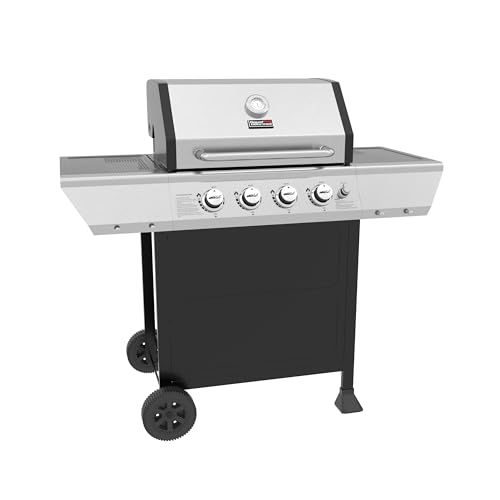
- Best overall for entertaining: Royal Gourmet GA4400T 4-Burner Propane Gas Grill — Check on Amazon
- Best portable party grill: Coleman RoadTrip 285 Portable Stand-Up Propane Grill — Check on Amazon
- Best value for occasional hosts: Char-Broil Classic 280 2-Burner Liquid Propane Gas Grill — Check on Amazon
- Best second station: Cuisinart CGG-306 Chef’s Style Tabletop Portable Propane Grill — Check on Amazon
- Best for small gatherings: Weber Q1200 Liquid Propane Portable Gas Grill, Titanium — Check on Amazon
- Best appetizer and overflow grill: Cuisinart CGG-180 Petit Gourmet Portable Gas Grill with VersaStand — Check on Amazon
Read the full guide ↓
Disclosure: As an Amazon Associate, dailyhomedecorating.com earns from qualifying purchases. Links to Amazon on this page are affiliate links; they cost you nothing extra. Listing details such as price and availability change often, so check the current Amazon listing before you buy.
Entertaining is the stress test that separates a grill from a party trick, so the best gas grill for outdoor entertaining under $300 is not simply the biggest grill the budget allows — it is the one that keeps food moving, hot and calm while eight people are hungry at the same time. Party cooking has its own physics: everything is wanted at once, the grate is loaded colder and fuller than on a weeknight, guests drift toward the grill with drinks in hand, and the cook is also the host. The grills that survive that test share three traits — enough cooking area to work in batches without a bottleneck, more than one heat zone so finished food can hold while the next batch sears, and a warming rack or side shelf where the cooked food lands. This guide scores every pick on those party traits first and weeknight virtues second, and it includes a full section on the workflow — sequencing, station layout, guest safety — that makes a budget grill entertain like a bigger one.
The headline pick is the Royal Gourmet GA4400T, the only grill here with four burners, over 500 square inches of total cooking space counting its warming rack, and shelves on both sides: it is a production line in a box, and it stays inside this budget. Behind it, the list covers the ways real parties actually happen — the Coleman RoadTrip 285 for the host whose party moves between the yard, the park and the tailgate; the Char-Broil Classic 280 for the occasional host who entertains six without wanting a monument; the Cuisinart CGG-306 as the second station that turns a single-grill party into a two-grill system; the Weber Q1200 for the small, frequent gathering done properly; and the little Cuisinart Petit Gourmet as the appetizer-and-overflow grill that quietly saves parties. If the guest list comes with chairs to buy as well, the Best Adirondack Chair For Outdoor Entertaining Under $300 guide covers seating chosen for exactly these evenings.
In this guide
Best Gas Grill for Outdoor Entertaining Under $300: Quick Picks
Short on time, or comparing several options at once? Each row below names a hosting style and the grill that suits it, with a link to the listing.
| Buyer type | Pick | Why it stands out | Link |
|---|---|---|---|
| Best overall for entertaining | Royal Gourmet GA4400T 4-Burner Propane Gas Grill | Four zones, cast-iron grates, a warming rack and two shelves — the full party workflow on one cart | Check on Amazon |
| Best portable party grill | Coleman RoadTrip 285 Portable Stand-Up Propane Grill | Three burners on a folding wheeled stand — the party goes where the stand opens | Check on Amazon |
| Best value for occasional hosts | Char-Broil Classic 280 2-Burner Gas Grill | A warming rack and two-zone fire for parties of four to six, at the low end of the budget | Check on Amazon |
| Best second station | Cuisinart CGG-306 Chef’s Style Tabletop Grill | An independent two-zone grill for vegetables, seafood and dietary-separate cooking | Check on Amazon |
| Best for small gatherings | Weber Q1200 Portable Gas Grill | The best-built small grill — dinner-party quality for two to four guests | Check on Amazon |
| Best appetizer and overflow grill | Cuisinart CGG-180 Petit Gourmet with VersaStand | A freestanding mini station for skewers, appetizers and keeping sides warm | Check on Amazon |
How These Picks Were Chosen
The budget rule was applied first, as in every guide in this series: a pick is linked only when listing evidence places it inside the tier. One pick needs its disclosure up front — the Coleman RoadTrip 285 carries a list price above $300 and is included because its listing is so frequently discounted into the tier; its review repeats the warning, and the advice is to buy it only inside the budget. The other five sit within the tier on the listings and price records we verified. This guide prints no static product prices, because they change constantly; check price on Amazon for the current figure on any pick.
Entertaining criteria came next, and they are stricter than weeknight criteria. Throughput: how much food can move across the grate per hour without quality collapsing — a function of area, heat recovery and grate mass. Zones: at least two independently controlled heat levels, or a grate layout that fakes it convincingly, because a party grill spends half its life holding food, not cooking it. Landing space: shelves and warming racks where finished food goes, because a party’s bottleneck is rarely the fire — it is the missing square foot for the cooked tray. And host ergonomics: ignition that works first time in front of an audience, a grease system that does not flare up theatrically mid-party, and a fuel supply that cannot die at the headline moment. We verified specifications against manufacturers and independent sources, and checked every model against U.S. Consumer Product Safety Commission recall records; the category’s recalls are model-specific — certain older Char-Broil Patio Bistro models, a Cuisinart Propel+ model, an older Royal Gourmet Patio 2-Burner line — and none of the six grills here is a recalled product.
One further entertaining criterion deserves naming: forgiveness. A party grill is operated by a distracted host in front of an audience, often in fading light, sometimes with a drink in the non-tong hand. The picks that survived this filter light reliably, hold their temperatures without constant adjustment, and tolerate a full grate and a busy cook without flaring, sulking or running cold. Party cooking punishes temperamental equipment more than any other kind, and every grill above earned its place partly by being boring in the best sense — it simply works, every time the lid opens.
Finally, the list had to cover parties as they are, not as catalogs imagine them: the eight-person family barbecue, the six-person dinner that wants courses, the movable party, and the two-grill household that discovers a small second grill changes everything. Each pick below is the best answer to one of those parties.
The Six Best Gas Grills for Outdoor Entertaining Under $300, Reviewed
1. Royal Gourmet GA4400T 4-Burner Propane Gas Grill — Best Overall for Entertaining
Who it suits: Hosts who entertain six to ten people and want the whole menu — mains, sides, warming — to happen on one grill without a traffic jam.
Four burners, 34,000 BTU, 397 square inches of porcelain-enameled cast-iron grate and a 115 square inch warming rack: read as a party specification, that is a searing station, a finishing zone, a vegetable zone and a heated serving shelf in one footprint. The entertaining workflow writes itself — batch one of burgers sears over the hot burners while corn works the gentle side; finished food rides the rack where it stays hot without cooking further; batch two follows without the first batch going cold on a plate across the yard. The cast-iron grates hold their heat through a full cold load, which is exactly where thin-grate budget grills collapse mid-party, and the double-layer lid keeps the chamber steady when the lid is opened for an audience every two minutes. Two side shelves carry the raw tray and the cooked tray — the one-way flow that keeps a party cook sane and food safe.
Pros: The only true multi-zone party grill in this budget; warming rack as a built-in serving shelf; cast-iron heat retention under full loads; shelves on both sides for a clean raw-to-cooked flow.
Honest limitation: Output per burner is modest, so the technique is batches and zones, not a single grate-wide sear of ten steaks at once. Assembly is a project, the steel is budget grade and wants a cover, and this is a parked grill — the party comes to it, not the reverse.
Choose it if your parties are at home and your guest list runs past six. Skip it if your gatherings are four people and a bottle of wine — the Weber below will make you happier.
Check on Amazon — check price on Amazon for the current figure.
2. Coleman RoadTrip 285 Portable Stand-Up Propane Grill — Best Portable Party Grill
Who it suits: Hosts whose entertaining happens in more than one place — the yard this weekend, the park pavilion next, the tailgate after that — and who refuse to rent their party to a venue’s equipment.
The RoadTrip 285 is a party grill that travels to the party. Its folding stand locks open at full standing height on wheels, its three adjustable burners put up to 20,000 BTU under 285 square inches of porcelain-enameled cast-iron grate, and its push-button Instastart ignition performs reliably in front of guests. Three burners give a real hot side and holding side, the cast iron sears properly, and interchangeable swap-top surfaces let a griddle join the setup for breakfast parties and smash-burger nights. It runs on 1 lb cylinders — pack spares, plural, for a party — or a 20 lb tank with Coleman’s adapter hose when the party is at home.
Pros: Standing-height party cooking anywhere the stand opens; three burners and cast iron, a rare combination in a portable; wheels that make the trip from car to pavilion trivial; folds away when the party is over.
Honest limitation: The standing disclosure: list price above this tier, included on the strength of its frequent in-tier listings — buy it inside the budget or not at all, and check price on Amazon on the day. At close to fifty pounds it rolls rather than carries, and its shelves are modest, so a portable party needs a folding table beside it for the tray flow.
Choose it if your guest list gathers in more than one zip code. Skip it if your parties are always at home — a parked cart’s shelves and storage serve a stationary host better.
Check on Amazon — check price on Amazon, and only buy it when that figure is inside the budget.
3. Char-Broil Classic 280 2-Burner Gas Grill — Best Value for Occasional Hosts
Who it suits: Hosts who entertain four to six people a handful of times a year and want a real cart grill that handles those days gracefully without consuming the budget or the patio.
The Classic 280’s party credentials are quieter than the Royal Gourmet’s but real: two in-line stainless burners at 20,000 BTU for an honest hot-and-gentle split, 280 square inches of porcelain-coated grate for the main event, and — the feature that makes it a party grill at all — a 130 square inch warming rack where the first batch of burgers or the grilled vegetables wait at serving temperature instead of cooling on the counter. Two metal side shelves run the tray flow, piezo ignition keeps the start drama-free, and the whole grill costs little enough that the budget survives buying the good chairs too. For the four-to-six-person party, cooked in two relaxed batches, it lacks nothing essential.
Pros: Warming rack included at the lowest cart price in this guide; even in-line burner heat; a size that suits both weeknights and party days; parts and covers available everywhere.
Honest limitation: Past six guests, the math turns into three batches and a queue — manageable with the sequencing in this guide’s workflow section, but the Royal Gourmet is the honest upgrade. The wire grate and thin steel are budget materials; there is no lid thermometer.
Choose it if your parties are small, your hosting is occasional, and the rest of the budget has other jobs. Skip it if eight-person cookouts are your monthly rhythm.
Check on Amazon — check price on Amazon for the current figure.
4. Cuisinart CGG-306 Chef’s Style Tabletop Grill — Best Second Station
Who it suits: Hosts who already own a main grill — or who are buying the Royal Gourmet above — and want the independent second station that makes mixed menus and mixed diets effortless.
Ask experienced hosts what upgrade changed their parties and many will say the same thing: a second, smaller grill. The CGG-306 is built for the role — two independent stainless burners at 10,000 BTU each under 275 square inches of stainless grate, in an all-stainless tabletop body with folding legs, twist-start ignition and a lid thermometer. As a second station it takes the jobs that complicate a main grill: the vegetable and seafood course that wants its own heat and its own surface, the vegetarian menu cooked entirely apart, the appetizer skewers that need five hot minutes while the main grill is committed to a roast. It sets up in minutes on a sturdy table at the edge of the action, runs on 1 lb cylinders so it needs nothing from the main grill’s tank, and when the party ends it folds into the garage instead of becoming patio furniture.
Pros: True two-zone control independent of the main grill; stainless build that wipes clean between parties; doubles as the household’s travel and weeknight grill; no permanent footprint.
Honest limitation: As a party’s only grill it tops out around six people in batches, and it needs a suitable table — one more thing to own and place. Stainless grates reward a full preheat and a light oiling for delicate foods.
Choose it if your menus are mixed, your guests’ diets are varied, or your main grill is always one course short. Skip it if you are buying your first and only grill for big parties — start with the Royal Gourmet.
Check on Amazon — check price on Amazon for the current figure.
5. Weber Q1200 Portable Gas Grill — Best for Small Gatherings
Who it suits: Hosts whose entertaining means two to four favorite people, cooked for properly — the dinner party that happens to be outdoors.
Not every gathering is a crowd, and for the small one the Q1200 is the finest tool in this guide. Its cast-aluminum body, single 8,500 BTU stainless burner and 189 square inches of porcelain-enameled cast-iron grate deliver the most even heat and the best sear of any pick here, with a built-in lid thermometer and electronic ignition, folding side tables for the cook’s glass and tools, and a removable catch pan that keeps the operation tidy in front of guests. Whole chickens, thick steaks and delicate fish all cook with a precision the bigger budget carts cannot match, because heat quality beats heat quantity at this scale. It runs on disposable cylinders or a 20 lb tank with Weber’s adapter hose.
Pros: The best cooking quality per square inch in this guide; dinner-party manners — contained grease, reliable ignition, tidy profile; parts support that makes it a decade-long appliance.
Honest limitation: One burner, one zone, 189 square inches: six guests means batches and patience, and ten means a different grill. It also sits near the top of the budget for its size — you are paying for build quality, not capacity.
Choose it if your entertaining is intimate and frequent. Skip it if your guest list regularly exceeds four — capacity beats refinement at that point, and the Royal Gourmet is waiting.
Check on Amazon — check price on Amazon for the current figure.
6. Cuisinart CGG-180 Petit Gourmet with VersaStand — Best Appetizer and Overflow Grill
Who it suits: Hosts who want a satellite station — appetizers by the seating area, a warming spot by the table, a kids’-menu grill away from the main event — that stands on its own and stores in a closet.
The Petit Gourmet’s telescoping VersaStand turns a small tabletop grill — one 5,500 BTU burner, 150 square inches of porcelain-enameled grate — into a freestanding mini-station you can place where the party actually is. Its party roles are the ones main grills handle badly: skewers and appetizers served straight off the grate where guests are sitting, sausages for the kids kept away from the steak operation, grilled desserts — peaches, pineapple — finished while the main grill rests. The grate is dishwasher-safe, the lid latches, the whole unit carries by its handles, and it runs on 1 lb cylinders, so it asks the host for nothing but a few square feet.
Pros: A freestanding second location for the party, not just a second grill; the easiest cleanup here; tiny storage footprint between parties; comfortably inside the budget.
Honest limitation: Gentle power and a single zone — it is a specialist, not a main grill, and thick cuts for a crowd are beyond its design brief. Buy it as the supporting act it is.
Choose it if your parties sprawl across the yard and your courses arrive in waves. Skip it if you need one grill to do everything — that is the top of this list, not the bottom.
Check on Amazon — check price on Amazon for the current figure.
Comparison Table
| Grill | Format | Burners | Total BTU | Total cooking area | Party strength | Fuel |
|---|---|---|---|---|---|---|
| Royal Gourmet GA4400T | Cart | 4 | 34,000 | 397 sq. in. + 115 sq. in. rack | Full menu, 6–10 guests | 20 lb tank |
| Coleman RoadTrip 285 | Folding stand | 3 | 20,000 | 285 sq. in. | The movable party | 1 lb cylinder / 20 lb with adapter |
| Char-Broil Classic 280 | Cart | 2 | 20,000 | 280 sq. in. + 130 sq. in. rack | Relaxed parties of 4–6 | 20 lb tank |
| Cuisinart CGG-306 | Tabletop | 2 | 20,000 | 275 sq. in. | The independent second station | 1 lb cylinder / 20 lb with adapter |
| Weber Q1200 | Tabletop | 1 | 8,500 | 189 sq. in. | Small gatherings, best quality | Disposable cylinder / 20 lb with adapter |
| Cuisinart CGG-180 VersaStand | Tabletop + stand | 1 | 5,500 | 150 sq. in. | Appetizers and overflow | 1 lb cylinder |
For entertaining, read the table by party strength first and specifications second. The right question is not which grill is biggest but which grill’s working style — zones, racks, shelves, mobility — matches the way your guests actually eat.
The Entertaining Workflow: Making a Budget Grill Party Like a Big One
Sequence the menu by holding power. The professional secret of party grilling is that almost nothing is cooked to order. Foods that hold well — sausages, chicken pieces, corn, peppers, anything destined for the warming rack — go first and hold happily. Foods that punish waiting — burgers, steaks, fish — cook last, in the final stretch before eating. Write the sequence down before guests arrive; a party is the wrong time to improvise an order of operations, and a written sequence is what lets the host talk to people between batches instead of staring at the grate.
Build the one-way station. Raw food flows in from the kitchen on one tray, cooked food leaves on a different, clean tray, and the two never share a surface. Place the grill’s shelves — or your side table — as the border between those flows, keep tongs for raw and cooked separate or wash between uses, and park a small trash bowl at the station for skewers, ties and trimmings. Add the drinks station at a deliberate distance: guests with glasses gravitate to the grill, and a cooler placed ten feet away gives them somewhere better to stand than the cook’s elbow — which is also the safety rule, because a hot grill surrounded by a crowd with drinks is how parties produce their one bad story.
Manage the fire like a host, not a spectator. Preheat fully before the first guest reaches the grill, keep the grease tray emptied from the last cook so the party’s flare-ups stay theatrical-free, and cook with the lid down between flips — every lid lift for an audience costs heat the next batch needs. Keep a spray-free zone: water bottles for flare-ups smear ash and grease; moving food to the cool zone is the professional fix, which is why every recommended setup in this guide preserves a cool zone even at full party load. And guard the fuel: a full tank or a counted stack of spare cylinders, checked the day before, is the cheapest party insurance in this entire guide.
Plan the ending when you plan the beginning. The last batch should be timed so the grill’s residual heat finishes the grilled dessert or the final skewers while the cook finally sits down. Then, while guests are still there and the grill is still warm, thirty seconds with a brush across the hot grate does the cleaning that would take ten minutes tomorrow — the host’s reward for thinking ahead, and the reason the next party starts with a clean grill instead of a chore.
How to Choose a Gas Grill for Entertaining
Size for your real guest list, then check the rack. Count your typical party, not your largest ever. Four to six guests are served gracefully by 280 square inches with a warming rack; six to ten want the 400-square-inch class with zones to spare. In both cases the warming rack is the entertaining feature — it is the difference between serving in waves and serving together — which is why two of the three carts and stands in this guide were chosen partly for how they hold finished food. If your parties outgrow every figure here, the answer is the two-grill system described in the CGG-306 review, not a single grill beyond this budget; hosts planning that route can also compare the wider field in the Best Gas Grill Under $300 overview.
Count zones before burners. A party grill needs a hot place, a gentle place and a holding place. Four burners give you all three with room to spare; two burners give you hot and gentle, with the rack as the holder; one burner gives you a fine small grill that entertains by intimacy rather than capacity. Buy the zone structure your menu needs — a host who grills one protein at a time needs less machinery than a host running a mixed grill of meats, vegetables and breads at once.
Decide whether the party moves. A parked cart is the best stationary host; a folding stand is the only honest answer to the movable party; a tabletop second station multiplies whichever you choose. Households that entertain in one place should not pay the portable tax — weight limits, smaller grates, cylinder logistics — and households that entertain in three places should not buy a monument. The Best Gas Grill For Backyards Under $300 guide applies the same thinking to the purely stationary case.
Think about light and time of day. Parties drift later than planned, and a grill in a dark corner turns the last batch into guesswork. Choose the grill’s party position for the light it will have at eight in the evening, not the light it has at noon — near the porch light, or with a simple outdoor fixture aimed at the grate — and schedule the cooking sequence so the fussiest foods cook while there is still daylight to judge them by. The hosts who plan for the light are the ones whose final batch looks like the first.
Budget the party kit with the grill. Entertaining consumes the accessories weeknight grilling forgives: a second set of tongs, a big serving tray, a spare tank or cylinders, a cover, and enough side-shelf or table space to run the one-way flow. If the total must respect the tier, the Classic 280 plus the full kit entertains better than a bigger grill with none of it. Hosts furnishing the whole scene at once can spread the same budget across the Best Gas Grill Under $500 tier for the grill and keep this guide’s workflow — the workflow, not the hardware, is what guests remember.
Common Mistakes When Entertaining on a Budget Gas Grill
Cooking everything to order. The queue forms, the first guests finish before the last are served, and the host never leaves the grill. Sequence by holding power, use the rack, and serve in waves that look intentional.
Loading a cold, full grate. A party load of cold meat on an under-preheated grill steams instead of searing, and the recovery time doubles. Full preheat, batches with space between pieces, and patience for the first batch to finish before the second lands.
Letting the drinks station colonize the grill. Guests stand where the action is, and the action is hot. Place drinks, seating and the interesting conversation a few steps away and the grill keeps its working clearance — the Best Adirondack Chair For Backyards Under $300 guide exists partly to give guests somewhere better to be.
Testing the party setup for the first time at the party. A new grill, a new stand position, a new menu and eight guests should never debut simultaneously. Cook one ordinary weeknight dinner on the exact setup first — same grill position, same tray flow, same ignition — and the party inherits a rehearsed system instead of a first draft. Every workflow in this guide assumes that one quiet rehearsal, and hosts who skip it are the ones discovering the missing adapter, the wobbly stand leg and the too-short table in front of an audience.
Running out of fuel at the headline moment. It happens at parties and almost never on weeknights, because parties cook three times as long. Check the tank by weight or keep the spare; count the cylinders. There is no recovery that does not involve a car trip.
Skipping the grease tray before guests arrive. Last month’s grease plus a full party load is the flare-up formula. Five minutes of cleaning the day before is the entire fix, and it also removes the smoke that makes guests’ clothes smell like your menu.
Buying capacity you host once a year. The fifteen-person reunion is real, and it is also one day. Rent, borrow, batch, or add the small second grill — do not let one day choose the grill that must fit your patio and your Tuesdays for five years.
Menus That Make a Budget Grill Look Expensive
The menu is the host’s real equipment, and the right menu makes a sub-$300 grill perform like a caterer. Build around one anchor protein that holds well — chicken thighs, sausages, a whole spatchcocked chicken on the big cart — and let it carry the party’s center of gravity. Add one fast, impressive item cooked last in view of the guests: skewers, shrimp, or thick burgers on the hottest zone, because a short burst of live-fire cooking at the end is the theater a party remembers. Surround those with grilled vegetables that forgive timing — peppers, zucchini, corn, mushrooms — which can char early, hold warm, and even improve as they rest in their dressing. Finish with a grilled dessert, peaches or pineapple caramelized over the residual heat while the grill is still hot and the cook has finally sat down; it costs almost nothing, uses heat you already paid for, and ends the evening at the grill on your terms.
What to avoid is the sampler menu: six different proteins in small quantities, each with its own temperature and timing, turning the host into a short-order cook and the grill into a traffic jam. Mixed-diet parties are the honorable exception, and they are exactly what the second-station strategy exists for — the main grill runs one coherent menu while the Cuisinart CGG-306 or the Petit Gourmet quietly runs the parallel one, separate surfaces, separate tools, no compromises on either side. Write the menu as a sequence with times, shop to it, and prep everything that can be prepped — skewers threaded, vegetables cut, sauces made — before the first guest arrives. A party grill’s grate should be the only thing working hard at your party, and with the right menu, even it gets to rest between batches.
Hosting Logistics: Quantities, Timing and Fuel
Quantities defeat more parties than grills do, so here is the arithmetic experienced hosts use. Plan the main protein by the piece rather than by the pound where you can — one burger or two sausages or one chicken portion per guest, plus a deliberate overage of about a quarter, because appetites at outdoor parties run larger than at tables and the cost of surplus is a good lunch tomorrow. Vegetables and breads should be planned generously; they are cheap, they fill the gaps while batches cook, and grilled bread beside the protein is the oldest party trick in the world. Work backward from the eating time: the grill preheats for fifteen minutes, the holding foods take the first twenty minutes of cooking, the fast foods take the last fifteen — so the fire starts roughly an hour before the table does, and the host who lights it then is free for the party’s first half hour instead of imprisoned by it.
Fuel deserves the same arithmetic. A 20 lb tank in good health outlasts several parties; a tank of unknown age and fill is a gamble, so weigh it or swap it before the big day rather than during it. Portable hosts should count cylinders the way they count guests: a long party on a three-burner portable can consume more than one, and the spare belongs at the station, not in a store across town. Finally, brief your future self: while the grill is still warm after the party, brush the grate; while it is cooling, empty the catch tray into the trash; when it is cold, cover it. The next party begins the moment this one ends, and the host who ends well starts the next one with a clean grill, a known tank and a written sequence that already worked once.
A Party-Day Timeline, From Morning to the Last Skewer
Run a party backwards and it schedules itself. The day before: clean the grease tray and grate, check the fuel, confirm the ignition lights, and write the menu as a sequence with the holding foods first and the fast foods last. That fifteen minutes is the whole foundation; everything after it is execution. The morning of the party: shop or thaw to the written menu, thread the skewers, cut the vegetables, make the sauces, and set the station — grill in position with its clearances, side table or shelves arranged for the one-way tray flow, trash bowl placed, tools laid out, drinks station positioned its deliberate distance away. A station built in the calm of the morning never has to be improvised in the noise of the evening.
An hour before eating: light the grill, close the lid, and let it come fully to temperature while you greet the first guests with the fire already behaving. Forty minutes out, the holding foods go on — sausages, chicken, corn, the vegetables that forgive — and the warming rack begins its shift. Twenty minutes out, the grill is a system at steady state: finished food resting warm, the cook free enough to talk, the fast foods staged on their tray by the grill. Fifteen minutes out, the fast foods cook in their single focused batch, and the party’s theater happens while everyone is actually present to enjoy it. Then the table: everything arrives within a few minutes of everything else, which guests experience as abundance and the host experiences as the sequence working exactly as written.
After the meal, while the grill still holds its heat and the party is still happily outdoors, run the skewers or the grilled dessert over the residual fire — the last course costs no fuel and ends the cooking on a high note. Then the thirty-second brush across the hot grate, the tray emptied once cool, the lid closed and, later, the cover on. The guests will remember the food and the ease. The ease was the timeline, and the timeline was available to any host with any grill in this guide — which is the most encouraging sentence in it.
Final Recommendation
For the host whose parties live at home, the Royal Gourmet GA4400T is the best gas grill for outdoor entertaining under $300 — four zones, a warming rack, cast-iron grates and shelves, arranged exactly the way a party cook works, inside the tier: check price on Amazon to confirm the day’s figure. The Coleman RoadTrip 285 takes the same party on the road whenever its listing sits inside the budget, and the Char-Broil Classic 280 proves how far the low end of this tier goes for the occasional host. The upgrade that experienced hosts swear by is not a bigger grill but a second one — the Cuisinart CGG-306 as an independent station, or the Petit Gourmet as the appetizer outpost — while the Weber Q1200 remains the connoisseur’s answer for the small gathering. Choose the grill that matches your guest list’s true size, run the workflow in this guide, and a sub-$300 grill will entertain like it cost much more.
FAQ
How many people can a gas grill under $300 feed at a party? Comfortably, six to ten with the largest pick in this guide, working in two batches with a warming rack; four to six with the mid-size picks. Beyond that, the honest solutions are a second small grill or a menu built around foods that hold well — not a bigger single grill at this price.
What matters more for entertaining: burners or cooking area? Zones. Area without zones forces everything to cook at one temperature, so finished food waits on plates and goes cold. Two zones plus a warming rack will out-entertain a larger single-temperature grate every time, which is why the picks here are ordered the way they are.
How do I keep the first batch hot while the second cooks? The warming rack is the tool: finished food rests there, above the gentle burners, at serving temperature without continuing to cook hard. Absent a rack, a low zone at the grate’s edge and a loose foil tent over a tray does the same job less elegantly.
Is a portable grill really enough for a party? For the movable party, yes — a three-burner stand-up portable cooks for a group in batches and goes where the party is. For a stationary party of ten, a parked four-burner cart is the better tool. Match the format to the venue and either answer is honest.
What should I do the day before a party? Clean the grease tray and grate, check the fuel by weight or count, confirm ignition, lay out the two-tray system and write the cooking sequence. Fifteen minutes of preparation the day before is worth an hour of calm during the party.
What if it rains on the party? Light rain is a nuisance, not a cancellation: position the grill where the cook has some shelter that is not an enclosed or low-covered space — never move a lit grill into a garage or under a low overhang, because heat, smoke and carbon monoxide make covered spaces dangerous — cook with the lid down, and shift the menu toward the holding foods that forgive a slower pace. Heavy weather is a judgment call the host should make early and cheerfully; the same menu, cooked in a shorter window on a fully preheated grill, loses very little, and guests remember a decisive host fondly.
How far ahead can I cook before guests eat? Holding is a quality budget, not a switch. Foods on a warming rack over gentle heat hold well for the length of a batch cycle — plan on serving within roughly twenty to thirty minutes for the best texture, with sturdy items like sausages and chicken holding more gracefully than burgers and steaks, which is why the sequence in this guide cooks the sturdy foods first and the proud foods last. When in doubt, under-promise the schedule and let the last batch be the show.
Can two small grills beat one big one for entertaining? Often, yes. Two independent grills give you two temperatures, two surfaces and a natural separation for dietary needs, plus redundancy if one fails. The combined cost of the second-station picks in this guide with a mid-size main grill sits close to this tier — which is why so many experienced hosts end up there.


