Where to buy
Check the latest price, availability and delivery on Amazon. Orders are placed on Amazon. We may earn a commission from qualifying purchases.
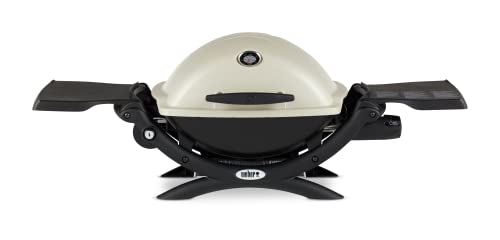
- Best overall for apartments: Weber Q1200 Liquid Propane Portable Gas Grill, Titanium — Check on Amazon
- Best two-zone tabletop: Cuisinart CGG-306 Chef’s Style Tabletop Portable Propane Grill — Check on Amazon
- Best with its own stand: Cuisinart CGG-180 Petit Gourmet Portable Gas Grill with VersaStand — Check on Amazon
- Best ultra-compact: Cuisinart Grillster Portable Gas Grill, CGG-059A — Check on Amazon
- Best for a shared grilling area: Coleman RoadTrip 285 Portable Stand-Up Propane Grill — Check on Amazon
- Best for a private ground-floor patio: Char-Broil Classic 280 2-Burner Liquid Propane Gas Grill — Check on Amazon
Read the full guide ↓
Disclosure: As an Amazon Associate, dailyhomedecorating.com earns from qualifying purchases. Links to Amazon on this page are affiliate links; they cost you nothing extra. Listing details such as price and availability change often, so check the current Amazon listing before you buy.
The search for the best gas grill for apartments under $300 has to start with a sentence most grill guides skip: in many apartment buildings, the honest answer is that a gas grill on your balcony is not allowed at all — and no grill in this guide is worth your deposit, your lease, or your neighbors’ safety. Leases, HOA rules and local fire codes frequently prohibit open-flame cooking on balconies of multi-family buildings, restrict how close a grill may be to combustible walls and railings, and ban storing standard 20 lb propane tanks indoors or on the balcony itself. Rules differ by city and by building, which is why the first section below is a rules checklist, not a product. Read it, send the email to your landlord or property manager, and only then shop. If your building says no to gas on the balcony, this guide still helps: several picks are small enough to live in a closet and travel to the places grilling is allowed — a designated communal grilling area, a ground-floor patio, a park, a friend’s yard.
If you do have permission — a private ground-floor patio, a building that allows small propane grills, a communal area you can book — apartment grilling rewards a different kind of grill than backyard grilling does. The winners here are compact, clean-burning, quick to cool and easy to store: tabletop models that run on small 1 lb cylinders, sear properly on a heavy grate, and come inside when dinner is over. The six below were chosen for exactly that life. The Weber Q1200 leads on build quality, the Cuisinart CGG-306 is the rare tabletop with two true heat zones, the Cuisinart Petit Gourmet brings its own folding stand, and the little Grillster disappears into a closet shelf. The Coleman RoadTrip 285 is here for residents whose grilling happens in a shared courtyard or parking area rather than on a balcony, and the Char-Broil Classic 280 closes the list for the one apartment setup that suits a cart grill: a private, ground-level patio where the building allows it. If you are furnishing that small outdoor space at the same time, the Best Adirondack Chair For Apartments Under $300 guide covers seating sized for apartment patios and balconies.
In this guide
Best Gas Grill for Apartments Under $300: Quick Picks
Short on time, or comparing several options at once? Each row below names a renter’s situation and the grill that suits it, with a link to the listing. Every pick assumes you have confirmed grilling is permitted where you plan to use it.
| Buyer type | Pick | Why it stands out | Link |
|---|---|---|---|
| Best overall for apartments | Weber Q1200 Portable Gas Grill | Cast-aluminum body, cast-iron grates, tidy grease catch pan — the cleanest, best-built small grill here | Check on Amazon |
| Best two-zone tabletop | Cuisinart CGG-306 Chef’s Style Tabletop Grill | Two independent 10,000 BTU burners in a stainless tabletop body — sear and finish at once | Check on Amazon |
| Best with its own stand | Cuisinart CGG-180 Petit Gourmet with VersaStand | Telescoping stand means no table needed; folds down and carries like a briefcase | Check on Amazon |
| Best ultra-compact | Cuisinart Grillster CGG-059A Portable Gas Grill | About 13 pounds, locking lid, dishwasher-safe grate — the closet-friendly option | Check on Amazon |
| Best for a shared grilling area | Coleman RoadTrip 285 Portable Stand-Up Propane Grill | Folding wheeled stand and three burners — wheel it to the courtyard, wheel it home | Check on Amazon |
| Best for a private ground-floor patio | Char-Broil Classic 280 2-Burner Gas Grill | A full cart grill on a 20 lb tank for the apartment setup that can actually host one | Check on Amazon |
First, the Rules: Leases, HOAs and Fire Codes
This section is the most important one in the guide, and it comes before a single product review on purpose. Three separate layers of rules can govern your grill, and you need a yes from all three.
Your lease. Many standard leases prohibit grills, open flames, or propane storage on balconies and patios outright, and many more require written permission. A clause you never read still binds you: grilling against the lease can mean fines, losing the grill, or in the worst case a lease violation on your record. If your lease is silent, ask anyway — an email to the property manager asking “may I use a small propane tabletop grill on my patio, and are there size or fuel limits?” takes two minutes and creates the paper trail that protects you.
Your HOA or building rules. Condo associations and managed buildings commonly add their own layer: no grills on upper balconies at all, grills only in designated areas, minimum distances from the building, or a rule that only electric grills are permitted. Designated communal grilling areas exist in many complexes precisely because individual balcony grilling is banned — if your building has one, it is not a downgrade; it is usually a nicer space than a balcony, and it is where the stand-up portable pick in this guide earns its place.
Your local fire code. Many jurisdictions adopt fire-code language that prohibits open-flame cooking devices on combustible balconies or within about ten feet of combustible construction in multi-family dwellings, with narrow exceptions — a sprinklered balcony, for example, is treated differently in some codes. Propane storage is regulated separately: standard 20 lb tanks are commonly prohibited from being stored inside living spaces, and many buildings ban them from balconies and from being carried through interior hallways or elevators. Small 1 lb disposable cylinders are treated more leniently in some places and are still fuel in a can in others. We are not your fire marshal and this guide is not legal advice: codes vary by city and change over time, so verify with your building and, if anything is unclear, your local fire department’s non-emergency line. They answer this exact question every week.
What this means practically: if you are on an upper-floor balcony in a multi-family building, assume gas grilling there is prohibited until you have confirmed otherwise in writing. If you have a private ground-floor patio with non-combustible surfaces and distance from the building, a small propane grill is far more likely to be permitted. And wherever you grill, the universal rules apply: never grill indoors, in a garage or under a low overhang; keep the grill attended; keep it away from railings, siding and anything that burns; and let it cool fully before it comes inside for storage. The picks below were chosen to make the permitted version of apartment grilling as good as it can be — small footprints, small cylinders, contained grease, fast cooldowns — not to help anyone work around a ban.
How These Picks Were Chosen
Every grill below is a real Amazon listing whose ASIN was cross-checked against the manufacturer’s specifications or an independent retailer or testing source, and each one sits inside this budget on the evidence we gathered — with one flagged exception: the Coleman RoadTrip 285 carries a list price above the tier and belongs here only when its listing is discounted into it, which its review states plainly. This guide prints no static product prices, because listings change constantly; check price on Amazon for the current figure on any pick.
Apartment-specific filters came next. Footprint and storage came first: a grill that cannot live in a closet, a corner or a storage unit will not survive apartment life. Fuel came second: five of the six picks run on 1 lb disposable cylinders, because the 20 lb tank that a backyard takes for granted is the single most commonly restricted item in apartment rules. Grease management came third — a contained, removable catch system matters when the surface below the grill is a balcony floor your deposit depends on. Cooldown and carry weight mattered too: a grill that comes inside after dinner must be light enough to move and quick enough to cool that this is realistic. We checked every model against U.S. Consumer Product Safety Commission recall records; the grill recalls in this category are model-specific — certain older Char-Broil Patio Bistro models and a Cuisinart Propel+ model, neither of which appears here — and none of these six models is a recalled product.
Finally, each pick had to serve a different apartment reality: the permitted balcony or patio tabletop, the no-table balcony, the closet-storage cook, the shared courtyard, and the private ground-floor patio. If none of those is your reality because your building prohibits gas grills entirely, the right purchase is no purchase — spend the budget on the communal area’s schedule, a park permit, or the electric alternative your building does allow.
The Six Best Gas Grills for Apartments Under $300, Reviewed
1. Weber Q1200 Portable Gas Grill — Best Overall for Apartments
Who it suits: Apartment cooks with a permitted patio or balcony spot who grill for two to four and want the small grill that behaves most like a real backyard grill.
The Q1200 earns the top spot for apartment life on containment and control as much as on cooking. Its cast-aluminum lid and body sit over a single 8,500 BTU stainless burner and 189 square inches of porcelain-enameled cast-iron grate — heavy metal that sears properly and, just as important in an apartment, heats evenly without the flare-up drama of thin budget grills. The removable catch pan underneath captures grease in a disposable foil liner instead of letting it drip toward a balcony floor. Folding side tables give you a place for tongs and a plate, an electronic ignition lights it reliably, a built-in lid thermometer helps you roast without lifting the lid, and when it has cooled it carries inside by its handles at about 31 pounds. It runs on 14.1 or 16.4 oz disposable cylinders — the fuel format apartment rules most often tolerate — and Weber’s adapter hose lets it run on a 20 lb tank in settings where a tank is allowed.
Pros: The best-built and most even-heating small grill in this guide; contained grease management that protects floors and deposits; folding tables and a real thermometer; Weber’s long-term parts support.
Honest limitation: One burner means one heat zone — you manage doneness by moving food around the grate rather than by dial. At 189 square inches it cooks for two to four, not a crowd, and it sits near the top of this budget, so confirm the listing is inside it when you shop — check price on Amazon.
Choose it if you have permission, a stable non-combustible surface to set it on, and a household of up to four. Skip it if your building prohibits gas grills — no grill is exempt from that — or if you regularly cook for five or more.
Check on Amazon — check price on Amazon for the current figure.
2. Cuisinart CGG-306 Chef’s Style Tabletop Grill — Best Two-Zone Tabletop
Who it suits: Apartment cooks who actually cook — mixed loads of protein and vegetables, thick cuts that need a gentle finish — and need two heat zones in a tabletop body.
Almost every tabletop grill has one burner and one temperature. The CGG-306 has two independently controlled stainless burners at 10,000 BTU each, 20,000 BTU in total, under 275 square inches of stainless grate. On an apartment patio that translates directly into better dinners: peppers blistering on the hot side while chicken finishes gently on the low side, instead of everything racing at one heat. The all-stainless body wipes down easily — a real consideration when the grill lives indoors between uses — the legs fold flat, setup needs no tools, a twist-start ignition lights it, and a lid thermometer is built in. At about 22 pounds it is the easiest serious grill here to carry in and out, and it runs on 1 lb cylinders or a 20 lb tank with an adapter hose where tanks are permitted.
Pros: True two-zone cooking, which no other tabletop here offers; the largest tabletop cooking area in this guide; stainless construction that cleans up well for indoor storage; tool-free setup.
Honest limitation: You supply the surface: a sturdy, heat-safe table on the patio, which is one more thing to store. Stainless grates need a full preheat and a light oiling to release fish and other delicate foods gracefully.
Choose it if your cooking is varied and your permitted spot has room for a small table. Skip it if you have no suitable surface — the Petit Gourmet below brings its own stand.
Check on Amazon — check price on Amazon for the current figure.
3. Cuisinart CGG-180 Petit Gourmet with VersaStand — Best with Its Own Stand
Who it suits: Couples and solo cooks whose patio or balcony has floor space but no table, and whose grill must fold away into a closet after dinner.
The Petit Gourmet’s telescoping VersaStand is the feature that makes it an apartment grill rather than just a small one: it sets the grill at a comfortable standing height with no furniture required, then folds so the whole unit carries by its handles and stores flat. The grill itself is a single 5,500 BTU burner under 150 square inches of porcelain-enameled grate — sized for dinner for two to three — with a dishwasher-safe grate that makes the indoor-storage cleanup genuinely easy, and a latching lid for transport. It runs on 1 lb disposable cylinders, keeping both the fuel footprint and the storage footprint as small as this category gets.
Pros: Freestanding with no table to buy or store; the smallest storage footprint of any stand-up option here; dishwasher-safe grate; comfortably inside the budget.
Honest limitation: 5,500 BTU is gentle power — excellent for burgers, vegetables, seafood and thin cuts, slow on thick steaks, and there is only one heat zone. Households of four or more will find 150 square inches tight.
Choose it if storage and simplicity outrank searing power in your kitchen-less outdoor life. Skip it if thick steaks for four are the mission — that is the Weber or the CGG-306.
Check on Amazon — check price on Amazon for the current figure.
4. Cuisinart Grillster CGG-059A Portable Gas Grill — Best Ultra-Compact
Who it suits: The apartment cook with the least space of all — a studio closet, a storage bin, a car trunk — who grills for one or two and wants a grill that is simply there when wanted.
The Grillster is the smallest serious gas grill in this guide: about 13 pounds, a single 8,000 BTU burner under roughly 146 square inches of enameled steel grate, a locking lid, and a briefcase-style carry. For its size the output is respectable — that burner drives a small chamber to genuinely high temperatures, so burgers, skewers, vegetables and chops cook with real color rather than steaming. The grate lifts out and goes in the dishwasher, which matters when your kitchen sink is also your everything sink. It runs on 1 lb cylinders, sets up in moments on any sturdy heat-safe surface, and stores on a shelf — the only pick here that truly disappears.
Pros: The lightest, smallest, easiest-storing grill in this guide; strong heat for its size; dishwasher-safe grate; the lowest-commitment way into apartment grilling where it is permitted.
Honest limitation: This is a grill for one or two people, full stop — a dinner party will not fit on it, and there is a single heat zone with a small margin between searing and scorching that you learn by cooking on it.
Choose it if space is the whole problem and your table is usually set for two. Skip it if you host — look at the CGG-306 or, for shared areas, the Coleman.
Check on Amazon — check price on Amazon for the current figure.
5. Coleman RoadTrip 285 Portable Stand-Up Propane Grill — Best for a Shared Grilling Area
Who it suits: Residents whose building provides a designated grilling area, courtyard or patio space — or who grill at parks and tailgates — and who need standing-height cooking that wheels home afterward.
If your building bans balcony grills but provides a communal area, the RoadTrip 285 is the grill shaped for your life. Its stand folds flat and rolls on wheels, then locks open to give you a full-height grill with three adjustable burners, up to 20,000 BTU, and 285 square inches of porcelain-enameled cast-iron grate — enough to cook for a group of friends in the courtyard, with push-button Instastart ignition and interchangeable swap-top cooking surfaces available if you add a griddle later. At home it runs on 1 lb cylinders, which keeps the fuel question simple, and Coleman’s adapter hose allows a 20 lb tank where one is permitted.
Pros: Standing height with no table and no permanent footprint; three burners and cast-iron grates — real capacity for group cooks; folds and wheels away into a closet or storage unit.
Honest limitation: Two warnings. First, at close to fifty pounds it is a wheel-it grill, not a carry-it grill, and it is far too large to be a balcony appliance even where balcony grilling is allowed. Second, its list price sits above this guide’s ceiling; it belongs in a best gas grill for apartments under $300 guide only when its listing is discounted into the tier, which happens often but not always — check price on Amazon and only buy it inside the budget.
Choose it if your grilling happens in shared or public spaces and you want one grill for all of it. Skip it if your only space is a small balcony — that is what the tabletops above are for.
Check on Amazon — check price on Amazon, and only buy it when that figure is inside the budget.
6. Char-Broil Classic 280 2-Burner Gas Grill — Best for a Private Ground-Floor Patio
Who it suits: The minority of apartment and townhouse renters with a private, ground-level patio, non-combustible surroundings, and written confirmation that a cart grill on a 20 lb tank is permitted.
For that specific setup, a small cart grill is simply the most convenient format: it stands ready outside, the tank lives underneath, and there is nothing to carry in and out. The Classic 280 is the budget benchmark — two in-line stainless burners at 20,000 BTU across 280 square inches of porcelain-coated grate plus a 130 square inch warming rack, piezo ignition, two metal side shelves, and a porcelain-coated steel lid and firebox, on two wheels at roughly 43 pounds. It cooks dinner for four to five with a simple two-zone fire, and its long production run means covers, grates and burners are easy to find.
Pros: A complete parked-grill setup at the low end of this budget; even in-line burner heating; warming rack included; parts and accessories everywhere.
Honest limitation: Everything about it assumes permission: it needs a 20 lb tank, outdoor storage and a patio with safe clearances, which most apartment situations do not have. The wire grate and thin steel are budget materials that ask for a cover and basic care, and there is no lid thermometer.
Choose it if your patio is private, ground-level and cleared for it. Skip it if any of those three conditions is missing — the tabletops above exist precisely for you.
Check on Amazon — check price on Amazon for the current figure.
Comparison Table
| Grill | Format | Burners | Total BTU | Cooking area | Weight | Fuel |
|---|---|---|---|---|---|---|
| Weber Q1200 | Tabletop | 1 | 8,500 | 189 sq. in. | About 31 lb | Disposable cylinder / 20 lb with adapter |
| Cuisinart CGG-306 | Tabletop | 2 | 20,000 | 275 sq. in. | About 22 lb | 1 lb cylinder / 20 lb with adapter |
| Cuisinart CGG-180 VersaStand | Tabletop + stand | 1 | 5,500 | 150 sq. in. | Light, briefcase carry | 1 lb cylinder |
| Cuisinart Grillster CGG-059A | Tabletop | 1 | 8,000 | About 146 sq. in. | About 13 lb | 1 lb cylinder |
| Coleman RoadTrip 285 | Folding stand | 3 | 20,000 | 285 sq. in. | About 47–50 lb | 1 lb cylinder / 20 lb with adapter |
| Char-Broil Classic 280 | Cart | 2 | 20,000 | 280 sq. in. + 130 sq. in. rack | About 43 lb | 20 lb tank |
For apartment life, read the fuel and weight columns before the BTU column. The grill you can legally fuel, legally store and physically carry is the grill you will use; a powerful grill that violates your lease is not a grill, it is a liability with a lid.
How to Choose a Gas Grill for an Apartment
Get the permission answer first, in writing. Everything else in this section is shopping; this step is housing. Read the lease, check the HOA or building rules, and confirm the local fire code position for your building type. If the answer restricts fuel size — small cylinders only is a common compromise — let that decide your shortlist before you fall in love with a cart grill. If the answer is no gas anywhere on your unit’s outdoor space, ask about designated areas; many buildings that ban balcony grills provide them.
Measure the storage spot, not just the patio. An apartment grill lives two lives: cooking outside and stored inside. Measure the closet, corner or storage unit where it will spend most of its hours, and compare against the grill folded, not the grill open. The Grillster and Petit Gourmet were designed for this measurement; the cart grill fails it by definition, which is fine only if it is allowed to live outside.
Match the fuel to your rules and your rhythm. One-pound cylinders are simple, storable and commonly the only format buildings tolerate, but they are the expensive way to buy propane per cook and they run out mid-dinner if you do not keep a spare. A 20 lb tank is cheaper fuel and longer runtime, but it brings the storage and transport restrictions described above. Choose the format your building allows and your cooking frequency justifies — and keep a spare cylinder either way.
Prioritize contained grease and quick cooldowns. In a house, a drip is a stain on concrete. In an apartment, a drip can be a deposit deduction, a neighbor complaint, or a smell in a shared stairwell. Prefer grills with removable catch pans or trays you can line and empty indoors, and remember that heavy cast-iron grates — wonderful for searing — hold heat longer, so budget cooldown time before the grill comes inside. The rest of the outdoor setup matters too: guides like the Best Gas Grill Under $300 overview and the Best Gas Grill For Small Patios Under $300 list apply the same budget to neighboring situations if your space turns out to be more patio than balcony.
Be a good neighbor on purpose. Grill at reasonable hours, position the grill so smoke drifts away from open windows where you can, keep cooks as short as good technique allows, and never leave the grill unattended — in a multi-family building your cookout is happening inside other people’s homes whether you intend it or not. Buildings keep permitting grills for residents who never generate a complaint; be that resident.
Common Mistakes Apartment Grillers Make
Buying first and reading the lease later. The most expensive mistake in this category, and the most common. The order of operations is permission, then purchase — never the reverse.
Assuming a small grill is an exempt grill. Most bans are written around open flames and fuel, not around grill size. A tiny tabletop propane grill is still a propane grill under almost every lease and fire code we have seen described. Small helps you comply with distance and storage rules; it does not repeal them.
Storing the tank wrong. A 20 lb tank does not belong inside your unit, in a hot closet, or next to a water heater — and in many buildings it does not belong on the balcony either. If your setup uses one, store it exactly as your building and the tank’s own labeling direct. Disposable cylinders should be stored cool, dry and upright, never in a hot car.
Grilling under an overhang or against the railing. Balcony ceilings, eaves and vinyl railings are exactly the combustible surfaces fire codes measure distance from. The middle of the permitted space, away from walls and rails, is the only correct position.
Carrying a warm grill inside. Cast iron and steel stay hot long after the flame is out. Let the grill cool fully — lid open speeds it — before it travels through your home to its storage spot.
Leaving grease to become the complaint. A neglected grease tray smokes, smells and flares. In shared airspace, that is not just bad cooking; it is how buildings decide to ban grills for everyone. Empty the tray, wipe the surfaces, keep the whole operation visibly considerate.
Apartment Grilling, Done Well: Setup, Cooking and Storage
Once permission is settled, apartment grilling becomes a logistics exercise, and the residents who enjoy it for years are the ones with a rhythm. Setup begins with the surface. A tabletop grill belongs on a sturdy, level, non-combustible surface at a comfortable working height — a metal or stone-topped patio table, never a plastic folding table, a wooden crate or the balcony railing. Leave clearance on every side, keep the grill out from under any overhang, and position it before you connect the fuel, not after. Connect the cylinder hand-tight, open its valve slowly, and give the connections a soapy-water check the first time and any time something smells wrong: bubbles growing at a joint mean gas is escaping, and the fix is to close the valve and remake the connection, never to grill anyway and hope.
Wind is the apartment cook’s invisible variable. A balcony three floors up can be breezy when the street is calm, and wind steals heat, bends flames and makes temperatures swing. Set the grill in the most sheltered corner of your permitted space, keep the lid down as much as the recipe allows, and allow extra preheat time on gusty days — ten to fifteen minutes lid-down is the baseline for the tabletops here, and a heavy cast-iron grate like the Weber’s is a genuine advantage in wind because it stores the heat the breeze keeps trying to take. Cook in smaller, faster batches rather than loading the grate edge to edge: crowded food steams, steaming makes more smoke, and smoke is the currency of neighbor complaints. A simple instant-read thermometer earns its drawer space here too, because it ends cooks at the right moment instead of during a third lid-lifting check.
Fuel management is the other rhythm. A 1 lb cylinder does not announce its end politely; it fades mid-cook. Keep a spare, always, and learn the rough arithmetic of your grill — a small tabletop sipping fuel for weeknight dinners stretches a cylinder across many cooks, while long roasting sessions drink it quickly. When a cylinder dies mid-cook, close all valves, swap it cool-headedly, and relight; food forgives a five-minute pause far better than a cook forgives a panic. Spent cylinders are not household trash in many areas — check your local household hazardous waste guidance, and never puncture or incinerate one. If your building permits a 20 lb tank with an adapter hose on a portable, the economics improve dramatically, but the tank inherits every storage rule discussed earlier in this guide.
Cleanup is where apartment grilling is won or lost socially. Brush the grate while it is still hot after cooking — thirty seconds with a brush or a ball of foil in tongs — then, once the grill is cool, empty the catch pan or grease tray into the trash, wipe the exterior, and let everything dry before the lid closes for storage. A grill stored dirty in a closet perfumes the closet; a grill stored dirty on a patio smokes like a chimney at the next cook and announces itself to every open window nearby. Once a month in season, check burner ports for blockages and the ignition for reliable spark, and inspect the hose or cylinder connection for wear. Before any long break — a winter, a move — clean the grill thoroughly, disconnect all fuel, and store the grill dry. Do these small things and a sub-$300 tabletop will give an apartment cook the thing they actually wanted from it: real grilled food, at home, with no letters from the management company.
If Your Building Says No: The Honest Alternatives
A refusal is not the end of grilled food in your life; it is a routing decision. The first alternative is the one many buildings intend: the designated grilling area. Complexes install these because they concentrate the fire risk in a maintained space and give every resident access to it. If yours has one, learn its rhythm — booking rules, busy hours, what equipment is provided and what you must bring. A portable of your own, wheeled or carried to that area, beats a shared building grill of unknown cleanliness for most cooks, and it is precisely the life the Coleman RoadTrip 285 and the two Cuisinart tabletops in this guide were designed for. The same portables serve you in public parks where grilling is permitted, at campsites, and at the homes of friends whose yards allow what your balcony does not — which is the deeper reason apartment dwellers disproportionately choose portable formats even when their own patio allows a cart.
The second alternative is the one your building probably prefers: an electric grill on the balcony itself. Electric models are outside this guide’s scope — it is a gas grill guide, and we will not pretend a product we did not research is a pick — but the honest guidance is simple. Where a lease or fire code prohibits gas and charcoal but permits electric, an electric grill is not a consolation prize; it is the compliant tool, and modern electric grills with heavy plates and lids cook far better than their reputation from decades ago. Buy one with a cooking surface sized like the tabletops here, a lid, and a removable grease tray, and the great majority of weeknight grilling — burgers, vegetables, seafood, chicken — transfers without drama.
The third alternative is to change the question at renewal time. If grilling matters to you, it belongs on the checklist beside the commute and the laundry: does the building permit grills, where, and in what format? Ground-floor units with private patios, buildings with roof decks and grilling stations, and complexes with courtyard setups all exist at every rent level, and a property manager answering a prospective tenant hears the grill question as a sign of a rule-reading resident, not a nuisance. Until then, keep any grill you own stored clean, keep its fuel stored exactly as the rules require, and let your record as the resident who asked first be the reason the next permission conversation goes well. Rules in shared buildings are written for the worst user; the entire strategy of this guide is to make sure that user is never you.
What About Charcoal, Pellets and Other Fuels?
Because readers ask: this guide covers gas grills because the keyword does, but the rules discussion applies with even more force to other fuels. Charcoal is treated more strictly than gas in most leases and fire codes we have seen described — it involves open embers, ash disposal and a long, hot cooldown, and many buildings that tolerate a small gas tabletop ban charcoal outright. Pellet grills burn wood and produce sustained smoke, which makes them poor citizens in shared airspace even where they are technically permitted. None of that makes those fuels bad — in a house with a yard they are wonderful — but in an apartment the fuel hierarchy runs opposite to the barbecue world’s preferences: the more a fuel behaves like a contained appliance, the more likely it is to be allowed. Gas in small cylinders sits in the middle of that hierarchy, electric at the permitted end, and open solid fuel at the prohibited end. Choose the fuel your building’s rules put within reach, and let the recipes adapt; grilled food is a technique, not a fuel brand, and every technique in this guide — preheating, zones, sequencing, resting — transfers to whichever compliant grill you end up cooking on.
Final Recommendation
If your building permits it and you want one grill that does apartment life properly, buy the Weber Q1200: it is the cleanest, most contained, best-built small grill under this ceiling, and it will still be cooking well when a lesser grill has been replaced twice. If your cooking needs two heat zones, the Cuisinart CGG-306 is the tabletop that cooks like a real grill, and if your patio has no table, the Petit Gourmet’s VersaStand solves the problem in the product itself. The Grillster is the honest minimum — a real gas grill that stores on a shelf — and the Coleman RoadTrip 285, bought when its listing sits inside the budget, turns a building’s shared grilling area into your grilling area. The Char-Broil Classic 280 serves the lucky few with a private ground-floor patio and written permission. And if your permission check comes back negative, believe it, and put this budget toward the spaces where grilling is welcome — the same picks travel well, and our broader Best Gas Grill Under $300 guide and the Best Gas Grill Under $200 shortlist cover the neighboring budgets and formats.
FAQ
Are gas grills allowed on apartment balconies? Very often, no. Many leases, HOA rulebooks and local fire codes prohibit open-flame cooking on balconies of multi-family buildings or within a set distance of combustible construction, and propane storage is restricted separately. Some buildings allow small grills on ground-floor patios or in designated areas. The only reliable answer is the one in your lease and from your building management and local fire code — get it before you buy.
Is a small 1 lb propane cylinder treated differently from a 20 lb tank? In many buildings and codes, yes — small disposable cylinders are sometimes permitted where full-size tanks are banned, and tank storage indoors is commonly prohibited. But “sometimes” is doing real work in that sentence; some rules restrict all propane. Confirm the fuel format, not just the grill, when you ask permission.
What if my building only allows electric grills? Then an electric grill is the right purchase for your balcony, and a small gas grill only makes sense if you will genuinely use it in permitted places — a shared area that allows gas, parks, camping. Do not buy a gas grill hoping an electric-only rule will not be enforced; in most buildings, it is.
How do I keep smoke from bothering neighbors? Cook with a clean grill — old grease is the main smoke source — keep the lid down, avoid excessively fatty flare-up cooking on small balconies, position the grill so the breeze carries smoke away from windows, and keep cooks reasonably brief. Consideration is both polite and strategic: complaints are how permissions get revoked.
Can I store a tabletop grill inside my apartment? The grill itself, once fully cool and clean, stores fine indoors — that is the point of the tabletop format. Fuel is the regulated part: follow your building’s rules and the cylinder labeling for propane storage, keep cylinders cool and upright, and when in doubt store them in the building’s designated area or not at all.
Which pick is best if I can only grill in the building’s shared area? The Coleman RoadTrip 285, because it wheels there, stands on its own, cooks for a group and wheels home. If the shared area is a short walk and your group is small, the Weber Q1200 or Cuisinart CGG-306 carried to a provided table is the lighter-weight answer.


