Where to buy
Check the latest price, availability and delivery on Amazon. Orders are placed on Amazon. We may earn a commission from qualifying purchases.
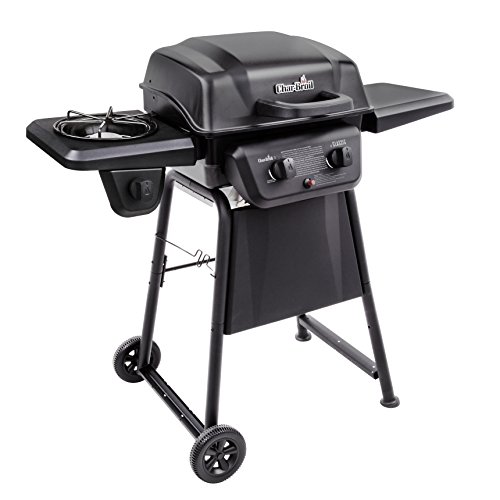
- Best for hosting overall: Char-Broil Classic Series 2-Burner Gas Grill (463637626) — Check on Amazon
- Best crowd capacity for the money: Megamaster 1-Burner Portable Gas Grill (820-0065C) — Check on Amazon
- Best second grill for sides and overflow: Royal Gourmet GT1001 Stainless Steel Portable Grill — Check on Amazon
- Best appetizer and searing station: Char-Broil Grill2Go X200 Portable Gas Grill — Check on Amazon
- Best for intimate dinner parties: Cuisinart CGG-180T Petit Gourmet Portable Tabletop Gas Grill — Check on Amazon
- Best small-bites station: Cuisinart Grillster Portable Gas Grill (CGG-059) — Check on Amazon
Read the full guide ↓
Disclosure: As an Amazon Associate, dailyhomedecorating.com earns from qualifying purchases. Links to Amazon on this page are affiliate links; they cost you nothing extra. Listing details such as price and availability change often, so check the current Amazon listing before you buy.
The best gas grill for outdoor entertaining under $200 is not the grill that cooks the best single steak. It is the grill that survives a party: the second round of burgers when the first round’s timing slips, the vegetarian skewers that cannot share a grate with the sausages, the corn that needs a warm holding place while the chicken finishes, and the host — you — who would like to attend the gathering instead of being sentenced to the grill for three hours. Entertaining is a throughput and workflow problem disguised as a cooking problem, and this guide grades every pick on exactly that: how much food moves across the grate per hour, how gracefully the grill holds finished food, and how the cooking is organized so one person is not trapped holding tongs while everyone else holds drinks.
The honest news first. This budget buys one true cart grill — a compact two-burner with a warming rack and side shelves — and a field of strong portables. It does not buy the sprawling four-burner party machine of catalog photographs, and any guide that promises one under $200 is describing sheet metal too thin to survive its second summer. What experienced hosts know, and what this guide is built around, is that entertaining at this tier works by strategy rather than size: a main grill with zones and a warming rack, a menu written for the grate you own, batch timing planned before the first guest arrives, and — the move this budget makes genuinely affordable — a second portable grill running the sides, the appetizers or the overflow. Two of the picks below cost, together, less than many single mid-range grills, and a host running both will out-serve a neighbor with one bigger box.
Two famous names are handled the way this series handles them everywhere: the Weber Q1200 and the Cuisinart Chef’s Style CGG-306 carry list prices above this tier, so they appear as unlinked stretch picks, worth a look only if a live sale pulls one inside the budget while you shop. The Coleman RoadTrip line sits far above the tier in current pricing and is excluded. Every linked pick below is a verified gas grill with an independent price sighting inside the budget — including one, the Grill2Go X200, whose price lives at the tier’s ceiling and whose review tells you exactly what to do if it has drifted over on the day you shop. Read the hosting workflow section as carefully as the reviews; at a party, it matters just as much.
In this guide
Quick Picks
Each row names a hosting job and the grill that does it. Check the current price on Amazon before you buy — especially the pick that lives at the top of this tier.
| Hosting job | Pick | Why it stands out | Link |
|---|---|---|---|
| Best for hosting overall | Char-Broil Classic Series 2-Burner (463637626) | Two zones, a warming rack and side shelves — the party workflow in one grill; check price on Amazon | Check on Amazon |
| Best crowd capacity for the money | Megamaster 1-Burner Portable (820-0065C) | The largest claimed cooking area here at the value end of the tier; check price on Amazon | Check on Amazon |
| Best second grill | Royal Gourmet GT1001 | Sides, vegetables and overflow on their own grate, with a warming rack; check price on Amazon | Check on Amazon |
| Best appetizer / searing station | Char-Broil Grill2Go X200 | Infrared heat for skewers and steaks while the main grill works; it sits at the top of this tier, so check the live price on Amazon first | Check on Amazon |
| Best for intimate parties | Cuisinart CGG-180T Petit Gourmet | A calm tabletop grill for dinner-party cooking for four to six in rounds; check price on Amazon | Check on Amazon |
| Best small-bites station | Cuisinart Grillster (CGG-059) | A light plate grill for appetizers and finishing, with dishwasher cleanup after the party; check price on Amazon | Check on Amazon |
How These Picks Were Chosen
The budget filter was strict: a genuine propane gas grill, sold on Amazon in the United States, with a verified listing and at least one independent sighting of that exact model at or under this tier’s ceiling. Charcoal was excluded — a charcoal grill is a fine entertainer and a different guide — as were the over-budget names, which appear only as flagged prose. On top of the filter, the entertaining lens re-ranked everything by party criteria that ordinary guides ignore: primary grate area measured without warming-rack inflation, because rounds-per-hour is the number a party feels; the presence of a warming rack or a second surface, because holding finished food gracefully is half of hosting; heat zoning, because a host cooking for mixed tastes needs a hot side and a gentle side at the same time; and fuel endurance, because a grill that dies mid-party — an empty tank, a faded canister — is the one failure guests remember.
We did not cook on these grills in our own yard. Specifications were cross-checked across manufacturer listings, independent reviews and retailer data, and every model was checked against the U.S. Consumer Product Safety Commission recall database; none of the six picks, and neither stretch pick, is subject to a CPSC recall. Where sources disagreed, the reviews use the conservative figure and say so: the Megamaster’s 360 square inches is a total that includes its warming rack, the Grill2Go X200’s nominal 200 square inches measures closer to 187 in independent testing, and the Petit Gourmet’s grate is 145 square inches by its maker’s specification whatever the listing headline rounds it to. A host planning a menu around a cooking area deserves to know which inches are real.
The shortlist’s shape — one cart, five portables — is the budget describing itself, and for entertaining it turns out to be a feature. A cart anchors the party; a portable extends it. Because the portables here are priced the way they are, the two-grill strategy costs less than stepping up a single tier, and it solves the two problems a bigger single grill cannot: separation (a dedicated grate for vegetables, seafood or a guest’s dietary needs) and simultaneity (appetizers searing while mains rest, desserts of grilled fruit while the grate is still hot). The reviews are written for hosts who will use the picks in combination as often as alone.
Detailed Reviews: The Best Gas Grill for Outdoor Entertaining Under $200, Pick by Pick
1. Char-Broil Classic Series 2-Burner (463637626) — Best for Hosting Overall
Who it suits: The regular host cooking for six to ten: family cookouts, birthday burgers, the standing Saturday gathering. If one grill must run the whole party, this is the one in this guide built for the assignment.
The Classic’s party credentials are structural. Two stainless in-line burners at 20,000 BTU create the hot side and the gentle side — burgers searing while chicken finishes without scorching. The 280-square-inch porcelain-coated primary grate takes a full round for a group, and the 130-square-inch warming rack above it is the feature hosts learn to love first: buns toasting, early finishers holding warm, corn resting in its husk while the grate below works the next round. Two metal side shelves hold the platter, the tongs and the sauce — the landing zone that keeps a host from balancing things on the ground. Underneath, a standard 20-pound tank delivers the endurance a party demands: no canister arithmetic, no mid-cookout fuel anxiety, refills that cost little and happen rarely.
Pros: The only zoned cooking here; the best holding game in the guide thanks to the warming rack; shelves that make solo hosting manageable; tank endurance for long sessions; the largest primary grate of any pick.
Honest limitation: Materials are budget porcelain-coated steel with wire grates — several seasons of good service under a cover, not a decade of heirloom duty, and warranty coverage is short by premium standards. Throughput has a ceiling: a single round is a round for six to eight, and a party of twelve eats in two waves whether the host plans it that way or discovers it. Assembly is an afternoon’s project before the first party, not the morning of it.
Choose it if you host groups regularly and want one grill to anchor the party. Skip it if your gatherings are intimate — four chairs, one bottle of wine — where the Petit Gourmet below is the better-shaped tool. Check on Amazon
2. Megamaster 1-Burner Portable (820-0065C) — Best Crowd Capacity for the Money
Who it suits: The big, casual gathering on a strict budget: the team party, the reunion picnic in the backyard, the holiday where the guest list outgrew the grill years ago and the menu is wisely burgers, dogs and sausages in cheerful waves.
The Megamaster brings the largest claimed cooking area in this guide — 360 square inches in total, warming rack included — behind an 11,000 BTU stainless burner, at the value end of this tier. Read the area the way this guide insists and the primary grate is still the roomiest of the tabletop picks, which for crowd food is the whole story: a burger line that keeps moving. Push-button ignition restarts rounds without ceremony, the lid thermometer keeps a borrowed co-cook oriented, and at about 14.4 pounds the whole grill relocates to wherever the party actually is — the park pavilion, the lake lot — with its folding legs and locking lid. For a host, that portability is a party trick: the grill goes to the gathering instead of the gathering squeezing into the grill’s yard.
Pros: Capacity per dollar nothing here approaches; a strong burner for a big grate; light enough to take the party on the road; a price that leaves budget for the food, which is the correct priority.
Honest limitation: One burner means the grate’s center is the hot zone and its edges run cooler — a crowd cook arranges accordingly, searing in the middle and holding at the edges, and a perfectionist will find it uneven. The headline area counts the warming rack. Enamel and paint finishes need a cover and indoor storage to age gracefully.
Choose it if your parties are large, casual and budget-bound. Skip it if your hosting is steakhouse-style — thick cuts for six, cooked to order — where the X200’s sear or the cart’s zones serve you better. Check on Amazon
3. Royal Gourmet GT1001 — Best Second Grill for Sides and Overflow
Who it suits: The host who already owns a main grill — of any size, from any tier — and has learned the party’s real bottleneck: everything wants the grate at the same moment, and half of it should not touch the other half.
The GT1001 is a stainless tabletop grill with a U-shaped 10,000 BTU burner under a 214-square-inch primary grate, a 71-square-inch warming rack, a lid thermometer and a slide-out grease tray, at a little under 18 pounds. As a second unit it is close to perfect casting: vegetables and seafood cook on their own grate at their own temperature, the warming rack holds the first round of appetizers while the second sears, and the whole appliance stores in the shed between parties instead of squatting on the patio year-round. An optional adapter hose lets it share the main grill’s tank, so the two-grill system runs on one fuel supply. Hosts who add this grill to an existing setup consistently report the same discovery — the party stops queuing at the grill.
Pros: The most complete portable cooking arrangement here; separation for mixed menus and dietary needs; a warming rack for holding appetizers; stainless build and a grease tray that keeps a busy station tidy.
Honest limitation: As a party’s only grill it is a family-sized unit, not a crowd unit — one burner, one zone, four to six fed per round. The chrome warming rack ages first. It is a two-handed carry at a little under 18 pounds.
Choose it if you are adding a second grill or hosting four to six with a mixed menu. Skip it if you need maximum crowd throughput from a single unit — the Megamaster — or true two-zone cooking in one body — the cart. Check on Amazon
4. Char-Broil Grill2Go X200 — Best Appetizer and Searing Station
Who it suits: The host whose parties start with things on skewers and end with steaks cooked properly: the appetizer hour — wings, skewers, sausages, halloumi — and the main event’s sear, handled by a dedicated station while the main grill manages volume.
The X200 cooks through Char-Broil’s TRU-Infrared system, listed today as Amplifire: a 9,500 BTU burner heating an emitter plate, which delivers even, flare-up-resistant heat across a nominal 200-square-inch grate that independent testing measures closer to 187. For entertaining, that profile is gold. Appetizers cook without the flare-up drama that sugary glazes and fatty wings usually cause; steaks sear hard while the cart or the Megamaster handles the crowd’s burgers; and the cast-aluminum, latching case means the station travels — to the park, the tailgate, the rental house — without a second thought. Its burner and lid warranty is the longest among the portables here, which matters for a grill that works party overtime.
Pros: The best searing and flare-up control in this guide; even heat for appetizers that burn easily; a rugged travel case; rust-proof cast aluminum; longer burner and lid warranty than its rivals.
Honest limitation: It runs hot by nature — low-and-slow holding is a fight, so do not assign it the ribs. Its price sits at the ceiling of this tier, with sightings at or just under the line: check the live Amazon price first, and if it has drifted over budget, assign the station role to the GT1001 instead. The emitter plate needs a scrape-and-brush routine to stay at its best.
Choose it if your parties feature seared appetizers and steaks and a second station would set you free. Skip it if gentle heat is your station’s job, or the live price breaks the tier. Check on Amazon
5. Cuisinart CGG-180T Petit Gourmet — Best for Intimate Dinner Parties
Who it suits: The host of small, good dinners: four to six people, a menu with courses, a table on the patio and a cook who wants the grill to feel like part of the evening rather than a production staged away from it.
The Petit Gourmet is a briefcase grill of about 13.5 pounds in tabletop form — a 145-square-inch porcelain-enameled grate over a 5,500 BTU stainless burner, twist-start ignition, a lid gauge, folding legs, a locking lid. Its entertaining virtue is scale honesty: it cooks a course at a time, beautifully — the fish course for four, the steaks for two couples, the vegetables while the table clears — and its calm, quiet operation suits a table-side rhythm that a roaring cart grill overwhelms. It sips its one-pound canister across a whole evening, heats fast between courses, and when the party ends it cools, latches and goes back in the closet, leaving the patio a patio.
Pros: The most civilized small-party grill here; fast heat-up between courses; frugal fuel use across a long evening; storage that disappears; a comfortable mid-tier price.
Honest limitation: Throughput is the trade: beyond six people, or a single-course menu for more than four, the host is batch-cooking while guests wait — the exact sentence this guide exists to prevent. The burner is the gentlest here, so thick steaks in cold weather test its patience and yours.
Choose it if your entertaining is intimate and coursed. Skip it if your parties are headcount-first — that is the Megamaster’s party, or the cart’s. Check on Amazon
6. Cuisinart Grillster (CGG-059) — Best Small-Bites Station
Who it suits: The grazing party: drinks and small bites over hours, where food arrives in small hot batches — sliders, skewers, flatbreads, grilled fruit — and the grill works the whole evening at a simmer of activity rather than one big service.
The Grillster’s enameled steel plate, about 146 to 148 square inches over an 8,000 BTU burner, cooks by even contact, which flatters exactly the small-bites menu: slider patties crust evenly, skewers roll and brown, flatbreads blister without falling through a grate. At roughly ten pounds it sets up anywhere a station is wanted — the drinks table end of the patio, the park, the balcony-free rental’s yard — and its party trick arrives after the party: the plate lifts out and goes in the dishwasher, so the host’s night does not end with a scraper. The stainless lid locks for carrying and the legs fold flat for storage.
Pros: The lightest, most placeable station here; even contact heat for small bites; dishwasher cleanup after the party; a mid-tier price; storage that fits a shelf.
Honest limitation: A plate is not a grate: no open-flame char, and fatty bites sit in their juices unless managed. Output is small-batch by design — a station, never the main event — and one temperature covers the whole plate.
Choose it if your parties graze and your cleanup crew is you. Skip it if you need a primary grill for groups — start at the top of this list. Check on Amazon
Comparison Table
The six picks side by side, graded for the party. Cooking areas are manufacturer figures — the reviews flag the ones that include warming racks or measure smaller in testing. Prices are deliberately not printed: check the current price on Amazon for the grill you choose.
| Pick | Party role | Burners / Output | Cooking area | Holding help | Fuel |
|---|---|---|---|---|---|
| Char-Broil Classic Series 2-Burner | Main grill | 2 burners, 20,000 BTU | 280 sq in primary + 130 sq in warming rack | Warming rack + 2 zones | 20-lb tank |
| Megamaster 1-Burner Portable | Crowd grill | 1 burner, 11,000 BTU | 360 sq in total claimed, incl. warming rack | Warming rack | 1-lb canister |
| Royal Gourmet GT1001 | Second grill | 1 U-burner, 10,000 BTU | 214 sq in + 71 sq in warming rack | Warming rack | 1-lb canister (tank hose optional) |
| Char-Broil Grill2Go X200 | Searing station | 1 burner, 9,500 BTU, infrared | 200 sq in nominal (measures less) | Lid-down holding | 1-lb canister (tank hose optional) |
| Cuisinart CGG-180T Petit Gourmet | Intimate dinners | 1 burner, 5,500 BTU | 145 sq in (maker figure) | Course-by-course service | 1-lb canister |
| Cuisinart Grillster CGG-059 | Small-bites station | 1 burner, 8,000 BTU | About 146–148 sq in plate | Continuous small batches | 1-lb canister |
How to Choose the Best Gas Grill for Outdoor Entertaining Under $200
Count your real guest list, then add the plus-ones. Entertaining math is per-round math: a primary grate of about 280 square inches serves six to eight per round; 214 square inches serves four to six; the briefcase grills serve two to four. A party of ten on a family grill is two rounds — which is fine, if the menu and the host’s timing plan for two rounds, with appetizers bridging the gap. The hosts who suffer are the ones who discover the second round at serving time.
Write the menu for the grill, not the other way around. The under-$200 party menu that works is built on foods that forgive: burgers and sausages that hold well on a warming rack, chicken thighs that tolerate timing slips, skewers that cook in minutes, corn and vegetables that wait gracefully. The menu that fights this tier is steaks to order at six different donenesses for nine people. Choose the forgiving menu and a budget grill throws a party indistinguishable from a premium grill’s; choose the diva menu and no grill in this guide can save the evening.
Decide your holding strategy before the party. Food finishes at different times; guests eat at the same time. A warming rack is the built-in answer on the cart, the Megamaster and the GT1001. Without one, the answers are a low second grill, a platter tented and resting — resting is a virtue for meat anyway — or a menu sequenced so the last item off is the one that cannot wait. Pick the strategy when you pick the grill, because it is the same decision.
Take the two-grill option seriously. This tier’s pricing makes a main grill plus a station grill a rational purchase rather than an extravagance, and the combination out-serves any single grill here: separation for dietary needs, simultaneity for courses, redundancy if one unit sulks. If you already own any grill at all, the correct entertaining purchase may be the second one — the GT1001 for sides and overflow, the X200 for searing, the Grillster for bites — rather than a replacement for the first.
Fuel the whole party in advance. For the cart, start the evening with a tank you know is healthy; the middle of a cookout is the worst moment to learn otherwise. For canister portables, the rule is one in the grill and one in reserve, minimum, with a third if the session is long or the night is cold. An adapter hose to a full-size tank converts any of the larger portables into an endurance machine for home parties — for a regular host it is the highest-value accessory in this guide.
The Host’s Workflow: Running a Party on a Budget Grill
An hour before guests arrive, the grill station is set: grill placed with clearance, side table or shelves staged with tongs, platter, oil, seasoning and a clean tray for cooked food — never the tray that carried raw meat. The leak check happens now, not at ignition time in front of an audience. Food is portioned and sequenced in the kitchen in the order it will cook: the item that holds best cooks first, the item that cannot wait cooks last, and everything that can be skewered, pattied or portioned already is. A party grill session is won in this hour; the cooking itself is the easy part.
During the party, cook in declared rounds and say so — guests relax when they know food is coming in waves, and the host who announces rounds buys the grill time to do its work. Appetizers from the station grill, or the first quick round from the main grill, land early and take the pressure off everything after. Keep the warming rack or holding platter working continuously rather than serving in bursts, keep raw and cooked platters rigorously separate, and let one person — the host or a recruited co-cook — own the grill while another owns drinks and people. The two-host system is the difference between a party the cook attends and one the cook caters.
After the last round, turn the grill up for a few minutes to burn off residue while the party is still loud, brush the grate, and close it down. The deep clean waits for tomorrow; the burn-off does not, because a grill cleaned warm is a five-minute job and a grill cleaned cold and three days later is a punishment. Hosts who build this workflow around a budget grill discover the tier’s real secret: guests remember the food’s timing, the host’s presence and the evening’s ease — none of which a bigger grill buys, and all of which a well-run small one delivers.
Party Menu Engineering for a Small Grill
The menu is the cheapest capacity upgrade a host can buy, so engineer it like one. Start with the anchor protein and choose the cut that forgives: chicken thighs instead of breasts, sausages and burgers that hold on a rack, a spatchcocked chicken that cooks flat and fast instead of a whole bird that hogs the lid’s height. Build the second course from the grate’s edges — corn, peppers, onions, zucchini planks — foods that cook in the margins while the anchor occupies the center, and that taste as good warm as hot. Put one item on the menu whose entire job is to be first and fast: skewers, wings or a flatbread that lands within fifteen minutes of the first guest and converts the grill’s warmup time into hospitality.
Then engineer the holding. Every item on a party menu should have a declared destination when it leaves the grate — the warming rack, the resting platter, the station grill turned low — and the menu is finished when every item has one. Desserts deserve the same thought, because a hot grill at the end of the night is a free course: grilled peaches, pineapple spears or pound-cake slices take two minutes and make a budget cookout feel catered. Finally, count the menu against the rounds honestly: if the plan needs four rounds on a two-round grill, the plan is wrong, not the grill — cut a course, add the second grill, or move a dish to the oven without shame. The best hosts at this tier are editors before they are cooks.
Common Mistakes Hosts Make at This Tier
Buying one grill for the guest list and cooking a menu for a different one. A diva menu on a family grill fails; a forgiving menu on the same grill shines. The mistake is rarely the grill — it is the mismatch, and it is made in the shopping list, not the store.
No holding plan. The first round goes cold while the second cooks, the chicken waits raw while the burgers hold the grate, and the host serves a relay instead of a meal. Warming rack, second grill or sequenced menu — choose one before the party, because the party will not wait while you improvise one.
Running out of fuel mid-party. The most preventable failure in grilling. A tank checked the day before, a spare canister in reserve — either is a small habit, and the party that ends with raw chicken and a dead grill ends because neither habit happened.
Letting guests colonize the grill station. A crowd around the grill is a safety problem wearing a party hat: blocked paths, bumped tables, children at grate height. Set the station with clearance, put the drinks somewhere else, and let the cook work a defined space. The party will be better for it in every way except the one guest who wanted to supervise.
Skipping the safety basics because it is a party. Leak check done early, grease tray emptied before the session — a full tray under party volumes of fatty food is a flare-up waiting for its moment — and raw and cooked platters kept apart. Festivity is not a waiver; it is the condition under which the basics matter most.
What the Next Tier Adds for Hosts — and Why This One Still Works
Stepping above this budget buys a host three real things: a larger primary grate that serves a party in one round, cast-iron grates that hold heat through the constant lid-opening of party service, and build quality that treats a decade of summers as a plan rather than a hope. The two unlinked names in this guide live up there — the Weber Q1200 with its cast-aluminum body and cast-iron grates, the Cuisinart Chef’s Style with its two burners and wide portable grate — and a host who finds either inside this budget on a sale day has found a genuine upgrade. What the next tier does not buy is the party itself: the rounds still need planning, the menu still needs editing, the holding strategy still needs choosing, and the host still needs a second pair of hands. Those are free at every tier, and they are worth more than the grate.
This tier works for entertaining because its constraints push hosts toward the strategies that make parties good anyway — forgiving menus, declared rounds, a station for appetizers, food that holds gracefully — and because its two-grill arithmetic lets a household own a system instead of a compromise. Buy the workflow first and the hardware second, and an under-$200 grill throws parties that guests remember for the evening, not the equipment.
Final Recommendation
For the regular host, the Char-Broil Classic Series 2-Burner is the anchor this tier offers: zones, a warming rack, shelves and tank endurance, in one grill, inside the budget. Pair it — now or next season — with the Royal Gourmet GT1001 and you own a two-grill system that handles menus and headcounts neither grill touches alone. Strict budgets hosting crowds should start with the Megamaster and its capacity per dollar; hosts whose parties run on skewers and steaks should claim the Grill2Go X200 station while its live price sits inside the tier; intimate hosts will be happiest with the Petit Gourmet‘s calm, course-by-course rhythm; and grazing parties belong to the Grillster. Whatever you choose, spend as much thought on the menu and the workflow as on the grill — at a party, they are the same purchase. And buy it before the season’s first invitation, not the week of it: a grill that has cooked three family dinners before its first party is a known tool with its quirks mapped, while a grill unboxed for an audience is a rehearsal performed as a premiere. The hosts who look effortless in July are the ones who were methodical in May. Keep a short note after each party — what ran out, what queued, what nobody ate — and the second party of the season will be planned from evidence instead of optimism; three parties in, your system will fit your guest list the way these picks were chosen to fit your patio.
Frequently Asked Questions
How many people can a gas grill under $200 feed at a party?
Comfortably, six to eight per round on the cart grill in this guide, four to six on the larger portables, and two to four on the briefcase picks. With appetizers bridging and a menu that holds well, a family-sized grill hosts ten to twelve in two rounds without stress. The limit is rarely the guest count; it is whether the menu and timing were planned for rounds.
Is it better to buy one bigger grill or two smaller ones for entertaining?
At this tier, two smaller ones — a main grill plus a station — usually out-serve a single unit: you gain separation for mixed menus, simultaneity for courses, and a backup. A single bigger grill only wins above this budget, where one body can offer multiple zones and a large grate together. Within this guide, the cart plus any portable is the strongest entertaining combination.
What foods hold best on a warming rack during a party?
Burgers and sausages hold gracefully for the length of a round; corn in the husk and foil-wrapped vegetables hold longer still. Chicken thighs tolerate holding better than breasts, which dry as they wait. Steaks should be served off the grate with only a short rest — plan them as the last round, not the held one.
How do I keep a mixed menu — meat and vegetarian — straight on one grill?
Zones and order: cook the vegetarian items first on a clean grate, or hold one side of a two-burner grill for them throughout, with separate tongs. It works, with discipline. The easier answer is the second-grill strategy in this guide — a dedicated portable for the vegetarian or seafood menu removes the choreography entirely, and guests with dietary needs notice the care.
How long will a one-pound canister last through a party?
Roughly one to two hours of cooking depending on burner size and how hard it runs — enough for a portable’s station duty or an intimate dinner, not enough for an evening of crowd rounds. Hosts running portables as main grills should use the adapter hose and a full-size tank, or hold at least two spare canisters. The cart pick’s tank removes the question entirely.
What is the best way to time a cookout so the host enjoys it too?
Prep everything before guests arrive, cook in announced rounds, put appetizers out early from a station or a fast first round, and run a two-host system — one person on the grill, one on people. Choose a forgiving menu, keep a holding plan, and burn off and brush the grill while the party is still going so cleanup tomorrow is ten minutes. The workflow section above is the full playbook.
Can I cook a whole party on a portable grill alone?
Yes, if the party is sized and menued for it: the larger portables here feed four to six per round, and a host who plans two rounds with appetizers bridging can serve eight to ten from a GT1001 or a Megamaster without drama. What a portable cannot do alone is the twelve-person, single-service, everything-hot-at-once party — that wants the cart’s grate and zones, or the two-grill combination. Match the claim to the guest list and the portable is a legitimate party grill, not a compromise.
What should I buy first if I am equipping a party patio from zero?
The anchor grill — the cart in this guide if your space takes it — then one full party cooked on it before anything else is bought. That first party teaches you your real bottleneck: if sides queued, the second grill is the GT1001; if appetizers bottlenecked the start, it is the X200 or the Grillster; if holding was the pain, a warming-rack model or a better platter routine solves it. Hosts who buy in that order own systems that fit their parties; hosts who buy everything at once own a patio full of hypotheses.
How do I keep a budget grill’s temperature steady with the lid opening all the time?
Party service is lid-open service, and thin budget fireboxes lose heat faster than premium ones — that is physics, not failure. Compensate the host’s way: preheat a few minutes longer than a weeknight cook, cook in fuller rounds so the lid opens for a loaded grate rather than a single burger, keep the warming rack working so finished food is not re-opened for, and favor the cart or the infrared X200 for the items that suffer most from temperature swings. A lid thermometer — fitted to the GT1001 and the Megamaster here — turns the guessing into reading, which at a party is the difference between calm and hovering.
Where should the grill station sit at an outdoor party?
On level ground with full clearance from walls, fences and overhangs, at the edge of the gathering rather than its center — close enough that the cook is part of the party, far enough that guests, drinks and children are not circulating through the working space. Put the drinks and seating in their own zone, keep a clear path between grill and kitchen, and aim any lighting at the grate: a host who can see the food cooks better and enjoys it more.
Related Guides
Building the rest of the party patio? These guides from the same series cover the neighboring decisions:


