Where to buy
Check the latest price, availability and delivery on Amazon for the linked picks. Orders for those picks are placed on Amazon. We may earn a commission from qualifying purchases. Two picks in this guide are dealer-sold ceramic grills with no standard Amazon offer, and they are listed without an Amazon link on purpose.
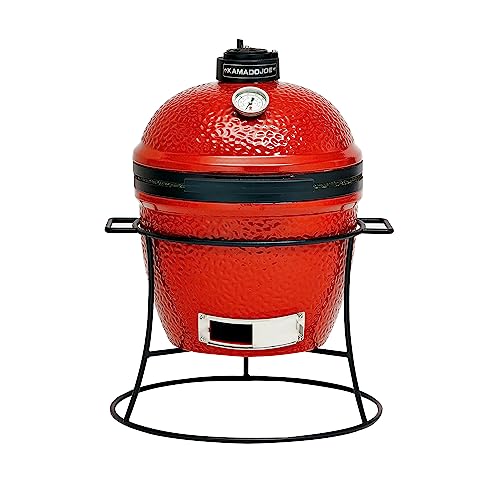
- Best compact ceramic (where permitted): Kamado Joe Joe Jr 13.5-Inch Portable Ceramic Charcoal Grill with Cast Iron Stand (KJ13RH) — Check on Amazon
- Best removable-capsule option: PK Grills PK360 Cast Aluminum Charcoal Grill and Smoker (PK360-BTBX-D) — Check on Amazon
- Easiest to move and store: Weber Performer Deluxe Charcoal Grill, 22-Inch, Touch-N-Go Gas Ignition, Black (15501001) — Check on Amazon
- Only with a private, permitted terrace: Kamado Joe Classic Joe Series II 18-Inch Ceramic Charcoal Grill and Smoker with Cart (KJ23RHC) — Check on Amazon
- Ground-floor patios only: Weber Summit Kamado E6 Charcoal Grill, Black (18201001) — Check on Amazon
- Shared grill-area purchase (dealer): Big Green Egg Large — sold through authorised dealers; see the review below for how to buy it well
Read the full guide ↓
Disclosure: As an Amazon Associate, dailyhomedecorating.com earns from qualifying purchases. Links to Amazon on this page are affiliate links; they cost you nothing extra. Listing details such as price and availability change often, so check the current Amazon listing before you buy.
Searching for the best charcoal grill for apartments under $1500 starts with a sentence most grill guides bury: on most apartment balconies, the correct answer is no charcoal grill at all. Open-flame charcoal cooking is prohibited by a large share of leases, condo and HOA rules, and many local fire codes restrict or ban charcoal grills on combustible balconies and within a set distance of multi-family buildings. A premium budget does not change a single one of those rules — and a $1,500 kamado is the worst possible way to discover them, because it is heavy, conspicuous and impossible to hide. Read your lease, check your building rules and your local fire code first. This guide is written for the apartment situations where charcoal is genuinely permitted.
Those situations do exist. Ground-floor units with private concrete patios, buildings with a shared courtyard or designated grill area, townhouse-style rentals with their own yards, and roof terraces with explicit written permission can all host charcoal cooking legally and safely. For those homes, this guide ranks the premium options by the constraints that actually bind: footprint, weight, smoke output, how far the grill can be moved, and how completely it can be shut down and made cold. The order below is deliberately different from a backyard ranking — the smallest genuine kamado leads, and the big ceramics appear with strict conditions attached.
Three safety rules apply to every pick that follows, whatever your lease says. Never use a charcoal grill indoors, in a garage, or under an enclosed porch — carbon monoxide from charcoal kills quietly and every year. Keep the grill well clear of siding, railings and stored items, on a non-combustible surface, and never leave it unattended. And shut it down properly after every cook: vents closed, ash fully cold — a full day, not an hour — before ash goes anywhere near a bin or a storage corner.
In this guide
Quick Picks: The Best charcoal grill for apartments under $1500 at a Glance
| # | Grill | Best for | Cooking area | Body |
|---|---|---|---|---|
| 1 | Kamado Joe Joe Jr 13.5-Inch | Best compact ceramic (where permitted) | 150 sq. in., 13.5-inch stainless steel grate | Ceramic body on a cast iron stand |
| 2 | PK360 Cast Aluminum Grill & Smoker | Best removable-capsule option | 360 sq. in. hinged cooking grate | Cast aluminium capsule, stainless steel grate |
| 3 | Weber Performer Deluxe 22-Inch | Easiest to move and store | 363 sq. in., 22-inch hinged plated-steel grate | Porcelain-enamelled steel kettle on a cart |
| 4 | Kamado Joe Classic II 18-Inch | Only with a private, permitted terrace | 250 sq. in. main grate (two-tier Divide & Conquer system) | Ceramic body, stainless steel grates, cast iron cart |
| 5 | Weber Summit Kamado E6 24-Inch | Ground-floor patios only | 452 sq. in., 24-inch hinged stainless steel grate | Dual-wall insulated steel, porcelain-enamelled |
| 6 | Big Green Egg Large 18-Inch | Shared grill-area purchase (dealer) | 262 sq. in., 18.25-inch grid | Ceramic body, dealer-assembled packages |
How These Picks Were Chosen
Picks for this guide were filtered through apartment reality before cooking performance. First, permission fit: any grill too large or permanent to be plausible outside a private yard was demoted and labelled with its conditions rather than quietly recommended. Second, shutdown behaviour: sealed kamados and lidded kettles that starve a fire completely when the vents close scored ahead of open designs, because a grill you cannot make safely cold has no place near a building. Third, mobility and storage: weight, footprint and whether the grill can be moved by one or two people without dragging were scored as primary specs, not footnotes.
Verification standards matched the rest of this batch: linked picks have confirmed Amazon listings for the exact models named, with price sightings recorded in the research notes; the dealer-sold Big Green Egg is reviewed without a link because it is not sold on Amazon and its warranty requires an authorised dealer. No pick has a CPSC recall. The honest headline of this guide bears repeating: if your documents prohibit charcoal, the right purchase is none of these — spend the budget on the shared-area option your building allows, or on a permitted electric alternative, and revisit this list when you have a space where fire is welcome.
The Six Picks in Detail
1. Kamado Joe Joe Jr 13.5-Inch — Best compact ceramic (where permitted)
The Joe Jr is a real ceramic kamado shrunk to apartment-adjacent dimensions: a 13.5-inch grate with about 150 square inches of cooking space, a genuine heat deflector for indirect cooking, a stainless steel hinged grate and an ash tool, all sitting in a cast iron stand. It grills, smokes, roasts and sears with the same thick-wall ceramic behaviour as its big brothers — it just does it for two to four people instead of a crowd. A whole chicken fits. A small pork butt fits. A rack of ribs needs cutting in half or coiling, and that is the honest shape of compact kamado cooking.
Size is the whole argument. At roughly 76 pounds with the stand it is a two-hand carry for one strong person or an easy carry for two, it fits in a car boot for tailgates and camping, and its footprint is a fraction of a full-size kamado’s. It is also the cheapest way into genuine ceramic cooking in this guide, which makes it the sensible premium pick wherever space — not money — is the binding constraint. What it is not is light or balcony-automatic: 76 pounds of ceramic still needs a solid, non-combustible, permitted place to stand, and the fire rules in the sections below apply to it exactly as they apply to the big grills.
For apartment life the Joe Jr is the one premium pick that starts from the right size. In a shared courtyard or on a permitted ground-floor patio it delivers real kamado cooking, then shuts down tight with its vents closed. Its stand footprint fits a corner a full kamado cart never would — but get permission for the spot in writing before the pallet arrives, because returning 76 pounds of ceramic is nobody’s idea of fun.
Who it suits: Choose it if space is your real budget, you cook for two to four, and you want true kamado performance you can also take travelling.
Pros:
- Genuine ceramic kamado cooking in the smallest footprint here
- Includes deflector, stand and ash tool — ready to cook
- Portable enough for tailgates, camping and shared spaces
- Same ceramic warranty family as the full-size Kamado Joes
Honest limitation: 150 square inches is a hard ceiling — this is a household-of-two-to-four grill, and at about 76 pounds it is portable in the car-boot sense, not the carry-it-upstairs-daily sense.
Choose it if: Choose it if space is your real budget, you cook for two to four, and you want true kamado performance you can also take travelling.
Skip it if: Skip it if you regularly feed six or more, or you need to move the grill after every cook by yourself — look at the kettle picks instead.
2. PK360 Cast Aluminum Grill & Smoker — Best removable-capsule option
The PK360 comes from a design older than the kamado craze: the Portable Kitchen capsule from 1952, rebuilt in thick cast aluminium. Aluminium is a brilliant grill material — it cannot rust, it conducts heat evenly so there are no scorching hot spots over the coals, and it reflects radiant heat back onto the food. The capsule shape with four vents — two below the fire, two in the lid — gives the most precise two-zone control of any grill in this guide: shut one side down and the PK360 will hold a gentle indirect temperature for hours; open everything and it sears like a furnace.
Everything about the PK360 is built to be serviced rather than replaced. The capsule lifts off the stand, the hinged stainless grate flips for fire access, the ash plugs knock out for cleanup, and the whole grill breaks down flat enough to travel — competition teams cook on these for a reason. The stand version here includes side shelves and a lower shelf, the thermometer is built into the lid, and the castings carry the kind of warranty confidence you expect from a grill owners hand down. It will not match a kamado for all-night fuel efficiency, but for grilling-first cooks who also smoke on weekends, it is arguably the smartest shape in this guide.
The PK360’s apartment case is its capsule: it lifts off the stand, so the cooking unit can travel to a permitted shared area or a friend’s yard while the stand stays home. Aluminium also cools faster than ceramic once the vents close. It still produces full charcoal smoke while cooking — position it where smoke will not pour into neighbours’ windows, and agree times with the building if you share the space.
Who it suits: Choose it if grilling quality and two-zone control matter more than raw capacity, and you want a grill that shrugs off coastal air and wet climates.
Pros:
- Cast aluminium never rusts and heats exceptionally evenly
- Four-vent system is the most precise two-zone control here
- Capsule lifts off the stand for travel and easy cleaning
- Built to be repaired and kept for decades
Honest limitation: The 360-square-inch grate is honest family size, not crowd size, and the low capsule profile means no room for a beer-can chicken with the lid shut on larger birds — check your tallest regular cook fits.
Choose it if: Choose it if grilling quality and two-zone control matter more than raw capacity, and you want a grill that shrugs off coastal air and wet climates.
Skip it if: Skip it if you regularly cook for eight or more, or you want the set-and-forget fuel efficiency of a sealed ceramic kamado for overnight smokes.
3. Weber Performer Deluxe 22-Inch — Easiest to move and store
Not everyone shopping at this level wants a kamado, and the Performer Deluxe is the reminder of how far the classic kettle can be developed. Weber takes the 22-inch kettle — 363 square inches, porcelain-enamelled bowl and lid — and mounts it in a proper cart with a large work table, tool hooks, a charcoal storage bin, wire bottom shelf and rolling casters. The headline feature is the Touch-N-Go ignition: a small gas burner under the charcoal grate lights the coals at the push of a button, no chimney, no lighter cubes, no newspaper ash blowing around the patio.
The details are the mature ones. The hinged Gourmet BBQ System grate flips up for adding fuel and accepts Weber’s insert range; the Tuck-Away lid holder parks the lid instead of leaving it on the ground; the One-Touch system sweeps ash into a high-capacity removable catcher; and a built-in lid thermometer and timer are mounted where you can actually read them. It will never sip charcoal like a sealed kamado or hold 225 degrees untouched overnight — thin steel sheds heat — but for weeknight grilling speed, searing performance and sheer ease of ownership, it earns its place in a guide at this ceiling as the pick for people who grill four nights a week rather than smoke four times a year.
The Performer is the easiest big grill here to live with in a rental: it rolls, it is comparatively light, and its gas ignition means less smoke during lighting than a full chimney start. It needs a proper storage corner and a cover, and its thin steel must be fully cold before it goes anywhere near a wall — build the cool-down into your routine, not as an afterthought.
Who it suits: Choose it if you grill far more than you smoke, light charcoal several times a week, and want a complete cart station well inside the budget.
Pros:
- Gas ignition lights charcoal in minutes with no chimney
- Big work table, storage bin and cart make it a complete station
- 363 sq. in. grate with hinged, insert-ready cooking system
- Lightest full-size pick here — easy to move and store
Honest limitation: Thin steel cannot match kamado fuel efficiency or overnight temperature stability, and the ignition uses small disposable gas canisters that are one more consumable to keep in stock.
Choose it if: Choose it if you grill far more than you smoke, light charcoal several times a week, and want a complete cart station well inside the budget.
Skip it if: Skip it if long low-and-slow cooks are the point of the purchase — that is what the ceramic and insulated-steel picks above are for.
4. Kamado Joe Classic II 18-Inch — Only with a private, permitted terrace
The Classic II is the grill this tier is really about. Kamado Joe’s 18-inch ceramic cooker arrives on a cast iron cart with locking casters, folding side shelves, the Divide & Conquer two-tier cooking system, a pair of half-moon heat deflectors, an ash tool and a grill gripper in the box — which matters, because its main ceramic rival sells almost all of that separately. The Air Lift hinge is the feature owners mention most: it counterbalances the heavy ceramic dome so the lid feels dramatically lighter than it is and stays where you leave it, which makes one-handed grate checks realistic instead of a two-handed lift. The Kontrol Tower top vent is cast aluminium, holds its setting when you open the lid, and sheds rain better than a simple daisy wheel.
In use, the thick ceramic walls are the story. Once the fire is settled, the Classic II holds a low smoking temperature for hours on a modest load of lump charcoal, then climbs to genuine steak-searing heat with the vents opened up. The two-tier grate system lets you run a direct and an indirect zone at different heights at the same time — searing over the coals on the low tier while vegetables finish up top — and the slide-out ash drawer means cleanup is a pull and a tip into the bin rather than a scoop-and-scrape session inside a hot firebox. The gasket is a wire mesh fibreglass design that seals well and is cheaper to replace than old-style felt.
The Classic II appears here under strict conditions only: a private, ground-level, non-combustible terrace or yard where your lease and local code explicitly allow charcoal, with room to keep it permanently. It cannot be carried to a shared area, it cannot be stored indoors with ash in it, and at roughly 228 pounds it is effectively a fixture. If your apartment offers that rare setup, it is superb; if it does not, it is the wrong purchase at any price.
Who it suits: Choose it if you want one grill that smokes, roasts, bakes and sears for a decade or more and you have a permanent, level spot for it.
Pros:
- Arrives complete: cart, shelves, deflectors and two-tier grates in the box
- Air Lift hinge makes the heavy dome genuinely one-hand friendly
- Slide-out ash drawer is the easiest ash cleanup in the class
- Ceramic holds low temperatures for hours and still sears hard
Honest limitation: At roughly 228 pounds on the cart it is a place-it-once grill: fine on a paved patio, miserable on gravel, grass or up a flight of stairs, and the ceramic body can crack if it is dropped or knocked hard in transit.
Choose it if: Choose it if you want one grill that smokes, roasts, bakes and sears for a decade or more and you have a permanent, level spot for it.
Skip it if: Skip it if you need to move your grill often, store it in a tight corner, or want maximum grate area per dollar — kettle designs give you more square inches for far less money.
5. Weber Summit Kamado E6 24-Inch — Ground-floor patios only
Weber’s answer to the ceramic kamado is built from steel, and that single decision changes everything about owning it. The Summit Kamado E6 wraps a 24-inch cooking surface — the largest in this guide — in dual-wall insulated steel with an air gap, so it holds heat and sips charcoal like a ceramic cooker but cannot crack if it gets knocked, and it weighs far less than a comparable ceramic grill. The porcelain-enamelled finish is the same family of coating Weber has used on kettles for decades, and the One-Touch cleaning system sweeps ash into a removable catcher exactly as it does on a kettle.
The cooking system is pure Weber, scaled up. The hinged stainless steel Gourmet BBQ System grate lifts at the sides for adding charcoal mid-cook and accepts Weber’s range of inserts; the charcoal grate itself has two positions, dropped low for slow smoking with the diffuser plate in place, raised for direct searing. A built-in lid thermometer, a large lid damper and Weber’s Rapidfire lid damper arrangement give you the airflow control, and the three-leg stand with locking casters keeps the whole thing stable and rollable on hard surfaces. There is no cart table on the E6 — that is the more expensive S6 — so plan on a side table of your own.
The E6 is a ground-floor-patio-only pick for the same reasons as the Classic II, with one apartment advantage — steel cannot crack if a neighbour’s mover knocks it — and one disadvantage: its 24-inch width eats a small patio whole. Measure the space with the lid open and a person standing at the grill before you even consider it, and confirm the delivery route fits a boxed grill of this size.
Who it suits: Choose it if you cook for a crowd, want kamado efficiency without ceramic fragility, and already like how a Weber kettle behaves.
Pros:
- 24-inch grate is the biggest cooking surface in this guide
- Steel body cannot crack and is much lighter than ceramic rivals
- One-Touch ash sweeping and kettle-style familiarity
- Two-position charcoal grate plus diffuser covers smoking and searing properly
Honest limitation: The E6 stand has no work surface at all, and the grill is wide — measure your gate, your storage corner and your cover size before you order, because 24 inches of kamado is a lot of patio.
Choose it if: Choose it if you cook for a crowd, want kamado efficiency without ceramic fragility, and already like how a Weber kettle behaves.
Skip it if: Skip it if your space is tight, you need side shelves built in, or you prefer the look and ritual of a traditional ceramic kamado.
6. Big Green Egg Large 18-Inch — Shared grill-area purchase (dealer)
The Large is the original kamado for most American buyers — the most popular size in the Big Green Egg range, with an 18.25-inch grid that handles a whole turkey, a dozen burgers or a couple of pork butts, and a ceramic body that holds low temperatures for very long cooks on one load of lump. The ecosystem around it is the deepest in kamado cooking: the convEGGtor for indirect heat, tiered EGGspander racks, pizza stones, woks and a dealer network that stocks parts and runs classes in most metro areas. Owners keep these for decades, and the ceramic carries a limited lifetime warranty.
The buying process is the catch, and this guide will not pretend otherwise. Big Green Egg sells only through authorised dealers — the grill is not sold on Amazon or general marketplaces, and buying from an unauthorised reseller can void the warranty, which is exactly why this pick has no Amazon link. The Egg is also priced as a body, not a setup: it must sit in a Nest, a table or a concrete support (the maker warns that placing it on a combustible surface without proper support voids the warranty), and the convEGGtor most owners consider essential is a separate purchase. Bought as the maker’s own Nest package with the essentials included, a Large lands right at the top of this guide’s budget.
The Egg’s apartment route is unusual but real: some buildings and landlords will permit a quality grill in a designated shared area when the purchase, placement and insurance are discussed first, and a local dealer can deliver, place and service it there. That conversation — in writing, before purchase — is the entire buying process for this pick in an apartment context.
Who it suits: Choose it if you value a local dealer relationship, the accessory ecosystem and the classic kamado experience, and you are budgeting for a complete package.
Pros:
- The deepest accessory ecosystem and dealer network in kamado cooking
- Ceramic holds low temperatures for very long cooks
- Limited lifetime ceramic warranty through authorised dealers
- Huge owner community, classes and resale value
Honest limitation: Dealer-only purchase with no Amazon route, and the headline price is for the Egg alone — Nest, convEGGtor and tools are extra, so budget for the package, not the body.
Choose it if: Choose it if you value a local dealer relationship, the accessory ecosystem and the classic kamado experience, and you are budgeting for a complete package.
Skip it if: Skip it if you want transparent online pricing and everything in one box — the Kamado Joe Classic II includes the cart, shelves and deflectors the Egg charges extra for.
Dealer purchase: buy through an authorised dealer so the ceramic warranty registers in your name — see the buying notes in the review above.
Comparison Table
| Grill | Cooking area | Weight | Fire control | How you buy it |
|---|---|---|---|---|
| Kamado Joe Joe Jr 13.5-Inch | 150 sq. in., 13.5-inch stainless steel grate | About 76 lb with its stand | Maker-rated for low smoking through high-heat searing | Amazon (check price) |
| PK360 Cast Aluminum Grill & Smoker | 360 sq. in. hinged cooking grate | About 90 lb with stand and shelves | Four-vent airflow system for precise two-zone control | Amazon (check price) |
| Weber Performer Deluxe 22-Inch | 363 sq. in., 22-inch hinged plated-steel grate | About 91 lb on its cart | Touch-N-Go gas ignition lights charcoal in minutes | Amazon (check price) |
| Kamado Joe Classic II 18-Inch | 250 sq. in. main grate (two-tier Divide & Conquer system) | About 228 lb on its cart | 225–750°F maker-rated range | Amazon (check price) |
| Weber Summit Kamado E6 24-Inch | 452 sq. in., 24-inch hinged stainless steel grate | About 147 lb on a three-leg stand | Two-position charcoal grate for smoking or searing | Amazon (check price) |
| Big Green Egg Large 18-Inch | 262 sq. in., 18.25-inch grid | About 162 lb for the Egg itself | Maker-rated from low smoking to high-heat searing | Authorised dealer |
How to Choose the Best Charcoal Grill for Apartments Under $1500 — Permission First, Then Grill
Step one is documents, not grills. Read the charcoal and open-flame clauses of your lease, your building’s rules, and your city or county fire code. Many jurisdictions restrict charcoal on balconies of multi-family buildings and require distance from the structure; many leases ban it outright regardless of the code. If anything you find prohibits charcoal, stop — no pick in this guide overrides it, and a violation can cost you your deposit or your lease.
Get the specific permission in writing. An email from your landlord or property manager naming charcoal grilling, the exact location, and any conditions (distance from the building, surface protection, storage rules) is the document that protects you. Verbal okay from a leasing agent is not enough for a purchase at this level.
Match the grill to the permitted location. A designated shared grill area favours something movable like the Joe Jr or the PK360 capsule. A private ground-floor concrete patio can host a kettle station or, at the limit, a full kamado. A balcony that somehow carries written permission still rules out the big ceramics on weight and smoke alone.
Plan smoke and shutdown like a neighbour, because you are one. Choose lighting methods that minimise smoke, cook at times that respect open windows, position the grill so smoke drifts away from the building, and follow a strict cool-down: vents closed until the body is cold, ash held in a metal container outdoors for at least a day before disposal. If you are furnishing a small permitted patio, the companion guide to Best Patio Furniture Set For Small Patios Under $1500 covers layouts that keep seating clear of the grill zone.
Common Mistakes Apartment Grillers Make at This Budget
Assuming a small grill is an allowed grill. Rules ban charcoal, not square inches. A tabletop charcoal grill on a prohibited balcony is still a violation and still a fire and carbon-monoxide risk.
Grilling under a balcony, awning or enclosed porch to dodge rain. Overhead coverings trap heat and carbon monoxide and are a classic apartment fire scenario. If it rains, postpone the cook.
Dumping ash that is only surface-cool. Charcoal ash insulates live embers for many hours. Ash goes into a metal container with a lid, outdoors, and stays there at least a full day before it goes near any bin.
Storing the grill or its charcoal indoors while either is warm — or storing charcoal in a damp corner. Charcoal belongs in a dry, ventilated spot away from living spaces, and a grill belongs indoors, if ever, only stone cold and ash-free. For smaller-budget options that suit tighter rules and spaces, compare Best Charcoal Grill For Apartments Under $500 and Best Charcoal Grill For Apartments Under $300.
Buying the dream kamado first and asking permission later. At this weight class, returns are freight events. Permission, measurements and a delivery plan come before the order, every time.
Apartment Charcoal Etiquette and Storage That Actually Works
Smoke management is a skill. Light with a small, clean fire rather than a heaped chimney, let the initial white smoke clear before food goes on, keep the lid closed while cooking, and avoid fatty flare-up foods on windy days that push smoke toward the building. Lump charcoal smokes less than briquettes at startup and is the right default fuel near neighbours.
Storage separates good apartment setups from violations waiting to happen. The grill lives in its permitted spot, covered, vents closed, ash removed on schedule. Charcoal lives in a sealed, dry container — never a paper bag on a balcony floor. Tools and starters live with the charcoal, not in a kitchen drawer next to anything flammable. If your building offers a storage cage, a kettle or capsule grill that can be moved there cold is worth more than a fixed kamado you cannot legally place.
Think about the whole patio, not just the grill. A permitted ground-floor patio works best zoned: grill on its non-combustible pad at maximum distance from the building, seating upwind, a clear path between. The companion guide at Best Fire Pit For Apartments Under $1500 carries the same warning label as this one, and the step-down picks in Best Charcoal Grill For Apartments Under $700 obey it too: fire features must stay well clear of the grill zone, rugs do not belong near a hot grill, and a fire pit is subject to exactly the same lease and code rules as the grill — check before you buy either.
Talking to Your Landlord: A Practical Script for Getting to Yes
Most apartment charcoal stories that end well start with a short, specific, written request — not a purchase. Property managers say no to vagueness and yes to plans, so give them a plan. Name the exact location you propose: the designated grill area, or a specific corner of a ground-floor patio, described by its surface and its distance from the building. Name the grill class you intend: a small, lidded, sealed kamado or kettle — not an open brazier — and state how it shuts down: vents closed, fire starved, ash held in a lidded metal container until fully cold. State your storage: grill covered in its permitted spot, charcoal in a sealed dry container, nothing stored warm or indoors.
Offer the conditions before they are demanded. Distance from siding and railings, a non-combustible pad under the grill, no grilling under any overhang, no unattended cooking, agreed hours that respect neighbours’ windows, and a commitment to move or remove the grill if the building’s policy changes. If the building carries rules about renter’s insurance, confirm yours is current. Put the whole exchange in email so the permission, when it comes, is a document rather than a memory — and keep it with your lease.
If the answer is no, accept it as information rather than a challenge. Ask what the building does permit: many complexes maintain a shared grill area where a quality grill, bought cooperatively or with the manager’s blessing, is welcome — which is precisely the scenario the dealer and capsule picks in this guide serve. Some landlords will permit an electric grill on a balcony they would never allow charcoal on, and a premium electric setup bought with this budget is a better life than a charcoal grill bought in defiance. The goal was never the grill; it was cooking well at home without risking the home.
One last practical point: whatever you agree, re-confirm it when management changes. Buildings sell, managers rotate, and yesterday’s verbal okay is not today’s policy. A two-line email each lease renewal keeps a permitted setup permitted.
The Apartment Accessory Kit: Small, Safe and Storable
Apartment grilling kits should be judged by whether they store invisibly and work safely. The essentials: a fitted cover that keeps the grill presentable in its permitted spot; a lidded metal ash container, which is a safety device before it is a convenience; a sealed, dry charcoal caddy sized to the space rather than a torn bag; natural fire starters that light with minimal smoke, out of respect for the neighbours above; and heat-resistant gloves, because compact grills put hands closer to hot metal. Everything on that list fits in one storage box or hangs on two hooks — which is precisely the point. If an accessory cannot be stored within the terms of your permission, it does not belong in an apartment setup, whatever it does for the cooking.
Head-to-Head: Matching the Grill to the Apartment You Actually Have
The shared-area renter needs a grill that travels between storage and a designated cooking spot, shuts down completely, and draws no complaints. That is the Joe Jr’s exact design brief, with the PK360 capsule as the alternative for cooks who want a full-size grate at the destination. Both assume the area exists and permits charcoal — confirm it before choosing between them.
The ground-floor patio owner has the widest real choice. A Performer Deluxe parks against the wall and lights without a smoky chimney session; a Classic II becomes possible only where the patio is private, ground-level, non-combustible and explicitly permitted — a combination that exists in townhouse-style rentals and almost nowhere else. Measure the patio’s usable corner honestly: the kamado needs its clearance every day, not just on cook days.
The townhouse or duplex dweller with a small private yard is, functionally, a backyard buyer with apartment paperwork. The backyard ranking applies to your cooking, but the permission discipline in this guide still applies to your purchase: lease first, grill second, everything in writing.
And the balcony dweller — the reader this guide most owes honesty — should close this tab with the budget intact. Charcoal on a typical apartment balcony is prohibited for sound reasons: open flame near combustible railings and siding, carbon monoxide under overhangs, smoke into the units above. The permitted alternatives your building allows will serve you better than a violation, and this list will still be here when your housing gives charcoal a legal home.
Final Recommendation
If your lease, building rules and fire code genuinely allow charcoal, the Joe Jr is the apartment answer at this tier: real ceramic cooking in the smallest, most movable premium package. The PK360 follows for anyone who needs a capsule that lifts off its stand, and the Performer Deluxe for renters with a proper patio and storage corner. The Classic II, Summit E6 and Big Green Egg are included honestly and conditionally — superb grills that belong only in the rare apartment setup with a private, permitted, ground-level space. And if your documents say no charcoal, believe them: that answer saves you $1,500 and your lease.
Check the Kamado Joe Joe Jr 13.5-Inch on Amazon
Check the PK360 Cast Aluminum Grill & Smoker on Amazon
Check the Weber Performer Deluxe 22-Inch on Amazon
FAQ
Can I use a charcoal grill on my apartment balcony?
In most cases, no. Many leases, HOA rules and local fire codes prohibit charcoal grills on balconies of multi-family buildings or within a set distance of the structure. Check your lease and local code before buying anything — this guide’s picks are for apartments with a genuinely permitted location, such as a private ground-floor patio or a designated shared grill area.
What is the smallest premium charcoal grill for an apartment?
The Kamado Joe Joe Jr: a genuine 13.5-inch ceramic kamado at about 76 pounds with its stand. It is the only full kamado in this guide that one or two people can realistically relocate, and it shuts down completely when its vents are closed.
How do I dispose of charcoal ash in an apartment?
Close the vents and let the grill go completely cold — allow at least a full day. Scoop ash into a metal container with a tight lid, keep it outdoors away from the building and anything combustible, and only transfer it to household waste once you are certain it is cold throughout.
Will a kamado annoy my neighbours less than a kettle?
Somewhat: a sealed kamado lights cleaner on lump charcoal and cooks with its lid closed, so it produces less stray smoke than an open kettle. It still makes real charcoal smoke. Positioning, timing and a clean, small fire matter more than the grill badge.
My lease bans charcoal. What should I do with this budget?
Do not buy a charcoal grill. Ask your landlord what the designated grill area, if any, permits, or redirect the budget to an allowed electric setup for your space and revisit charcoal when you have a permitted location. No grill in this guide is worth a lease violation.
Does renter’s insurance cover grill accidents?
Policies vary, and grilling in violation of a lease or fire code can complicate any claim. Keep your policy current, follow every condition of your written permission, and treat the safety rules in this guide — clearances, supervision, complete cool-down — as non-negotiable. When in doubt, ask your insurer before the first cook, not after an incident.


