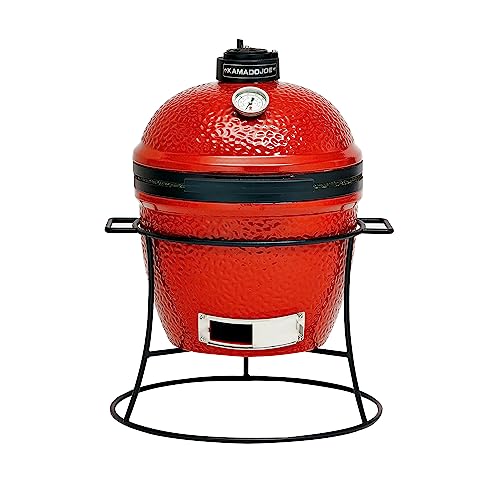
Where to buy
Check the latest price, availability and delivery on Amazon. Orders are placed on Amazon. We may earn a commission from qualifying purchases.
- Best where charcoal is allowed: Kamado Joe Joe Jr. 13.5-Inch Ceramic Charcoal Grill, Model KJ13RH — Check on Amazon
- Best small and storable: Char-Griller AKORN Jr. Portable Kamado Charcoal Grill and Smoker, Model E86714 — Check on Amazon
- Best for ground-floor patios: Weber Smokey Mountain Cooker, 18-Inch, Model 721001 — Check on Amazon
- Best for a private ground-level yard: Char-Griller AKORN Kamado Charcoal Grill and Smoker, Model E16620 — Check on Amazon
- Best for house-style rentals with a real yard: Weber Performer Deluxe Charcoal Grill, 22-Inch, Black — Check on Amazon
- The durable upgrade above this tier: PK360 Grill & Smoker — covered in prose below; the maker’s price sits above this guide’s ceiling, so it carries no purchase link here
Read the full guide ↓
Disclosure: As an Amazon Associate, dailyhomedecorating.com earns from qualifying purchases. Links to Amazon on this page are affiliate links; they cost you nothing extra. Listing details such as price and availability change often, so check the current Amazon listing before you buy.
Looking for the best charcoal grill for apartments under $700 comes with a catch that most grill guides bury, so this one puts it in the first paragraph: in a great many apartment buildings, there is no charcoal grill you are allowed to use on your balcony, at any price. Open-flame cooking devices are restricted by many leases, by condo and HOA rules, and by local fire codes that commonly prohibit charcoal grills on combustible balconies and within a set distance of multi-family buildings. Those rules exist because charcoal holds heat for hours, throws sparks when it is lit and dumped, and produces exactly the kind of smoke that drifts into a neighbor’s window. So this guide is written in two parts. The first part is the permission check — the questions to answer before money moves. The second part is the shortlist itself, ranked for the apartment situations where charcoal genuinely is allowed: ground-floor units with private patios, buildings whose leases permit grills in designated areas, and house-style rentals where “apartment” describes the lease rather than the architecture.
If the permission check fails for your building, the honest recommendation is not a smaller charcoal grill. It is no charcoal grill, plus a look at the fuel your lease does allow — many buildings that ban charcoal permit small gas or electric grills, and the apartment version of the gas shortlist is Best Gas Grill For Apartments Under $700. Nothing in the pages below should be read as encouragement to cook around a rule: a lease violation can cost a deposit or a home, a balcony fire can cost far more, and no steak is worth either. But if your situation clears the check — and many ground-floor and rental-house situations genuinely do — then apartment charcoal cooking has its own logic, and it is not the logic of a smaller backyard grill. Smoke management matters more than cooking area. Storage matters as much as the cooker. Ash disposal becomes a safety procedure rather than a chore. The picks below were ordered by that logic.
One more framing note before the shortlist. The $700 ceiling in this keyword buys far more grill than an apartment can usually house, so this guide treats the budget as headroom rather than a target: the leading picks are compact, storable and calm-smoking, and several leave most of the budget unspent, which in an apartment is a feature — the leftover covers the cover, the storage bin, the chimney and the charcoal supply that make a small-space setup actually work. Readers whose situation turns out to be a full backyard should start from the unconstrained version of this shortlist, Best Charcoal Grill Under $700, and readers squeezed on footprint alone should also see Best Charcoal Grill For Small Patios Under $700.
In this guide
Quick Picks: The Best Charcoal Grill for Apartments Under $700 at a Glance
Every pick below assumes the permission check in the next section has been passed. Match your living situation to a row.
| Apartment situation | Pick | Why it stands out | Link |
|---|---|---|---|
| Best where charcoal is allowed | Kamado Joe Joe Jr., 13.5-Inch | True ceramic kamado on an included stand: small footprint, enclosed fire, excellent smoke control for its size, lifetime warranty on ceramics | Check on Amazon |
| Best small and storable | Char-Griller AKORN Jr., Model E86714 | Insulated kamado cooking in a locking-lid portable one person can carry indoors to store | Check on Amazon |
| Best for ground-floor patios | Weber Smokey Mountain Cooker, 18-Inch | A vertical smoker with a footprint barely wider than its body, a water pan that steadies temperature, and sections that stack away | Check on Amazon |
| Best for a private ground-level yard | Char-Griller AKORN Kamado, Model E16620 | Full-size insulated kamado cooking on a cart, for apartment addresses that come with real outdoor space | Check on Amazon |
| Best for house-style rentals | Weber Performer Deluxe Charcoal Grill, 22-Inch | The full kettle station — gas ignition, work table, enclosed ash catcher — for renters with a yard and a long lease | Check on Amazon |
| The durable upgrade above this tier | PK360 Grill & Smoker | A cast-aluminum capsule that never rusts and detaches from its stand for storage — but the maker’s price is above this guide’s ceiling, so it is covered without a link | Prose only — see review below |
Before You Buy: The Permission and Safety Check
Read your lease for the grill clause, not the vibe. Many leases ban “open flame devices,” “charcoal,” or grills on balconies specifically, and many incorporate local fire code by reference. If the lease is silent, ask the property manager in writing and keep the answer. A verbal “should be fine” from a leasing agent is worth very little the day a complaint is filed or an incident is investigated. If you are in a condo or HOA community, the association rules sit on top of the lease and can be stricter than the city’s.
Know the common fire-code pattern. Widely adopted fire codes restrict charcoal burners and other open-flame cooking devices on combustible balconies and within a set distance — often around ten feet — of combustible construction, with exceptions that typically cover single-family homes and, in some jurisdictions, balconies protected by sprinklers. Your city’s exact rule is the one that governs, and it takes ten minutes to find on the fire department’s website or by phone. This guide cannot clear your address; only that check can.
Apply the physical tests even where you are allowed. Charcoal belongs on a non-combustible surface, away from siding, railings, stored items and overhangs, where sparks from lighting and ash handling cannot reach anything that burns. It needs a metal ash container with a lid, because charcoal can stay live far longer than it looks — ash should be treated as hot for at least 48 hours, wetted down, and never dumped into a plastic bin, a dumpster or a cardboard box. It should never, under any circumstances, be used indoors, in a garage or under a covered structure where carbon monoxide can collect; charcoal produces carbon monoxide without flame or smoke to warn you, and apartment-sized spaces concentrate it fast. And it needs a plan for the smoke: kamado-style cookers burning lump charcoal at a settled temperature produce the least visible smoke of any format in this guide, which is one reason they lead it.
If your situation passes all of that — ground-floor patio on concrete, a lease that permits it, a building with a designated grilling area, or a rented house with a yard — the shortlist below is ranked for you. If it does not pass, the correct purchase is a permitted fuel type, and this guide’s job was to tell you that before checkout rather than after.
How These Picks Were Chosen
The apartment ranking reorders the usual priorities. First came containment: enclosed fireboxes, locking or latching lids, and ash systems that keep embers inside the cooker — an open kettle with a loose ash pan is a fine backyard tool and a poor balcony neighbor. Second came smoke behavior: insulated kamados burning lump charcoal run clean and steady once settled, producing a fraction of the smoke of a wide-open kettle burning through a chimney of briquettes, and in shared airspace that difference is the difference between grilling and getting complaints. Third came storage: every pick had to have a plausible indoor or closet life, because apartment grills that cannot be stored become patio furniture that cannot be used. Fourth came the same price gate as the rest of this series — a verifiable Amazon listing for the exact model at or under the $700 ceiling at research time — which is why the PK360, a genuinely apartment-appropriate design, appears in prose: the maker’s price sits above the ceiling and no in-tier Amazon offer could be verified.
Specifications were taken from manufacturer data and Amazon listing details for the exact models, cross-checked where sources disagreed, and cooking areas are described in real food terms in each review, because a square-inch number means little until it becomes burgers. No pick is subject to a CPSC recall that we could find; model names were checked individually. And a standing caution that applies to this entire guide: prices and offers move, so check price on Amazon on the day you order — after you have checked your lease, not before.
The Six Picks in Detail
Kamado Joe Joe Jr. 13.5-Inch Ceramic Charcoal Grill, Model KJ13RH — Best Where Charcoal Is Allowed
Who it suits. The apartment cook with a legitimate place to use it — a ground-floor concrete patio, a designated grilling area, a rented house’s yard — who wants the best-behaved small charcoal fire money in this tier can buy. The Joe Jr. leads this guide because a ceramic kamado is, behaviorally, the most considerate charcoal cooker ever made: the fire is fully enclosed in a thick ceramic body, the vents meter the burn precisely, and once it settles at temperature it produces a thin, faint smoke rather than a plume.
The cooker itself is the real article. The 13.5-inch ceramic body carries the maker’s lifetime warranty on its ceramics — coverage no steel portable in this guide can match — and it arrives with a cast iron stand that holds it at working height on a patio table or a sturdy surface, a heat deflector that makes it a genuine smoker for a chicken or a small shoulder, a stainless steel cooking grate of about 150 square inches, an ash tool and a grill gripper. In food terms, that grate is dinner for two with ambition, or three with sides cooked elsewhere. The top vent holds its setting when the lid opens, the gasket seals the body so the vents — not leaks — control the air, and the whole cooker burns lump charcoal with an economy that matters when your fuel storage is one closet shelf: a small load runs a long, low cook, and unburned lump can be shut down and relit next time, which no briquette fire does as gracefully.
Pros. Enclosed ceramic firebox with precise vent control — the least smoky, most contained charcoal cooking in this guide; lifetime warranty on the ceramics; heat deflector and stand included; outstanding fuel economy and relightable lump; build quality that makes it a decade-long appliance rather than a seasonal purchase.
Honest limitation. It weighs roughly 76 pounds by the Amazon detail table, and ceramic does not forgive a drop: moving it is a two-person or strong-one-person job done slowly, and it is nobody’s idea of a grill to carry up stairs weekly. The grate cooks for two or three, not a gathering. And none of its good behavior changes the rules — it is still a charcoal fire, still prohibited wherever charcoal is prohibited, and its tidiness must never be used as an argument to a landlord that it should count as something else.
Choose it if you have a permitted ground-level space and cook for a small household. Skip it if your only outdoor space is an upper balcony — where the answer is a different fuel, not a different charcoal grill — or if you will move it so often that ceramic’s fragility becomes a standing risk. Check price on Amazon; it is frequently discounted from the maker’s list price, which is part of how it fits this tier.
Char-Griller AKORN Jr. Portable Kamado, Model E86714 — Best Small and Storable
Who it suits. The apartment dweller whose charcoal cooking happens in an allowed space — a ground-floor patio, a shared courtyard where grills are permitted, a friend’s yard, a campsite — but whose grill has to live indoors between cooks. The AKORN Jr. is the storage-first pick: a genuine insulated kamado small enough to carry by its handle, lock shut, and put in a closet, at a price that leaves nearly all of this guide’s budget unspent.
The engineering is the same triple-wall insulated steel as its full-size sibling, which is what makes it a kamado rather than a novelty: it holds a low smoking temperature with small vent adjustments, climbs to a real sear, and sips charcoal while doing both. The cooking grate is cast iron — a rarity in portables — at 155 square inches, which is two steaks with room to spare, four burgers, or a halved rack of ribs. The lid locks down for carrying, the ash pan pulls out for emptying into your metal ash can once everything is fully cold, and the numbered vents make your settings repeatable from one cook to the next. For apartment life specifically, its virtues compound: it cools in a sealed body rather than radiating from thin steel, it uses so little fuel that a single bag of lump is a season’s supply on a closet shelf, and its price is so far under this tier’s ceiling that the full supporting kit — cover, chimney, gloves, ash can — fits in the same budget with room to spare.
Pros. Real kamado temperature control in a one-person-carry body; locking lid and enclosed ash handling, built for transport and storage; cast iron grate; extremely frugal with fuel and space alike; priced at a small fraction of the ceiling.
Honest limitation. Capacity is dinner for two or three, cooked in one round; a crowd means relays. Its street price is also the most volatile in this guide — it has a documented history of jumping well above its usual level for stretches — so the check price on Amazon step genuinely matters here. And like every charcoal cooker on this page, it remains a charcoal cooker: permitted spaces only, full ash discipline, no exceptions for its small size.
Choose it if storage and portability are your binding constraints and your cooking location is legitimate. Skip it if you have a permanent ground-level spot and a household of four — the full-size AKORN below is the better resident cooker. The tight-budget version of this thinking lives in Best Charcoal Grill Under $500.
Weber Smokey Mountain Cooker, 18-Inch, Model 721001 — Best for Ground-Floor Patios
Who it suits. The ground-floor apartment or townhouse cook whose patio is concrete, whose lease permits charcoal, and whose ambitions run to ribs and shoulders rather than weeknight burgers. The Smokey Mountain earns its apartment ranking on geometry: it delivers 481 square inches of cooking area on two stacked grates while standing in a footprint barely wider than its own 18-inch body — capacity per square foot of patio that no horizontal grill in this guide approaches.
It is a vertical water smoker: a charcoal base, a middle section with a porcelain-enameled water pan that steadies the temperature and keeps the cooking chamber humid, two plated steel cooking grates, and a lidded top with a built-in thermometer and a silicone grommet for a probe cable. A large aluminum fuel door lets you add charcoal or wood mid-cook without dismantling the stack. For apartment use, three properties matter beyond the smoking itself. It breaks down into sections that store in a closet or a storage unit far more gracefully than any cart grill. Its cooking is low and slow, which means a settled smoker at a gentle temperature rather than a flaring grill — a calmer presence in shared airspace, though it still makes honest wood smoke and belongs where smoking is acceptable to the neighbors it will perfume. And at about 39 pounds in sections, no single piece is a heavy lift.
Pros. The most cooking capacity per square foot of patio in this guide; purpose-built low-and-slow stability; sectional storage; fuel door for calm long cooks; deep owner community for every method and cut.
Honest limitation. It is a smoker, not a grill — weeknight burgers are a workaround on its base section, not a use case. The water pan makes cleanup a greasy-water exercise that apartment sinks will not thank you for; plan on outdoor cleanup where you cook. And a long smoke is a long presence: six hours of wood smoke is a different neighbor proposition from forty minutes of grilling, so ground-floor cooks should be doubly sure their situation — and their neighbors — are genuinely fine with it before this becomes the pick.
Choose it if you have a permitted ground-floor patio and barbecue is the point. Skip it if your cooking is mostly fast grilling, or if your patio is small enough that a tall, hot cylinder crowds the door swing and the seating — measure first. Check price on Amazon, and make sure the listing is the 18-inch model; the 22-inch is a different, larger cooker.
Char-Griller AKORN Kamado, Model E16620 — Best for a Private Ground-Level Yard
Who it suits. The renter whose apartment comes with a real piece of ground: a duplex with a yard, a ground-floor unit with a private garden patio, a small house on an apartment lease. Where the space is genuinely yours and genuinely at ground level, the constraint that shapes the rest of this guide relaxes, and the full-size AKORN becomes the best value in it — a complete kamado station on a cart, at a mid-tier price.
The body is triple-wall insulated steel rather than ceramic, which buys the kamado essentials — temperature stability over hours, serious fuel economy, a range that runs from low smoking to a hard sear — without ceramic’s fragility or weight, a real consideration for renters who will move house with their grill eventually. The Amazon listing states 445 square inches of total cooking area including the warming rack, over a roughly 20-inch cast iron main grate. The cart rolls on large wheels, the side shelves fold, the lid locks, and the EasyDump ash pan keeps cleanup contained. For a renter, the steel body is also the forgiving body: it shrugs off the knocks of a move that would end a ceramic cooker, and its price leaves budget behind for the cover it should live under.
Pros. Full-size kamado range and stability at a mid-tier price; steel body that travels well between homes; generous cooking area with warming rack; cart, shelves and locking lid included; leaves much of the budget for the supporting kit.
Honest limitation. It is a resident, not a visitor: the cart footprint needs a permanent parking spot, and it makes no sense for any balcony, however sturdy. Painted steel also asks for basic care — cover on, chips touched up — because it can rust where ceramic cannot. And its size makes it the most visible pick here; in a shared or overlooked yard, check that a full kamado station is within what your lease and your neighbors consider reasonable.
Choose it if your apartment life includes a private ground-level yard and you cook for a household. Skip it if your space is a balcony or a small shared patio — the two compacts above exist for you. Check price on Amazon; this model’s street price moves with sales, usually helpfully.
Weber Performer Deluxe Charcoal Grill, 22-Inch, Black — Best for House-Style Rentals
Who it suits. A specific and common renter: the one in a house or duplex with a yard, a long lease and a landlord who permits grilling — where the living situation is a house in everything but title deed. For that reader, the apartment constraints fall away and the best all-round charcoal station in this tier is the answer: the 22-inch Weber kettle, with its 363 square inches of grate, mounted in a cart with a work table, a weather-protected charcoal bin, and push-button gas ignition for the coals.
The details that make it the frequent griller’s pick bear repeating in rental terms. The Touch-N-Go ignition lights charcoal from a small propane canister at the push of a button, so weeknight grilling has no chimney routine. The One-Touch cleaning system sweeps ash into an enclosed catcher — no open pan of embers, which matters for tidiness and for any landlord conversation about the yard. The porcelain-enameled bowl and lid tolerate weather that punishes painted steel, the hinged grate lets you add coals mid-cook, and the maker’s parts support is the deepest in charcoal: a renter who buys this is buying a grill that survives several leases. It is included in this guide, ranked last of the linked picks, precisely because its audience within “apartments” is narrow — but for that audience it is the best answer on the page.
Pros. Push-button charcoal ignition; enclosed ash catcher; integrated work table and dry charcoal storage; enamel durability and unmatched parts support; the full 22-inch kettle cooking experience.
Honest limitation. The cart needs a permanent footprint the size of a small desk and a yard to put it in; for any true apartment balcony it is not a candidate at all, and this guide will not pretend otherwise. You are also paying for convenience — the food is the food of any 22-inch Weber — and when the lease ends, it is the bulkiest pick here to move.
Choose it if you rent a house or duplex with a yard and a grill-friendly lease. Skip it if your outdoor space is a balcony or a patio measured in single-digit feet. Check price on Amazon, and confirm the listing is the Deluxe with gas ignition rather than the plainer Performer cart.
PK360 Grill & Smoker — The Durable Upgrade Above This Tier (Prose Only)
Who it suits. The apartment cook with a permitted space who thinks in decades and hates rust. The PK360 is a capsule-shaped cooker of thick cast aluminum — a material that cannot rust, conducts heat evenly, and shrugs off weather that eats steel — with a four-vent airflow system that makes two-zone cooking unusually precise, and a body that lifts off its stand for transport and storage. On apartment merits alone, it would rank near the top of this guide.
It appears without a purchase link for a budget reason, stated plainly: the maker’s price for the PK360 sits above this guide’s $700 ceiling, and no in-tier Amazon offer for the exact model could be verified at research time. Rather than stretch the ceiling quietly, the guide covers it in prose. What the extra money buys is the capsule itself — the most weatherproof body in charcoal cooking, a genuinely distinctive two-zone tool, and a design that has been in production in evolving form for generations. What it does not buy is permission: it is a charcoal fire like every other pick here, subject to exactly the same lease and fire-code rules, and its premium changes nothing about where it may be used.
Pros. Cast aluminum body that cannot rust — the lowest-maintenance exterior in charcoal; excellent two-zone control from its four-vent system; capsule detaches from the stand for moving and storage; a proven, long-lived design.
Honest limitation. Above budget at the maker’s price, full stop. Its cooking area suits small households rather than crowds, the stand is a separate visual and physical commitment on a small patio, and its premium buys durability and control rather than capacity.
Choose it if — outside this guide’s frame — durability is your first priority and the budget is a guideline. Skip it if the ceiling is real: the Joe Jr. gives you a lifetime-warrantied ceramic cooker inside the tier, and the AKORN Jr. gives you insulated cooking at a fraction of it. The full accessory kit that supports any of these picks is covered in Best Grill Accessories Under $700.
Comparison Table
| Pick | Format | Cooking area | Apartment strength | Watch out for |
|---|---|---|---|---|
| Kamado Joe Joe Jr. | Ceramic kamado on stand | ~150 sq. in. | Most contained, least smoky charcoal fire; lifetime ceramic warranty | ~76 lb and fragile if dropped; cooks for two or three |
| Char-Griller AKORN Jr. | Compact steel kamado | 155 sq. in. | Locks shut, carries indoors, stores in a closet | Small capacity; price is volatile |
| Weber Smokey Mountain 18″ | Vertical water smoker | 481 sq. in. on two grates | Most capacity per square foot; stores in sections | A smoker, not a grill; long cooks mean long smoke |
| Char-Griller AKORN E16620 | Kamado on cart | 445 sq. in. total incl. warming rack | Full-size cooking for private ground-level yards | Needs a permanent spot; never a balcony pick |
| Weber Performer Deluxe 22″ | Kettle on cart | 363 sq. in. | Gas ignition and enclosed ash for house-style rentals | Cart footprint; only suits rentals with a real yard |
| PK360 | Cast-aluminum capsule | Compact capsule class | Cannot rust; body lifts off stand for storage | Priced above this guide’s ceiling — prose only |
How to Choose the Right Charcoal Grill for an Apartment
Permission first, product second. The order of operations in this guide is deliberate: lease, building rules, fire code, physical space — then grills. Every later decision is wasted money if the first one fails, and the failure mode is not a returned box but a lease problem. Do the paperwork step while you are enthusiastic; it takes less time than assembling any pick here.
Match the cooker to the space you actually have. Ground-floor concrete patio: almost everything on this page is in play, ranked by what you cook. Designated building grilling area: portability and a locking lid move to the top of the list, because the grill travels and waits its turn. Private yard with a rental house: buy like a homeowner. Upper-floor balcony: stop — the correct answer is a fuel your building permits, and the gas and electric guides exist for exactly that home.
Weight smoke as a real specification. In shared airspace, smoke is not ambience; it is the externality your neighbors experience. Settled kamados on lump charcoal are the mildest charcoal cooks; open kettles lighting a full chimney are the strongest; long smokes are long regardless of format. Choose the mildest format that cooks your food, burn clean fuel, and let the fire settle before food goes on — most of the heavy smoke in charcoal cooking happens in the first fifteen minutes, and simply waiting it out is the single most neighborly technique there is.
Plan storage and ash before the grill arrives. Where will it live in January? Where does the charcoal live — dry, sealed, off the floor? What is the ash routine: fully cold (allow at least 48 hours), wetted, into a lidded metal can, out with household trash only when cold through? Apartments punish improvisation in all three, and reward the household that treats them as part of the purchase. A lidded metal ash can and a sealed charcoal bin cost little and are not optional extras in this setting.
Spend the headroom on the system, not the badge. Because the leading picks sit far below the ceiling, the smart apartment basket is grill plus cover plus chimney plus ash can plus a bag of good lump plus gloves and a thermometer — a complete, storable, permitted setup — rather than the largest cooker the budget can technically reach. The system is what you live with; the badge is what you look at.
Common Mistakes When Buying a Charcoal Grill for an Apartment
Assuming a small grill is an allowed grill. Rules ban the fuel and the flame, not the diameter. A 14-inch charcoal grill violates a charcoal ban exactly as completely as a 22-inch one, and “it’s only small” has never been a defense that survived a complaint.
Asking forgiveness instead of permission. The first cook announces itself to the whole building by smell. If the answer would have been no, you will hear about it — from the neighbor, the manager or the fire marshal, in ascending order of expense.
Using charcoal on a balcony “just once,” or indoors in bad weather. There is no safe version of this. Balcony fires spread upward through the balconies above; indoor charcoal produces carbon monoxide that has killed people in exactly the “just this once, it’s raining” scenario. Never is the whole rule.
Dumping ash too soon. Charcoal hides live embers in ash for a day or more. Ash goes into a lidded metal container, gets wetted, waits at least 48 hours, and only then joins household trash — never a plastic bin, never the building dumpster while warm. Most grill-related apartment fires start after the cook, in the ash, not during it.
Buying for the crowd instead of the household. Apartment storage is the scarcest resource in this entire purchase. A compact cooker you use weekly beats a full-size station that lives in a storage unit across town and is used twice.
Storing charcoal loose on a balcony. Charcoal absorbs moisture, molds its bag, and becomes both useless and a mess; it also belongs away from the grill’s spark zone. A sealed bin indoors is the whole solution.
Getting the Most From Apartment Charcoal Cooking: Fire, Smoke and Upkeep
Light small, burn clean. In a kamado especially, a modest load of lump charcoal lit in one spot comes up to temperature gently and settles into the clean, thin smoke that makes this format the apartment-friendly one. A roaring chimney of briquettes dumped in all at once is the opposite: maximum smoke at maximum visibility. Match the fire to the cook — a weeknight’s burgers need a fraction of the fuel a shoulder does — and let the cooker stabilize before food goes on.
Keep a simple log. Vent settings, fuel load, weather, result. Apartment cooks benefit doubly: the same settings reproduce the same cook, and a short history of calm, controlled cooks is a genuinely useful thing to be able to describe if a property manager ever asks how you grill. It also makes you better, faster, than any accessory does.
Leave the space better than you found it. Grate brushed, ash out when cold, grease spots cleaned off the concrete, cover on, everything stored. In shared or rented space, your footprint is your reputation, and your reputation is your permission. The cooks who keep apartment charcoal privileges for years are the ones whose neighbors associate the smell with dinner rather than with a nuisance.
Apartment Charcoal Cooking, Cook by Cook
The weeknight cook for two. This is the cook the Joe Jr. and AKORN Jr. were born for. A small load of lump, one lit spot, ten to fifteen minutes of settling while you prep, and the cooker is at a steady medium-high with the grate holding two steaks, or four burgers, or a pair of chicken breasts with skewers of vegetables around them. Total smoke footprint is modest and brief, total fuel used is a double handful, and the shutdown is part of the design: close the vents and the fire dies in its sealed body, leaving relightable lump for Thursday. In an apartment, that rhythm — small fire, short cook, sealed shutdown, no ash drama — is worth more than any specification on the box.
The weekend low-and-slow. A small shoulder or a halved rack of ribs on the Joe Jr. with its deflector in place, or a full session on the Smokey Mountain, is a four-to-eight-hour commitment of gentle smoke. This is the cook to schedule with your situation in mind: a ground-floor patio where the smoke rises away from windows, a day when the neighbors’ windows are closed, a start time that does not perfume anyone’s Sunday morning. The food is superb and the cookers here are genuinely capable of it — but in shared housing, the calendar is a cooking tool too, and the considerate cook uses it.
The small gathering. Four to six guests is the realistic apartment ceiling, and the strategy is sequencing rather than size: grill the fast items in two relaxed batches, hold the first batch warm and wrapped, lean on the warming rack if your cooker has one, and let sides come from the kitchen — which, in an apartment, is fifteen steps away and has an oven. Hosts who plan this way feed a happy table from 155 square inches. Hosts who buy a crowd-sized grill for an apartment feed a storage problem all year.
Final Recommendation
If your lease, building and fire code give you a genuine yes, the Kamado Joe Joe Jr. is the best charcoal grill for apartments under $700: the most contained and best-mannered charcoal fire in this tier, in a ceramic body with a lifetime warranty, sized for the households apartments actually hold. If storage is your sharpest constraint, the Char-Griller AKORN Jr. delivers real kamado cooking that locks shut and lives in a closet, for a fraction of the budget. Ground-floor barbecue lovers should look hard at the Weber Smokey Mountain 18-Inch, and renters with real ground should buy the full-size AKORN or the Performer Deluxe without apology.
And if the permission check gave you a no, believe it, and let it redirect you rather than stop you: the permitted-fuel guides will put a grill on your balcony that your lease allows, and a grill you may use beats a finer grill you may not, every single week of the year.
FAQ
Are charcoal grills allowed on apartment balconies?
Very often, no. Many leases, HOA rules and local fire codes prohibit charcoal and other open-flame cooking devices on balconies — particularly combustible ones — and within a set distance of multi-family buildings. The rules vary by building and city, so the only reliable answer is the one in your lease and your local fire code. This guide’s picks are for the situations where charcoal is permitted: ground-floor patios, designated grilling areas and house-style rentals.
What is the least smoky way to cook with charcoal in an apartment setting?
An insulated kamado burning lump charcoal, lit modestly and allowed to settle before cooking. The enclosed body and precise vents keep the fire burning cleanly, and most heavy smoke in any charcoal cook happens during lighting — a smaller, calmer light-up plus a short settle produces a fraction of the smoke of a full chimney start in an open kettle.
How do I dispose of charcoal ash in an apartment?
Let it sit in the closed cooker until fully cold — at least 48 hours — then wet it down, transfer it to a lidded metal container, and only dispose of it with household trash once it is cold all the way through. Never put ash, however dead it looks, into a plastic bin, a cardboard box or a building dumpster while there is any chance of a live ember.
Is a small charcoal grill safer or more acceptable than a large one?
Smaller fires are easier to manage, store and keep contained, which is why the compacts lead this guide. But acceptability is set by rules about fuel and flame, not by size — a small charcoal grill is still a charcoal grill wherever charcoal is banned.
My building bans charcoal. What should I buy instead?
Whatever your lease permits — commonly a compact gas or electric grill. Start with Best Gas Grill For Apartments Under $700 if gas is allowed, and confirm the fuel type with your property manager in writing before ordering, the same discipline this guide asks for with charcoal.


