Where to buy
Check the latest price, availability and delivery on Amazon. Orders are placed on Amazon. We may earn a commission from qualifying purchases.
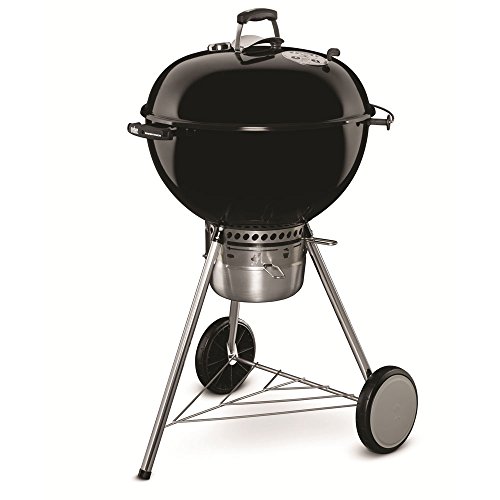
- Best overall for entertaining: Weber Master-Touch Charcoal Grill, 22-Inch, Black — check price on Amazon
- Best for big parties: Oklahoma Joe’s Highland Offset Smoker and Grill — check price on Amazon
- Best for long, relaxed gatherings: Char-Griller AKORN Kamado Charcoal Grill and Smoker, 20-Inch, Graphite — check price on Amazon
- Best value for hosts: Weber Original Kettle Premium Charcoal Grill, 22-Inch, Black — check price on Amazon
- Best for barbecue parties: Weber Smokey Mountain Cooker, 18-Inch Charcoal Smoker, Black — check price on Amazon
- Best finishing station: Kamado Joe Joe Jr., 13.5-Inch Ceramic Charcoal Grill with Cast Iron Stand, Red — check price on Amazon
Read the full guide ↓
Disclosure: As an Amazon Associate, dailyhomedecorating.com earns from qualifying purchases. Links to Amazon on this page are affiliate links; they cost you nothing extra. Listing details such as price and availability change often, so check the current Amazon listing before you buy.
Entertaining outdoors is a logistics problem wearing a party hat. The best charcoal grill for outdoor entertaining under $500 is not simply the biggest grill or the most precise one — it is the grill that keeps food moving, holds finished dishes at serving temperature, recovers quickly when a fresh batch of guests arrives hungry, and leaves the host standing with everyone else, drink in hand, instead of performing emergency surgery on a dying fire. That brief reshapes the usual rankings. Throughput matters: how much food crosses the grate per hour, and how gracefully the grill handles the second and third waves. Holding matters: a warming zone is worth more at a party than at any other time in a grill’s life. Forgiveness matters most of all, because a host is a distracted cook by definition, and the grill that punishes ten minutes of conversation with a temperature crash or a flare-up is a bad party grill no matter how beautifully it sears on a quiet Tuesday.
Judged that way, the Weber Master-Touch takes the top spot in this guide: its hinged grate refuels without moving food, its warming rack holds the first wave while the second cooks, and its manners are so well understood that a guest can be handed the tongs without a training seminar. The Oklahoma Joe’s Highland follows for the host whose parties are events — its offset chamber cooks for a crowd in a single session and turns the fire itself into part of the entertainment. The Char-Griller AKORN suits the long, slow gathering, holding smoking temperatures for hours on little fuel while the afternoon unspools. The Kettle Premium delivers the same kettle party craft as the flagship for less, the Smokey Mountain owns the barbecue-party format outright — set it in the morning, slice at showtime — and the little Joe Jr. plays the specialist’s role at a big spread: the finishing station where smoked meats get their final sear and vegetables cook away from the meat rush. Every pick was verified inside this budget on its current Amazon listing. Below: quick picks, the reasoning, full reviews written from the host’s chair, a comparison, a party-day buying checklist, the mistakes that turn hosts into prisoners of their own grill, and the final word.
In this guide
Quick Picks
Ranked for hosts: throughput, holding capacity and forgiveness under distraction. Check price on Amazon for the current figure on each verified listing.
| Host type | Pick | Why it stands out | Link |
|---|---|---|---|
| Best overall for entertaining | Weber Master-Touch, 22-Inch | Warming rack, hinged grate, and the easiest fire to hand to a guest | Check on Amazon |
| Best for big parties | Oklahoma Joe’s Highland Offset | 616 sq in chamber cooks the whole party in one session | Check on Amazon |
| Best for long gatherings | Char-Griller AKORN, 20-Inch | Hours of steady heat on little fuel; 445 sq in with the rack | Check on Amazon |
| Best value for hosts | Weber Original Kettle Premium, 22-Inch | The same kettle party craft, at a lower tier positioning | Check on Amazon |
| Best for barbecue parties | Weber Smokey Mountain, 18-Inch | Cook ahead, hold steady, slice when guests arrive | Check on Amazon |
| Best finishing station | Kamado Joe Joe Jr., 13.5-Inch | A ceramic searing and vegetable station beside the main grill | Check on Amazon |
How These Picks Were Chosen
The budget was applied first and strictly: every pick’s exact linked listing sat under $500 on Amazon.com at research time — check price on Amazon, because party-season pricing moves. Then the ranking was rebuilt around hosting. We scored throughput as food-per-hour across a whole evening, not grate size in isolation: a grill that refuels without unloading food and holds finished items warm outproduces a larger grill that does neither. We scored forgiveness by asking what happens when the cook walks away for fifteen minutes of conversation — the kettles idle gracefully, the kamado barely notices, the water smoker was designed for exactly that absence, and the offset, honestly, bills you for it. We scored host experience: ash systems that stay clean around guests, lids that park themselves instead of hunting for a surface, and fires whose smoke behaves once they are up to temperature, because your guests’ clothes are part of the evening’s review.
We also considered the party around the grill, because entertaining is an ecosystem: the seating your guests rotate through in Best Outdoor Sofa For Outdoor Entertaining Under $500, the ground under the serving zone in Best Outdoor Rug For Outdoor Entertaining Under $500, and the fire feature that takes over when the cooking ends. A grill guide that ignores the gathering is answering a narrower question than the one hosts actually ask. Specifications and model numbers were verified against maker and retailer sources, and we favored designs with deep parts support — a grill that fails the morning of a party needs a replacement part that exists, not a successor model. We did not test these grills at our own parties; we read the listings and specifications, cross-checked the numbers, and weighed the ownership patterns that repeat wherever hosts compare notes.
The 6 Picks, Reviewed in Detail
Weber Master-Touch Charcoal Grill, 22-Inch, Black
Who it suits: The regular host — dinner parties of six to ten, family gatherings, neighborhood evenings — who wants the evening to feel effortless and is willing to let the grill’s design do the organizing.
The Master-Touch is the best party grill in this budget because its features read like a host’s wish list translated into hardware. Start with the warming rack: at a party, food finishes in waves, and the rack holds the first wave — chicken pieces, sausages, corn — in gentle heat while the grate below runs the next batch, which is the entire difference between a buffet and a queue. The hinged grate solves the party’s other classic crisis: the fire that fades at hour two. Lift a flap, add charcoal, close it — dinner never leaves the grill, no guest is conscripted into holding a loaded grate, and the cook loses thirty seconds instead of the evening’s momentum. The Tuck-Away lid holder ends the search for a clean surface every time the lid comes off, and in a yard full of drinks and plates, a lid with a designated home is a small safety system. Underneath, the One-Touch system keeps ash in its enclosed catcher rather than in the evening breeze, and the porcelain enamel wipes clean between gatherings without a detailing session.
The deeper hosting virtue is social. A kettle is the one charcoal fire most guests already understand, which means the tongs can change hands — a brother-in-law can mind the burgers, a friend can learn the two-zone shuffle — and the host can actually attend their own party. Temperature manners are gentle: a kettle at a steady medium fire forgives a distracted quarter-hour and recovers with a damper nudge. Capacity is the honest ceiling: 363 square inches plus the rack serves a gathering well, but a party in the high teens will batch, and hosts who regularly cook at that scale should read the Highland’s review next. For the broad middle of outdoor entertaining — the parties that actually happen, monthly, for people you like — this is the grill that makes them easier, and the one this guide would buy first with a host’s money.
- Warming rack holds finished food while the next wave cooks — a buffet, not a queue.
- Hinged grate refuels mid-party without moving a single piece of food.
- Lid holder, enclosed ash catcher and enamel that cleans up between parties.
Honest limitation: Capacity tops out at a comfortable gathering; parties in the high teens will cook in batches or need a second station.
Choose it if you host often and value an evening that runs itself. Skip it if your parties are genuinely large and regular — the Highland below was built for your guest list.
Oklahoma Joe’s Highland Offset Smoker and Grill
Who it suits: Hosts whose parties are productions — holiday cookouts, team celebrations, the annual gathering everyone talks about — and who enjoy the fire-tending performance as part of the show.
For sheer party throughput, nothing in this budget touches the Highland. Its offset chamber offers 616 square inches of main cooking area: a brisket, two racks of ribs and a pan of beans can share one session, and the firebox’s own grate grills directly over live coals for the burgers-and-dogs course while the chamber smokes on. That two-front capability is a party architecture no single-chamber grill can imitate — courses genuinely overlap instead of queueing. The offset method brings a second, underrated hosting gift: the fire lives in its own box, so refueling never opens the chamber, never dumps a gust of ash over the food, and never interrupts a conversation happening at the grill — and there is always a conversation at the grill, because an offset at work is theater. Guests gather, ask questions, and watch the smoke; the host who loves that attention will find this cooker turns cooking into the party’s hearth. Heavy-gauge steel, a front shelf for the tray sprawl, and wheels that move it across the yard complete the picture.
The bill arrives in attention. An offset party is a hosted fire: someone feeds the firebox on a rhythm all afternoon, and that someone is you. Temperature follows your discipline, so the first parties on a Highland are learning experiences — schedule them kindly, with forgiving foods like pork shoulder rather than a brisket deadline. The footprint claims a permanent station, and fuel consumption runs at party scale too, so the charcoal and wood store beside it needs planning. None of this is hidden cost; it is the craft’s price, stated on the label. Hosts who want the crowd fed and the fire forgotten should keep reading — the AKORN and the Smokey Mountain offer that temperament. Hosts who want the party everyone photographs have found their grill.
- 616 sq in chamber plus a firebox grate: courses overlap, crowds eat together.
- Fire tending happens in the side box — the food chamber never opens for fuel.
- The cooking itself is the entertainment: an offset at work draws a crowd.
Honest limitation: The host is the fire crew — regular tending for hours — and its size and fuel appetite are party-scale commitments.
Choose it if your gatherings are big, your afternoons are long and you love the craft. Skip it if you host to socialize first; a fire that needs you every half hour is a co-host you didn’t invite.
Char-Griller AKORN Kamado Charcoal Grill and Smoker, 20-Inch, Graphite
Who it suits: Hosts of the long gathering — the afternoon that drifts into evening — who want one grill that smokes lunch, sears dinner and never once asks the party to pause for a fuel crisis.
The AKORN’s party talent is endurance. Its triple-wall insulated steel body holds a smoking temperature on a modest load of lump charcoal for hour after hour, which means the pork shoulder you started at noon is still cruising when guests arrive at four, and the same grill — dampers opened, fire fanned — will be searing steaks at fierce heat by six. That range, in one cooker, collapses the party timeline beautifully: no second grill to light, no transfer of food between stations, no hostage negotiation with two fires at once. Capacity supports the role: 314 square inches of cast iron main grate, 445 with the warming rack, which holds finished pieces the way a good host holds a conversation — warmly, without pressure. Once the AKORN is settled at temperature, it burns clean and steady, a courtesy your guests’ clothes will appreciate, and the EasyDump ash pan means the between-courses cleanup is a ten-second errand rather than a production.
The hosting caveats are about peaks, not endurance. A kamado’s grate is a circle of fixed size: when twelve burgers must land at the same minute, the AKORN batches where the Highland’s chamber simply fits them, and its temperature changes are deliberate rather than instant — a kamado asked to swing from smoking to searing needs its minutes, so the party menu should be sequenced, not improvised. The steel body also wants its cover between parties and a dry corner to live in. Sequence the menu — smoke first, sear second, pizzas as the finale while the fire is already roaring — and the AKORN hosts the most relaxed long party in this guide, the kind where the grill feels less like equipment and more like the day’s slow heartbeat. When the cooking finally ends, the gathering usually migrates to the fire feature; the entertaining-sized options are rounded up in Best Fire Pit For Outdoor Entertaining Under $500.
- One grill, whole timeline: smokes for hours, then sears, on a single fuel strategy.
- 314 sq in main grate, 445 with the warming rack for holding finished food.
- Clean, steady burn at temperature — kind to guests, clothes and conversation.
Honest limitation: Fixed circular capacity batches at peak moments, and temperature swings are deliberate — the menu must be sequenced, not improvised.
Choose it if your parties are long, menu-driven and relaxed. Skip it if your hosting style is a short, intense burst of grilling for a crowd — kettle or offset throughput suits that better.
Weber Original Kettle Premium Charcoal Grill, 22-Inch, Black
Who it suits: Hosts building the whole party setup on a budget — grill, seating, shade, lights — who refuse to let the cooker eat the entire entertaining fund.
The Premium’s party case is arithmetic with a happy ending. Its cooking is the flagship kettle’s cooking — the same 363 square inches, the same hinged grate for mid-party refuels, the same two-zone fire that lets a host run burgers hot on one side and hold chicken gently on the other, the same enclosed ash catcher keeping the patio presentable, the same lid thermometer keeping the cook honest. What it omits — the lid holder, the warming rack, the insert system — are conveniences a host will notice, priced honestly against what the savings buy elsewhere in the party: the seating that keeps guests lingering, the shade that makes a July afternoon survivable, the string lights that carry the evening after the grill cools. Entertaining is a system, and this is the pick for hosts who budget it as one. The food, it must be repeated, does not know the difference: a Premium and a Master-Touch fed the same fire produce the same dinner, and no guest in history has asked which kettle cooked their steak.
Managing the omissions is easy enough to plan around. The lid hook works — hang the lid deliberately, on the bowl’s side, away from traffic. The missing warming rack is the one real party loss; improvise with the grate’s cool zone and a foil-covered tray, and sequence the menu so the items that hold best cook first. If your parties grow into the flagship’s conveniences, the Premium also makes the finest second kettle ever sold: the day a Master-Touch joins it, the pair runs a party of twenty without breaking a sweat, one hot and fast, one low and holding. Until then, this is the value host’s grill, and its positioning — check price on Amazon for the current gap to the flagship — is the most defensible spend in this guide.
- Flagship kettle cooking for parties: 363 sq in, hinged grate, enclosed ash catcher.
- Savings fund the rest of the entertaining setup — where guests actually feel it.
- The natural future second kettle for hosts whose parties outgrow one grill.
Honest limitation: No warming rack and no lid holder — the two conveniences a host feels most — so holding food takes a little choreography.
Choose it if the party budget covers more than the grill. Skip it if you host monthly and know the flagship’s rack and holder will pay you back in calm every single time.
Weber Smokey Mountain Cooker, 18-Inch Charcoal Smoker, Black
Who it suits: The barbecue-party host — the one whose invitations mean pulled pork, ribs and brisket — who wants the cooking finished on schedule and the party itself spent with the guests.
The Smokey Mountain inverts the party problem. Instead of a grill that performs during the party, it is a cooker that completes before it: load its two grates — 481 square inches, room for multiple shoulders or a rib collection — in the morning, let the water pan hold its famous steady low temperature through the day, and be slicing, rested meat as the doorbell rings. Barbecue is the ideal party food for exactly this reason: it improves with a rest, holds beautifully wrapped and warm, and serves a crowd from a cutting board with zero last-minute fire drama. The cooker’s calm is the host’s calm. Its footprint is a patio corner, its smoke at temperature is the thin, sweet kind that reads as atmosphere rather than nuisance, and its porcelain-enameled sections clean up after the party without a restoration project.
Its limits at a party are the mirror of its strengths. It will not grill the burgers a few guests will inevitably want — the workaround of grilling over its base is a courtesy for two, not a service for ten — so the classic pairing is a kettle beside it, which is why this pick so often arrives as a household’s second cooker. The water pan needs a refill check on the longest cooks, and wind steals its steadiness, so site it in the yard’s sheltered corner. As the dedicated engine of a barbecue party, though, nothing in this budget — and little beyond it — matches the Smokey Mountain’s record of hosts who actually enjoyed their own events. Pair it with after-dinner warmth from Best Outdoor Heater For Outdoor Entertaining Under $500 and the party can run as long as the conversation does.
- 481 sq in over two grates: the party’s barbecue, cooked ahead on schedule.
- Water-pan steadiness frees the host from the fire entirely.
- Barbecue holds and rests gracefully — serving is slicing, not scrambling.
Honest limitation: It does not grill for a crowd, so mixed menus need a kettle partner; the pan and the wind both need a little management.
Choose it if your parties are barbecue parties and you want to attend them. Skip it if your menu is burgers at six sharp — that is kettle work, above.
Kamado Joe Joe Jr., 13.5-Inch Ceramic Charcoal Grill with Cast Iron Stand, Red
Who it suits: Hosts with a main grill already, who want a specialist station at a big spread: the finishing sear for smoked meats, the seafood and vegetable grill, the pizza oven working the party’s edge.
Every great party kitchen has stations, and the Joe Jr. is the charcoal version of that idea. Its 13.5-inch ceramic body — about 148 square inches of grate — heats to a fierce sear and holds it with ceramic stability, which makes it the perfect finishing grill: brisket slices and pork steaks come off the smoker and kiss this grate for thirty seconds a side; vegetables and shrimp cook here, unhurried and unmixed with the meat rush; a small pizza bakes while the main grill runs the mains. The heat deflector in the box lets it roast and hold small items gently, the gasketed lid seals between tasks, and its tiny fuel appetite means the station runs all evening on what a big grill spends in an hour. Guests, reliably, gather around it — a small red ceramic egg at work is a conversation piece with a purpose.
As a party’s only grill it would be a catastrophe of capacity, and this guide ranks it here, last and proudly, as a specialist. It is heavy, it is fragile if knocked, and its price per square inch only makes sense when its precision is used constantly — which, at a well-run party with a main cooker beside it, it is. Buy the main grill first, from the top of this list. Then, when the parties grow and the menu wants a second fire, this is the addition that makes a host look like a caterer.
- A ceramic finishing station: hard sears, gentle holds, tiny fuel use.
- Keeps vegetables, seafood and pizzas off the main grill’s crowded grate.
- Deflector included, so it roasts and smokes small batches between sears.
Honest limitation: A station, not a solution — far too small to host alone, and heavy for its size.
Choose it if your parties already have a main grill and want a second fire. Skip it if it would be the only cooker; start at the top of this guide instead.
Comparison Table
| Product | Type | Cooking area | Best party role | Link |
|---|---|---|---|---|
| Weber Master-Touch 22″ | Kettle | 363 sq in + warming rack | The all-round host’s grill | Check on Amazon |
| Oklahoma Joe’s Highland | Offset smoker/grill | 616 sq in main chamber | Big parties, cooked in one session | Check on Amazon |
| Char-Griller AKORN 20″ | Insulated steel kamado | 314 sq in (+ rack = 445) | Long gatherings, one fire all day | Check on Amazon |
| Weber Original Kettle Premium 22″ | Kettle | 363 sq in | Value hosts building the whole setup | Check on Amazon |
| Weber Smokey Mountain 18″ | Vertical water smoker | 481 sq in, two grates | Barbecue parties, cooked ahead | Check on Amazon |
| Kamado Joe Joe Jr. 13.5″ | Ceramic kamado | ~148 sq in | Finishing and specialty station | Check on Amazon |
How to Choose the Best Charcoal Grill for Outdoor Entertaining Under $500
Start with your real guest count — not the reunion fantasy, the party you actually throw four times a year. Six to ten guests is kettle country, and the choice narrows to the flagship’s conveniences or the Premium’s value. Regular parties in the teens need the Highland’s chamber or a two-cooker architecture, most often a kettle plus the Smokey Mountain, which this budget can fund if you buy the kettle at the Premium level. Then interrogate your hosting temperament, honestly: if being needed by the fire every half hour sounds like pleasure, the offset will make you the party’s beloved pitmaster; if it sounds like exile, choose the cookers that idle calmly — kettle, kamado, water smoker — and be the host who is actually at the party.
Plan the party’s flow on paper once, and let it veto bad purchases. Where does finished food hold? Where do raw and cooked trays live, on which shelf or table? Where does the lid go, a hundred times an evening? Where does smoke drift relative to the seating, and can the grill sit so the breeze carries it away from your guests? A grill that answers those questions in its design — a warming rack, a lid holder, a front shelf, a clean-burning fire at temperature — is worth more to a host than raw specifications. Finally, buy the supporting kit in the same decision: a second chimney so a fresh fire is always ten minutes away, long tongs and a spare instant-read thermometer, a fitted cover, and charcoal stored dry beside the grill. Parties are won by systems, and the grill is only the hottest part of yours. The mixed-fuel version of this planning, for hosts also weighing a gas station, is covered in Best Gas Grill For Outdoor Entertaining Under $500.
Common Mistakes Hosts Make When Buying a Party Grill
The first mistake is buying grate size and ignoring holding: a party’s bottleneck is rarely cooking area, it is the finished food with nowhere warm to wait, and hosts discover this with a tray in each hand. The second is choosing a high-maintenance fire for a social job — the offset bought for a host who actually wants to mingle — and spending every party in negotiations with a firebox. The third is lighting with lighter fluid or a towering chimney beside the seating: the startup minutes are the smokiest and the most chemical-smelling of any cook, so light early, light away from guests, and let the fire settle before anyone sits down. The fourth is a menu with no sequence — everything needing the grill at the same temperature at the same moment — when a staggered menu (smoke ahead, hold, sear to order) makes any grill on this list look twice its size. The fifth is forgetting the after-party: ash dumped warm, a greasy grate left for next month, a cover never bought. The hosts who entertain effortlessly are simply the ones whose systems — holding, sequencing, cleanup — were decided before the guests arrived.
A Host’s Party-Day Timeline
Gear is half of entertaining; the other half is a clock. Here is the timeline that makes any pick in this guide look effortless, built from the pattern of hosts who enjoy their own parties. In the morning, do the cold work: confirm the headcount against the menu, check the charcoal store and the ash can’s emptiness, and stage the grill with its grate brushed from last time — a grate cleaned in the morning is a fire that lights cleanly at showtime. If barbecue is on the menu, the smoker or kamado lights now, hours before guests, because low-and-slow food finished early rests happily while food finished late makes a room full of people watch a thermometer. Set the serving geography while the yard is empty: where raw trays land, where cooked food holds, where drinks live so guests never queue through the cook’s working space. This ten minutes of furniture is the difference between a station and a scramble.
An hour before guests, light the grilling fire — early enough that the chimney’s smoky startup finishes before the first car arrives, and the coals settle into the clean, steady burn that flatters both food and guests’ clothes. Cook in the order the food forgives: the holders first (sausages, chicken pieces, anything destined for the warming rack or the cool zone), the heroes at their moment, the thirty-second items — shrimp, asparagus, bread — as guests are actually holding plates. Keep one zone of the fire always in reserve, cooler and empty, because every party produces the vegetarian guest, the second burger, the child’s plain hot dog, and a reserve zone answers all of them without a rebuild. As the evening turns, let the fire do its last job: the finishing sears, the dessert that grills — fruit over the dying coals is a host’s oldest trick — and then close the dampers and let the grill cool in its own time while the party migrates to the fire feature. The next morning’s ten minutes — ash to the metal can once fully cold, grate brushed warm-up style for next time, cover on — is part of this party, not the next one. Run that clock twice and it becomes reflex; run it all season and your parties acquire the reputation every host wants: the food was wonderful, and nobody saw you work.
Menus That Make a Host Look Effortless
The grill is chosen; the menu decides whether it shines. The most forgiving party menu in charcoal is built in three acts, and every pick in this guide can perform it. Act one is the held course, cooked first and happiest waiting: sausages, chicken pieces, ribs or a shoulder — foods whose quality survives, even improves, across a warm hour on a rack or in a wrap. Act two is the spectacle course, cooked as guests watch: steaks, chops, a whole fish, the items whose drama is the sizzle and whose timing is measured in minutes. Act three is the coasting course, cooked on the fire’s decline: vegetables in the embers’ gentler heat, bread crisped at the grate’s edge, fruit caramelized for dessert while the conversation, not the cook, does the work. A menu built this way never asks the grill for two temperatures at once, never strands the host at the fire during the party’s best hour, and always has something ready when someone is hungry — which, at a party, is always.
Two variations deserve their own note. The barbecue party inverts the acts: everything substantial cooks before the party on the smoker or kamado, rests, and is sliced to order, and the grill’s only during-party job is a small, hot grate for the finishing touches — the least stressful format in this entire guide, and the one new hosts should attempt first. The grazing party abolishes courses altogether: a kettle held at a steady medium fire, a parade of small things crossing it all evening — skewers, wings, flatbreads, corn — with guests eating in waves and the host cooking in a rhythm closer to tending a fire among friends than running a kitchen. Both formats fail on the same mistake and succeed on the same virtue: they fail when the menu is a list of simultaneous deadlines, and they succeed when the menu is a sequence the fire can actually keep. Choose the format that matches your temperament, let the grill you bought play its act, and the party will feel — to everyone including you — like it hosted itself.
Feeding Guests With Different Needs
A modern guest list is a logistics exercise of its own: the vegetarian, the gluten-free, the child who eats exactly one thing, the guest who keeps kosher or halal and has quietly decided to eat only salad at other people’s houses. A charcoal grill, run with a little intention, answers all of them better than most kitchens can — because its zones are visible, separable and honest. Reserve one corner of the grate, from the first minute, as the clean zone: vegetables, breads and plant-based mains cook there before any meat touches it, on a grate brushed hot and clean, with dedicated tongs that never cross over. The two-zone fire every kettle and kamado in this guide runs natively is the whole technology: a hot side for the meat eaters’ spectacle course, a gentle side where the other menu lives its separate life, and no guest reduced to the side dishes. For the child contingent, the warming rack and the cool zone are a standing answer — plain items, cooked early, held warm, available at the unpredictable moments children actually eat.
The deeper point is that separation, done openly, is hospitality rather than accommodation. Cook the vegetable skewers where everyone can see them sizzling beside the steaks, serve the gluten-free rolls warmed on the clean corner in their own basket, and ask — once, cheerfully, in advance — what would make each guest’s plate full rather than apologetic. The hosts remembered for their parties are rarely the ones with the most elaborate menus; they are the ones at whose tables nobody performed gratitude for a plate of plain lettuce. Every grill in this guide has the geography for that kind of hosting. The rest is just deciding, before the fire is lit, that every guest’s dinner is a first-class citizen of the grate.
Final Recommendation
Buy the Master-Touch if you host the way most people host: it holds food, refuels gracefully, forgives distraction and hands its tongs to a guest without a manual. Buy the Highland if your parties are events and you want the fire to be part of the show. Choose the AKORN for the long, slow gathering, the Smokey Mountain when the party is barbecue and the host intends to enjoy it, the Premium when the whole setup shares one budget, and the Joe Jr. when a main grill needs its specialist partner. Verify the live price — check price on Amazon — order the second chimney and the cover with it, and plan the menu in waves. Do that, and the grill stops being the party’s risk and becomes its engine.
Frequently Asked Questions
How big a grill do I need for a party of twelve?
A 22-inch kettle with a warming rack — about 363 square inches — handles twelve with sensible sequencing: items that hold well first, quick items last. If twelve-plus is your regular count and everything must land at once, step up to an offset’s 600-plus square inches or run a kettle and a smoker as a pair.
Which charcoal grill lets the host spend the least time cooking?
The Smokey Mountain, used as a cook-ahead engine: barbecue finished and resting before guests arrive. Among grills that cook during the party, the AKORN kamado needs the least tending once set, and the kettles are close behind. The offset needs the most — by design.
How do I keep grilled food warm during a party?
Use the grill’s own geography: a warming rack if it has one, the indirect zone of a two-zone fire if it doesn’t, and foil-covered trays for rested barbecue, which holds its quality for a generous window. Sequence the menu so the best holders — shoulders, ribs, sausages — cook first and the fast, fragile items cook to order.
How do I stop smoke from bothering my guests?
Light the fire well before guests sit down — startup is the smokiest phase — let it settle to a clean burn, and position the grill so the prevailing breeze carries smoke away from seating. Kamados and water smokers at a steady temperature produce the gentlest smoke; avoid lighter fluid entirely and use a chimney starter.
Is a second small grill worth it for parties?
For hosts who entertain often, yes: a compact second station handles vegetables, seafood, finishing sears and dietary-separate items without touching the main grill’s flow. It is a luxury that pays in calm. Buy it after the main grill, sized as a specialist, the way the Joe Jr. is used in this guide.
How far ahead can I cook for a party?
Barbecue is the generous case: shoulders and briskets cooked in the morning — or even the day before and reheated gently — serve beautifully at an evening party, and ribs hold well for a few hours wrapped and warm. Grilled items are the opposite: steaks, burgers and seafood want minutes, not hours, which is why this guide’s party menus sequence the holders first and the heroes last. Cook each food on its own clock and the party never waits on the grill.
What else should I buy with a party grill?
A second chimney starter, long tongs, a spare instant-read thermometer, a fitted cover, a lidded metal ash container and a side table or shelf if your grill lacks one. Together they cost a fraction of the grill and remove most of the friction that makes hosting feel hard.


