Where to buy
Check the latest price, availability and delivery on Amazon. Orders are placed on Amazon. We may earn a commission from qualifying purchases.
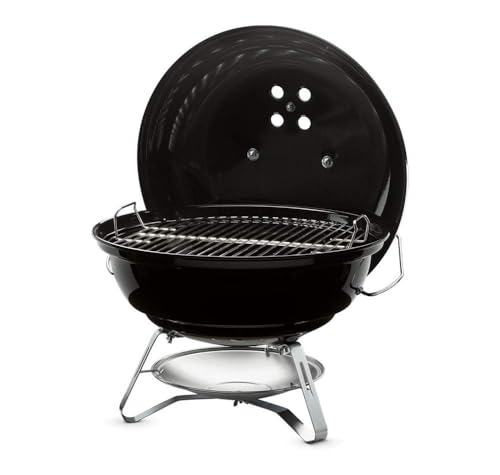
- Best where charcoal is permitted: Weber Jumbo Joe Charcoal Grill, 18-Inch, Black — check price on Amazon
- Best small kamado: Char-Griller AKORN Jr. Portable Kamado Charcoal Grill and Smoker, 14-Inch, Ash — check price on Amazon
- Best premium compact: Kamado Joe Joe Jr., 13.5-Inch Ceramic Charcoal Grill with Cast Iron Stand, Red — check price on Amazon
- Best full-size for a ground-floor patio: Weber Original Kettle Premium Charcoal Grill, 22-Inch, Black — check price on Amazon
- Best full-size upgrade: Weber Master-Touch Charcoal Grill, 22-Inch, Black — check price on Amazon
- Best for a shared courtyard: Char-Griller AKORN Kamado Charcoal Grill and Smoker, 20-Inch, Graphite — check price on Amazon
Read the full guide ↓
Disclosure: As an Amazon Associate, dailyhomedecorating.com earns from qualifying purchases. Links to Amazon on this page are affiliate links; they cost you nothing extra. Listing details such as price and availability change often, so check the current Amazon listing before you buy.
Searching for the best charcoal grill for apartments under $500 usually starts with a picture: a small grill on a small balcony, dinner for two, the city below. This guide has to start somewhere less romantic, because the honest first fact of apartment grilling is that charcoal is the fuel most likely to be restricted where you live. Many leases prohibit charcoal grills on balconies outright, many local fire codes require open-flame cooking to happen a set distance from the building — ten feet is a common figure — and many complexes ban charcoal everywhere except a shared ground-level grilling area. None of that makes this guide pointless. It makes the order of operations important: first confirm, in writing where you can, that charcoal is allowed in the specific spot you plan to use — a ground-floor patio, a designated grill station, a detached rental’s yard — and only then choose the grill. Every pick below is chosen for the spaces where charcoal genuinely is permitted, and chosen for apartment realities: small footprints, contained ash, fires that shut down completely when you close the dampers, and grills that store in a closet corner or under a cover rather than colonizing the whole patio.
With that ground rule set, the good news is real. Apartment-sized charcoal cooking is not a compromise category. The best pick here, Weber’s Jumbo Joe, is a true 18-inch kettle — 240 square inches of grate, real two-zone fire control — that happens to sit on short legs and lock its lid down for carrying. The kamado options are even more interesting: insulated grills sip charcoal, produce less smoke once they are up to temperature than an open kettle does, and seal shut at the end of the cook, which matters when your grill lives meters from your neighbor’s open window. At the other end of the list, if your “apartment” comes with a genuine ground-floor patio or a shared courtyard where management allows full-size grills, the two 22-inch Weber kettles and the Char-Griller AKORN bring backyard capacity to that setting. What this guide will not do is encourage you to grill where your lease or your fire code says no — no burger is worth a lost deposit, a fine, or worse, and charcoal’s particular risks, glowing coals that stay hot for a day or more in the ash, are exactly why the rules exist. Read the rules section before the reviews; then pick the grill that fits the space you are actually allowed to use.
In this guide
Quick Picks
Each row assumes charcoal is permitted in the space described — verify that first. Every pick was checked against its current Amazon listing; check price on Amazon for the live figure.
| Buyer type | Pick | Why it stands out | Link |
|---|---|---|---|
| Best where permitted | Weber Jumbo Joe, 18-Inch | A real kettle at tabletop size: 240 sq in, locking lid, minimal storage footprint | Check on Amazon |
| Best small kamado | Char-Griller AKORN Jr., 14-Inch | Insulated steel kamado: frugal with fuel, seals shut after cooking | Check on Amazon |
| Best premium compact | Kamado Joe Joe Jr., 13.5-Inch | True ceramic performance sized for two, deflector included | Check on Amazon |
| Best ground-floor patio | Weber Original Kettle Premium, 22-Inch | Full-size kettle cooking with an enclosed ash catcher for tidy patios | Check on Amazon |
| Best full-size upgrade | Weber Master-Touch, 22-Inch | The complete kettle with lid holder and warming rack | Check on Amazon |
| Best for a shared courtyard | Char-Griller AKORN, 20-Inch | Kamado range and efficiency for a communal grilling spot | Check on Amazon |
First, the Rules: Read This Before the Reviews
Apartment charcoal use is governed by three layers, and you need all three to say yes. The first is your lease or HOA rules, which commonly ban charcoal by name — not grills in general, charcoal specifically — because of the ash and ember risk. The second is your local fire code: many jurisdictions adopt rules modeled on national fire standards that prohibit charcoal burners on combustible balconies and within a set distance of multi-family buildings, with exceptions sometimes made for ground-floor patios on non-combustible surfaces. The third is your building’s own setup: some complexes provide a designated grilling area away from the structure, and charcoal may be welcome there even when balconies are off-limits. If any layer says no, the answer is no, and the right move is a fuel your building allows — the comparison in Best Gas Grill For Apartments Under $500 covers the most common permitted alternative — rather than a smaller charcoal grill and a hope that nobody notices. Smoke drifts, ash blows, and neighbors are close; in an apartment, “nobody noticed” is not a strategy, it is a countdown.
Where charcoal is permitted, apartment discipline still differs from backyard discipline. Ash must be treated as live for far longer than feels reasonable — charcoal ash can hide embers for 24 hours or more, so it belongs in a metal container with a lid, on a non-combustible surface, never in a plastic bin or a cardboard box, and never in the building’s trash chute the same night. The grill itself needs clearance from railings, siding and anything stored on the patio, and it should never be used under an overhang or in an enclosed porch, both for fire reasons and because charcoal produces carbon monoxide, which is why it must never, under any circumstances, be used indoors or in a garage. Storage matters too: charcoal belongs in a sealed, dry container kept away from the grill’s heat, and the grill belongs somewhere it cannot be knocked over by a guest, a pet or a gust funneling between buildings. The picks below were chosen with these realities in mind — contained ash systems, complete damper shutdown, modest fuel loads and footprints that leave room for the clearances the rules assume.
How These Picks Were Chosen
Every pick was verified on its Amazon.com listing and sat inside the $500 budget at research time — check price on Amazon for the current figure. Beyond the budget, apartment suitability drove the ranking. Footprint came first: a grill that consumes the whole patio fails the assignment no matter how well it cooks, so compact bodies, short legs and stand-mounted formats lead the list, and full-size grills appear only where a ground-floor patio or courtyard gives them a legitimate home. Ash containment came second — enclosed catchers, dump pans and tight-sealing lids — because ash is the part of charcoal cooking your neighbors and your landlord will actually experience. Third was shutdown discipline: grills whose dampers close fully, so the fire dies on your schedule and the remaining charcoal can be reused, suit apartment life far better than open designs that burn until the fuel is gone. Finally, we favored makers with real parts support, because a stored-on-a-patio grill lives a harder life and will need its grate or gasket eventually.
The 6 Picks, Reviewed in Detail
Weber Jumbo Joe Charcoal Grill, 18-Inch, Black
Who it suits: Apartment cooks with a permitted spot — a ground-floor patio, a designated grill area, a rental with a small yard — who want genuine kettle cooking in a grill that stores like luggage.
The Jumbo Joe is the rare portable that is not a toy. Weber builds it from the same porcelain-enameled steel as its full-size kettles, around an 18-inch grate with 240 square inches of cooking area — enough for a real dinner for two to four: a spatchcocked chicken, a full load of burgers, two-zone cooking with a genuine indirect side. Bowl and lid dampers give you the same air control a big kettle offers, which means this little grill sears hard, roasts gently and shuts down completely when the dampers close. The Tuck-N-Carry lid lock is the apartment feature hiding in plain sight: it clamps the lid for transport, yes, but it also means the whole cooker moves as one sealed unit from storage to grilling spot and back, with no loose lid to juggle through a doorway. An ash catcher beneath the bowl keeps the leavings contained, and the short legs are designed for a sturdy table or stand at the grilling area rather than for the ground.
Ownership in a small home is where the Jumbo Joe earns its top ranking. It weighs roughly what a full grocery bag does, so carrying it to a courtyard grill station or out to a permitted patio corner is a one-trip, one-hand errand. It stores on a closet shelf or in a corner under its cover, not as patio furniture you must design around. It burns a small load of charcoal per cook — a couple of handfuls rather than a chimney overflowing — which means less smoke during startup, less ash afterward, and a charcoal bag that lasts a small household a long season. Its honest limits are size and stance: 240 square inches will not feed a party, two-zone space is tight for large indirect items, and it needs a stable, heat-safe surface to sit on, because those short legs put the bowl close to whatever is underneath. Use it on the metal stand or table your grilling area provides — never on a wooden railing, a plastic table or a balcony floor — and respect the clearance rules in the section above. For the permitted apartment spot, nothing else in this guide fits the life as neatly; readers setting up that small outdoor corner will find the ground-level picks in Best Outdoor Rug For Apartments Under $500 chosen with the same footprint discipline.
- 240 sq in of genuine kettle cooking in a tabletop format that stores on a shelf.
- Tuck-N-Carry lid lock: the grill moves and stores as one sealed unit.
- Porcelain-enameled bowl and lid, full damper control, contained ash catcher.
Honest limitation: It seats a small household, not a gathering, and it requires a proper heat-safe stand or table — it is not a floor grill and never belongs on combustible surfaces.
Choose it if your permitted space is small and your household is too. Skip it if you regularly cook for five or more — step up to the 22-inch kettles below, if your space and your rules allow them.
Char-Griller AKORN Jr. Portable Kamado Charcoal Grill and Smoker, 14-Inch, Ash
Who it suits: Small households in permitted spaces who cook slowly as often as they grill, and who value a fire that sips fuel and seals itself shut when dinner is done.
The AKORN Jr. shrinks the kamado idea to apartment scale without discarding what makes it work. The body is triple-wall insulated steel in the classic egg shape, holding 155 square inches of cooking area on cast iron grates. Insulation changes the apartment math in three ways. First, fuel: a small load of lump charcoal runs a long, low cook, so you store less fuel and produce less ash. Second, smoke behavior: once a kamado is up to temperature and its dampers are set, it burns clean and steady rather than billowing, which is a genuine courtesy when other people’s windows are near. Third, shutdown: close the top and bottom dampers and the sealed body starves the fire completely, leaving unburned lump for next time and a grill that goes cold on your schedule — the single most apartment-friendly behavior a charcoal cooker can have. The locking lid and compact cart-less body make it a realistic carry to a shared grilling area, and its temperature range covers the full kamado repertoire, from low smoking to a fierce sear for two steaks.
The trade-offs are capacity and material. At 155 square inches, this is a cooker for two, occasionally three: a pork butt fits, a whole brisket does not, and a rib rack needs cutting. Steel, even triple-walled and insulated, is not ceramic — it will eventually show rust if the finish is chipped and the grill lives uncovered in the weather, so the cover is part of the purchase, not an accessory. Assembly is a small project, and the dampers reward a patient first month while you learn their settings. None of that dents its apartment logic. Among small charcoal cookers, the Jr. is the one that behaves most like a sealed appliance and least like an open fire, and in a permitted apartment setting that temperament is worth more than raw grate size. It pairs naturally with a compact fire feature for the same small footprint — see Best Fire Pit For Apartments Under $500 for options sized with the same restraint, where local rules allow them.
- Insulated steel kamado: 155 sq in, tiny fuel loads, long steady cooks.
- Sealed shutdown — dampers close fully, fire dies on schedule, lump is reusable.
- Locking lid and a body one person can carry to a shared grilling area.
Honest limitation: Strictly a small-household cooker, and the steel body wants a cover and basic care to keep rust away over the years.
Choose it if you smoke as much as you grill and your permitted spot rewards a tidy, sealed fire. Skip it if your typical cook is four or more people — the Jumbo Joe’s wider grate will serve you better.
Kamado Joe Joe Jr., 13.5-Inch Ceramic Charcoal Grill with Cast Iron Stand, Red
Who it suits: Couples and solo cooks with a permitted ground-level spot who want the best-built small charcoal cooker in this budget, and who will keep it in one place rather than carry it around.
Everything said about the AKORN Jr.’s shape applies here in ceramic, and ceramic changes the feel of ownership. The Joe Jr.’s thick ceramic body banks heat so effectively that temperature swings barely register, the gasketed lid seals with a soft finality, and the whole cooker has the dense, permanent quality of a masonry oven in miniature. The cooking area is about 148 square inches on a 13.5-inch stainless grate — dinner for two, cooked beautifully — and the box includes the ceramic heat deflector that turns the little egg into a genuine smoker and roaster, plus an ash tool, so the full repertoire works from the first weekend. Air control is precise in the way ceramic rewards: small damper movements, long patience, steady results. For an apartment household that grills twice a week for two people, this is not a compromise purchase; it is arguably the best-matched cooker in the entire guide, sized exactly to its job.
The cautions are weight and fragility, and in an apartment they compound. Ceramic is heavy — this small grill is a committed two-hand lift, awkward on stairs, and genuinely unhappy about being moved often. It is also breakable in the one way steel is not: a hard knock in a doorway or a drop from a stand can crack what a kettle would merely dent. So the Joe Jr.’s apartment is a specific one: a ground-floor patio or a stable corner of a shared area where it can live under its cover, cook in place, and be admired rather than transported. If your permitted spot is up two flights or across a parking lot, the Jumbo Joe and AKORN Jr. above are the honest recommendations, and this one is the grill to want later. Its price positioning near the top of this budget — check price on Amazon — buys the ceramic and the Kamado Joe ecosystem, and for the stationary small household, that is a fair trade stated plainly.
- Genuine ceramic kamado with deflector included: smokes, roasts and sears for two.
- Exceptional heat stability and a tight, gasketed seal.
- Stand-mounted format that lives happily in a ground-floor patio corner.
Honest limitation: Heavy and fragile for a “portable” grill — it wants a permanent spot, not a commute — and its grate is the smallest in this guide.
Choose it if your permitted spot is stationary and your household is small. Skip it if the grill must travel to its cooking spot; weight and ceramic make that a chore and a risk.
Weber Original Kettle Premium Charcoal Grill, 22-Inch, Black
Who it suits: Apartment households whose lease and layout genuinely accommodate a full-size grill — a ground-floor patio on a non-combustible surface, a private yard behind a rental unit, or a courtyard where management permits kettle grills.
If your permitted space can hold it, the 22-inch kettle is the most capable apartment grill per dollar in this guide, and the Premium is the version to buy. Its 363 square inches cook for a gathering without batches, the hinged grate lets you refuel mid-cook, the built-in lid thermometer keeps you honest, and the One-Touch system sweeps ash into an enclosed, removable catcher — the feature that matters most in a shared environment, because ash that stays in the can never films a neighbor’s patio furniture. The porcelain-enameled bowl and lid tolerate outdoor storage under a cover, the wheels let one person reposition it for the clearances your space requires, and Weber’s parts support means a tired grate in year six is a small order, not a new grill. It is, in short, the backyard standard, admitted to this guide only for the apartment settings that can honestly host it.
Those settings deserve one more clear statement, because this is the pick most likely to be bought into the wrong home. A 22-inch kettle does not belong on a small balcony: not because of its diameter alone, but because safe clearance from railings and siding, room to work around a hot bowl, and a legal place to put it rarely coexist in that footprint — and in most multi-family buildings the lease or fire code settles the question anyway. Buy this grill for the ground floor, the yard or the courtyard, and it is a superb apartment purchase that will follow you to your next home unchanged. Readers warming a ground-floor patio into the evening will also appreciate Best Outdoor Heater For Apartments Under $500, chosen for the same close-quarters settings.
- Full 363 sq in kettle capacity with hinged grate and lid thermometer.
- Enclosed ash catcher — the tidiest ash story of any full-size grill here.
- Porcelain enamel, wheels for repositioning, and unmatched parts support.
Honest limitation: It needs a legitimate full-size footprint with real clearances — which most balconies cannot offer and many leases forbid outright.
Choose it if your apartment life includes ground-level outdoor space where charcoal is permitted. Skip it if your only outdoor space is a balcony; choose from the compact picks above instead.
Weber Master-Touch Charcoal Grill, 22-Inch, Black
Who it suits: The same ground-floor and courtyard households as the Premium, who cook often enough that the flagship kettle’s daily conveniences will be used every single time.
The Master-Touch adds three things to the Premium’s foundation, and in a shared-space setting each one pulls its weight. The Tuck-Away lid holder gives the hot lid a designated parking place angled behind the bowl — on a patio where space is choreographed, never wondering where the lid goes is a safety feature as much as a convenience. The warming rack adds a second, gentler zone for buns, vegetables and finished pieces, effectively expanding what a single cook can serve without a second grill. And the Gourmet BBQ System grate accepts inserts — a griddle for smash burgers and breakfast, a sear grate, a wok — that let one grill cover menus a small home has no room to cover with separate equipment. Underneath, the same enclosed One-Touch ash system keeps the patio clean, and the porcelain enamel shrugs off the weather between cooks.
Why rank it below the Premium in this guide specifically? Because apartment value math differs from backyard math. The Master-Touch’s upgrades are about cooking experience, and they are worth their premium to a frequent cook — but the Premium delivers identical food with the same tidy ash system for less, and in a small home the difference buys the cover, the chimney and the charcoal storage bin that apartment charcoal discipline genuinely requires. If you grill three times a week, buy the flagship and enjoy it for a decade. If you grill twice a month, the honest apartment answer is the Premium plus its supporting kit. Either way, the same rule from the top of this guide governs both: full-size kettles belong only where the lease, the fire code and the physical clearances all agree.
- Lid holder, warming rack and insert-ready grate on the full 363 sq in kettle.
- One insert system covers griddle, sear and wok cooking in a one-grill home.
- The same enclosed ash system and enamel durability as the Premium.
Honest limitation: The largest footprint-per-household on this list alongside the AKORN, with a premium that buys convenience rather than capacity.
Choose it if you cook constantly and your permitted space is genuinely full-size. Skip it if the Premium plus accessories serves your actual routine — for most apartment cooks, it does.
Char-Griller AKORN Kamado Charcoal Grill and Smoker, 20-Inch, Graphite
Who it suits: Apartment communities and households with a shared, ground-level grilling area, where one efficient cooker can serve a small gathering and then seal itself shut and roll away.
The full-size AKORN earns its place in an apartment guide through behavior, not size. Its triple-wall insulated steel body holds 314 square inches of main cooking area — 445 with the warming rack — yet it burns charcoal with a kamado’s thrift, so a shared courtyard cook for six uses less fuel and makes less ash than the same dinner on an open kettle. The EasyDump ash pan empties in seconds into a metal container, the locking lid keeps the cooker sealed between uses, and the cart’s large wheels make the trip from storage corner to grilling area a one-person job. Temperature range is the other courtyard virtue: the same grill that holds a low smoking temperature all afternoon for a shared pork shoulder will run fiercely hot for pizzas and steaks at a community cookout, which means one grill covers the building’s whole repertoire.
Its apartment limits are the obvious ones. It is a full-size appliance that needs a real home — a storage corner, a courtyard, a ground-floor patio — and it is not a balcony grill under any reading of any lease. The steel body wants its cover on between uses, especially in a shared space where nobody owns the maintenance, and its cast iron grates want a light oiling habit to stay ahead of rust. Assign it a home and a cover, and it becomes the hardest-working shared grill a small community can own inside this budget; the wider small-space field at a lower tier is surveyed in Best Charcoal Grill Under $300.
- 314 sq in main grate (445 total) with kamado fuel efficiency and range.
- EasyDump ash pan and locking lid — tidy in shared spaces.
- Rolls easily on its cart from storage to the grilling area.
Honest limitation: A full-size footprint that needs a courtyard or ground-floor home, and a steel body that depends on its cover in communal storage.
Choose it if your building life includes a shared grilling area that can host a real cooker. Skip it if your space is private and small — the AKORN Jr. is this grill’s idea at your scale.
Comparison Table
| Product | Type | Cooking area | Best apartment use | Link |
|---|---|---|---|---|
| Weber Jumbo Joe 18″ | Tabletop kettle | 240 sq in | Permitted patios and grill areas; stores on a shelf | Check on Amazon |
| Char-Griller AKORN Jr. 14″ | Insulated steel kamado | 155 sq in | Sealed, frugal cooking for two | Check on Amazon |
| Kamado Joe Joe Jr. 13.5″ | Ceramic kamado | ~148 sq in | Stationary ground-floor premium for two | Check on Amazon |
| Weber Original Kettle Premium 22″ | Kettle | 363 sq in | Ground-floor patios and rental yards | Check on Amazon |
| Weber Master-Touch 22″ | Kettle | 363 sq in | Frequent cooks with full-size permitted space | Check on Amazon |
| Char-Griller AKORN 20″ | Insulated steel kamado | 314 sq in (+ rack = 445) | Shared courtyards and community grill areas | Check on Amazon |
How to Choose the Best Charcoal Grill for Apartments Under $500
Begin with permission, in this order: read your lease for the word “charcoal,” check your city or county fire code for balcony and distance rules, and ask your building management where grilling is allowed — ideally getting the answer in writing. Only a space that passes all three is a candidate, and the space then dictates the grill. A designated grill area or ground-floor patio with room to move points to the Jumbo Joe or AKORN Jr. if you must carry the grill to it, or to a kettle or full AKORN if the grill can live there. A private rental yard behaves like a small backyard and can host anything on this list. A balcony, in the overwhelming majority of multi-family buildings, hosts nothing on this list — and the correct purchase there is a permitted fuel, not a smaller charcoal fire.
Next, plan the unglamorous logistics before choosing by grate size. Where will ash go, in a lidded metal container, and where will that container sit while it cools for a day or more? Where will charcoal live — sealed, dry, and away from heat? Where will the grill store, and does that spot keep it stable, covered and out of walkways? How far is the carry from storage to cooking spot, and does the grill’s weight make that trip realistic weekly? The answers quietly eliminate most wrong purchases: heavy ceramic fails a third-floor carry, an open ash system fails a tidy shared patio, and a full-size kettle fails a closet. What survives that checklist will also be the grill you still enjoy in year three, because apartment grilling succeeds or fails on logistics far more than on sear marks.
Common Mistakes Apartment Grill Shoppers Make
The first and most serious mistake is buying first and checking the lease later — or never. Charcoal is the most commonly restricted fuel in multi-family housing, and discovering the ban after the grill is assembled turns a purchase into a return, a resale or a violation. The second mistake is assuming a small grill is automatically a permitted grill: rules regulate the fuel and the fire, not the diameter, and a 14-inch charcoal grill on a prohibited balcony is still prohibited. The third is mishandling ash — dumping warm ash into a dumpster, a plastic bin or a bag the same evening. Ash insulates embers; treat it as hot for at least a full day, in metal, on a non-combustible surface. The fourth is cooking under an overhang, in a screened porch or — worst of all — bringing a grill inside during rain: charcoal’s carbon monoxide risk is absolute, and no weather justifies it. The fifth is forgetting the neighbors in the other direction: a chimney starter’s first ten minutes are the smokiest of any cook, so timing, placement and a quick-settling fire are courtesies that keep a permitted setup permitted.
A Safe Apartment Cook, Step by Step
For readers whose space passed the permission checks, here is the routine that keeps a permitted apartment setup welcome — with management, with neighbors and with your own conscience. The day before, confirm the cook itself: check the weather for wind that would carry smoke and ash toward open windows, and glance at your charcoal store so the cook never becomes an excuse for a rushed, oversized fire. An hour before cooking, set the grill in its permitted spot with its full clearances, on its proper surface, and stage the kit beside it: chimney, charcoal measured to the meal rather than the bag, tongs, a spray bottle of water for stray flare-ups on the grate’s edge, and the lidded metal ash container waiting empty for tomorrow. Light the chimney in the grill’s own bowl where the design allows, or on the grill’s grate, so the smokiest ten minutes of the cook happen in the most contained place you have — and time them, where you can, for when neighbors’ windows are likeliest closed.
During the cook, small-space discipline is mostly about containment. Keep the lid on and the dampers doing the work; a closed grill smokes less, cooks better and keeps ash where it belongs. Work over the bowl, not over the patio — every transfer of food, every scrape of the grate, happens above the grill so drips and debris land in the fire’s house, not on shared concrete. If a gust lifts ash or the fire flares beyond the grate, the answer is the lid and thirty seconds of patience, never a relocation of a hot grill. When the last piece comes off, close every damper fully — this is the shutdown your grill was chosen for — and leave the cooker sealed and untouched. The next day, not the same evening, open it cold: sweep or dump the ash into the metal container, close that lid, and set it on its non-combustible spot for another full day before the ash is bagged for the trash. Wipe the grate area, check the patio for strays, and store the grill in its place. That routine, repeated without shortcuts, is what “responsible apartment grilling” actually looks like — and it is also, not coincidentally, the routine that keeps a good landlord, a good HOA and good neighbors good.
Talking to Your Landlord and Neighbors
Permission, in apartment life, is partly paperwork and partly relationships, and the second half deserves the same care as the first. If your lease is ambiguous — silent on grills, or banning “open flames” in language that may or may not mean your kettle — ask before you buy, in writing, describing exactly what you propose: the grill’s size, its fuel, the specific spot, the distance from the building, and your ash routine. A specific proposal gets a specific answer, and a written yes is worth more than a hallway maybe. If the answer is yes with conditions, treat the conditions as part of the purchase: the designated area, the hours, the storage spot. If the answer is no, accept it as final information rather than an opening bid — the fastest way to lose a good apartment is to become the tenant who litigates a grill.
Neighbors are the other constituency, and they are won with the same specificity. Tell the households nearest your grilling spot what you are doing before the first cook, not during it; people object to surprises far more than to smoke. Learn the wind the way sailors do — on the evenings it carries your startup smoke toward a neighbor’s open window, a kamado’s smaller chimney load or a later start is a cheap courtesy — and share the results occasionally, because a neighbor who has eaten from the grill experiences its smoke as anticipation rather than intrusion. Keep the patio cleaner than the rules require, the ash can lidded and invisible, and the grill stored as though it were furniture. Apartment charcoal, where it is allowed at all, survives on exactly this reputation: one careless tenant with a smoking balcony grill writes the ban that the next ten careful tenants live under. Be the tenant the policy survives because of.
Final Recommendation
Confirm permission first — lease, fire code, management — and let the permitted space choose the grill. For most apartment cooks with a legal spot, the Weber Jumbo Joe is the answer: real kettle cooking, a shelf-sized storage footprint and a carry you will never dread. If you smoke often and cook for two, the AKORN Jr.’s sealed, frugal kamado behavior is the smartest apartment temperament in this guide, and the Joe Jr. is its premium, stationary counterpart. Households with ground-floor patios or courtyards can honestly host the full-size picks — the Kettle Premium for value, the Master-Touch for daily convenience, the AKORN for shared-space range. And if your building’s answer to charcoal is no, believe it, and put this budget toward the best permitted alternative instead. A grill you are allowed to use every week beats a better grill you are not, every single time.
Frequently Asked Questions
Are charcoal grills allowed in apartments?
Often not on balconies, and sometimes not at all. Many leases ban charcoal by name, and many fire codes prohibit it on combustible balconies and within a set distance of multi-family buildings. Ground-floor patios and designated grilling areas are the usual exceptions. Check your lease, your local fire code and your management before buying — all three must allow it.
What is the safest type of charcoal grill for an apartment setting?
Where charcoal is permitted, the safest choices are small, sealed and contained: a compact kettle with a locking lid like the Jumbo Joe, or an insulated kamado like the AKORN Jr. whose dampers close fully and shut the fire down completely. Enclosed ash handling and a lidded metal ash container complete the setup.
Can I use a charcoal grill on my balcony if it is very small?
Size does not change the rule. Restrictions target charcoal fuel and open flame, not grill diameter, and most balconies in multi-family buildings fail on lease terms, fire-code distance, clearance or all three. Unless your lease and fire code explicitly permit charcoal on your specific balcony, treat the answer as no.
How do I dispose of charcoal ash in an apartment?
Let it cool in the closed grill, then move it to a metal container with a tight lid, set on a non-combustible surface away from the building, and wait at least 24 to 48 hours before bagging it for the trash. Never use plastic containers, never use the building’s trash chute with fresh ash, and never store ash indoors.
How long does charcoal stay hot after cooking?
Longer than intuition suggests. In a closed grill, coals can remain hot for many hours, and ash can conceal live embers for a day or more. Kamados with tight seals smother a fire fastest; open kettles take longer. Plan storage and ash handling around the slowest case, not the average one.
Can I keep a charcoal grill if I only use it at a park or a friend’s house?
Yes, and for many apartment dwellers this is the happiest arrangement of all: the compact picks in this guide — the Jumbo Joe and the AKORN Jr. especially — were designed to travel, with locking lids that keep ash and coals contained in transit once fully cold. Store the grill clean and dry at home, cook where charcoal is welcome, and you get the full charcoal experience with none of the lease risk. Just never transport a grill that is still warm, and let it cool completely at the cooking site before it goes in a car.
What if my building bans charcoal — what should I buy instead?
Put the budget toward the best fuel your building permits, most often a compact gas or electric grill sized for your space, and keep the charcoal dream for a home where it is allowed. The cooking techniques in this guide — two-zone heat, patience, a good thermometer — transfer to whatever grill you are permitted to use.


