Where to buy
Every linked pick in this guide to the best charcoal grill for small patios under $100 is sold on Amazon — check the latest price, availability and delivery there before you buy. Orders are placed on Amazon. We may earn a commission from qualifying purchases. One pick below is covered in prose only, with the reason stated in its review, because its current Amazon pricing sits outside this budget tier.
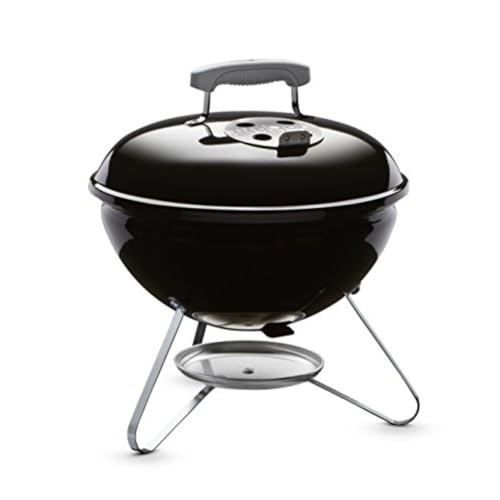
- Best for small patios: Weber Smokey Joe Portable Charcoal Grill, 14-Inch, Black — Check on Amazon
- Cuisinart 14-Inch Portable Charcoal Grill (CCG-190RB, Red) — Check on Amazon
- Weber Go-Anywhere Charcoal Grill — Check on Amazon
- Gas One 14-Inch Portable Barbecue Grill (CG-14) — Check on Amazon
- Weber Jumbo Joe Charcoal Grill, 18-Inch, Black — Check on Amazon
- Char-Griller Patio Pro Charcoal Grill and Smoker, Model E1515 — prose only, see its review below for why
Read the full guide ↓
Disclosure: As an Amazon Associate, dailyhomedecorating.com earns from qualifying purchases. Links to Amazon on this page are affiliate links; they cost you nothing extra. Listing details such as price and availability change often, so check the current Amazon listing before you buy.
A small patio does not ask for a smaller appetite; it asks for a grill whose whole life — cooking, cooling, storing — fits inside a few square feet without colonising them. The best charcoal grill for small patios under $100 is therefore judged by a stricter accounting than any other guide in this series: the footprint on the slab, the clearance it needs from the wall and the furniture, the table it stands on, the corner it stores in, and the smoke it makes in a space where the neighbours’ windows and your own sliding door are both close enough to care. The good news is that this budget tier is unusually kind to small patios. Nearly everything honestly built under the ceiling is a compact tabletop or portable format, so the contest is not about finding a small grill — it is about choosing among small grills by how gracefully each one lives at patio scale.
Our headline pick is the Weber Smokey Joe, the 14-inch kettle whose combination of tiny footprint, sealed lid-lock carry and real kettle cooking has made it the default small-space grill for decades. Around it, the list arranges the alternatives by patio logic: the Cuisinart for the smallest storage and the firmest budget, the Go-Anywhere for patios whose storage is a flat shelf, the Gas One for the least spend of all, and the Jumbo Joe as the one deliberate step up — the grill for the small patio whose owners cook for four and can spare it a real corner. One familiar name, the Char-Griller Patio Pro, appears in prose only: its current Amazon pricing sits above this tier’s ceiling, and its cart format is, in any case, the one shape a genuinely small patio should think hardest about, for reasons its review makes plain.
Two ground rules govern everything below. First, clearances are not decoration: any charcoal grill needs open air above it, distance from siding, fences and stored items, and a stable, heat-tolerant surface under it — on a small patio those distances, not the grill’s diameter, decide where cooking can happen, and renters should check their lease and local fire rules for patio grilling just as apartment dwellers must, since many rules treat patios and balconies as one question. Second, a small patio stays pleasant only if the grill leaves it when the cooking ends — which is why storage shape carries as much weight in these reviews as grate size. Readers whose space is a full backyard rather than a patio should start from our Best Charcoal Grill For Backyards Under $100 guide instead, and those furnishing a small patio from scratch will find the seating side of the puzzle in the Best Adirondack Chair Under $100 roundup.
In this guide
Quick Picks
In a hurry? This table matches each grill to the small-patio situation it fits.
| Buyer type | Pick | Why it stands out | Link |
|---|---|---|---|
| Best for small patios | Weber Smokey Joe, 14-Inch | Kettle cooking in the smallest quality footprint; lid locks for corner storage | Check on Amazon |
| Best for tiny storage and budgets | Cuisinart 14-Inch Portable Charcoal Grill (CCG-190RB) | Featherweight, latches shut, dual vents — disappears onto a shelf | Check on Amazon |
| Best flat storage | Weber Go-Anywhere Charcoal Grill | Rectangular case shape stores on a shelf or in a storage bench | Check on Amazon |
| Cheapest honest option | Gas One 14-Inch Portable Barbecue Grill (CG-14) | Sealing lid and ash catcher for the least money in the guide | Check on Amazon |
| Best if you cook for four | Weber Jumbo Joe Charcoal Grill, 18-Inch | 240 square inches — the one step up a small patio can still host | Check on Amazon |
| Standing cart option | Char-Griller Patio Pro E1515 | Cart and shelf format — but a permanent footprint, and currently priced above this tier on Amazon | Prose only — see review |
How These Picks Were Chosen
Small-patio criteria reordered the usual priorities. Footprint came first — not just the grill’s diameter, but the working footprint: grill, plus the table it stands on, plus the cook’s standing room, plus safe clearance on every side. Storage came second, measured honestly: where does this grill live on a February Tuesday, and does that place exist on a small patio or in the home behind it? Sealed lids and locking latches scored heavily, because a grill stored indoors or in a patio storage box must keep its ash and smell inside itself. Smoke manners came third — small, controllable fires with lids that close fully — and only then did the conventional virtues of capacity, venting and build get their say.
Every specification was verified against manufacturer data, and every linked pick had a price sighting at or under the tier ceiling on its exact Amazon listing at research time; those sightings live in the notes accompanying this guide, and readers should recheck the listing before buying, because grill pricing moves with the season. The Char-Griller Patio Pro failed the price test — current Amazon and maker-store pricing above the ceiling — and is reviewed in prose with that explained, because its name promises patio suitability that its footprint only sometimes delivers. We also checked for CPSC recalls covering these grill models and found none for any grill reviewed here; recent recalls in this category concern accessories such as wire-bristle brushes, hence the bristle-free cleaning advice in the care section. Dimensions quoted for the picks are the makers’ figures, rounded; measure your own patio furniture and storage before ordering, because in this category a centimetre is a decision.
Finally, we discounted the patio photography effect. Listings show compact grills on bijou patios with the furniture cropped out; real small patios hold a table, two chairs, a plant stand and a storage box that were there first. Each review below therefore talks about the grill’s life among furniture — where it stands, what it displaces, and how the patio works on the five days a week the grill is not cooking.
The 6 Best Charcoal Grill for Small Patios Under $100 — Reviewed
1. Weber Smokey Joe Portable Charcoal Grill, 14-Inch, Black — Best for Small Patios
Who it suits: Small-patio owners who cook for one or two, entertain a third or fourth occasionally, and need the grill to vanish — into a storage box, a cupboard, a corner — when dinner ends.
The Smokey Joe’s patio case is proportion. The bowl is fourteen inches across, the whole grill stands on a side table or a low stand in a footprint smaller than a patio chair’s, and in current specification it weighs under nine pounds with the Tuck-N-Carry lid lock clipping the lid down — so the trip from storage to table is one hand, and the trip back, once the grill is fully cold, is the same hand. What you cook on is not a toy version of grilling: the porcelain-enamelled kettle bowl, aluminium dampers top and bottom, and 147 square inches of grate deliver the full kettle repertoire — two steaks with room to breathe, four burgers, a batch of skewers, vegetables at the edges — with a small chimney of fuel that lights fast, cooks a meal and burns down without leaving the patio smelling of bonfire for the evening. On a small patio, that modest fire is a social feature: less smoke over the fence, less heat radiating into the seating, less ash to manage on a slab you also walk on barefoot.
Pros: the smallest quality footprint in the guide; sealed, one-hand storage; enamel that lives happily in a storage box or under a cover; fuel economy that suits patio-scale cooking. Honest limitation: capacity is the trade — four-person cooking is batch cooking, and a whole chicken is a squeeze. Ash is tip-out rather than pan-emptied, so the patio routine needs a small metal bin kept at the station, used only when the ash is completely cold.
Choose it if your patio is genuinely small and your table is two. Skip it if four-person weeknight cooking is the norm — the Jumbo Joe below is your step up, if the patio can spare its corner. Check on Amazon
2. Cuisinart 14-Inch Portable Charcoal Grill, CCG-190RB — Best for Tiny Storage and Budgets
Who it suits: Patio owners whose storage is a shelf in a storage bench or a cupboard indoors, first-time charcoal cooks, and anyone furnishing a small patio where the grill must compete with plants, seating and a bicycle for every inch.
The Cuisinart is the lightest object in this guide — a matter of a few pounds — and on a small patio, weight is a layout feature: it can live on a high shelf, come down one-handed, cook on the patio table, and go back up after cooling, leaving the slab exactly as it was. Its three lid latches seal it shut for that shelf life, so no ash dust escapes onto stored cushions. The 14-inch chrome-plated grate and dual vents — lid and base, a pairing many budget grills skip — cook the two-person repertoire directly and well: burgers, sausages, skewers, corn, a pair of chicken breasts with the lid doing the finishing. The maker states a generous area for the size; by grate diameter it is a true 14-inch grill, and we judge it as such. An ash catcher plate beneath the firebox is a patio-specific kindness, keeping the table and slab beneath cleaner than open tabletops manage.
Pros: storage that amounts to a shelf; latching lid; dual-vent control at a budget price; ash catcher for tidy slabs. Honest limitation: thin steel means the fire fades faster and the finish ages sooner than enamel — a multi-season grill whose life depends on being stored dry and empty. A grill this light also demands a stable, level, heat-safe surface; on a small patio that means the metal or stone-topped table, never the plastic side table.
Choose it if storage and budget lead. Skip it if you want a decade from the purchase — the Smokey Joe is the same footprint with enamel’s patience. Check on Amazon
3. Weber Go-Anywhere Charcoal Grill — Best Flat Storage
Who it suits: Small patios whose storage is flat — a storage bench’s interior, a shelf in a utility cupboard, the top of a wardrobe — and owners who split cooking between the patio and the road.
Round grills store like buckets; the Go-Anywhere stores like a briefcase, and on space-starved patios that geometry wins arguments. The rectangular enamelled body, roughly twenty-one inches long, holds about 160 square inches of cooking area; the legs fold up and lock the lid for carrying, then fold down to stand the grill on the patio table. Inside the body there is room for the chimney starter and tools, so the entire grilling kit occupies one flat box in the storage bench — on a small patio, consolidating the kit is worth as much as the grill itself. As a cooker it suits patio menus beautifully: the long grate takes skewers, sausages, corn and fish in rows, twin lid dampers steer heat along its length, and the closed lid keeps the small fire mannerly in close quarters. The build is Weber enamel, with the parts support to match, so the flat box is also a long-lived one.
Pros: flat-pack storage nothing round can match; the kit stores inside the grill; enamel durability; a grate shape made for patio menus. Honest limitation: it sits at the top of this tier’s pricing — you are paying for the format — and the low lid rules out tall food. Its tabletop footprint, while flat, is longer than the round grills’, so measure the table it will cook on, not just the shelf it will sleep on.
Choose it if your storage is a bench or a shelf. Skip it if your patio table is tiny and round — the Smokey Joe sits on less table. Check on Amazon
4. Gas One 14-Inch Portable Barbecue Grill, CG-14 — Cheapest Honest Option
Who it suits: Small-patio owners on the strictest budget, occasional grillers, and anyone who wants a patio grill for a season’s experiment before committing to a name brand.
The CG-14’s patio virtues are its sealing lid and its price. The three-point locking lid keeps a stored grill’s ash and odour inside itself — essential when the storage is a patio box shared with cushions — and the dual venting and ash catcher give it tidier manners than its price suggests. The maker states about 150 square inches around the 14-inch grate: two people’s cooking, four in batches, hot and direct in the tabletop way. It stands on the same sturdy table the other tabletops need, stores on the same shelf, and costs less than the patio dinner it cooks. For the occasional patio cook — a few Saturdays a summer — that is a complete and rational proposition, and if the experiment proves the hobby, its replacement by a Weber later is a planned upgrade rather than a failure.
Pros: the lowest price in the guide; a genuinely sealing lid for shared storage; ash catcher; dual vents. Honest limitation: light-gauge steel and basic hardware — the weakest heat retention here and a build meant for occasional duty. On a small patio it also shares the tabletops’ universal condition: it is only as safe as the surface and clearances you give it.
Choose it if price is the first criterion and use will be occasional. Skip it if the patio grill will work weekly — the Cuisinart is the smarter minimum. Check on Amazon
5. Weber Jumbo Joe Charcoal Grill, 18-Inch — Best If You Cook for Four
Who it suits: The small patio with a family attached — owners who cook for three or four most weeks and can dedicate a real corner, on a proper table, to a grill that stays out under a cover.
The Jumbo Joe is this guide’s deliberate exception to smallness, included because some small patios need family capacity more than they need floor space. Its 18-inch enamelled kettle bowl gives 240 square inches — eight burgers in one load, a true two-zone fire — in a body about twenty inches across that stands on a sturdy table and, at roughly eighteen pounds, still moves when the patio needs rearranging. The Tuck-N-Carry lid lock keeps the lid clipped against patio breezes and hooks it to the bowl while you cook, keeping the hot lid off the slab and the furniture. The honest cost is presence: this grill, its table and its clearances claim the patio’s best corner permanently, and on a truly tiny slab that claim can crowd out the seating it exists to feed. Measure before you fall for the capacity: if the patio holds the Jumbo Joe’s station and still seats your household comfortably, it is the most capable small-patio grill here; if it does not, it is a beautiful frustration.
Pros: family capacity with real zones; enamel longevity outdoors; lid management made for close quarters. Honest limitation: the largest working footprint of any linked pick — grill, table and clearances together — and the price sits at the top of the tier. It also radiates a bigger fire’s heat and smoke, which close neighbours will notice more than a 14-inch fire’s.
Choose it if you cook for four and the patio can spare the corner. Skip it if the patio seats two and stores less — every pick above serves that life better. Check on Amazon
6. Char-Griller Patio Pro Charcoal Grill and Smoker, Model E1515 — Prose Only
Who it suits: Strictly, the larger end of “small patio” — a terrace or courtyard corner where a standing cart grill can live permanently, with room to roll it out and work around it. For the genuinely small patio, this review is a cautionary entry, included because the model’s name sends patio shoppers to it.
Two facts govern the Patio Pro here. The first is price: at verification, its Amazon pricing sat above this guide’s ceiling, as did its maker’s own store pricing, so it is covered in prose rather than linked — check price on Amazon, and know that above-ceiling money competes with the next tier’s full-size kettles. The second is footprint physics. The Patio Pro is a barrel on a wheeled cart with a wooden side shelf: roughly fifty pounds of grill that must live where it cooks, claiming its rectangle of patio every day of the year, cooking or not. What it returns for that claim is real — 250 square inches of cast-iron grate, standing working height, a shelf for plates, an ash pan — and on a courtyard-sized patio that trade can be right. On a small slab, the same rectangle is the difference between a patio that seats four and a patio that seats two and a grill. The name says patio; the dimensions say which patios.
Pros: cast-iron searing; standing height and a real shelf; the largest stated area here. Honest limitation: a permanent footprint, above-tier current pricing, powder-coat that wants chip care, and no storage story at all — it does not pack, latch or shelve.
Choose it if your “small patio” is a courtyard corner with permanent space and you find it in tier. Skip it if the patio must return to seating when dinner ends — that requirement defines every other pick in this guide. Hosts stepping up should compare it against the standing grills in the Best Charcoal Grill Under $200 guide before paying above-ceiling prices.
Comparison Table
| Grill | Format | Cooking area | Storage story | Patio footprint | Watch out for |
|---|---|---|---|---|---|
| Weber Smokey Joe 14-Inch | Tabletop kettle | 147 sq in | Corner or storage box; lid locks | Smallest quality footprint | Two-person loads; tip-out ash |
| Cuisinart CCG-190RB | Tabletop | 14-inch grate | Shelf; lightest here, latches shut | Side-table sized | Thin steel; needs a stable surface |
| Weber Go-Anywhere | Rectangular portable | About 160 sq in | Flat — bench or shelf; stores its tools | Long but flat | Needs a longer table; low lid |
| Gas One CG-14 | Tabletop | About 150 sq in (maker-stated) | Storage box; three-point sealing lid | Side-table sized | Occasional-use build |
| Weber Jumbo Joe 18-Inch | Tabletop kettle | 240 sq in | Corner under cover; lid locks | A dedicated corner with table | Crowds a tiny slab |
| Char-Griller Patio Pro E1515 | Barrel on cart | 250 sq in | Lives outdoors permanently | A permanent rectangle | Above this tier on Amazon — prose only |
Laying Out a Small Patio Around a Grill
The station takes one corner, and only one
On a small patio the grill station should be a single, defined corner: the grill on its heat-safe table, the charcoal bin and tools beneath or beside it, a small landing surface for plates within the cook’s reach, and nothing else. Defined this way, the station’s footprint is knowable before you buy — pace it out, count the furniture it displaces, and decide with open eyes. The station belongs at the patio’s edge, with open air above, clear of the door swing, the drying laundry, the stored cushions and the route from kitchen to chairs. A grill that migrates around a small patio from cook to cook ends up, sooner or later, in the one place it should not be; a station stays safe by staying put.
Clearances are the patio’s real dimensions
Follow the grill maker’s manual and your local fire guidance for distances, and treat them as the patio’s true measurements: the grill’s working footprint is its body plus the clear space on every side plus open sky above — never under an awning, a balcony above, or a shade sail while lit. On very small patios this arithmetic occasionally delivers an unwelcome answer, that the only compliant spot is not workable; when it does, believe it, and take the grill to the garden, the driveway apron or the park instead. Renters should also confirm the lease’s position on patio grilling, since many buildings regulate patios and balconies together.
Surfaces: what the grill stands on, and what it stands over
Tabletop grills pour heat downward. The right supports are metal or stone-topped tables, purpose-built stands, or masonry; the wrong ones are plastic tables, wooden surfaces without a heatproof mat or stand, and anything that wobbles. Underneath, paving and concrete forgive the occasional fallen coal; decking wants a grill mat and vigilance; and dry leaves collected in a patio corner are fuel waiting for a spark — one more reason the station corner gets swept as part of setup.
How to Choose the Best Charcoal Grill for Small Patios Under $100
Measure three places, not one
Measure where the grill will cook (table size plus clearances), where it will store (shelf, bench, cupboard — with the lid locked shut), and where the cook will stand. A grill that fits the first two and fails the third produces the patio crouch, cooking sideways between a chair and a plant stand, which nobody sustains past August. The tape measure is the most honest reviewer in this category; use it before the listings.
Choose the fire size your neighbours can live with
Small patios have near neighbours — above, beside, across a fence measured in feet. Smaller fires are better neighbours: a 14-inch grill’s modest chimney of briquettes, fully lit before food goes on and cooked under a closed lid, produces a fraction of the smoke of a big smoky fire, and finishes sooner. If your patio is overlooked on all sides, the 14-inch picks are not a compromise; they are the considerate specification, and the food for two loses nothing by it.
Storage shape beats storage size
A flat grill fits a bench; a round grill fits a corner; a latched grill fits a shared box. Match the shape to the storage you actually own rather than the storage you plan to buy — the Go-Anywhere for benches and shelves, the Smokey Joe for corners and boxes, the Cuisinart for a shelf above other things, the Jumbo Joe only when a covered corner is genuinely free. And whatever the shape, the lid must seal: an unsealed grill in shared storage is a smell with a handle.
Let the table decide between 14 and 18 inches
If the patio’s table is small — a café table for two — the 14-inch grills sit on it or beside it on a stand without drama, and the Jumbo Joe will dominate it. If the patio already holds a family table, the Jumbo Joe’s extra capacity costs nothing in furniture and buys single-load cooking for four. The grill follows the furniture; households that reverse that order spend the summer rearranging the patio around a purchase.
Common Buying Mistakes
Counting only the grill’s diameter as its footprint
The working footprint includes the table, the clearances, the cook’s space and the landing surface. Buyers who measure only the bowl discover the rest of the geometry on delivery day. Pace out the whole station, in the patio’s real furniture arrangement, before ordering anything — including the prose-only cart grill, whose permanent rectangle is the most commonly underestimated footprint in this category.
Cooking under the awning, balcony or shade sail
Heat and sparks rise, and overhead coverings are exactly where they arrive. Small patios tempt this mistake because the covered corner is the comfortable corner. Resist it absolutely: the grill goes where the sky is open, and if the patio has no such spot with clearances, the grill’s home is elsewhere — a fact to learn from the tape measure, not from a scorched awning.
Storing the grill with ash inside, in the cushion box
Damp ash corrodes the grill and perfumes everything stored with it. The small-patio routine is short and non-negotiable: coals fully cold, ash into a metal container, grate brushed, grill dry and latched before it joins the cushions. Skipping it once is how a tidy patio starts to smell like a bonfire that never quite went out.
Buying the standing cart for a patio that must convert back to seating
If the patio hosts dinner at seven and breakfast at eight, the grill must leave the stage nightly. Cart grills do not leave stages. The tabletops in this guide were chosen precisely because they clear the set in one trip — cold, latched, carried — and any patio with a double life should hold that requirement above every specification, including cooking area.
Using a wire-bristle brush in a barefoot space
A shed bristle on a patio slab is a hazard to bare feet and pets as well as to food, and wire grill brushes have been recalled by the million across brands in recent years. A coiled bristle-free brush or a wooden scraper does the same work; on a patio where people walk barefoot, the swap is not optional thinking.
A Small-Patio Week, Lived With Each Format
Picture the same patio — a slab with a two-seat table, a storage bench, one large plant — across a week. With the Smokey Joe, Tuesday’s dinner for two is a one-hand carry from the storage box to the side table, a small chimney lit while the salad is made, twenty minutes of cooking, and a grill that cools on its table while you eat; by the weekend it has hosted skewers for four friends in two batches, the patio rearranged not at all. With the Cuisinart, the week is lighter still — the grill lives on the bench’s shelf and the patio never knows it is there — but Saturday’s longer cook asks for a second small fire midway, and you make a note to store it bone-dry because the steel asks that of you. With the Go-Anywhere, the kit lives inside the grill inside the bench, the neatest trick of the three, and Sunday’s cooking migrates to the park because the grill packs like luggage and the patio gets a day off. With the Jumbo Joe, the corner is a station all week — cover on, cover off — and Thursday’s family dinner cooks in one load while everyone sits down together; the patio is smaller for its presence and better fed. None of these weeks is the wrong week. The exercise is to recognise yours before the box arrives, because on a small patio the grill you live with is the grill’s storage and station story, retold daily.
Cleaning and Care in Close Quarters
Small patios punish mess because there is nowhere for it to hide. The routine that keeps a patio grill pleasant is short enough to survive tired evenings: while the grate is still hot from cooking, brush it clean with the bristle-free brush; when the grill is fully cold — the next morning is the honest schedule — tip or scoop the ash into the small metal container kept at the station, wipe the bowl’s interior if grease has pooled, and give the grate its light film of oil before the lid goes on and the grill returns to its box, bench or corner. Charcoal dust is the patio’s quiet enemy: it tracks indoors on shoes and settles on cushions, so the charcoal itself lives in its sealed bin, the bin lives at the station, and the slab around the station gets the broom as part of setup rather than as an occasional reckoning. Once a month in season, wash the exterior, check the dampers move freely, and look over enamel or paint for chips while the grill is clean enough to see them. None of this is more work than a backyard demands; it is the same work at higher visibility, which is precisely why patio grills that are cared for look better, longer, than their backyard cousins — neglect has nowhere to hide, so it rarely gets the chance.
The Small Patio Across the Seasons
Spring is when the small patio’s grill earns its storage discipline back: the grill that went away clean, dry and latched in autumn lights in minutes and cooks the season’s first dinner while the patio is still being swept back to life. Summer is the patio’s high season and the grill’s busiest — and the season when the small fire’s manners matter most, with windows open on every side and neighbours’ evenings as exposed as your own; the 14-inch picks, run fully lit and lidded, were chosen with exactly these months in view. Autumn may be the small patio’s best grilling season of all: the air cools, the grill’s warmth becomes a reason to stay out, and a small kettle beside the chairs extends the patio’s usable evenings by weeks — the season when the Jumbo Joe’s corner, if you gave it one, stops looking like a concession and starts looking like a hearth. Winter asks the only hard question: does the grill store indoors, in the bench, or under its cover in the station corner? Each answer works if the grill goes away empty and dry; the one arrangement that fails is the grill left full of ash in the rain, ageing a year per month while the patio waits for spring. Plan the winter answer when you buy — it is, on a small patio, simply the storage question asked a final time — and the grill you choose in this guide will greet each spring as an appliance rather than an archaeology project.
Final Recommendation
Buy the Weber Smokey Joe for the typical small patio: it cooks like a real kettle, stores like a sealed bucket in one hand, asks for the least table, the least fuel and the least forgiveness from the neighbours, and its enamel build will outlast the patio furniture around it. Choose the Cuisinart instead when the storage is a shelf and the budget is firm, the Go-Anywhere when the storage is flat and the cooking travels, and the Gas One when the spend must be the minimum possible for an occasional patio season. Step up to the Jumbo Joe only after the tape measure confirms the patio can give it a corner, a table and its clearances while still seating your household — when it can, it is the finest grill here. And let the Patio Pro’s lesson stand for the whole category: on a small patio, the right grill is the one whose entire life — cooking, cooling, storing — fits the space, not merely the one whose cooking does.
For the rest of the small-patio picture at this ceiling, our Best Patio Dining Set Under $200 guide covers compact dining sets, and the Best Portable Grill Under $100 guide compares carry-format grills across fuels for patios that double as storage.
Frequently Asked Questions
What is the smallest charcoal grill worth buying for a patio?
A 14-inch kettle-format grill — the Smokey Joe in this guide — is the smallest size that cooks with real control: two zones in miniature, a lid that works, and enough grate for two people’s dinner. Smaller novelty grills exist, but they give up venting and lid behaviour that make charcoal cooking pleasurable rather than theatrical.
Can I use a charcoal grill on a small patio if I rent?
Only if your lease and local fire rules allow it — many buildings regulate patios and balconies under the same clause, and some jurisdictions restrict charcoal near multi-unit buildings. Check the lease for grilling and open-flame terms, ask management in writing if it is silent, and keep the grill clear of the building, fences and stored items wherever it is used.
What should a tabletop grill stand on?
A stable, level, heat-tolerant surface: a metal or stone-topped table, a purpose-built grill stand, or masonry, ideally with a heatproof grill mat beneath on decking. Never a plastic table, never an unprotected wooden surface, and never anything that rocks — a small patio concentrates people around the grill, and stability is a safety feature.
How do I keep smoke down on a small patio?
Use a small fire, fully lit before food goes on — half-lit charcoal is the smoke-maker — cook with the lid closed as much as the food allows, and keep fatty flare-ups managed by moving food to the grate’s cooler edge rather than letting it drip and blaze. A 14-inch grill run this way is a considerate neighbour; a big smoky fire on any grill is not.
Where should I store a charcoal grill on a small patio?
Cold, empty, dry and latched: in a patio storage box or bench, under a fitted cover in the station corner, or indoors on a shelf or in a cupboard. The lid must seal so ash and odour stay inside, and charcoal stores separately in a sealed, dry bin. Never store a grill with ash in it — damp ash corrodes steel and scents the storage.
How much charcoal does a small patio grill use per cook?
Very little, which is part of the format’s economy: a small chimney of briquettes — roughly a modest single layer across a 14-inch charcoal grate — cooks a two-person dinner completely, and snuffed leftovers can be shaken and relit next time. Patio households routinely find a single bag lasts them a large part of a season, provided it is stored sealed and dry; damp charcoal, not the grill, is what makes small fires feel weak.
Can I grill on a small patio in winter?
Yes — a lidded kettle holds its fire well in cold air with the vents opened a touch wider and a little patience added to preheating, and a small patio’s sheltered corners help. The winter disciplines are the usual ones, sharpened: light in daylight where possible, keep the station swept of leaves and ice, and never bring the grill indoors to cool faster. Many patio owners find winter grilling the most pleasant kind — the grill warms the cook as well as the food.
Is an 18-inch grill too big for a small patio?
Not automatically — it depends on the station, not the slab’s total size. If a corner with a proper table, clearances and the cook’s standing room exists while the patio still seats your household, the Jumbo Joe’s capacity is a genuine gain. If fitting it means moving furniture for every cook, the patio has answered the question: buy the 14-inch.


