Where to buy
Every linked pick in this guide to the best charcoal grill for apartments under $100 is sold on Amazon — check the latest price, availability and delivery there before you buy. Orders are placed on Amazon. We may earn a commission from qualifying purchases. One pick below is covered in prose only, with the reason stated in its review, because its current Amazon pricing sits outside this budget tier. Before any of that, read the rules section immediately under this box: for apartment dwellers it matters more than any product choice.
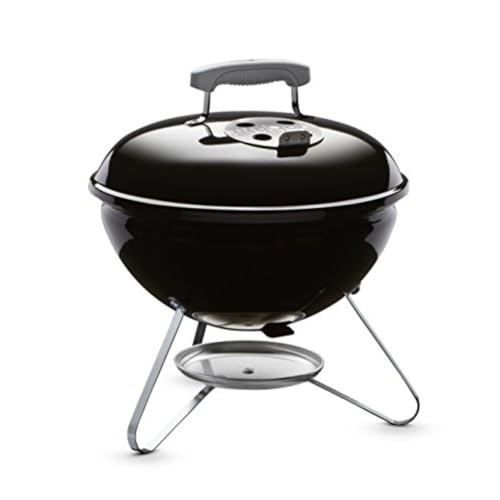
- Best apartment pick, where charcoal is allowed: Weber Smokey Joe Portable Charcoal Grill, 14-Inch, Black — Check on Amazon
- Cuisinart 14-Inch Portable Charcoal Grill (CCG-190RB, Red) — Check on Amazon
- Gas One 14-Inch Portable Barbecue Grill (CG-14) — Check on Amazon
- Weber Go-Anywhere Charcoal Grill — Check on Amazon
- Weber Jumbo Joe Charcoal Grill, 18-Inch, Black — Check on Amazon
- Char-Griller Patio Pro Charcoal Grill and Smoker, Model E1515 — prose only, see its review below for why
Read the full guide ↓
Disclosure: As an Amazon Associate, dailyhomedecorating.com earns from qualifying purchases. Links to Amazon on this page are affiliate links; they cost you nothing extra. Listing details such as price and availability change often, so check the current Amazon listing before you buy.
The rule check comes first. Searching for the best charcoal grill for apartments under $100 usually starts with products, but in an apartment the first question is not which grill — it is whether charcoal is allowed where you live at all. Many leases and HOA rulebooks ban charcoal grills on balconies outright, and a large number of city and state fire codes prohibit any open-flame or charcoal device on a combustible balcony or within a set distance of a multi-unit building, with narrow exceptions for ground-floor patios and sprinklered or non-combustible structures. These rules exist because a balcony grill sits under another home’s balcony, beside stored belongings, in a space with one exit. If your lease or local code says no, this guide will not talk you around it: no grill is worth an eviction notice, a fine, or the risk the rule was written to prevent. Do not buy first and hope nobody notices.
So who is this guide for? Three kinds of apartment households, all legitimate. First, ground-floor renters and owners whose patio is at grade, away from the building, where the lease and fire code allow charcoal — a common and perfectly legal setup. Second, residents of buildings with a shared courtyard, roof terrace rules that permit grilling in a designated area, or a communal grill zone where you may bring your own grill. Third, apartment dwellers who grill away from home — at parks with grill-permitted picnic areas, at a partner’s or family’s house, at campsites — and need a grill that stores in a closet and rides in a car without drama. If none of those describes you, the honest recommendation is to stop here and look at what your building does allow: many buildings that ban charcoal permit electric grills, and some permit small gas grills, which our Best Gas Grill Under $100 guide covers at the same ceiling — after the same lease check, applied to that fuel.
For the three households above, apartment grilling has its own criteria, and they are not the backyard criteria shrunk down. Storage is the first: the grill will live in a closet, a storage cage or a car boot, so packed size and a lid that locks shut — keeping ash and charcoal dust sealed inside — matter as much as cooking area. Smoke manners are second: a small, clean-burning fire with a lid that closes fully is a better neighbour than a big smoky one, and every pick here is sized for modest fires. Third is cool-down and carry: you will move this grill, sometimes through your own living room, so weight, handles and a design that contains its ash are safety features, not conveniences. Our headline pick, the Weber Smokey Joe, wins on exactly those apartment terms. The rest of the list trades size, price and storage shape against them, and each review says plainly where a grill does not fit apartment life — including one well-known cart grill that only makes sense for ground-floor homes with real outdoor floor space.
In this guide
Quick Picks
In a hurry? This table matches each grill to the apartment situation it fits — after the rules check above.
| Buyer type | Pick | Why it stands out | Link |
|---|---|---|---|
| Best for apartments | Weber Smokey Joe, 14-Inch | Compact enamel kettle, under nine pounds, lid locks for closet storage and carrying | Check on Amazon |
| Best for tiny storage | Cuisinart 14-Inch Portable Charcoal Grill (CCG-190RB) | Featherweight tabletop with three lid latches that seal it shut for storage | Check on Amazon |
| Cheapest way in | Gas One 14-Inch Portable Barbecue Grill (CG-14) | Three-point locking lid and ash catcher for very little money — park and picnic duty | Check on Amazon |
| Best for flat storage and travel | Weber Go-Anywhere Charcoal Grill | Rectangular body stores on a shelf or in a boot; legs fold and lock the lid | Check on Amazon |
| Best for ground-floor patios | Weber Jumbo Joe Charcoal Grill, 18-Inch | The most cooking area here — 240 square inches — for households with real outdoor space | Check on Amazon |
| Standing cart option | Char-Griller Patio Pro E1515 | Cart, shelf and cast-iron grates — but only suits ground-floor homes, and currently priced above this tier on Amazon | Prose only — see review |
How These Picks Were Chosen
Apartment criteria reordered the usual priorities. First came the storage test: could the grill be carried through a home, stored in a closet or storage unit, and kept from shedding ash or charcoal dust in either place? Lid locks and latching lids scored heavily; open bowls that must be carried like a tray of ash scored poorly, however well they cook. Second came the footprint and weight test — every linked pick is a one-person carry, and the smallest two weigh less than a full grocery bag. Third came smoke and fire manners: fully closing lids, controllable vents that let a small fire burn clean rather than smoulder, and designs that contain sparks and ash. Fourth, and only fourth, came cooking: grate size, heat control and build quality, judged for the two-to-four-person cooking that apartment life actually involves.
Verification worked the same way as in our other grill guides. Model numbers, stated cooking areas, materials and weights were checked against manufacturer data, and every linked pick had a price sighting at or under this tier’s ceiling on its exact Amazon listing at research time; those sightings are recorded in the notes accompanying this guide, and listings should be rechecked before buying because grill prices move with the season. One familiar model failed the price test — the Char-Griller Patio Pro, currently above the ceiling on Amazon — so it appears as a prose-only entry with the situation explained rather than a link that breaks the budget in the guide’s title. We also checked for CPSC recalls on these grill models and found none covering any grill reviewed here; the category’s recent recalls concern accessories such as wire-bristle brushes, which is why the care advice below recommends a bristle-free brush for every pick.
What we deliberately did not do is rank by balcony fantasy. Product photos show small grills on small balconies, but a photograph is not permission, and several picks here are recommended explicitly for ground-floor patios, designated grill areas and away-from-home cooking rather than for balconies. Where a pick only makes sense in one of those settings, its review says so. Readers whose outdoor space is a private patio rather than a shared or ground-floor arrangement may also want our companion guide to the Best Charcoal Grill For Small Patios Under $100, which applies the same shortlist to owned patio space where the rules questions are simpler.
The 6 Best Charcoal Grill for Apartments Under $100 — Reviewed
1. Weber Smokey Joe Portable Charcoal Grill, 14-Inch, Black — Best for Apartments
Who it suits: Apartment cooks with a legal place to use it — a ground-floor patio at grade, a building’s designated grill area, or regular park and picnic cooking — who cook for one or two and store the grill indoors between uses.
The Smokey Joe earns the top spot here on apartment evidence, not backyard evidence. It is a 14-inch porcelain-enamelled kettle with 147 square inches of cooking area, and in current specification it weighs under nine pounds and carries the Tuck-N-Carry lid lock: the lid clips down, so the whole grill lifts by one handle with its ash and grate sealed inside, rides in a car boot without scenting the car, and stands in a closet corner without shedding dust. That sealed, one-hand carry is the single most apartment-relevant feature any grill in this guide offers. As a cooker it is a true kettle — aluminium dampers in lid and bowl, a bowl shape that concentrates heat, enough fire for two steaks, four burgers or a batch of skewers — and its small chimney of charcoal burns down and cools faster than a big grill’s fire, which matters when the grill comes back indoors the same evening. Only bring it inside when it is completely cold; the safety section below gives the routine.
Pros: sealed one-hand carry and closet-sized storage; enamel build that wipes clean and does not rust in a storage cage; a small, quick, well-mannered fire; Weber parts support if a grate or damper ever needs replacing. Honest limitation: capacity is two-person cooking with four-person batching, and ash handling is the simple tip-it-out kind — there is no ash pan, so empty it outdoors, cold, into a metal container, never through the apartment in an open bowl. It also has no business on a balcony where charcoal is banned, and its small size does not make it an exception to any rule.
Choose it if you have a permitted place to grill and indoor storage. Skip it if your only outdoor space is a balcony where charcoal is prohibited — no pick in this guide changes that answer. Check on Amazon
2. Cuisinart 14-Inch Portable Charcoal Grill, CCG-190RB — Best for Tiny Storage
Who it suits: Renters with the least storage of all — a shelf, a storage ottoman’s worth of space, the top of a wardrobe — and first-time charcoal cooks who want to test the hobby at the lowest sensible commitment.
Cuisinart’s red tabletop is the lightest grill in this guide, a matter of a few pounds, and its three lid latches lock the top down tight, which is exactly the feature storage in a lived-in apartment demands: nothing rattles loose, no ash escapes, and the whole thing can be carried to a park picnic area by its handle like a small case. The 14-inch chrome-plated grate cooks for two in the direct style — burgers, sausages, skewers, corn — and dual vents, one in the lid and one in the base, give more fire control than most grills at this price, so a small clean fire is achievable rather than a smoky smoulder. The maker’s stated cooking area flatters the 14-inch grate slightly; judged by diameter, it matches the Smokey Joe’s class. An ash catcher plate beneath the firebox helps keep a designated-area table or ground-floor patio cleaner, a courtesy your neighbours and your deposit will both appreciate.
Pros: the smallest storage burden here; locking lid; dual vents at a budget price; light enough for absolutely anyone to carry to a grill area. Honest limitation: thin steel means modest heat retention and a multi-season rather than decade-long life, and a grill this light must sit on a stable, level, heat-safe surface — never on a plastic table, a wooden balcony deck where grilling is allowed at all, or anywhere it can be knocked. It is also the pick most likely to be outgrown if charcoal becomes a weekly habit.
Choose it if storage space and price lead your decision. Skip it if you already know you will grill weekly for years — the Smokey Joe’s enamel repays its higher price. Check on Amazon
3. Gas One 14-Inch Portable Barbecue Grill, CG-14 — Cheapest Way In
Who it suits: Apartment dwellers whose grilling happens away from the building — parks, beaches, a friend’s yard, camping — and who want the lowest possible spend while they find out how often they actually go.
The CG-14’s apartment virtues are its three-point locking lid and its price. The lid seals at three points, so a cold grill full of ash can be carried through a lobby and stored in a closet without perfuming the coats, and the dual venting system plus an ash catcher give it better manners than the anonymous tabletops at similar prices. The maker states about 150 square inches of cooking surface around its 14-inch grate — two-person cooking, four in batches — and it cooks the way all honest 14-inch tabletops cook: hot, direct and quick. For the renter whose grill will be used six times a year at picnic sites, spending Weber money makes little sense; this is the rational tool for that life, and its low price means a damaged or forgotten grill is an annoyance, not a loss.
Pros: the lowest price in this guide; a genuinely sealing lid for transport and storage; ash catcher included; nothing to assemble beyond legs and handles. Honest limitation: light-gauge steel and basic hardware throughout — heat retention is the weakest here, hinges and latches are built to a price, and this is an occasional-use appliance, not a weekly workhorse. Thin grills also cool and rust faster if stored with ash inside, so the empty-and-dry routine matters more, not less, at this price.
Choose it if your grilling is occasional and away from home. Skip it if you will cook weekly — the Cuisinart is the better budget step up. Check on Amazon
4. Weber Go-Anywhere Charcoal Grill — Best for Flat Storage and Travel
Who it suits: Apartment households whose storage is flat — a shelf in a storage unit, the space under a bed frame’s storage drawer, a car that doubles as the grill cupboard — and anyone whose grilling is split between a ground-floor patio and the road.
Rectangular where every rival is round, the Go-Anywhere stores the way luggage stores, and that shape is its whole apartment argument. The enamelled body offers about 160 square inches of cooking area, the plated-steel legs fold up and lock the lid for carrying, then fold down to stand the grill on a surface, and at roughly fourteen pounds it is an easy one-person carry from closet to car to grill area. Twin lid dampers let you steer heat along the grate, and the long shape suits apartment-scale entertaining — a row of skewers, sausages or corn fits more naturally than on a small round grate. Inside storage is a genuine bonus: owners routinely pack the chimney starter and tools inside the body, so the entire grilling kit occupies one flat box in the closet. Build quality is Weber enamel throughout, with the parts support to match.
Pros: flat-pack storage no round grill matches; enamel longevity; a shape that travels and stores tools inside itself; real vent control. Honest limitation: it sits at the top of this tier’s pricing, so you pay for format rather than area, and the low lid limits tall food — whole chickens are a squeeze. Like every pick here it needs a permitted place to cook; its portability is the point for apartment dwellers precisely because it makes designated areas and parks easy, not because it makes a banned balcony acceptable.
Choose it if your storage is flat and your grilling moves around. Skip it if the grill will live on one ground-floor patio — the Jumbo Joe cooks more for similar money. Check on Amazon
5. Weber Jumbo Joe Charcoal Grill, 18-Inch — Best for Ground-Floor Patios
Who it suits: Ground-floor apartment and townhouse households whose patio is at grade, separated from the building, and confirmed legal for charcoal — the apartment situation that most resembles a small backyard.
Where the rules allow a real patio setup, the Jumbo Joe is the most capable cooker in this guide: an 18-inch porcelain-enamelled kettle bowl with 240 square inches of grate, proper two-zone fire potential, and a dome lid with headroom for a small chicken. It cooks for four in one load, which none of the 14-inch picks can claim, and its Tuck-N-Carry lid lock still lets it be carried to a communal grill area or packed for a trip. At roughly eighteen pounds and twenty inches across, though, it is the bulkiest storage proposition among the linked picks — a closet corner or storage-cage resident rather than a shelf item — and it needs a sturdy, heat-safe table or stand to cook on, which is one more thing to store. Those are fair trades for a ground-floor home with a patio table already in place; they are poor trades for a third-floor walk-up with a storage locker.
Pros: the most cooking capacity and the best heat control here; enamel build; still portable when needed. Honest limitation: size and weight work against small-space storage, and it is emphatically not a balcony grill for buildings that ban charcoal — its capability does not dilute any rule. It also costs the most of the linked Webers’ smaller siblings’ class, sitting near the top of the tier.
Choose it if you have a legal ground-floor patio and cook for three or four. Skip it if storage is a shelf or the grill must travel weekly — take the Smokey Joe or the Go-Anywhere. Check on Amazon
6. Char-Griller Patio Pro Charcoal Grill and Smoker, Model E1515 — Prose Only
Who it suits: Only one apartment profile: ground-floor homes and townhouses with genuine outdoor floor space where a standing cart grill can live outside permanently under a cover. For everyone else in an apartment, this is a skip, and the review exists so you know why it keeps appearing in budget roundups.
Two separate reasons keep the Patio Pro out of the linked list. The first is this guide’s price promise: at verification, its Amazon pricing sat above the under-$100 ceiling, as did its maker’s own store pricing, so it is covered in prose rather than linked — check price on Amazon yourself, and know that at above-ceiling money the next tier’s full-size kettles compete hard for the same dollars. The second reason is fit. The Patio Pro is a barrel grill on a wheeled cart, around fifty pounds, with 250 square inches of cast-iron grate and a wooden side shelf: an appliance that must live where it cooks. It cannot be closet-stored, carried to a grill area, or sensibly kept in a storage cage, and its larger fire is the least neighbour-friendly in this guide. What it offers — standing height, a shelf, cast-iron searing — is a backyard specification, honestly good in a backyard-shaped life.
Pros: cast-iron grates, standing working height, a real side shelf, the largest stated cooking area here. Honest limitation: immobile by apartment standards, currently priced above the tier, and its powder-coated body needs chip touch-ups to keep rust away if it lives outdoors.
Choose it if you are a ground-floor household with permanent outdoor space and you find it priced inside the tier from a seller you trust. Skip it if you store your grill indoors or carry it anywhere — every other pick here serves that life better. Readers stepping up should see the Best Charcoal Grill Under $200, where standing grills are priced honestly.
Comparison Table
| Grill | Format | Cooking area | Storage story | Best apartment use | Watch out for |
|---|---|---|---|---|---|
| Weber Smokey Joe 14-Inch | Tabletop kettle | 147 sq in | Closet corner; lid locks shut | Ground-floor patio, grill areas, parks | Two-person capacity; tip-out ash |
| Cuisinart CCG-190RB | Tabletop | 14-inch grate | Shelf; lightest here, latches shut | Tiny storage, first grill | Thin steel; needs a stable surface |
| Gas One CG-14 | Tabletop | About 150 sq in (maker-stated) | Closet; three-point sealing lid | Away-from-home grilling | Occasional-use build |
| Weber Go-Anywhere | Rectangular portable | About 160 sq in | Flat shelf or car boot; stores tools inside | Travel plus ground-floor patio | Top-of-tier price; low lid |
| Weber Jumbo Joe 18-Inch | Tabletop kettle | 240 sq in | Closet corner or storage cage | Ground-floor patios, families | Needs a table; bulkiest linked pick |
| Char-Griller Patio Pro E1515 | Barrel on cart | 250 sq in | Lives outdoors permanently | Ground-floor homes only | Above-tier pricing — prose only; immobile |
The Apartment Rules Check, Done Properly
Read the lease before the listings
Search your lease and any HOA or building rules for “grill”, “barbecue”, “charcoal”, “open flame” and “balcony”. The answer is usually written down, and it binds you regardless of what a product photo shows. If the documents are silent, ask the landlord or building management in writing — an email answer protects you in a way a hallway conversation does not. If the answer is no for charcoal, ask what is permitted: many buildings allow electric grills anywhere and small gas grills in defined spots, and knowing the permitted fuel is the difference between grilling this weekend and not grilling at all.
Know that fire codes sit above leases
Even a permissive landlord cannot waive the local fire code, and many jurisdictions restrict charcoal and open-flame devices on combustible balconies and near multi-unit buildings, commonly with distance requirements from the structure and exceptions for ground-floor, at-grade patios. Your city’s fire department website usually states the rule in plain language. When the lease and the code disagree, the stricter one governs your safety and your liability — including the sobering fact that a fire started by a banned grill can void insurance cover you assumed you had.
If you grill in a shared or designated area, be the resident everyone hopes for
Use the smallest fire that cooks the food, keep the lid closed as much as the cooking allows — it contains sparks and cuts smoke — and never leave the grill unattended. Let coals cool completely in place, then carry the cold grill back; ash goes into a metal container, never a plastic bin or dumpster while there is any warmth in it. Wipe the area down, take your charcoal bag and tools with you, and leave the spot cleaner than the last person did. Shared grill areas survive on exactly this etiquette, and buildings withdraw them when it lapses.
How to Choose the Best Charcoal Grill for Apartments Under $100
Storage first, cooking second
In an apartment the grill you cannot store is the grill you will stop using. Measure the closet corner, shelf or storage cage the grill will occupy and compare it honestly: a latched 14-inch tabletop fits almost anywhere, the Go-Anywhere fits flat spaces nothing round can use, and the Jumbo Joe needs a genuine corner. A lid that locks or latches is non-negotiable for indoor storage — it is what keeps ash, dust and charcoal smell inside the grill instead of on your belongings.
Weight is a weekly feature
You will carry this grill — to the grill area, to the car, back to the closet — far more often than a backyard owner carries theirs. Every linked pick here is a comfortable one-person carry, but the difference between the Cuisinart’s few pounds and the Jumbo Joe’s eighteen is the difference between an afterthought and a plan. Choose the weight your actual routine will tolerate on a tired weekday, not the weight you can lift once in a showroom mood.
Small fires, clean burns
Apartment-appropriate grilling is small-fire grilling: a modest chimney of briquettes, fully lit before food goes on — half-lit charcoal is what produces the bitter smoke neighbours complain about — with vents set to keep the fire burning cleanly rather than smouldering. Every pick here has the lid and bowl venting to do that. If smoke complaints are a realistic risk in your building, cook smaller batches with the lid down and avoid fatty flare-up foods in shared areas; the food tastes better that way in any case.
Plan the cold routine before the first cook
Decide now where the grill will cool (in place, in the grill area, never hurried indoors), where the ash will go (a small metal container with a lid, stored outside the living space), and where the charcoal will live (sealed, dry, off the floor). Households that settle these three answers before the first cookout are the ones still grilling happily a year later; the routine takes two minutes and prevents every common apartment-grill problem that is not about the rules themselves.
Common Buying Mistakes
Buying the grill first and checking the rules second
The most expensive apartment grill is the one confiscated, resold at a loss, or never used because the lease banned it. The rules check in this guide takes ten minutes and costs nothing. Do it before the order, and keep the written answer with your lease.
Assuming a small grill is exempt from balcony bans
Rules ban the fuel and the flame, not the size. A 14-inch charcoal grill on a prohibited balcony is exactly as prohibited as a large one, and “everyone on my floor does it” is not a defence when something goes wrong. If charcoal is banned where you are, the permitted-fuel guides — starting with the Best Portable Grill Under $100 roundup for carry-friendly options across fuels — are the honest detour.
Carrying a warm grill back inside
Coals that look dead can hold heat for many hours and can rekindle in stored ash. The grill returns indoors when it is cold to the touch throughout — ideally the next morning after an evening cook in a shared area, with ash emptied into metal first. No schedule justifies carrying a warm firebox through a home.
Storing charcoal loose in a closet
Charcoal absorbs moisture, lights badly when damp, and dusts everything near an open bag. Keep it in its bag, clipped shut, inside a lidded plastic bin with the chimney and brush. The bin becomes the grill kit: one grab for the grill area, one tidy box in the closet, no smell, no mess.
Lighting with lighter fluid in a shared space
Beyond the taste it ruins, lighter fluid produces the acrid smoke plume most likely to draw a complaint — and complaints are what get shared grill privileges withdrawn. A chimney starter lights cleanly with newspaper or starter cubes and makes you the neighbour nobody minds.
Two Apartment Scenarios, Worked Through
The ground-floor patio household. Your patio is concrete, at grade, with the building wall behind you and open air above — the setup most leases and codes that allow charcoal are describing. Here the Jumbo Joe earns its place if you cook for three or four, on a sturdy metal or stone-topped table you already own, with a cover for the weeks it lives outside and a metal ash bin by the door. If you cook for two, the Smokey Joe does the same job with half the storage cost and can still come indoors for the winter. The routine that makes it work: grill on the patio, cool in place, ash into the metal bin, grill under its cover or into the closet. Nothing about this life requires apology or luck — it is simply a small backyard that happens to belong to an apartment.
The third-floor household with a park habit. Your balcony is off-limits for charcoal and your lease is clear; your grilling happens at the park two streets away, where the picnic area permits personal grills, and at a sister’s house on Sundays. Your grill is therefore luggage. The Cuisinart or the Gas One rides in the car boot in its latched, sealed state, with the charcoal bin, chimney and brush beside it, and comes home to a closet shelf. The Go-Anywhere is the upgrade version of the same life — flatter, tougher, and able to swallow its own tools. What this household should not buy is anything on a cart, anything without a locking lid, or anything heavy enough to make the park trip feel like a chore: the grill that stays home because carrying it is tiresome is the only true waste of money in this guide.
The Apartment Grill Kit: Storing the Whole System in One Bin
Apartment grilling works when the kit is a system, not a pile. One lidded bin — the size of a storage tote — holds the charcoal bag clipped shut, the chimney starter, the bristle-free brush, tongs and a heatproof glove, and it lives beside the grill in the closet or storage cage. Beside it stands a small metal container with a tight lid for ash, kept out of the living space. That is the entire footprint of the hobby: one bin, one ash can, one small sealed grill. Nothing smells, nothing dusts the coats, and the trip to the grill area is two grabs and a free hand for the food. Households that skip the system end up with a charcoal bag shedding dust in a wardrobe and a grill stored dirty “just this once” — which is how a multi-season grill becomes a one-season grill, and how a closet starts to smell faintly of bonfire. The bin is not an accessory; in an apartment, it is half the product.
Smoke, Smells and Neighbour Diplomacy
Most apartment grill friction is not about rules on paper; it is about smoke drifting into a neighbour’s open window at dinner time. The physics are on your side if you work with them. A fully lit chimney of briquettes smokes hard for its first minutes and then burns clean, so light the fire before you bring food out and let the heavy smoke pass while the coals finish ashing over — by the time anything is cooking, a lidded small grill produces a thin, honest wisp rather than a plume. Fat is the other smoke source: very fatty foods dripping onto open coals flare and smoke in bursts, so in shared areas choose the two-zone arrangement, move food off the coals to finish, and keep the lid working. Timing helps too — the household that grills at six on a still evening with every window in the building open is choosing the hardest version of the hobby. And the oldest diplomacy remains undefeated: neighbours who have been offered a skewer off the grill rarely become neighbours who complain about it. None of this replaces the rules check. It is what makes a permitted grill a welcome one, season after season, in a building full of people who did not choose to live next to your hobby.
If Charcoal Is Banned: Making the Most of the Fuel You Are Allowed
A charcoal ban is a constraint, not a verdict on your cooking life, and it is worth saying plainly in a charcoal guide: the households that grill happily under a ban are the ones that stop mourning the fuel and start exploiting the permitted one. Electric grills — allowed in many buildings that ban everything with a flame — have become genuinely capable for the apartment repertoire of burgers, skewers, vegetables and fish, and they work on balconies where nothing else may. Small gas grills, where the lease permits them, give instant heat and easy shut-off, which suits weeknight cooking better than charcoal ever did. Even the charcoal ritual survives in displaced form: the portable picks in this guide exist so that the park, the campsite and the family yard can host the charcoal cooking your building cannot. Plenty of devoted charcoal cooks live exactly this split life — electric at home on Tuesdays, charcoal at the lake on Saturdays — and report, usually with some surprise, that they grill more often than their house-dwelling friends. The rule check that opens this guide is therefore not a gate; it is a routing decision, and every route from it ends at a grill that fits your actual address.
Final Recommendation
Check the rules first — lease, building management, local fire code — and let that answer choose your path. If charcoal is permitted on a ground-floor patio or in a designated area, buy the Weber Smokey Joe: it stores sealed, carries in one hand, cooks beautifully for two, and its enamel build will outlast several leases. If your storage is a flat shelf or your grilling mostly happens on the road, the Go-Anywhere is the smarter shape. On the tightest budget or the tiniest shelf, the Cuisinart latches shut and disappears into a cupboard; for occasional park duty at the lowest spend, the Gas One is the rational minimum. Ground-floor households with real patio space and family-sized cooking should take the Jumbo Joe. And if the rules say no to charcoal, believe them, and grill happily with the fuel your building permits — the ritual survives the fuel change far better than a tenancy survives a violation.
Frequently Asked Questions
Are charcoal grills allowed on apartment balconies?
Very often, no. Many leases and HOA rules ban them, and many local fire codes prohibit charcoal or open-flame devices on combustible balconies or close to multi-unit buildings, with exceptions that typically involve ground-floor, at-grade, non-combustible or sprinklered setups. The only reliable answer is your own lease plus your local code — check both before buying, and never rely on a neighbour’s example.
What is the best charcoal grill for a small apartment with no balcony?
For storage and away-from-home use, a latched 14-inch tabletop such as the Cuisinart CCG-190RB or the Weber Smokey Joe: both seal shut, weigh very little, and serve park picnic areas, designated grill zones and campsites. Without any permitted place to use charcoal, no charcoal grill is the right purchase — look at the fuels your building allows.
How do I store a charcoal grill in an apartment?
Cold, empty and dry. Let coals cool completely, empty ash into a metal container, brush the grate, and store the grill with its lid locked or latched in a closet corner, storage cage or on a shelf. Keep charcoal sealed in a lidded bin. Never store a grill with ash inside — damp ash corrodes steel and scents the space.
Will a small charcoal grill annoy my neighbours with smoke?
A small, fully lit fire with the lid closed produces modest smoke, mostly at lighting. The complaints come from lighter fluid, half-lit charcoal smouldering, and large fatty flare-ups. Light a small chimney fully, cook lid-down in modest batches, and use designated areas where your building provides them.
Can I use one of these grills on a ground-floor patio?
In many places, yes — ground-floor patios at grade, set away from the building’s combustible parts, are the most commonly permitted apartment setup, and the Jumbo Joe and Smokey Joe are sized exactly for them. Confirm your lease and local code, keep the grill clear of siding and stored items, and follow the cold-ash routine.
How do I ask my landlord whether charcoal grilling is allowed?
Ask in writing — an email is ideal — and ask about the specific setup: the fuel, the location (ground-floor patio, balcony, courtyard), and any conditions the building attaches. A written yes protects you if a different staff member later questions the grill, and a written no, while disappointing, is far better than an assumption. If the lease already answers the question clearly, no further permission is needed or available; the document governs.
What should I do if my building bans charcoal but I already bought a grill?
Do not use it at home. Use it where charcoal is welcome — parks with grill areas, campsites, friends’ and family’s yards — which is precisely what the portable picks in this guide are built for, or return or resell it and put the money toward a grill using a fuel your building permits.


