Where to buy
Check the latest price, availability and delivery on Amazon. Orders are placed on Amazon. We may earn a commission from qualifying purchases.
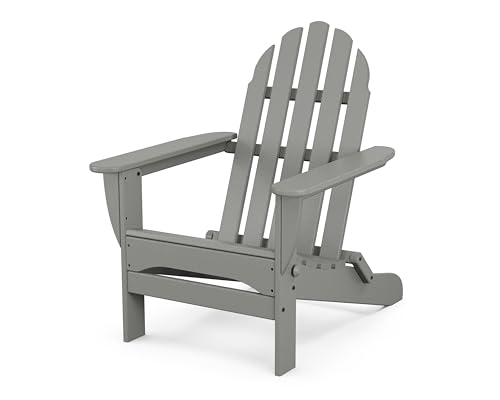
- Best folding premium chair for small patios: POLYWOOD Classic Folding Adirondack Chair (AD5030), Slate Grey — Check on Amazon
- Lightest chair to move daily: Keter Alpine Adirondack Chair, Grey — Check on Amazon
- Best folding recliner for one-chair patios: highwood Hamilton Adirondack Chair, Weathered Acorn — Check on Amazon
- Best simple single chair: YEFU Adirondack Chair, Blue — Check on Amazon
- Best set for patios that sometimes host four: SERWALL Foldable Adirondack Chair Set of 4, Grey — Check on Amazon
One pick in this guide — the POLYWOOD Modern Upright, our footprint champion — is sold mainly through the maker’s store and dealers rather than a standard Amazon listing we could verify, so it is covered in prose below with no Amazon link.
Read the full guide ↓
Disclosure: As an Amazon Associate, dailyhomedecorating.com earns from qualifying purchases. Links to Amazon on this page are affiliate links; they cost you nothing extra. Listing details such as price and availability change often, so check the current Amazon listing before you buy.
Shopping for the best adirondack chair for small patios under $1500 inverts the usual problem. The money is not the constraint — no single Adirondack chair costs anywhere near $1500, and even the finest pairs leave most of this budget unspent. The constraint is the patio: eight feet by ten if you are lucky, a door that swings across half of it, a grill with ambitions, and a traditional Adirondack footprint — roughly twenty-nine inches wide and thirty-six deep, plus legroom — that was designed for a lakeside lawn, not a townhouse slab. On a small patio, every inch a chair saves is an inch of life the patio keeps. This guide is about spending a large budget on small geometry.
So we ranked these chairs by the numbers small patios live and die by: overall depth first, because depth is what a small patio cannot lend; folded size second, because a chair that disappears lets one patio be two rooms; weight third, because small-patio chairs get moved daily — to follow shade, to clear the door, to make room for the grill. The premium materials this budget buys still matter, and HDPE leads our picks, but here material serves geometry: the best small-patio chair is the one whose footprint respects the space while its build respects the decade.
The configurations are small-patio honest. One perfect chair. A folding pair. Two chairs in rotation with two stored for guests. Nobody sane puts a six-pack on a ten-foot patio, and this guide will not pretend otherwise — the set we do include earns its place purely because it folds into a stack thinner than the patio’s problems. What the budget buys instead is quality per chair, the accessories that multiply a small space — a rug to zone it, shade to cool it, a storage box to empty it — and the rare pleasure of a small patio that feels furnished rather than crowded.
Measure first, as always: patio width and depth, the door’s swing arc, and the walking path you refuse to surrender. Then read the picks against those numbers. On a small patio, the right chair is not the best chair. It is the best chair that fits.
In this guide
Quick Picks: best adirondack chair for small patios under $1500
| Pick | What you get | Best for | Small-patio virtue |
|---|---|---|---|
| POLYWOOD Modern Upright | Single chair (maker/dealer sale) | The tightest patios | Shallowest depth and narrowest width here |
| POLYWOOD Classic Folding (AD5030) | Single folding chair — buy a pair | Classic lounge, part-time footprint | Folds flat against the wall |
| Keter Alpine Adirondack | Single resin chair | Daily moving and small budgets of space | Lightest pick, built-in cup holder |
| highwood Hamilton | Single chair, folds and reclines | The one-chair patio done properly | Three reclines, then folds away |
| YEFU Adirondack Chair | Single chair | A simple classic at a modest spend | Standard footprint, simple build |
| SERWALL Foldable Set of 4 | Four folding chairs | Two out, two stored rotation | A guest set that stores as a stack |
The one-line answer: the Modern Upright wins on pure geometry, the Classic Folding wins on flexibility, and everyone else is competing for the second chair’s job.
How we chose these small-patio Adirondack chairs
Our first filter was published depth. A traditional Adirondack reaches about 36 inches front to back; our top pick prints 23.5 inches — a foot of patio handed back. Any chair whose maker would not publish dimensions was cut, because on a small patio an unpublished depth is a surprise you cannot afford. Width mattered next: the spread between a 24.8-inch chair and a 33-inch chair is the difference between two chairs and a table, and one chair and an apology.
Second, the disappearing act. Four of six picks fold, and the two fixed picks justify themselves — one by the smallest footprint in the guide, one by being the lightest chair here. A small patio is a room that changes jobs: morning office, evening lounge, weekend grill station. Chairs that fold or lift away are how one slab holds all three lives.
Third, the sit in miniature. Small patios host close conversation, coffee and laptops more than sprawled sunbathing, so higher, shallower sits scored better here than they do in our backyard guide — while still including true lounge options for patios whose owners lounge first and measure second. Capacities are quoted only where makers publish them, and the prose-only pick is labelled with its reason.
Finally, tier honesty: at $1500 the correct small-patio purchase is one or two excellent chairs plus the accessories that make a small space work — shade, a rug, storage — not a fleet. Our companion guides to the Best Patio Umbrella For Small Patios Under $300 and the Best Deck Box For Small Patios Under $300 cover the two accessories that matter most, because on a small patio the box and the umbrella are furniture too.
The 6 best Adirondack chairs for small patios under $1500, reviewed
1. POLYWOOD Modern Upright Adirondack Chair — the footprint champion (prose-only)
The Modern Upright is the Adirondack redesigned by someone who measured a townhouse patio: 24.8 inches wide, just 23.5 inches deep, 38.5 inches tall, 28 pounds, with a 17.3-inch seat height — the highest here — and a 15.5-inch seat depth. That depth figure is the headline: roughly a foot shallower than a classic lounge chair, which on an eight-foot patio is the difference between a chair with legroom and a chair wearing the door. The upright posture suits the small patio’s real programme — coffee, conversation, a laptop, a meal — and standing up from 17.3 inches is effortless. The HDPE build and soap-and-water care are standard POLYWOOD.
Who it suits: the smallest patios, townhouse slabs, and anyone whose outdoor chair is also their morning office.
Pros:
- Smallest verified footprint in this guide — width and depth both
- 17.3-inch seat: the easiest rise in the category
- 28 pounds: reposition it one-handed, daily
- Two chairs and a table fit where one classic sprawls
Honest limitation: it does not fold, and it does not lounge — the shallow seat and upright back are a social sit, not a nap. We also could not verify a standard Amazon listing for it, so it is covered without a link; buy it through the maker’s store or a dealer, and verify your measurements against theirs before ordering.
Choose it if depth is your binding constraint. Skip it if deep recline is non-negotiable — fold a Classic instead. Check price on the maker’s site.
2. POLYWOOD Classic Folding Adirondack Chair (AD5030), Slate Grey — the classic lounge, part-time footprint
The POLYWOOD Classic Folding Adirondack Chair gives a small patio the genuine article — solid HDPE lumber, marine-grade hardware, the traditional low lounge sit at about 29 inches wide and 35.7 inches tall in the maker’s listings — with an exit strategy: it folds flat. Open, it is a full Adirondack and owns its footprint honestly. Folded, it leans behind the storage box, hangs on the wall, and gives the patio back for the grill, the kids or the yoga mat. For small spaces, that dual citizenship is worth more than any single dimension.
Who it suits: small patios that lounge on weekends and work all week, and pairs-buyers who want two real chairs with a storage plan.
Pros:
- True HDPE Classic build that folds flat
- The authentic low, reclined sit — nothing compromised but the storage
- Leave-out weatherproof; no seasonal maintenance
- A pair folds into a sliver of wall or closet
Honest limitation: open, it is still 35-plus inches of Adirondack depth — on the very smallest patios you will fold it between uses rather than leave it out, which is a habit, not a hardship, but be honest with yourself about whether you will. Folding hardware also wants a seasonal check that fixed chairs skip.
Choose it if you want the classic sit with a disappearing act. Skip it if the chair must live open in under three feet of depth — that is the Upright’s job. Check on Amazon for colours and current price.
3. Keter Alpine Adirondack Chair, Grey — the lightest daily mover
The Keter Alpine Adirondack Chair weighs about 22 pounds, and on a small patio that number is a lifestyle: chase the shade at noon, clear the door swing at six, carry it to the front step for a neighbour’s visit, all without planning. The moulded resin build carries a wood-effect finish, a cup holder built into the arm — deleting the side table a small patio cannot spare — dimensions around 31.9 by 31.5 by 39.8 inches, and a stated 350-pound capacity in the maker’s pair listings. It rinses clean and asks for nothing.
Who it suits: small patios that reconfigure daily, solo dwellers, and anyone whose second chair must earn its footprint by being effortless.
Pros:
- Lightest pick: moved constantly, stored anywhere
- Built-in cup holder saves a whole side table of space
- Taller, more upright sit suits small-patio conversation
- Resin shrugs off weather and rinses clean
Honest limitation: it does not fold, its footprint is standard rather than small, and resin flexes and ages in ways solid HDPE lumber does not — some owners report wear over years that the premium picks will never show. It is the right chair for mobility, not for heirloom ambitions.
Choose it if daily moving is your patio’s reality. Skip it if you want the solid, decade-grade feel of poly lumber. Check on Amazon for single and two-pack pricing.
4. highwood Hamilton Adirondack Chair, Weathered Acorn — one chair, three positions, zero trace
The highwood Hamilton is the one-chair patio’s best argument: a folding frame with a three-position reclining back, so a single chair is upright for breakfast, dropped for reading, and flat against the wall by dinner. It is made in the USA from highwood’s recycled synthetic lumber with a realistic woodgrain texture, stainless hardware, and a weight around 34 pounds that sits quietly solid on pavers. On a small patio, versatility is square footage: this chair does three jobs in one footprint and then vacates the footprint entirely.
Who it suits: one-chair patios, reading corners, and long-lease small spaces where a single excellent chair beats two adequate ones.
Pros:
- Recline adjustment plus a folding frame — maximum roles per inch
- Realistic woodgrain with zero sanding or staining
- Made in the USA with domestic support
- Solid, quiet sit; no hollow rattle on pavers
Honest limitation: open and reclined, it takes a traditional chair’s full depth — the space savings arrive when it folds, not while you lounge. It is also the heaviest folding pick here, and its premium price means the pair is a decision, not a default.
Choose it if one chair must do everything. Skip it if you need two chairs out permanently on a tiny slab. Check on Amazon for current availability.
5. YEFU Adirondack Chair, Blue — the simple classic, honestly sized
The YEFU Adirondack Chair is the straightforward option for a small patio that wants the classic look without premium commitment: a fan-back chair in high-impact polystyrene with a wood texture, a cup holder in the arm, and a wide colour range for matching a small space’s existing scheme — on a patio this size, one chair’s colour is the patio’s colour, so the choice matters. Assembly is simple, the build is uncomplicated, and the chair leaves most of this tier’s budget for the shade and storage that small patios actually lack.
Who it suits: modest small patios, renters in transition, and buyers who would rather fund the umbrella, rug and box than the chair alone.
Pros:
- Classic Adirondack shape with a practical cup holder
- Wide colour range for small-space coordination
- Simple assembly, simple ownership
- Leaves the budget for the accessories that complete a small patio
Honest limitation: HIPS is a step below HDPE in stiffness and longevity, the chair does not fold, and its footprint is the standard traditional one — it fits a small patio by being a single, not by being small. Buy it as the sensible single, not as a space-saving device.
Choose it if the chair is one line item in a whole-patio plan. Skip it if geometry is your crisis — the Upright and the folders solve that. Check on Amazon for colours and current price.
6. SERWALL Foldable Adirondack Chair Set of 4, Grey — two out, two in reserve
A set of four on a small-patio list needs defending, so here it is: the SERWALL Foldable Adirondack Chair Set of 4 is not for deploying four chairs on ten feet of pavers. It is for the rotation — two chairs live on the patio, two fold flat in storage, and when four friends arrive the patio borrows the spares and returns them by midnight. Each chair is HDPE with dual cup holders, a curved four-piece backboard and 304 stainless screws; folded, the whole set stacks into a footprint smaller than one open chair. Bought as a set, the per-chair cost makes the rotation cheaper than buying singles twice.
Who it suits: small patios attached to social lives — townhouses and condos whose owners host four occasionally and live as two daily.
Pros:
- Four chairs that store as one compact stack
- Rotation logic: daily pair plus guest pair, always matched
- Dual cup holders on every chair, deployed or reserve
- Set pricing beats assembling the same fleet from singles
Honest limitation: the rotation demands storage discipline — a household that will not fold the spares away owns four chairs on a small patio, which is the failure this pick exists to avoid. Value-brand finish also trails the premium folders at close range.
Choose it if your guest list occasionally doubles your patio. Skip it if storage is truly zero — buy the folding pair and stop. Check on Amazon for the current set price.
Comparison table
| Pick | Configuration | Depth / footprint note | Folds | Weight | Sold via |
|---|---|---|---|---|---|
| POLYWOOD Modern Upright | Single | 23.5 in deep, 24.8 in wide | No | 28 lb | Maker / dealers |
| POLYWOOD Classic Folding | Single / pair | Full depth open, flat folded | Yes | Moderate | Amazon |
| Keter Alpine | Single / pair | Standard footprint | No | ~22 lb | Amazon |
| highwood Hamilton | Single | Full depth open, flat folded | Yes, reclines | ~34 lb | Amazon |
| YEFU | Single | Standard footprint | No | Light-moderate | Amazon |
| SERWALL Set of 4 | 4 chairs | Stack footprint when folded | Yes | Moderate per chair | Amazon |
How to choose an Adirondack chair for a small patio
Budget inches before dollars. Draw the patio to scale — graph paper, tape on the ground, anything honest. Mark the door swing, the walking path and the grill’s heat zone. What remains is your chair budget in inches, and it is smaller than you think; a traditional chair plus legroom consumes a six-foot run of it. The Upright’s shallow depth exists precisely for the patios where that arithmetic fails.
Decide the chair count by the week, not the party. One or two chairs serve ninety percent of small-patio life. If guests regularly double that, solve it with folding spares in storage — the SERWALL rotation — not with permanent chairs strangling daily space. Our Best Outdoor Rug For Small Patios Under $300 guide shows how a rug zones a small slab so two chairs read as a room instead of an obstruction.
Prefer chairs that change the room’s job. Folding chairs, a recliner that becomes a lounger, a light chair that follows shade: on a small patio, flexibility is the luxury this budget should buy. Fixed, heavy, wide chairs are backyard furniture on the wrong stage.
Keep fire honest. A small patio plus a fire pit plus Adirondacks is a geometry exam: chairs need their two-to-three feet from the flame, and the patio needs a path past them. If the numbers do not close, choose a compact tabletop pit or skip the fire — our Best Fire Pit For Small Patios Under $500 guide works through the sizes that actually fit — and spend the difference on shade and light, including the options in our Best Outdoor String Lights For Small Patios Under $150 roundup.
Spend the surplus on the room, not a third chair. This tier will leave money unspent; that is success, not failure. Shade, a rug, a storage box and light will add more usable patio hours than any chair upgrade. If your true ceiling is lower, the Best Adirondack Chair For Small Patios Under $700 guide applies the same geometry at half the budget.
Common mistakes on small patios
Buying the backyard chair. The oversized, deep, wide lounge that charms in a listing is a patio-filling monument at home. Width and depth numbers exist; read them before the colour chart.
Two chairs, no path. If reaching the door requires turning sideways past a chair arm, the layout has failed and the patio will go unused. Protect a clear walking line ruthlessly.
Forgetting the door swing. The most common small-patio collision is chair versus door, daily, forever. Tape the swing arc on the ground before anything is ordered.
Permanent chairs for occasional guests. Guest seating that lives in storage beats guest seating that lives in your way. Fold, stack, rotate.
Matching the chair to the cushions you will not store. Small patios punish accessories without homes. If the cushion has no dry storage, the bare contoured chair was the right purchase all along.
Living with the small patio, season by season
Spring is for the tape measure and the rinse: unfold the folders, check locking pins, and re-mark the door arc if furniture moved over winter. Summer is for the daily shuffle — chairs follow shade, the rug defines the room, and the storage box swallows the evening’s clutter so the slab wakes up tidy. Autumn asks the honest question: which chair earned its footprint this year? Small patios forgive nothing unused, and a chair that sat empty is a candidate for the storage rotation, not the patio. Winter is when folding chairs prove their worth a final time, stacked in the box’s place or the closet’s corner, while the fixed Upright simply becomes the patio’s single winter seat for bright-morning coffee. The routine is minutes per season — the real maintenance of a small patio is not care, it is discipline about what gets to stay.
Final recommendation
If your patio is truly small, buy the Modern Upright — its shallow, narrow geometry is the only one in this guide designed for your problem, and its high seat will be kind every single day. If you lounge more than you sit, buy the Classic Folding pair and let the fold be your second room. Choose the Hamilton when one chair must do everything, the Keter when everything must move daily, the YEFU when the patio plan matters more than the chair, and the SERWALL set when guests regularly double your household. Then spend what remains — and at this tier, much will remain — on shade, a rug, storage and light. A small patio with the right two chairs and a finished room around them beats a large budget’s worth of chairs in a space that cannot breathe.
Three small-patio layouts, measured
Layout one, the coffee pair, fits an eight-by-ten patio: two upright or folding chairs angled forty-five degrees toward each other in the corner furthest from the door, a small table in the angle between them, and the remaining L of patio kept empty for the door swing and the walk to the railing. It seats two for ninety percent of a patio’s life and never once feels crowded, because the emptiness is doing design work. Layout two, the single retreat, fits patios down to six by eight: one folding recliner — the Hamilton is the archetype — placed on the diagonal, a plant softening the corner behind it, wall-mounted or railing light above. One chair, perfectly chosen, on a patio that breathes: this layout is the small space’s luxury form, and the budget exists to fund the single best version of it.
Layout three, the convertible host, serves the townhouse patio that entertains: the daily pair lives out, the SERWALL spares live folded in the deck box’s shadow, and on guest nights the patio deploys four chairs in a shallow arc, borrows the kitchen’s stools for the fifth and sixth guests, and returns to calm by midnight. Its secret is rehearsal — the host who has folded and unfolded the set twice hosts without furniture anxiety. All three layouts share one rule: the walking path is sacred. The moment a layout requires stepping over a chair leg to reach the door, it has failed, and the fix is always fewer or shallower chairs, never better shuffling.
Depth: the whole story
If this guide has a thesis, it is that overall depth is the small patio’s master dimension. Width gets the attention — chairs advertise it, shoppers compare it — but width is negotiable along a wall, while depth is spent against the patio’s shortest axis and against your legs. A classic Adirondack’s thirty-six inches of depth, plus the three feet of legroom its recline demands, consumes six feet of an eight-foot patio before a second chair is even discussed. The Upright’s twenty-three and a half inches hands back a foot of that, which is why it tops this list despite not folding and not lounging. Folding chairs cheat the number honestly: their depth is a part-time expense, paid only while someone sits. Even seat depth misleads the unwary — a deep seat feels luxurious in a listing and strands short legs in a life — so read both depths, overall and seat, and picture your own shins. On a small patio, geometry is not a spec sheet. It is the difference between a room and a storage unit with a view.
Accessories ranked for small patios
Small patios magnify accessories: the right three pieces triple the room, the wrong three end it. First, shade — a compact umbrella or a wall-mounted shade — because an unshaded small patio is a part-time room, closed by the afternoon sun exactly when it should open. Second, the storage box, sized to your slab: it swallows cushions, the hose, the grill tools, and in the convertible layout stands guard over the folded spares’ corner; on a small patio, storage is not an accessory, it is square footage you buy back. Third, light — a string run or a lantern — because small patios are evening rooms by nature, walled and intimate, and light is what makes the intimacy read as atmosphere instead of enclosure. Fourth, the rug, which zones two chairs into a room and keeps feet off cold concrete. Buy them in that order, sized small, and stop: the fifth accessory on a small patio is clutter auditioning.
When the answer is not an Adirondack at all
Honesty requires one section against interest. Some small patios should not hold an Adirondack: the four-foot balcony-strip patio, where even the Upright’s footprint eats the walking line; the dining-first patio, where four meals a week outvote two lounges a month and a compact dining set serves the real life; the patio whose household includes a member for whom even a seventeen-inch seat is a hard rise, where an upright dining-height chair is the kinder purchase. The Adirondack’s reclined geometry is its charm and its tax, and on the smallest stages the tax can exceed the charm. If your tape measure delivers that verdict, take it gracefully — buy the compact dining set or the upright chairs your patio actually fits, and let this tier’s lesson travel with you: measure the space, publish the numbers, and let geometry, not photography, choose the furniture.
The table question
Every small-patio chair plan collides with the same object: the table. Adirondack arms hold a drink with famous competence and hold nothing else — not a plate, not a book and a phone, not breakfast. Yet a conventional side table consumes the exact square footage the chair choice just saved. The solutions that work are scaled like the chairs: a narrow table in the angle between two angled chairs, which borrows space neither chair was using; a stool-height plant stand that moonlights as a surface; or the cup-holder chairs in this guide, whose arms genuinely delete the table for drink-only hours. Decide by your patio’s real programme — coffee-only patios can skip the table entirely, dining patios cannot — and buy the table in the same week as the chairs, because a patio that waits a season for its surface teaches its owners to balance plates on arms, a habit that ends in exactly one way.
Your patio in five numbers: a measuring worksheet
Before any order, write down five numbers. One: patio width, wall to wall or edge to edge. Two: patio depth, the short axis that decides everything. Three: the door’s clear opening and swing arc, measured with the door actually moving. Four: the walking path you refuse to surrender, in inches, from door to the patio’s far purpose. Five: your storage’s honest dimensions — the box, the closet corner, the wall run where folded chairs will lean. Now shop with the worksheet open: a chair qualifies only if its open footprint fits numbers one through four and its folded or stored form fits number five. Every pick in this guide publishes enough to run that test except where we have flagged the gap — and running it takes ten minutes that will save you a return, a resale listing, and a season of stepping over the wrong chair.
Small patio, four seasons
A small patio’s year is more varied than a big yard’s, because small spaces change jobs with the weather. Spring is the audit: unfold, rinse, re-tape the door arc if winter shifted anything. Summer is the daily choreography — chairs chase shade in the morning and open to the evening, the rug earns its zoning, the storage box proves that everything has a home. Autumn is the honest edit: the chair that sat empty since August rotates into storage and the patio breathes again, because on a small slab, subtraction is the only expansion available. Winter belongs to the single seat — one chair, kept out on purpose, for bright cold mornings with coffee and a blanket — while the folders sleep in their stack. Households that run this rhythm find their small patio is not a compromise at all; it is the most deliberately furnished room they own, precisely because nothing in it is allowed to be accidental.
Shade geometry on a small slab
Small patios are sun traps: walled, reflected, and hot at exactly the hours they should be pleasant. Shade on a small slab is a geometry problem with a budget answer. The umbrella’s shadow is an ellipse that travels; placed at the patio’s sunny corner rather than its centre, one compact umbrella can shade two chairs across the whole afternoon arc, because the chairs can sit in the shadow’s path instead of under the pole. Wall-mounted and railing-mounted shades delete the pole entirely — worth considering where the lease allows — and a shade sail, where permitted, deletes even the mast. The chair connection is direct: shade decides which corner is the seating corner, and the seating corner decides which chairs fit. Buy the shade before the second chair; a shaded single chair outperforms two chairs in a furnace, every afternoon of the summer.
The grill coexistence treaty
Most small patios must also be kitchens, and the grill and the Adirondacks negotiate a treaty with three clauses. Distance: the grill’s heat zone and the chairs’ fabric-and-polymer zone never overlap, and the cook gets a standing corridor that no chair leg enters. Sequence: on grill nights, folding chairs deploy after the cooking, not before, so the patio is a kitchen first and a lounge second — the convertible layout exists for exactly this diplomacy. Storage: the grill’s tools, like the chairs’ cushions, live in the same box or not at all, because a small patio with two storage systems has none. Households that sign this treaty find the small patio’s double life easy; households that wing it discover the treaty written in scorched armrests and chairs exiled to the hallway.
Sharing small outdoor space: two households, one slab
Duplexes, in-law suites and garden flats often share one small patio between households, and the chair strategy that keeps the peace is portability with ownership. Each household owns its chairs — folding or light, in distinguishable colours — deploys them for its hours, and stores them on its own side of the line. The shared layer is the fixed, neutral infrastructure: the rug both parties accept, the light both benefit from, the box whose halves are understood. This is another quiet argument for the folding picks in this guide: a chair that disappears cannot colonise shared ground, and a chair that deploys in a minute makes scheduling feel like abundance rather than rationing. Small shared patios fail on furniture imperialism, not on size; buy chairs that retreat, and the slab stays a commons.
Vertical thinking: walls, rails and hooks
When floor space is the scarcest thing you own, the walls become the second patio. A folding chair hung on a rated hook is stored at zero square feet; a pair of them flanking the door reads, to a generous eye, as intentional. Railing planters pull greenery up to eye level without spending the floor, and a wall-mounted drop-leaf surface can be the small patio’s entire table strategy — down for coffee, up and gone for guests. Leases govern all of this, so the renter’s versions are tension, clamp and over-rail systems that leave no holes. The principle survives every tenancy rule: on a small patio, anything stored vertically is space returned to living, and the folding chairs in this guide are the only picks that can claim a wall as their winter home.
The winter patio: one chair season
Small patios in cold climates are usually abandoned from November to March, which wastes a room for a third of the year. The alternative this guide’s picks enable is the winter single: one chair kept out deliberately — the Upright for its easy rise in heavy coats, or a folded Classic deployed on bright days — with a weatherproof cushion stored by the door and a blanket that lives indoors. Ten minutes of winter sun with coffee in a real chair recalibrates a household’s relationship with the season, and the patio that is used in January is maintained in January, arriving at spring ready instead of discovered. The rest of the fleet sleeps in its stack, audited and forgotten. It is a small ritual, and like most small-patio virtues, it is really the discipline of keeping the room alive at the scale the season allows.
What landlords and HOAs actually object to
Small patios often come with rules, and the objections, when they come, are predictable: items visible above the railing, anything attached to the building, storage that reads as clutter from the street, and water or soil escaping to the balcony below. The chair strategy in this guide is built to pass that inspection — freestanding chairs, nothing mounted without permission, folded storage that disappears, colours that do not shout over the rail. Two habits complete the compliance: keep chair backs below railing height where the rules ask it, which the classic low profile does naturally, and keep the patio’s floor swept and drained, because most complaints about balconies are about mess, not furniture. Read your lease’s outdoor clause once, before the order rather than after the letter; the chairs that fit the clause are the chairs in this guide, which is not a coincidence.
The patio audit: five minutes before you order
Stand on the patio with the tape measure and run the audit this guide has been building toward. Confirm the five numbers from the worksheet. Tape the chosen chair’s footprint and live with it through one full day of door swings, grill use and passing traffic. Check the storage destination with the door actually opening. Look at the slab at the hour you will sit in it and note where the sun is. Then — only then — order, in the confidence that small patios reward measurement more than any other space in the home, because they forgive nothing and therefore waste nothing.
A closing thought on small
Small patios are not failed large ones. They are the outdoor room at its most edited, where every object earns its place or leaves — and a chair chosen by measurement, material and honest use, at a tier that finally lets quality lead, is the purest form of the purchase this whole guide series tries to teach. Buy the chair that fits, finish the room around it, and let the neighbours with the big yards wonder why yours is the patio everyone prefers. Small, measured and deliberate beats large, padded and accidental — on patios as in everything else this guide has ever measured.
FAQ
What is the smallest Adirondack chair that is still comfortable?
On published numbers, the POLYWOOD Modern Upright: 24.8 inches wide and 23.5 inches deep with a 17.3-inch seat. It trades deep lounging for an upright, social sit — comfortable for conversation and coffee, less so for naps.
How much space does one Adirondack chair need?
A traditional chair occupies roughly 29 by 36 inches and wants about three feet of clearance in front for legs and standing. Budget a six-foot run of patio per lounge chair, or choose shallow and folding designs that compress that figure.
Are folding Adirondacks worth it on a small patio?
They are the small patio’s defining technology: full-size comfort when open, a wall-leaning sliver when stored. The trade is a seasonal hardware check and a touch less rigidity than fixed frames — worth it wherever space changes jobs.
Can I fit two Adirondack chairs on a 10-foot patio?
Yes, comfortably, if you protect a walking path and choose chairs with your depth budget in mind: two Uprights or a folding pair angled toward each other with a small table between them is the classic small-patio arrangement.
Should a small patio have a fire pit and Adirondacks?
Only if the geometry closes: chairs two to three feet from the flame, a clear path, and a pit sized for small spaces. If the tape measure says no, a tabletop fire feature or none at all is the honest answer.
What should I do with the rest of a $1500 budget?
Finish the room: shade, an outdoor rug, a storage box, lighting. On a small patio those pieces add more usable hours than upgrading the chairs further — the chairs stop being the constraint quickly at this tier.


