Where to buy
Check the latest price, availability and delivery on Amazon. Orders are placed on Amazon. We may earn a commission from qualifying purchases.
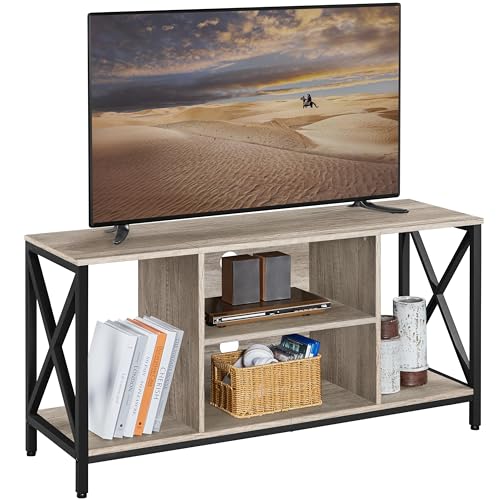
- Best compact open stand: Yaheetech Industrial TV Stand for TVs up to 55 Inches, 47.5 Inch, Grey — Check on Amazon
- Furinno JAYA TV Stand, French Oak Grey and Black — Check on Amazon
- PERLESMITH Universal TV Stand, Table Top TV Stand for 32 to 60 Inch TVs, PSTVS04 — Check on Amazon
- WLIVE TV Stand for 55 to 60 Inch TVs, Mid Century Modern TV Console, Retro Brown — Check on Amazon
- Huuger TV Stand for 55 to 60 Inch TVs, 54 Inch Entertainment Center with Power Outlets and LED Lights, Black — Check on Amazon
- VASAGLE Farmhouse TV Stand for TVs up to 65 Inches, ULTV535W01, Rustic White and Honey Brown — Check on Amazon
Read the full guide ↓
Disclosure: As an Amazon Associate, dailyhomedecorating.com earns from qualifying purchases. Links to Amazon on this page are affiliate links; they cost you nothing extra. Listing details such as price and availability change often, so check the current Amazon listing before you buy.
The best tv stand for small apartments under $200 is not simply a smaller version of a living-room console. Apartment TV walls live under constraints other rooms never meet: a wall that may be nine feet wide and shared with a dining table, a lease that forbids wall mounting, a single reachable outlet, neighbors below who hear every dropped remote, and the near-certainty that whatever you buy will have to fit a different room within two years. The right stand for that life is compact without being flimsy, stores the gear an apartment actually has, assembles without a workshop, moves without a van, and — because apartment budgets compete with deposits and rent — leaves as much of the $200 unspent as the room allows. Six picks meet that standard here, and the most expensive of them is the one we recommend last for most renters.
Notice what leads this guide: two open stands under 48 inches wide and a tabletop base that adds no furniture at all. That ordering is deliberate. In a small apartment, floor area is the scarcest resource you own, and a stand’s first job is to not waste it. The compact Yaheetech gives a 55-inch TV a proper home in 47.5 inches of width. The Furinno JAYA does the same job for smaller TVs at the lowest price in this guide. The PERLESMITH tabletop base is the renter’s cheat code — it bolts to the TV’s own mounting holes and lets a dresser, desk or shelf you already own become the stand, at zero additional footprint. Only after those come the true consoles: a 55-inch-class WLIVE for apartments with a real living-room wall, a 54-inch Huuger for the gaming-heavy studio, and a 58-inch VASAGLE included honestly as the ceiling case — the biggest stand an apartment should consider, for the largest small-apartment walls only.
Every pick passed this batch’s verification gates: a real Amazon listing from an identifiable brand, a manufacturer TV-size rating, and a genuine price sighting under $200 for the configuration reviewed, flagged in the sources file wherever the sighting came from a sibling configuration. No static prices appear in this article; check price on Amazon. Renters cross-shopping budgets should also see Best Tv Stand For Small Apartments Under $100 and the broader small-room guide at Best Tv Stand For Small Spaces Under $200.
In this guide
Quick Picks: best tv stand for small apartments under $200
In a hurry? Match your room and your TV to a row below. Each linked pick goes straight to its Amazon listing so you can confirm the live price and the exact dimensions before you commit.
| Buyer type | Pick | Why it stands out | Link |
|---|---|---|---|
| Best compact open stand | Yaheetech Industrial TV Stand for TVs up to 55 Inches, 47.5 Inch, Grey | 47.5 inches wide, four open compartments, top rated to 88 pounds — the compact default | Check on Amazon |
| Best simple budget stand | Furinno JAYA TV Stand, French Oak Grey and Black | The cheapest honest stand here, for TVs up to about 50 inches | Check on Amazon |
| Best zero-footprint option | PERLESMITH Universal TV Stand, Table Top TV Stand for 32 to 60 Inch TVs, PSTVS04 | No new furniture at all: a steel-and-glass base that turns your existing dresser into the stand | Check on Amazon |
| Best mid-century value | WLIVE TV Stand for 55 to 60 Inch TVs, Mid Century Modern TV Console, Retro Brown | A real cabinet console that still fits an apartment wall, for 55 to 60 inch TVs | Check on Amazon |
| Best for media gear and gaming | Huuger TV Stand for 55 to 60 Inch TVs, 54 Inch Entertainment Center with Power Outlets and LED Lights, Black | 54 inches with drawers and full charging — the studio gaming answer | Check on Amazon |
| Best farmhouse storage | VASAGLE Farmhouse TV Stand for TVs up to 65 Inches, ULTV535W01, Rustic White and Honey Brown | The ceiling case: a 58-inch storage console for the largest apartment walls only | Check on Amazon |
How These Picks Were Chosen
Apartment criteria overruled the usual ones. Width came first: every pick except the deliberate ceiling case is 55 inches wide or less, because an apartment TV wall competes with doors, radiators, desks and the walkway to the kitchen. Depth came second — shallow stands around 14 to 16 inches keep the walkway clear and the screen closer to the wall. Weight and assembly came third: a pick had to be buildable by one or two people with basic tools, in the room it will live in, and movable by the same people on moving day. Anything requiring a freight delivery or a permanent installation was out.
Rental reality shaped the rest. No pick requires wall mounting. The tabletop base exists precisely because many leases forbid drilling and many TVs arrive with splayed feet that fit nothing. Cable and outlet discipline mattered more than storage volume: an apartment setup is usually a TV, one console or streaming box and maybe a soundbar, so a stand that handles four devices tidily beats a cavern that handles twelve. And price honesty mattered most of all — the configuration named in each review needed a genuine sighting under $200, with sibling-configuration sightings flagged in the sources file, because apartment shoppers are the least able to absorb a pricing surprise.
Finally, we weighted the exit cost. A stand that fits this apartment but cannot fit the next one is a recurring expense. Compact open stands and the tabletop base travel anywhere; the consoles here were chosen at sizes that work in a typical next apartment too.
Detailed Reviews: Best TV Stand for Small Apartments Under $200, Pick by Pick
Yaheetech Industrial TV Stand for TVs up to 55 Inches, 47.5 Inch, Grey
Best for: most small apartments: a TV of 55 inches or under, one or two devices, and a wall under five feet.
The Yaheetech leads this guide because it is sized the way apartments actually are. At 47.5 inches wide, about 14 inches deep and 24.5 inches tall, it takes a TV up to 55 inches, holds up to 88 pounds on top, and gives you four open compartments with 22-pound shelf ratings for the streaming box, the console and the game cases. The grey-and-black industrial look disappears under a screen, the metal frame keeps it rigid, and the whole thing costs a fraction of this budget — which, in an apartment, is money that usually has a better use.
Open storage is the right call at this scale. Apartment gear runs hot in enclosed cabinets, remote signals need a clear path, and the total device count is low enough that there is no mess worth hiding behind doors. Assembly is quick, the stand is light enough to shift for cleaning or a room reshuffle, and when the lease ends it is the easiest piece in the room to carry down the stairs.
The compromises are visible: cables show unless you add ties and a small cable box, dust settles on open shelves, and a 55-inch TV is the hard ceiling. If your apartment’s TV is bigger, skip to the WLIVE or the ceiling-case VASAGLE and accept the width they demand.
What we like
- Correct apartment scale: 47.5 in wide, shallow depth
- Top rated to 88 pounds; four useful compartments
- Open design keeps apartment gear cool
- Light, quick to build, easy to move at lease end
Honest limitations
- Cables and dust stay visible
- 22-pound shelf ratings
- 55-inch TV ceiling
Choose it if your TV is 55 inches or under and the wall is under five feet. Skip it if you need doors, or your TV is 60 inches or more.
Furinno JAYA TV Stand, French Oak Grey and Black
Best for: strict budgets and smaller TVs — a first-apartment stand that covers the fundamentals.
The Furinno JAYA is the least money that buys a real stand in this guide: a roughly 47-inch-wide open stand in French Oak Grey and Black, tiered shelves for the gear, sized for TVs up to about 50 inches, with a tracked price sighting at the very bottom of this budget range. For a first apartment, a studio with a 43 or 50 inch TV, or a rental you know is temporary, it does the complete job — screen at viewing height, boxes on shelves, surface for the remotes — and leaves nearly the whole $200 for everything else a new home needs.
One-adult assembly is a genuine apartment feature: no second pair of hands to schedule, no half-built cabinet blocking the only walkway for a weekend. The open shelves breathe, the finish is neutral enough to survive a move to a different room or a different city, and the light build makes it the easiest full stand here to transport.
Know its lane: the JAYA line’s top rating is modest (40 pounds on the up-to-50-inch models in the line’s specifications), the shelves are light-duty, and nothing is enclosed. It is a stand for a TV and a streaming box, not a receiver stack. The sources file documents the line-level spec cross-checks behind those numbers. Within the lane, it is exactly what a tight-budget apartment needs.
What we like
- Lowest price in this guide by a wide margin
- One-adult assembly; easiest full stand to move
- Open shelves suit a simple streaming setup
- Neutral finish travels between rooms and leases
Honest limitations
- TVs up to about 50 inches only
- Modest top and shelf load ratings
- Open storage hides nothing
Choose it if the TV is 50 inches or under and the budget is spoken for elsewhere. Skip it if you have a receiver, a big console stack, or a 55-inch-plus TV.
PERLESMITH Universal TV Stand, Table Top TV Stand for 32 to 60 Inch TVs, PSTVS04
Best for: renters whose TV can live on furniture they already own — the zero-footprint pick.
The PERLESMITH PSTVS04 is not furniture; it is a universal tabletop TV base — a steel post and tempered glass foot that bolts to your TV’s VESA mounting holes and replaces the factory feet, for TVs from 32 to 60 inches and up to 88 pounds. In a small apartment that distinction is gold. Your dresser, your desk, your low bookshelf becomes the TV stand. No new footprint, no new furniture to move at lease end, and the TV gains height adjustment and a far more stable base than the splayed plastic feet most TVs ship with — feet that, in apartments, never seem to fit the furniture you actually own.
It also solves the two classic renter problems at once: leases that forbid wall mounting, and TVs whose wide-set feet overhang every surface in the flat. The glass base is compact, the post hides cables down its channel, and when you move, the stand is a shoebox-sized item in a bag rather than a piece of furniture in a stairwell.
The limits are structural: it provides no storage of its own, so your boxes live on the furniture beneath — choose something with a shelf or drawer. It needs that furniture to be sturdy, level and at a sensible viewing height. And check your TV’s VESA pattern against the listing before ordering; most TVs comply, but the check takes one minute and prevents the only real failure mode this pick has.
What we like
- Zero additional footprint — uses furniture you own
- Far more stable than factory TV feet
- Height-adjustable; fits 32 to 60 inch TVs to 88 pounds
- Moves in a bag, not a van
Honest limitations
- No storage of its own
- Needs sturdy, level furniture beneath
- Confirm your TV’s VESA pattern first
Choose it if you have a solid dresser or desk and a no-drilling lease. Skip it if you have no suitable furniture, or you need enclosed gear storage.
WLIVE TV Stand for 55 to 60 Inch TVs, Mid Century Modern TV Console, Retro Brown
Best for: apartments with a genuine living-room wall and a 55 to 60 inch TV that want one real console.
Some apartments do have a living room, and for those the WLIVE is the step up: a mid-century cabinet console sized for 55 to 60 inch TVs, with a cabinet for the clutter, an open shelf for the box that needs air, and tapered legs that keep the floor visible — the oldest trick for making a small room feel bigger. The retro brown finish warms the rental-white walls most apartments come with, and the proportions stay apartment-scaled rather than suburban.
It earns its place over the open stands when the setup grows up: a soundbar, a console, a router and the accumulated small gear of a settled home. The cabinet swallows the mess for guests; the open section keeps the hot gear breathing. It is the apartment pick most likely to follow you to a house and keep working, which amortizes its mid-range price across two homes.
Measure before you dream: it needs its full width plus walking clearance, it is not rated for a 65-inch TV, and our price sighting for this model family came from a sibling finish — confirm the live price on the retro brown listing, as the sources file flags. In a true studio, the Yaheetech or the PERLESMITH will serve you better.
What we like
- A real cabinet at apartment scale
- Legs keep small rooms feeling open
- Storage for a grown-up device stack
- Likely to survive the move to a bigger home
Honest limitations
- Needs a real living-room wall
- Not for 65-inch TVs
- Sibling-finish price sighting — verify live
Choose it if your apartment has a defined living area and a TV of 60 inches or under. Skip it if you live in a studio where every foot of wall is contested.
Huuger TV Stand for 55 to 60 Inch TVs, 54 Inch Entertainment Center with Power Outlets and LED Lights, Black
Best for: studio and one-bed gaming setups: one 54-inch console that powers and charges everything.
The Huuger is the apartment technologist’s pick: a 54-inch black entertainment center with drawers, shelves, LED lighting and a built-in charging station — four AC outlets, two USB ports and a USB-C port per the listing — rated for TVs up to 60 inches. Apartment electrical reality is one outlet near the TV wall if you are lucky; this stand turns that one outlet into a powered media hub, and its drawers swallow the controllers, cables and remotes that otherwise colonize a studio’s only surfaces.
In a studio, the TV wall is also the office wall and the living wall, and this is the pick that behaves accordingly: everything charges at the stand, the lighting shifts the room from work mode to movie mode, and the footprint stays at 54 inches. For a gaming-heavy one-bed, it is the most complete single purchase in this guide.
The caveats: it is the joint-widest apartment pick here, so measure the wall honestly; the build is budget-standard engineered wood and metal; and our price sighting is at model-line level, so verify the live listing price as the sources note says. If your setup is just a TV and a streaming stick, this is more machine than you need — the Yaheetech exists for you.
What we like
- Built-in AC, USB and USB-C ends the outlet hunt
- Drawers organize studio small-gear
- LED lighting shifts a studio’s mood
- 54-inch frame fits most one-bed walls
Honest limitations
- Too wide for the smallest studios
- Budget-standard build
- Model-line price sighting — verify live
Choose it if your apartment setup includes a console, soundbar and devices to charge. Skip it if your setup is a TV and one streaming box — buy simpler.
VASAGLE Farmhouse TV Stand for TVs up to 65 Inches, ULTV535W01, Rustic White and Honey Brown
Best for: the largest small apartments: a full storage console for a 65-inch TV, included as the ceiling case.
The VASAGLE farmhouse console (ULTV535W01) is here under a warning label: at about 58 inches wide it is the biggest stand an apartment should even consider, and only apartments with a long, dedicated TV wall should consider it. What it offers in return is the full-size experience — a rating for TVs up to 65 inches, sliding barn doors over real cabinets, a two-tone rustic white and honey brown finish — at a price our sighting put well under this budget. For the renter whose small apartment is a spacious one-bed with a 65-inch TV, it is the honest answer rather than a too-small stand the TV overhangs.
The sliding doors suit apartment life better than swing doors, which need clearance arcs that small rooms cannot spare. Storage volume is the most here, which in an apartment doubles as general storage — blankets, games, the printer — because apartments never have enough of it anywhere else.
The costs are the ceiling-case costs: it dominates a small wall, it is the heaviest pick to move, assembly is a real project, and in a true studio it will make the room feel like a TV with furniture attached. Measure twice, and if the wall is under six feet of clear space, choose from the picks above instead.
What we like
- Full 65-inch fit with maximum storage
- Sliding doors need no swing clearance
- Storage doubles as apartment general storage
- Well under budget in our sighting
Honest limitations
- Dominates small walls; heaviest to move
- Assembly is a real project
- Wrong for true studios
Choose it if your apartment is a spacious one-bed with a 65-inch TV and a long wall. Skip it if your space is a studio or the clear wall is under six feet.
Comparison Table
Apartment math: width first, then what the stand does with the devices and the outlet.
| Pick | TV fit | Storage style | Look and notes |
|---|---|---|---|
| Yaheetech Industrial TV Stand for TVs up to 55 Inches, 47.5 Inch, Grey | Up to 55 in | Four open compartments | 47.5 in wide; the compact default |
| Furinno JAYA TV Stand, French Oak Grey and Black | Up to 50 in | Open tiered shelves | Cheapest; one-adult assembly |
| PERLESMITH Universal TV Stand, Table Top TV Stand for 32 to 60 Inch TVs, PSTVS04 | 32 to 60 in | None — uses your furniture | Zero footprint; renter-proof |
| WLIVE TV Stand for 55 to 60 Inch TVs, Mid Century Modern TV Console, Retro Brown | 55 to 60 in | Cabinet plus open shelf | Real console for real living rooms |
| Huuger TV Stand for 55 to 60 Inch TVs, 54 Inch Entertainment Center with Power Outlets and LED Lights, Black | Up to 60 in | Drawers plus shelves | 54 in; powered hub for studios |
| VASAGLE Farmhouse TV Stand for TVs up to 65 Inches, ULTV535W01, Rustic White and Honey Brown | Up to 65 in | Sliding doors, cabinets | 58 in ceiling case; measure first |
How to Choose a TV Stand for a Small Apartment
Measure the wall, then the walkway. Tape the stand’s footprint on the floor before ordering: width against the wall, and depth — 14 to 16 inches is the apartment-friendly zone — against the path you walk a hundred times a day. If the tape makes the room feel tight, the stand will too.
Let the TV size set the ceiling. A 55-inch TV is about 48 inches wide and pairs with the compact picks; a 60-inch needs the 54-inch class; a 65-inch forces the ceiling case or a tabletop base on furniture you own. Never solve a too-big TV with a too-narrow stand — overhang looks wrong and rocks worse.
Exploit furniture you already have. The tabletop base exists because apartments are full of sturdy low surfaces. A dresser at the right height plus a VESA base is a better apartment answer than a second furniture purchase, and it is the only option here that costs zero floor space. If your furniture is flimsy or the wrong height, that calculus flips — buy the compact stand.
Count devices and outlets honestly. TV plus streaming box needs almost nothing. Add a console and a soundbar and you need airflow and three or four sockets: that is the Huuger’s case for existing. Add nothing you do not own yet; apartment storage spent on imaginary gear is how small rooms fill up.
Price the exit. Ask of every pick: can I carry it out alone, does it fit a typical next apartment, and would I keep it in a house? The open stands and the base score perfectly; the consoles score well at these sizes. That is why nothing larger than 58 inches appears in this guide. For the broader small-room view, see Best Tv Stand For Small Spaces Under $200, and for family apartments, Best Tv Stand For Families Under $200.
Common Mistakes to Avoid
Buying the suburban console. A 70-inch entertainment center in a nine-foot wall eats the room and the walkway. Apartment guides exist because the scaling is different; respect it.
Forgetting door and drawer clearance. Swing doors and pull-out drawers need arcs and straight pulls that tight rooms may not have. Sliding doors, open shelves and lift-off access are the apartment-safe patterns.
Wall-mounting against the lease. If the lease forbids drilling, a mount is a deposit risk. A tabletop base or a stand achieves the same screen position with zero holes.
Ignoring the outlet map. The stand will live where the outlet is, not where the room looks best in photos. Plan the wall around power and cable entry points first, furniture second.
Overbuying storage. A cavernous console invites accumulation in a home with no spare closets. Match storage to the device list you have, and let the perimeter stay clear. A compact table lamp completes the room without touching the floor plan.
Final Recommendation
For most small apartments, the Yaheetech is the best tv stand for small apartments under $200: correct width, correct depth, a real weight rating, and a price that leaves the budget alive. Go smaller and cheaper with the JAYA for a 50-inch TV, or go footprint-free with the PERLESMITH if your dresser can take the job. Step up to the WLIVE when the apartment has a true living room, to the Huuger when it has a true gaming setup, and to the VASAGLE only when it has a true 65-inch TV and the wall to match. Measure the wall, respect the lease, and keep the change.
The Apartment Move-In Playbook
Order of operations decides whether an apartment TV wall comes together in an afternoon or sprawls across a month. Start with the outlet, not the furniture: find where power and any cable or antenna point actually are, because the TV wall will live there regardless of where the room looks best empty. Tape the stand’s footprint on the floor at that wall — width, and the 14 to 16 inches of depth this guide recommends — and live with the tape for a day. Walk past it with laundry, with groceries, with the vacuum. If the tape annoys you, the stand would have annoyed you more.
Build the stand in the room it will serve, on the hardest floor section available, and place it before the TV goes anywhere near it. Run every cable while the stand is empty and reachable: power strip positioned, leads through the back cutouts, enough slack to pull a console out for a cable swap without dismantling the wall. Then the TV, then the devices heaviest-first and lowest-first, then the small things. Photograph the back of the finished setup before you push it to the wall — that photo is the map you will want the first time something needs unplugging in the dark.
Keep the packaging decision for last. Apartment storage is precious, but a stand’s box is its moving protection; if a closet or under-bed space can hold it flat-packed down, keep it until the first move is done. It is the difference between a stand that travels as luggage and one that travels as a liability.
Renting With a TV Wall: Deposits, Drilling and Neighbors
The rental rules that shape this guide deserve stating plainly. Wall mounting is a deposit question, not a technical one: if the lease forbids drilling, the tabletop base and the floor-friendly stands here achieve the same screen position with zero holes, and no viewing angle is worth a deposit dispute. Anchor straps are the honorable exception most landlords accept — a single small fixing that prevents a genuine hazard — but if even that is refused, choose the widest, lowest stand your TV allows and load its bottom shelf heaviest; physics is the fallback plan.
Neighbors are the other rental reality. A TV stand on a hard floor transmits the subwoofer’s energy straight into the structure; felt pads under feet, a rug under the stand, and the subwoofer on an isolation pad rather than bare floor are the difference between a setup and a complaint. Keep late-night volume honest, use the TV’s night mode if it has one, and remember that the stand you chose for its storage also stores the headphones that solve the problem completely.
Finally, document the wall as you found it. A dated photo of the TV wall before the stand goes in, and after it comes out, settles most move-out conversations before they start. Small apartments reward the renter who treats the room as borrowed — which, for now, it is — while living in it completely.
Studio-Specific: One Room, Three Jobs
The studio is the small apartment’s hardest form, because the TV wall must share one room with sleeping, working and living without making any of them feel like a compromise. The layout that works treats the TV wall as the room’s anchor and arranges the other jobs around its axis: the sofa or futon faces it and doubles as the bed’s daytime form, the desk takes the perpendicular wall so work and viewing never share a sightline, and the stand itself — compact, closed or open as the device count dictates — becomes the room’s main storage furniture, because in a studio every piece must earn its footprint twice.
Scale is the studio’s constant negotiation. A 55-inch TV on a 47.5-inch stand is usually the sweet spot: big enough to be the cinema, small enough to leave wall for a shelf, a mirror or nothing at all. Bigger screens are possible — the Huuger and the ceiling-case VASAGLE exist for them — but each step up in screen size should be interrogated: does the room gain more from the picture, or from the wall the picture consumes? Studios punish maximalism quietly, in the walkway that narrows and the corner that disappears.
Light and sound finish the studio brief. The TV wall will glow in a room where someone may be sleeping; bias lighting and a headphone habit are courtesies, not accessories. And because a studio’s floor is one continuous surface, the stand’s feet, pads and rug choices carry sound to the neighbors below — set the setup on a rug, pad the feet, and keep the subwoofer, if any, modest and isolated. A studio done this way does not feel like a small apartment with a TV in it; it feels like a small, complete home.
Small Apartment, Real Budget: Where the $200 Should Go
Apartments compete for money like no other homes, so this guide’s ordering deserves its reasoning stated once, plainly. The stand is infrastructure, not the experience: the experience is the picture and the sound. A renter with $200 for the whole TV wall is usually best served by the compact stand at a fraction of the budget and the remainder spent on the soundbar, the streaming device or simply kept against the deposit. The picks rise in price exactly as their justification must rise — more storage, more devices, a bigger screen, a longer tenancy — and a pick is only worth its step up when your situation names the reason.
The exception is the forever-apartment: the long lease, the rent-controlled keeper, the place you will furnish once and inhabit for a decade. There, the console you will look at daily for ten years deserves the top of the budget, and the WLIVE or the VASAGLE stops being a splurge and becomes the cheapest option per year of service. Match the spend to the tenancy, and the budget question answers itself.
A Worked Example: The One-Bedroom Living Room
Make it concrete: a one-bedroom apartment, a living room twelve feet by ten, a 55-inch TV, a streaming box, a game console, one reachable outlet, and a sofa that must also seat guests. The Yaheetech version of this room spends 47.5 inches of the short wall, leaves the corners for a lamp and a plant, keeps the console breathing on an open shelf, and banks most of the budget — the sensible default, and the room feels furnished rather than filled. The WLIVE version spends more wall and more money to gain the cabinet: guests see a calm front, the gear disappears, and the room graduates from furnished to finished — worth it precisely when the apartment is a keeper and the guests are frequent.
The Huuger version answers a different one-bed: the one where the living room is also the gaming room, the console has a headset, two controllers and a charging habit, and the single outlet was the room’s original sin. Same wall, same TV, three different correct answers — chosen not by taste but by which problem the room actually has. That is the whole method of this guide, and it transfers to every apartment: name the constraint first, and the stand selects itself.
Decorating Around the Apartment TV Wall
Once the stand is right, the apartment TV wall asks for restraint everywhere else. Keep the wall itself quiet: the screen is the picture, and art competes with it at this scale — if the wall needs softening, one large piece to the side or a plant at the stand’s end does more than a gallery cluster. Light the room from its edges, not from beside the screen, and let a rug, rather than furniture, define the viewing zone; rugs are the apartment’s cheapest architecture and the only kind that rolls up on moving day.
Resist, finally, the urge to fill the stand’s ends and top with objects because they are there. In an apartment, clear surfaces are the luxury — they are what makes a small room read as calm rather than crowded. The stand’s storage exists so the surfaces can stay empty. Use it that way, and the smallest room in this guide’s world will feel like the most deliberate one.
A Note on Buying Second-Hand in Apartments
Apartment furniture has a healthy second life, and TV stands are among the safest second-hand buys: no upholstery, no plumbing, nothing to hide. If you shop used, apply this guide’s gates in person — check the stand is wider than your TV, confirm the size rating from the brand and model, rock it on a hard floor to test the frame, and inspect cam locks and shelf pins, the parts that fail first and are hardest to replace. Buy new when the model is one of this guide’s powered picks, because outlet strips and LED modules are the components whose history you cannot inspect. Either way, the measurements and the method in this guide travel with you; the marketplace is simply another place to apply them.
Frequently Asked Questions
What size TV stand is best for a small apartment?
For most apartments, a stand between 47 and 55 inches wide and no more than about 16 inches deep. That covers TVs up to 55 or 60 inches while keeping walkways clear. Only step to a 58-inch console if you have a 65-inch TV and a long, dedicated wall.
Can I use a tabletop TV base instead of a stand in a rental?
Yes — it is often the best rental answer. A VESA tabletop base bolts to the TV and sits on a dresser or desk you already own: no wall drilling, no new footprint, and far more stable than factory feet. Confirm the furniture is sturdy and the TV’s VESA pattern matches.
How do I handle cables and outlets in an apartment setup?
Keep the device count lean, route every lead down behind the stand to one strip, and if the room gives you a single outlet for a multi-device setup, consider a stand with a built-in power strip such as the Huuger in this guide.
Is an open stand or a cabinet better for an apartment?
Open stands suit most apartments: the device count is low, airflow is free, and the visual weight is smaller. Choose a cabinet when the setup grows to several boxes or when the TV wall doubles as the room’s focal point for guests.
What should I check before buying a stand for a rental?
The lease (drilling rules), the wall width and outlet position, the walkway depth, and the exit: weight, assembly effort and whether it fits a typical next apartment. A stand that fails the exit test costs you twice.
More apartment guides in this batch: Best Tv Stand Under $150 for the tier below, and Best Tv Stand For Modern Homes Under $200 if the apartment’s style runs modern.


