Where to buy
Check the latest price, availability and delivery on Amazon. Orders are placed on Amazon. We may earn a commission from qualifying purchases.
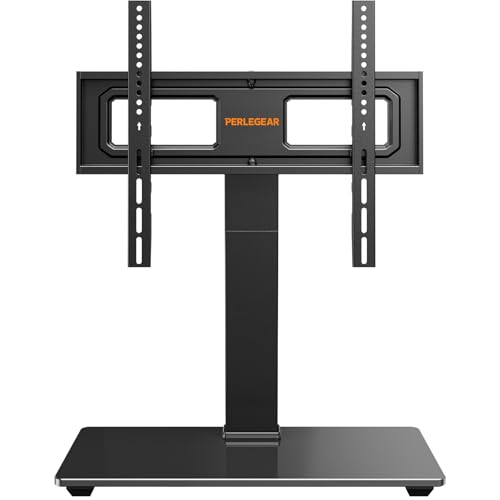
- Best overall for modern homes: Perlegear Universal Swivel TV Stand PGTVS26 — Check on Amazon
- FITUEYES Universal TV Stand, Table Top TV Stand for 27-55 Inch TVs — Check on Amazon
- PERLESMITH Universal TV Stand, Table Top TV Stand for 32-60 Inch TVs, PSTVS04 — Check on Amazon
- Furinno TURN-S-TUBE 3-Tier TV Stand, French Oak Grey — Check on Amazon
- Furinno JAYA Simple Design Corner TV Stand, Espresso/Black — Check on Amazon
Read the full guide ↓
Disclosure: As an Amazon Associate, dailyhomedecorating.com earns from qualifying purchases. Links to Amazon on this page are affiliate links; they cost you nothing extra. Listing details such as price and availability change often, so check the current Amazon listing before you buy.
The search for the best tv stand for modern homes under $50 contains a trap, and it is worth naming in the first paragraph: modern design is mostly subtraction. The rooms people mean by “modern” — calm, uncluttered, a screen that seems to float above a low line of furniture, no visible cable nest, no ornament for ornament’s sake — achieve that look by removing things, and the things removed are exactly the things that cost money to do well: thick panels, concealed joinery, doors that close flush, finishes that survive close inspection. Fifty dollars cannot buy that craftsmanship, and any guide that claims otherwise is selling you a photograph. What fifty dollars can buy, spent with a modern eye, is the silhouette: a low horizontal line, a screen raised on glass and steel instead of feet, a restrained grey-oak finish, and cables disciplined into invisibility. This guide is about buying the silhouette honestly, with products whose construction we could verify, and about knowing precisely which parts of the modern look this budget cannot counterfeit.
That is why this roundup is led by tabletop bases rather than furniture. A contemporary TV on its factory feet, standing on a low credenza, reads as an appliance on a table. The same TV bolted to a slim steel pillar on a tempered glass base reads as an installation — the screen floats, the footprint shrinks to a single elegant foot, and the furniture underneath can be the simplest low unit you own, because the base is doing the visual work. Perlegear, FITUEYES and PERLESMITH all sell that idea for under the ceiling, with real VESA hardware and weight ratings that dwarf anything furniture at this price can claim. The two furniture picks that follow them earn their places on finish and proportion: a pale grey-oak open stand whose color belongs in a modern palette, and a corner unit for the many modern rooms whose only honest layout is an angled one. The sixth slot — the low, doored, handle-less console of the catalogues — is honestly empty at this price, and we explain what to do about that rather than filling it with an anonymous listing.
Our short answer: for most modern rooms, buy the Perlegear PGTVS26 and put it on the plainest low surface you own — it is the single most modern-looking object in this guide. If your TV is smaller, the FITUEYES does the same job with a slightly softer profile; if you want the established name in tabletop bases, take the PERLESMITH. If you need actual furniture with shelves, the TURN-S-TUBE in French Oak Grey is the only finish in the verified under-$50 field that belongs in a contemporary palette. And if the room’s geometry says corner, the JAYA keeps the look disciplined. For the full modern effect, pair the screen with restraint around it — our notes on Best Console Table Under $50 as a minimalist TV surface and on keeping the wider room consistent are in the how-to section. Everything here stays under $50.
In this guide
Quick Picks: best tv stand for modern homes under $50
Chosen for line, finish and footprint — the modern criteria — as much as for capacity.
| Modern need | Pick | Why it stands out | Link |
|---|---|---|---|
| Best overall for modern homes | Perlegear Universal Swivel TV Stand PGTVS26 | Steel pillar and tempered glass base make the TV float; swivel, tilt, 32–70 inch TVs up to 88 lbs | Check on Amazon |
| Best for smaller modern setups | FITUEYES Universal TV Stand for 27-55 Inch TVs | Minimal glass-and-steel base with height adjustment for mid-size screens | Check on Amazon |
| Best established tabletop base | PERLESMITH Universal TV Stand PSTVS04 | Clean glass base, wire management in the spine, 32–60 inch TVs up to 88 lbs | Check on Amazon |
| Best modern-finish furniture | Furinno TURN-S-TUBE 3-Tier TV Stand, French Oak Grey | Pale grey-washed finish and a low, wide line; TVs up to 55 inches | Check on Amazon |
| Best for a modern corner layout | Furinno JAYA Simple Design Corner TV Stand, Espresso/Black | Corner geometry keeps an angled layout clean; TVs up to 46 inches | Check on Amazon |
| Best low doored console | No verified pick under $50 — see the honest note in the reviews | The handle-less cabinet look starts a tier up; this slot is prose-only | Prose only — no link |
How we chose these picks — the modern rules
The batch rules came first, as always: a verifiable Amazon listing from an identifiable brand, manufacturer dimensions and TV ratings cross-checked against a second source, and a genuine price sighting under $50 — no static prices are printed in this article, and you should check the live listing before buying. Then we applied the modern filter, which eliminated most of the budget field. Out went anything with a faux-rustic barn finish, turned legs, ornate hardware or a silhouette that reads “farmhouse” — not because those are bad products, but because they answer a different search. Out, too, went the wide anonymous consoles whose glass-and-LED styling copies the modern look in photographs while stating no weight ratings at all; in a modern room, where everything is exposed and nothing is hidden by clutter, an unrated stand is both a safety problem and a visual one, since sagging is the least modern look of all.
What survived shares three traits. A low horizontal emphasis, because contemporary rooms sit low and screens should meet viewers at seated eye level. A restrained material palette — black steel, clear glass, pale grey oak, deep espresso — that can disappear against a modern interior instead of decorating it. And cable discipline, because the modern look fails at the first visible wire: every pick here either hides cables in a spine, drops them behind an open frame into a corner, or gives you a clean rear path you can bundle into invisibility. Judge any alternative you find against those three traits and the verified ratings, and you will land where this guide landed.
The picks in detail
Perlegear Universal Swivel TV Stand PGTVS26 — best overall for modern homes
Who it suits: Anyone whose modern room already has a low surface — a credenza, a plain bench, a simple media unit — and whose TV still stands on its factory feet like an appliance. This base is the difference between furniture with a TV on it and a designed viewing wall.
The PGTVS26 is a tabletop stand in the mount industry’s sense: a steel pillar on a tempered glass base, bolting to the TV’s VESA holes (patterns up to 400x400mm), fitting TVs from 32 to 70 inches and rated to hold up to 88 lbs. The modern magic is proportion. The factory feet of a large TV sprawl; this base gathers the whole screen onto one centered, architectural foot, so the eye reads a floating rectangle of glass and light above a clean surface. Height adjustment lets you set the screen’s bottom edge exactly where the composition wants it — and lets a soundbar slide beneath the picture instead of interrupting it. Swivel and tilt, which sound like spec-sheet filler, are in practice the modern room’s best friends: swivel turns the screen toward a kitchen or a reading chair without moving furniture, and a slight downward tilt kills the ceiling-light reflection that plagues glossy modern interiors with big windows.
Build and setup are honest hardware work: real bolts, a screwdriver, twenty minutes, and a result that feels engineered because it is. The glass base wants a wipe now and then — in a minimalist room, dust on glass is visible in a way dust on wood-effect laminate is not, and the modern bargain includes a microfiber cloth kept in the credenza drawer. The base also concentrates the TV’s weight at the center of whatever it stands on, so the surface beneath must be genuinely sturdy and level; a floating shelf look achieved on a wobbling unit is neither modern nor safe. Given a solid low unit, though, this is the pick that most changes the room for the money — visitors will assume the installation cost several times what it did.
Pros: The floating-screen effect that defines the modern look; one centered footprint instead of sprawling feet; swivel and tilt manage modern rooms’ glass and glare; huge size and weight range (32–70 inches, up to 88 lbs); height adjustment composes the screen and clears soundbars.
Honest limitation: It is a base, not furniture — no storage, and it inherits the quality of the surface beneath it. The glass shows dust and fingerprints and demands the occasional wipe. VESA compatibility must be confirmed for your exact TV model before ordering.
Choose it if you own a solid low surface and want the installation look. Skip it if you need shelves or your TV lacks VESA holes. Check your pattern and the live price: Check on Amazon.
FITUEYES Universal TV Stand for 27-55 Inch TVs — best for smaller modern setups
Who it suits: Modern bedrooms, studios and second living spaces with a TV between 27 and 55 inches, where the Perlegear’s range is more than needed and a slightly lighter visual profile suits a smaller room.
FITUEYES’ tabletop stand covers 27 to 55 inches, is rated up to 88 lbs, and supports VESA patterns from 100x100mm to 400x400mm, on a tempered glass base with a height-adjustable pillar; the base unit measures roughly 17.5 by 9.5 by 25.5 inches. In a smaller modern room, scale is everything: a base proportioned for a 70-inch panel can look industrial under a 40-inch screen, while this unit’s slimmer pillar and smaller glass foot keep the composition light. Height adjustment matters even more in bedrooms, the natural home of this pick, because a screen watched from a bed wants to sit higher and tilt subtly down — this stand gives you both without a wall mount and without drilling, which keeps it renter-compatible in the design-conscious apartments where modern style usually lives.
The aesthetic details hold up at this price: the glass is clear and edge-finished rather than tinted green at the rim like the cheapest bases, the pillar’s finish is a matte black that disappears behind the screen, and the cable path runs down the pillar so the single visible line drops behind the furniture. Assembly is the usual FITUEYES hardware kit — labeled screws, clear instructions — and the finished object has the calm, nothing-extra look the modern brief asks for. The same conditions as any base apply: VESA holes required, a sturdy level surface beneath, and an understanding that storage lives elsewhere in the room. Within those, for a mid-size screen this is the most composed object in the guide.
Pros: Right-scaled for 27–55 inch screens; clean glass and matte steel palette; height adjustment suits bed viewing and soundbar clearance; cables vanish down the pillar; no drilling, so it suits design-led rentals.
Honest limitation: No storage; not the pick for screens above 55 inches; glass base needs dusting to keep the look; the surface beneath must be solid, since the base concentrates weight centrally.
Choose it if your TV is 55 inches or under and the room is a bedroom, studio or compact living space. Skip it if your screen is larger — take the Perlegear — or you need furniture. Check the listing: Check on Amazon.
PERLESMITH Universal TV Stand PSTVS04 — best established tabletop base
Who it suits: Modern-home buyers who prefer the established name in TV mounting, whose TV is between 32 and 60 inches, and who want wire management designed into the product rather than improvised afterward.
The PSTVS04 is the tabletop base that defined this little category: a tempered glass base and steel spine that bolt to VESA patterns up to 400x400mm, fit TVs from 32 to 60 inches, and are rated to hold up to 88 lbs, with height adjustment and wire management routed through the stand itself. Its modern credential is restraint. Where the Perlegear adds swivel hardware and the FITUEYES trims the profile, the PERLESMITH simply stands the screen up, centered and still, with the cables swallowed by the spine — the purest version of the floating-screen idea, and the one that has been sitting under modern living rooms’ TVs the longest. In a room composed around stillness — a low sofa, a plain wall, one artwork — that stillness is the point.
Practically, the height adjustment earns its keep daily: set the screen so a soundbar clears its sensor, or so the bottom bezel aligns with the top of a low credenza’s line, and the whole wall reads intentional. The glass base is wide enough to feel planted under a 60-inch screen yet visually weightless, and the unit’s own weight (a little over six pounds) makes the installation a one-person job once the TV is lifted on — lifting a large TV onto any base remains a two-person task regardless of the base’s weight. As with its rivals: VESA check first, sturdy surface required, no storage provided. If your modern room’s furniture is already chosen and loved, this is the base that interferes with it least.
Pros: The category’s established design; cleanest, stillest profile of the three bases; integrated wire management; wide 32–60 inch range with an 88 lb rating; height adjustment for soundbars and sightlines.
Honest limitation: No swivel — if your seating is off-axis, the Perlegear serves you better. Glass shows dust. And like every base here, it contributes no storage to a room that may need some.
Choose it if your seating faces the screen squarely and you value the established, minimal design. Skip it if you need swivel for angled seating. Check compatibility and price: Check on Amazon.
Furinno TURN-S-TUBE 3-Tier TV Stand, French Oak Grey — best modern-finish furniture
Who it suits: Modern rooms that genuinely need furniture — shelves for a console and media, nothing suitable already in the room — with a TV up to 55 inches and a palette of whites, greys and pale wood.
Most budget furniture fails the modern test on finish before it fails on anything else: the espresso and dark-walnut wood effects that dominate this tier belong to a warmer, more traditional interior. The TURN-S-TUBE in French Oak Grey is the exception we could verify — a pale, grey-washed oak effect that sits comfortably alongside the light woods and matte whites of contemporary rooms. The form helps too: about 47.25 inches wide, 13.4 inches deep and only 15.9 inches high, a long low line with squared tube legs, rated for TVs up to 55 inches with the top panel rated up to 80 lbs and lower shelves around 20 lbs each. Kept disciplined — one console, one streaming box, nothing else on display — it reads as a low modern plinth. Filled with clutter, it reads as a cheap shelf; the stand cannot make that decision for you, and this is the honest secret of modern style at any budget.
The open frame is a modern asset in one specific way: air. Consoles run cool, and there are no cabinet backs to drill for ventilation. It is a liability in the obvious way: everything shows. The modern setup ritual for this stand is therefore mostly subtraction and alignment — center the TV, place the console dead center on the middle tier, run every cable down the same rear leg in one bundle, and leave the bottom tier for a single low basket or a short stack of art books laid flat. Assembly is tool-free, tubes twisting by hand between composite wood shelves, and the unit comes apart just as easily — useful in the rental apartments where this style concentrates. Construction honesty applies as everywhere in this tier: engineered particleboard, light shelf ratings, no dragging it loaded across the floor.
Pros: The only verified under-$50 finish that belongs in a modern palette; low, wide, contemporary line; strongest furniture ratings here; open tiers ventilate a console; tool-free assembly suits rentals.
Honest limitation: The finish is a printed wood effect — convincing at viewing distance, not under close inspection. Open shelves expose everything you place on them. Depth (13.4 inches) excludes deep receivers, and the particleboard frame will not satisfy anyone expecting joinery.
Choose it if you need real shelves in a light modern palette. Skip it if your room runs dark and warm — the espresso finishes in our base guide will blend better — or if you already own a surface a base could use. See the listing: Check on Amazon.
Furinno JAYA Simple Design Corner TV Stand, Espresso/Black — best for a modern corner layout
Who it suits: Modern rooms whose architecture argues for an angled layout: open-plan spaces where the viewing zone is a corner of a larger room, L-shaped seating, or a studio where the TV corner defines the living area.
Modern floor plans are often open, and open plans often have no obvious TV wall — the viewing area becomes a corner carved out of a larger space, with a sectional’s chaise angled toward it. The JAYA is built for exactly that geometry: corner-cut shelves, 42.04 inches across the front, 15.55 inches deep and 22.75 inches high, rated for TVs up to 46 inches, in a deep Espresso/Black that anchors a light open-plan room the way a dark artwork would. The corner placement delivers the modern look’s hardest requirement for free: cable invisibility. Every wire drops into the corner void behind the unit, the one place in an open room where no sightline ever lands, so the installation reads clean from the kitchen, the dining zone and the sofa alike. Furinno’s rounded panel edges soften the unit’s front corners — a small mercy in a room where people circulate around the viewing zone rather than only sitting in it.
Set it up with a modern eye: the TV centered on the top panel and pushed back toward the corner, one component per shelf level rather than a stack, and the seating’s main position checked for a square-on view before the layout is declared finished — a corner TV serves an angled sectional beautifully and a straight sofa across the room only adequately. The construction is the budget standard, composite wood on tube framing, hand-assembled; keep loads within the modest ratings and the heaviest item low. What the JAYA cannot do is move: it is a corner piece in a way the other picks are not, and a household that rearranges seasonally should weigh that before choosing geometry over flexibility.
Pros: Defines a viewing zone in open-plan rooms; cables disappear into the corner from every angle; dark finish anchors light modern interiors; rounded edges suit circulation space; rated to 46 inches.
Honest limitation: Commits the room to the corner; usable top width is less than the headline once the corner cut is counted, so measure foot span; viewing angle favors angled seating over a straight sofa.
Choose it if your modern space is open-plan with a natural TV corner. Skip it if you have a clear flat TV wall — a base will look better there. Check the listing: Check on Amazon.
The low, doored, handle-less console — the pick we cannot honestly make under $50
Who it suits: Readers whose reference image is the catalogue console: long, low, doors flush and handle-less, everything hidden. We address you directly because you are probably the majority of this search — and because the honest answer is that this object, from a brand that states its dimensions and load ratings, does not exist under $50.
The economics are structural, not a conspiracy. A doored console needs thicker panels to stay square, hinges and backs, and a finish that survives being the largest furniture surface in the room; each of those is a cost the open tube-frame stands in this guide simply do not carry. What the under-$50 search results offer in this shape are anonymous listings with no stated weight ratings — and an unrated 55-inch-wide particleboard box is not a minimalist console, it is a sag with a deadline. The genuine article begins a tier up, and our Best Tv Stand Under $75 guide is the honest continuation of this search. Until that budget is available, modern households have two legitimate routes, both used in real design-led homes: the floating route — a tabletop base from this guide on the plainest low unit you own, which reads more “designed” than most consoles do — and the discipline route — the grey TURN-S-TUBE kept ruthlessly uncluttered, with media storage moved to a closed Best Bookcase Under $50 elsewhere in the room. Both preserve the look. Neither requires pretending a product exists.
Pros of the honest routes: They achieve the silhouette now, at this budget, with verified products. Honest limitation of this slot: no link and no product, deliberately — the accurate state of the market at this price.
Choose this route if doors are truly non-negotiable and the budget can grow. Skip it if the floating-base look appeals — most modern rooms end up preferring it.
Comparison table
| Pick | Type | TV size rating | Modern-relevant notes | Link |
|---|---|---|---|---|
| Perlegear PGTVS26 | Tabletop swivel base | 32–70 inch | Steel + tempered glass; floating effect; VESA up to 400x400mm; up to 88 lbs | Check on Amazon |
| FITUEYES Universal TV Stand | Tabletop base | 27–55 inch | Slim glass base; height adjustable; VESA 100×100–400x400mm; up to 88 lbs | Check on Amazon |
| PERLESMITH PSTVS04 | Tabletop base | 32–60 inch | Stillest profile; spine wire management; up to 88 lbs | Check on Amazon |
| Furinno TURN-S-TUBE, French Oak Grey | Open 3-tier stand | Up to 55 inch | 47.25 x 13.4 x 15.9 in; pale grey-oak finish; top up to 80 lbs | Check on Amazon |
| Furinno JAYA Corner, Espresso/Black | Corner stand | Up to 46 inch | 42.04 x 15.55 x 22.75 in; cables hide in the corner; rounded edges | Check on Amazon |
| Low doored console | Prose only | — | No verified option under $50; see the review above | — |
How to choose a TV stand for a modern home under $50
Choose the architecture first: floating screen or furniture. If any solid low surface exists in the room, a tabletop base will look more modern than any furniture this budget buys, because the modern effect lives in the floating screen and the empty surface around it. Buy furniture only when there is genuinely nothing for a base to stand on.
Let the palette decide the finish. Light rooms take the French Oak Grey or glass-and-steel; dark, moody modern rooms can carry the espresso corner unit. What modern rooms cannot absorb is a warm orange-toned faux wood — it fights everything. When in doubt, black steel and clear glass clash with nothing.
Treat cables as a design material. Budget the same attention for wires as for the stand: one bundle, one path, zero loops visible from the seating. Bases with spine management (PERLESMITH, FITUEYES) and corner placement (JAYA) do most of the work; a fabric cable sleeve in the wall color finishes it. A modern room with visible cables is just a room with a nice stand.
Compose the wall, not just the stand. Screen center at seated eye level, soundbar centered under the picture, nothing else on the surface except at most one deliberate object. Leave the surrounding walls quieter than feels natural at first — a Best Arc Floor Lamp For Apartments Under $100-style single light source and one Best End Table Under $50 beside the sofa will do more for the modern effect than any upgrade to the stand itself.
Verify the unglamorous numbers. VESA pattern for bases; foot span and TV weight for furniture; the rating of the surface a base will stand on. Modern style forgives cheap materials; it does not forgive a sagging panel or a screen that sits two inches off-center because nobody measured.
Common mistakes in modern rooms
Buying the photograph. LED-lit, glass-shelved anonymous consoles photograph like the future and state no ratings. In an exposed modern interior, their sag and cable chaos are more visible, not less. Verified and plain beats unverified and flashy.
Cluttering the open stand. An open stand in a modern room is a display decision. Every extra box, stack and figurine subtracts the effect the stand was chosen for. Store media elsewhere; display almost nothing.
Ignoring glare. Modern rooms have glass — windows, the TV itself, the base. A fixed stand facing a bright window fails daily at the same hour. Swivel, tilt, or reposition before blaming the TV.
Mixing warm and cool finishes. A grey-oak stand under a warm walnut floor with brass lamps reads as three rooms colliding. Pick the room’s temperature and let the stand obey it.
Forgetting the dust contract. Glass bases and open shelves in a minimalist room show dust as a design element. If nobody in the household will wipe a base weekly, choose the grey furniture finish, which forgives a fortnight.
Styling the modern TV wall on this budget
Because the modern effect is composition rather than craftsmanship, the last stretch of it is free, and it is worth describing in practical terms. Begin with the wall itself: a single calm color, with the TV zone kept empty of competing frames and shelves for at least a screen’s width on either side. The instinct to balance a TV with pairs of objects is a traditional instinct; modern rooms balance it with space. Set the screen’s center at seated eye level — in most modern rooms with low seating, that is lower than people first hang or stand it — and let the surface beneath carry at most two things besides the base: a soundbar, centered, and one object with a reason to exist, such as a low stack of books or a single ceramic piece. Everything else the setup needs — remotes, chargers, the streaming box if it is not behind the screen — belongs in a drawer or a closed box on that surface, because a modern surface with seven small things on it is a traditional surface photographed from farther away.
Light is the second free material. A modern TV wall is usually lit indirectly — a lamp to the side rather than a fixture overhead — because direct downlight reflects in the screen and flattens the room’s calm into glare. This is where tilt and swivel quietly pay for themselves a second time: a two-degree tilt removes the reflection of a window that no curtain fully tames, and the room keeps its daylight. Finally, hold the palette discipline at the level of small things: black cables or a wall-colored sleeve, black or silver remote controls rather than a rainbow of them, and media storage in one repeated container rather than five different ones. None of this costs more than a few dollars beyond the stand itself, and together it is the difference between a cheap stand in a room and a modern room that happens to contain a cheap stand.
It is also worth saying what to do when the room changes. Modern interiors evolve by replacement, not accumulation: when the TV grows, the base moves to the bedroom and a wider one takes its place; when the budget for the real console arrives, the grey open stand becomes hallway storage without a backward glance. Buying at this tier keeps each of those moves inexpensive, which is itself a modern virtue — the style has always prized the well-chosen temporary over the badly chosen permanent.
The supporting cast: what a modern room puts around the TV
A stand never appears alone, and in a modern room the objects around the screen decide whether the installation reads as designed or merely as placed. Sound is the first supporting role. A soundbar is the modern default — one horizontal line echoing the screen’s — and every base in this guide can raise the picture above one, while the furniture picks either house it on a step or a top tier. What modern rooms should avoid is the speaker pair on mismatched stands flanking a budget console: the asymmetry and the extra objects undo the calm faster than any finish choice can restore it. If stereo speakers are non-negotiable, they belong on the same low surface as the TV, equidistant, with their cables joining the single disciplined run behind — a composition problem, solvable, but one to solve on paper before the stand is ordered.
Storage is the second role, and the modern answer is to move it off the TV wall entirely. Games, discs, chargers and the household’s remote-control archaeology belong in a closed unit elsewhere in the room — a bookcase with doors, a lidded bench that doubles as seating — so the TV surface can stay at its two-object maximum. This is why this guide keeps linking its readers sideways to closed storage rather than apologizing for the open stands: the modern look is a system, and the stand is only its most visible third. Lighting is the third role, and the cheapest: one indirect source, placed to the side, warm in temperature, never reflected in the screen. A single well-placed lamp does more for a modern viewing room than any conceivable upgrade to a stand costing several times more, because the eye reads light and shadow as quality long before it reads materials.
Finally, a word on longevity in the modern idiom. Contemporary rooms are edited, not accumulated, and the pieces in this guide are sized for that habit: a base that moves to the bedroom when the main screen grows, a grey stand that becomes hallway storage, a corner unit that serves a child’s room next. Buying at this tier is not a compromise against the modern ideal; it is unusually compatible with it, because the style has always valued the replaceable, well-proportioned object over the permanent, ill-fitting one. Choose the silhouette that fits the room you have measured, keep the surface nearly empty, light it from the side — and the under-$50 installation will hold its own in photographs next to rooms that spent ten times more on the furniture and forgot the composition.
Measuring for the modern setup
Modern composition is unforgiving of near-misses, so measure the installation the way you would measure for a wall mount. Record the TV’s VESA pattern from its manual — not from the size class, since patterns vary within a size — and the width of its lower bezel, because that is the line the soundbar must clear. Measure the surface a base will stand on for width, depth and level; a surface that slopes a few degrees will tilt a glass-based screen visibly against every vertical line in the room, and modern rooms are nothing but vertical lines to compare against. For furniture picks, lay the room’s sightline from the main seat: screen center should land at eye level, and the stand’s height plus half the screen’s height is the arithmetic that gets you there. Finally, measure the cable run — from the TV’s ports, down the spine or leg, to the outlet — and buy the sleeve or ties in the wall’s color at the same time as the stand, not as a later errand that never happens. In a modern room, the installation is finished when nothing about it looks accidental, and accidents are usually just unmeasured inches. Take the ten minutes with the tape before the order, not after the delivery, and the budget installation will read as a decision rather than a compromise — which, in the end, is the entire modern effect.
Final recommendation
For most modern homes, the best tv stand for modern homes under $50 is not a stand at all: it is the Perlegear PGTVS26 base on a plain low surface, floating the screen the way the catalogues do. Smaller rooms should take the FITUEYES, square-on seating the PERLESMITH. Households that need actual furniture should take the French Oak Grey TURN-S-TUBE and keep it nearly empty, and open-plan corners belong to the JAYA. The doored console of the reference photos starts a tier up — when you are ready, Best Tv Stand Under $100 is where this guide’s honesty continues. Until then, silhouette, palette and cable discipline will carry a modern room further than any single product can.
FAQ
How can a TV setup look modern on a small budget? By subtraction: float the screen on a glass-and-steel base, keep the surface beneath it nearly empty, run one invisible cable path, and hold the palette to two or three restrained finishes. Those moves cost little; it is craftsmanship, not composition, that this budget cannot buy.
Is a tabletop base safe for a large TV in a minimalist setup? Yes — the bases here are rated to 88 lbs for TVs up to 60–70 inches, far beyond the weight of modern LED sets in those sizes, provided the TV’s VESA pattern matches and the furniture beneath is sturdy and level. The base is engineered hardware; the surface under it is the part to judge carefully.
Which finish suits a modern room best? Clear glass with black steel suits everything. Among furniture finishes, pale grey-washed oak (the TURN-S-TUBE’s French Oak Grey) suits light modern rooms, while deep espresso works as an anchor in open-plan spaces. Avoid warm orange-toned wood effects in cool modern palettes.
Why is there no low cabinet console among the picks? Because none could be verified under $50 from an identifiable brand with stated dimensions and load ratings. Doors, backs and thicker panels are exactly what the next price tier pays for; the slot is left honestly empty rather than filled with an unrated listing.
How do I hide cables in an open modern setup? Use a base with spine wire management or a furniture stand placed so cables drop behind one leg or into a corner, bundle them into a single run with hook-and-loop ties, and finish with a wall-colored sleeve where the run meets the outlet. One path, no loops, nothing visible from the seats.
Does swivel matter in a modern room? More than elsewhere: open-plan modern spaces seat people in several zones, and a swiveling screen serves the kitchen island and the sofa from one installation, while tilt manages the glare that large modern windows create.
Can a budget stand work in a high-end modern interior? As an interim installation, yes — and the interim is often longer than planned, because the floating-base effect is genuinely the same effect the expensive installations produce. The honest differences appear at close range: printed finishes instead of veneer, particleboard instead of framed panels, and none of the concealed hardware of fitted furniture. At viewing distance, composition dominates; at arm’s length, materials do. Most households find the viewing distance is where they live.
What should I upgrade first when the budget grows? Storage with doors, in the room’s existing palette — it removes the last visual compromise (exposed gear) without disturbing the screen installation that already works. The bases in this guide typically survive the upgrade unchanged, moving to a bedroom or staying under the main screen while the new console takes over storage duty beside them.


