Where to buy
Check the latest price, availability and delivery on Amazon. Orders are placed on Amazon. We may earn a commission from qualifying purchases.
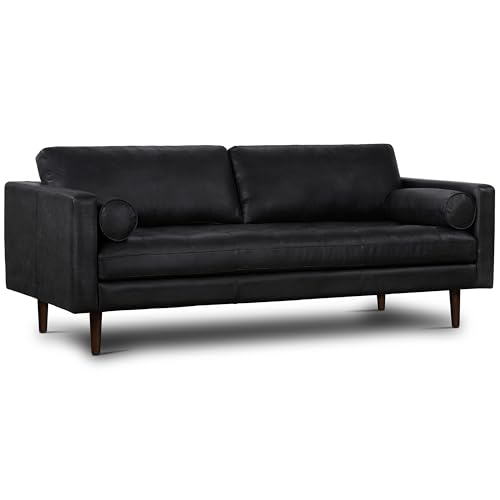
- Best overall: POLY & BARK Napa 88.5″ Leather Sofa, Onyx Black — Check on Amazon
- Best leather value: Signature Design by Ashley 92″ Classic Leather Sofa, Dark Brown — Check on Amazon
- Best modular sectional: CHITA Oversized Modular Sectional Sofa Set, 112″, Grey — Check on Amazon
- Best for storage: Belffin Modular Sectional Sofa with Storage Seats, Velvet, Grey — Check on Amazon
See 2 more Amazon options
- Best sleeper pick: HONBAY Modular Sectional Sleeper Sofa with Pull Out Bed, Beige — Check on Amazon
- Best budget three-seater: Signature Design by Ashley Darcy Sofa, Black — Check on Amazon
Read the full guide ↓
Disclosure: As an Amazon Associate, dailyhomedecorating.com earns from qualifying purchases. Links to Amazon on this page are affiliate links; they cost you nothing extra. Listing details such as price and availability change often, so check the current Amazon listing before you buy.
Finding the best sofa under $1500 is really about deciding where the money should go. At this budget you are past the flimsy, two-season couches that dominate the lowest price tiers, but you are not yet in made-to-order territory. What you can realistically expect is a solid frame, upholstery that survives daily use, cushions that keep their shape past the first year, and a design you will not be tired of by the next time you repaint. This guide compares six sofas that each spend the budget differently: one invests in full-grain leather, one in a modular layout you can rebuild, one in a hidden guest bed, and the rest in proven, comfortable three-seat designs that leave money in your pocket.
We looked at sofas the way most households actually use them. A sofa is where you drink morning coffee, where guests end up after dinner, where kids build cushion forts and where most of us fall asleep in front of a film at least once a week. That means seat depth, cushion recovery, fabric behaviour and delivery practicality matter as much as the headline style. Every pick below was checked against its current Amazon listing for construction details, dimensions where the maker publishes them, and a price sighting inside the under-$1500 tier at research time. Prices move, so treat the tier as a ceiling to verify, not a promise.
If you already know you want a corner layout rather than a straight sofa, our guide to the Best Sectional Sofa Under $1500 goes deeper on L-shaped and U-shaped options. If overnight guests are the priority, the Best Sleeper Sofa Under $1500 roundup focuses on pull-out and fold-flat beds. And if you would rather spend less and keep the change, the Best Sofa Under $1000 guide covers the tier below this one.
In this guide
Quick Picks
| Pick | Best for | Standout feature | Price |
|---|---|---|---|
| POLY & BARK Napa 88.5″ Leather Sofa | Best overall | Full-grain aniline Italian leather with feather-down cushion tops | Check on Amazon |
| Signature Design by Ashley 92″ Classic Leather Sofa | Leather on a tighter spend | Full-size 92-inch leather three-seater sold and shipped by Amazon | Check on Amazon |
| CHITA Oversized Modular Sectional, 112″ | Flexible layouts | Modular seats with reversible chaise and storage ottoman | Check on Amazon |
| Belffin Modular Sectional with Storage Seats | Hidden storage | Storage inside the seats, reversible chaise, velvet upholstery | Check on Amazon |
| HONBAY Modular Sectional Sleeper Sofa | Guest-ready | Pull-out bed plus storage seats in a modular frame | Check on Amazon |
| Signature Design by Ashley Darcy Sofa | Budget three-seater | Plush pillow-top arms and a proven contemporary design | Check on Amazon |
How These Picks Were Chosen
We started with a simple filter: the sofa had to be a genuine living-room sofa — not a futon frame with delusions, not a loveseat stretched by marketing — and it had to have a verifiable Amazon listing with a price sighting under $1500 at the time of research. From there we scored each candidate on the things that decide whether a sofa is still liked in year three: frame construction, cushion fill, upholstery type, seat dimensions, and how honestly the listing describes what is in the box.
Frame and suspension came first. A sofa under $1500 should not feel like a trampoline or a park bench. We favoured kiln-dried or reinforced hardwood frames and treated vague “sturdy construction” claims with suspicion. Cushion fill came next: high-resiliency foam holds its crown far longer than low-density foam, and feather or fibre wraps add the soft top layer that makes a firm seat feel welcoming instead of hard. Where a maker publishes foam certification or fill details, we noted it; where they do not, we said so in the review rather than filling the gap with guesses.
Upholstery is where this budget splits into philosophies. Full-grain leather costs more per seat but ages gracefully and wipes clean. Performance-style fabrics and velvets cost less, come in more colours, and forgive the occasional spill differently — they absorb first and clean second. Neither is automatically better; the right choice depends on whether your household produces more dust and pet hair or more spilled drinks. Each review below names the trade-off plainly.
We also weighed the unglamorous logistics. A 112-inch modular sectional arrives in boxes that fit through a standard door; a one-piece 92-inch sofa does not, and no discount is worth a sofa stuck in a hallway. Assembly time, whether the chaise can switch sides, and whether cushion covers come off all factored into the final six. Finally, we deliberately mixed shapes — straight sofas, an L-shaped modular, a sleeper — because “best” means little if the winning shape cannot fit your room.
The 6 Best Sofas Under $1500
POLY & BARK Napa 88.5″ Leather Sofa — best overall
Who it suits: Buyers who want one sofa to anchor the room for years, prefer real leather over fabric, and like a mid-century silhouette with a low, tailored profile. It is the pick for people who would rather buy once at the top of this budget than replace a cheaper sofa twice.
The Napa is upholstered in full-grain, Italian-tanned aniline leather — the top layer of the hide with minimal surface correction, so the natural grain shows and the surface develops a patina instead of peeling the way bonded or faux leathers eventually do. The seat cushions pair high-density foam with a feather-down topper, which gives that initial sink followed by real support. The listed dimensions are 88.5 inches wide, 38 inches deep and 34 inches high, with a 24-inch seat depth and a 19-inch seat height, and the maker rates it for three seats with a 750-pound weight limit. Solid wood legs keep the profile low and tailored.
Pros:
- Full-grain aniline leather that ages with use instead of cracking or flaking
- Feather-down cushion tops over foam cores — soft landing, supportive sit
- Generous 24-inch seat depth suits loungers and taller sitters
- Timeless mid-century profile that works with most decor directions
Honest limitation: Aniline leather is the least forgiving leather finish. It absorbs spills if they sit, shows scratches from pet claws and belt buckles, and needs conditioning to stay supple. It also sits close to the top of this budget, so sale timing matters — verify the current price before you commit, because this model moves above and below the tier line.
Choose it if leather is the point and you will care for it. Skip it if your household includes clawed pets, toddlers with juice boxes, or anyone who treats a sofa like a dining table. Check on Amazon
Signature Design by Ashley 92″ Classic Leather Sofa — best leather value
Who it suits: Households that want the wipe-clean practicality and traditional look of a leather three-seater at a noticeably lower spend than the Napa, with the reassurance of a major furniture brand and Amazon handling the delivery.
At 92 inches wide this is the roomiest straight sofa in the guide, a proper three-seater in dark brown leather with the rolled, classic proportions that suit traditional and transitional rooms. It is sold and shipped by Amazon, which simplifies the delivery and returns side of buying a large leather piece online — a genuine consideration, because returning a 92-inch sofa you dislike is nobody’s idea of fun. The traditional styling is deliberate: this is the sofa for rooms with wood furniture, layered rugs and a fireplace, not for stark minimalist spaces.
Pros:
- Full 92-inch width gives three adults real elbow room
- Leather surface wipes clean after spills and sheds pet hair easily
- Sold and shipped by Amazon for straightforward delivery and returns
- Classic styling that will not date as quickly as trend-led designs
Honest limitation: The listing is light on published construction detail compared with the Napa — the maker does not headline the leather grade or cushion build in the same way, so you are trusting the brand’s general standards rather than verified specifications. The traditional rolled-arm look also reads formal; in a small or very modern room it can feel heavy.
Choose it if you want leather, space and brand backing without spending at the ceiling. Skip it if you want published, premium material specs or a low-profile modern look. Check on Amazon
CHITA Oversized Modular Sectional Sofa Set, 112″ — best modular layout
Who it suits: Anyone whose room layout might change — renters who move, families who rearrange for holidays, open-plan spaces where the seating island needs to flex. Also a strong pick for wider seats: each of the four seats is a generous 34 inches across.
The CHITA is a modular system rather than a fixed sectional. In its L-shaped configuration it measures 112 inches wide and 66 inches deep, with a reversible chaise, a storage ottoman, and individual seats wide enough that four people are not negotiating for space. Seat depth is 21.5 inches and seat height 18.5 inches. The frame is FSC-certified wood, the foam in the cushions is CertiPUR-US certified, and the loose cushions are reversible with zip-off covers. Because it ships as modules, it threads through doors and stairwells that would defeat a one-piece sofa of the same finished size, and you can add or rearrange pieces later.
Pros:
- Modular pieces rearrange, separate and move house easily
- Extra-wide 34-inch seats — genuinely roomy per person
- Storage ottoman swallows throws, games and remotes
- Reversible chaise works in left- or right-hand layouts
Honest limitation: The zip-off cushion covers are dry-clean only, not machine washable — a real inconvenience for a family sofa, and worth knowing before you buy rather than after the first spill. Modular sections can also creep apart on hard floors over time; most owners solve it with the included connectors or a rug, but it is part of the modular bargain.
Choose it if flexibility and seat width top your list. Skip it if machine-washable covers are non-negotiable or you want a single fixed frame. Check on Amazon
Belffin Modular Sectional Sofa with Storage Seats — best for storage
Who it suits: Living rooms that double as storage space — apartments without a linen cupboard, family rooms drowning in throws and game controllers, anyone who wants a chaise they can flip to either side.
Belffin’s L-shaped modular sectional hides its party trick under the seats: the seat bases open for storage, so blankets, board games and spare cushions live inside the sofa instead of in a pile beside it. The velvet upholstery gives it a softer, more decorative look than the flat-pack crowd, the chaise is reversible, and the modular format means it can be reconfigured or split if you move. Velvet also handles the daily reality of living rooms well — it brushes clean, hides minor marks in its pile, and feels warmer in winter than leather or linen-look fabrics.
Pros:
- Storage inside the seats — rare and genuinely useful
- Reversible chaise and modular layout adapt to different rooms
- Velvet upholstery looks richer than most fabrics at this level
- Arrives in sections that fit through normal doorways
Honest limitation: Velvet shows pressure marks and needs occasional brushing to keep the pile even, and darker velvet shows dust and pet hair clearly. Belffin sells several very similar configurations under near-identical names, so check the exact configuration, piece count and dimensions on the listing before ordering — the storage layout differs between variants.
Choose it if storage and a softer look matter most. Skip it if you want a firm, formal sit or a fabric that hides pet hair. Check on Amazon
HONBAY Modular Sectional Sleeper Sofa — best guest-ready pick
Who it suits: Homes without a spare bedroom. If guests, in-laws or grown-up kids stay over more than a couple of times a year, a sofa that converts to a bed earns its floor space every single night it is used.
The HONBAY combines three functions in one modular footprint: an L-shaped sectional for daily seating, a pull-out bed for guests, and storage inside the seats for the bedding that guests need — which solves the usual sleeper-sofa problem of owning a bed with nowhere to keep its sheets. The beige upholstery is a safe neutral that works with most colour schemes, and the modular sections make both delivery and rearranging simpler than a traditional sleeper sofa, which is normally the heaviest single object in any living room.
Pros:
- Pull-out bed turns the living room into a guest room in minutes
- Storage seats keep guest bedding inside the sofa itself
- Modular delivery — no sleeper-sofa wrestling through doorways
- Neutral beige suits most existing decor
Honest limitation: Pull-out beds in this class are fine for a night or two, not a replacement for a real mattress on a long stay — the sleeping surface is thinner and firmer than a bed. The conversion mechanism also adds weight and moving parts, so it rewards households that will actually use it; if guests never stay, you are maintaining a feature you do not need. Readers comparing dedicated sleepers should also see the Best Sleeper Sofa Under $1500 guide.
Choose it if guests stay regularly and storage is tight. Skip it if nobody sleeps over — a fixed sofa will sit better for the same money. Check on Amazon
Signature Design by Ashley Darcy Sofa — best budget three-seater
Who it suits: First apartments, rental living rooms, and anyone who wants a proper full-size sofa from a known brand while spending well under the ceiling — leaving budget for the rug, lamps and coffee table the room also needs.
The Darcy is a long-running Ashley design for a reason: pillow-top arms, plush cushions and a flared, contemporary frame that looks deliberate rather than cheap. At roughly 89 inches wide it seats three adults honestly, it is sold and shipped by Amazon, and its soft fabric upholstery is the forgiving kind — it does not show every scuff the way leather does and feels warm the moment you sit down. For households furnishing a whole room at once, the Darcy is how you get the big piece sorted without the big piece eating the entire budget.
Pros:
- Full-size three-seater at a fraction of the tier ceiling
- Plush pillow-top arms are made for leaning and lounging
- Proven design from a major brand, sold and shipped by Amazon
- Fabric upholstery feels warm and hides everyday scuffs well
Honest limitation: The black upholstery shows lint, dust and pet hair more than any mid-tone fabric — budget for a lint roller habit. Cushion softness is the Darcy’s appeal and its trade-off: it is a sink-in sit, so buyers who need firm lumbar support for long work-from-sofa days should look at the firmer picks above. It is also a one-piece sofa, so measure doorways and stair turns before ordering.
Choose it if value and plush comfort lead your list. Skip it if you need a firm seat, a pale colour scheme, or modular delivery. Check on Amazon
Comparison Table
| Sofa | Format | Upholstery | Key strength | Watch out for | Price |
|---|---|---|---|---|---|
| POLY & BARK Napa 88.5″ | 3-seat sofa, 88.5″W | Full-grain aniline leather | Materials and longevity | Leather care; near tier ceiling | Check on Amazon |
| Ashley 92″ Classic Leather | 3-seat sofa, 92″W | Leather | Space per dollar | Few published specs | Check on Amazon |
| CHITA Modular Sectional 112″ | Modular L-shape, 112″W | Fabric, zip-off covers | Wide seats, flexibility | Covers are dry-clean only | Check on Amazon |
| Belffin Modular Sectional | Modular L-shape | Velvet | Storage inside seats | Velvet shows hair and dust | Check on Amazon |
| HONBAY Modular Sleeper | Modular L-shape + bed | Fabric | Guests plus storage | Bed suits short stays | Check on Amazon |
| Ashley Darcy | 3-seat sofa, ~89″W | Fabric | Plush comfort per dollar | Black shows lint; soft sit | Check on Amazon |
How to Choose a Sofa Under $1500
Start with the room, not the sofa. Measure the wall the sofa will sit against, then measure the route it travels: front door, hallway turns, stairwell corners, lift dimensions. A sofa that fits the room but not the doorway is a return, not a bargain. Leave at least a walkway of roughly 30 inches in front of the sofa and space at the sides if you want end tables. Modular picks like the CHITA, Belffin and HONBAY forgive tight access because they arrive in sections; one-piece sofas like the Napa, the Ashley leather and the Darcy demand an honest measurement first.
Match seat depth to how you sit. Seat depth is the most underrated number on any listing. Depths around 21–22 inches suit upright sitters and shorter legs; depths of 24 inches and beyond are built for curling up, cross-legged sitting and taller bodies. The Napa’s 24-inch depth is a lounger’s seat; the CHITA’s 21.5-inch depth keeps feet on the floor more easily. If two people with different habits share the sofa, cushions and a couple of firm throw pillows can split the difference.
Choose upholstery for your actual life. Leather wipes clean and shrugs off pet hair but shows scratches and needs conditioning; aniline leather most of all. Tight-weave fabrics hide scuffs and feel warm but absorb spills if you are slow with a cloth. Velvet looks rich and brushes clean but advertises dust. Removable covers help only if the care label matches your habits — a dry-clean-only cover, like the CHITA’s, is a very different promise from a machine-washable one.
Spend on the frame, save on the extras. At this budget the frame and cushion foam decide whether the sofa is a five-year or a ten-year piece. Kiln-dried hardwood, reinforced corners and high-resiliency foam are worth more than decorative stitching or a fashionable colour that will date. If a listing is silent on construction, treat that silence as information and weigh it against the brand’s track record and the returns policy.
Decide what the sofa must do besides sit. Guests staying monthly justify a sleeper like the HONBAY. A room with no storage justifies the Belffin’s storage seats. A household that rearranges justifies modular. But every extra function trades against something — usually cushion depth or price — so buy the function you will use weekly, not the one that sounds clever in the listing. If budget is the binding constraint instead, the tier below is covered in our Best Sofa Under $1000 guide, and two-seat options live in the Best Loveseat Under $1000 roundup.
Where the Money Goes in a Sofa at This Budget
Understanding what your budget actually buys helps explain why the six picks spend it so differently. In a sofa under $1500, the money divides roughly into frame, suspension, cushion fill, upholstery, and the unglamorous costs of getting a large object to your door. Upholstery is the most variable line: genuine full-grain leather can account for a third or more of a sofa’s price, which is why the Napa concentrates its budget there and keeps its design simple, while fabric picks like the Darcy redirect that money into size and plushness. Neither allocation is wrong — but knowing which one you are paying for stops you comparing a leather sofa and a fabric sofa as if they were the same product at different prices.
The frame is where longevity hides. Kiln-dried hardwood resists the warping and joint-creak that plague cheaper frames, and reinforced corner blocks stop the slow wobble that makes a three-year-old sofa feel tired. You cannot see any of this in a listing photo, which is why published construction details — or their absence — feature so heavily in our reviews. Cushion foam is the second hidden line. High-resiliency foam costs more and keeps its crown; low-density foam feels wonderful for a month and then develops the permanent dip that owners describe as “the sofa eating them.” Feather and fibre wraps, like the Napa’s cushion tops, are a comfort layer over that core, not a substitute for it.
Suspension — the springs or webbing under the cushions — is the third line and the least marketed. Sinuous springs are the honest standard at this tier; what matters is that the system is evenly supported and does not bottom out under an adult’s weight at the centre of a wide seat. Finally, logistics are real money: a one-piece sofa may need a two-person delivery crew, while modular formats ship as standard parcels. When a modular pick looks expensive next to a one-piece rival, part of what you are buying is the absence of a delivery drama.
The practical lesson is to compare like with like. Judge the Napa against other leather sofas, the CHITA against other modular systems, the Darcy against other value three-seaters. Cross-category comparisons — “this fabric sectional costs more than that leather sofa” — usually just restate that different materials cost different money. The right question is whether the pick you favour spends its share on the lines you will feel every day: the frame under you, the foam beneath you, and the surface against you.
Delivery Day, Assembly and the First Month
Large furniture rewards a little choreography. Before the delivery, clear the route from the door to the sofa’s destination, remove anything fragile from hallway walls, and have the old sofa’s exit planned — ideally it leaves before the new one arrives, because two sofas in one room is a puzzle with no good solution. Photograph the route’s tightest points on your phone; if a one-piece pick is coming, compare those photos against the sofa’s smallest dimension one last time while rescheduling is still free.
On the day, inspect before you sign or before the return window starts running. Check the upholstery in daylight for marks and colour consistency, sit on every seat — not just your usual one — and work any mechanism: pull the HONBAY’s bed out fully, open the Belffin’s storage seats, click the CHITA’s modules together and apart. Mechanisms that are stiff on day one sometimes free up, but mechanisms that are bent on day one never do, and the time to discover it is while the packaging is still in the hall.
Assembly, where it applies, is mostly patience. Modular systems go together best in their final position, because a built sectional is an awkward thing to drag. Keep every connector, foot and spare bolt in one labelled bag taped under the sofa — future-you, mid-move, will be grateful. For leather, the first month is when conditioning habits form: keep the Napa out of direct sun and away from radiators, and wipe spills immediately rather than “later,” because aniline leather’s openness is both its beauty and its vulnerability. For fabrics, vacuum the seats weekly for the first month — new upholstery sheds loose fibres and grit that otherwise grind into the weave — and start a cushion rotation rota now, while the cushions are still identical, rather than after one seat has visibly settled.
Finally, keep the paperwork. Photograph the listing, the invoice and the care label, and note the return deadline somewhere you will actually see it. Comfort verdicts take a fortnight of real evenings to form; the household that knows its deadline can act on that verdict, and the household that does not, owns the sofa either way.
Sofa, Sectional or Sleeper: Choosing the Format First
Before comparing individual models, settle the format, because the format decides which compromises you will live with. A straight sofa is the purest purchase: every dollar goes into sitting quality, the shape fits the most rooms, and it pairs with chairs you may already own. It is the right default for a defined living room with a clear wall and no guest duties. Its weakness is arithmetic — a three-seat sofa seats three, and film night for five becomes a floor-cushion negotiation.
A sectional trades some of that purity for capacity and geometry. The corner seat is the best seat in the house for lounging, the chaise replaces a footstool, and the L defines a seating zone in an open plan better than any rug. The costs are footprint discipline — the L must point the right way and leave walkways intact — and a harder delivery unless the design is modular. That is why the sectionals in this guide are modular systems: the CHITA, Belffin and HONBAY all arrive in sections, rearrange when the household changes, and leave through the same door they entered. If your room is a rectangle with one obvious corner, a sectional will usually seat your life better than a sofa plus chairs at this budget.
A sleeper is a format decision disguised as a feature. The mechanism adds weight, firms the seat, and consumes design budget that a pure sofa spends on cushions — so it should be bought by households with a guest calendar, not by households with a guest theory. Count last year’s overnight guests honestly. Six or more guest-nights a year justifies the HONBAY’s trade-offs easily; one awkward Christmas suggests a good air bed and a better sofa instead. The middle path is a deep, nap-friendly sofa — the ovios-style deep seat in our family guide, or the Napa’s 24-inch depth here — which hosts the occasional crashed friend without a mechanism’s compromises.
Whichever format you choose, let the room’s fixed facts vote first: the longest wall, the door positions, the window light, the walkway to the kitchen. Formats fail when they fight architecture. A sofa aligned with the room’s geometry looks intentional even at half the price; a sectional fighting the room’s only walkway looks wrong at twice it.
Common Buying Mistakes
Buying by photograph instead of dimensions. Sofas are photographed in warehouses-sized rooms. A 92-inch sofa in a 10-foot room leaves no visual breathing space, and a low-profile design can vanish in a high-ceilinged space. Tape the footprint on your floor with painter’s tape and live with the outline for a day before ordering.
Ignoring the delivery route. The most common sofa disaster is not comfort — it is a one-piece frame wedged in a stairwell. Measure the diagonal, check door widths, and if the route is tight, choose modular or confirm the legs and back can be removed for delivery.
Assuming “leather” means one thing. Full-grain, top-grain, split, bonded and faux leather are different materials with different lifespans wearing the same word. The Napa publishes its grade; many listings do not. If the grade is not stated, assume the lower end and price your expectations accordingly.
Forgetting the cost around the sofa. Delivery thresholds, old-sofa removal, fabric protection, cushions and the rug that a new, larger sofa suddenly demands all add up. A pick well under the ceiling, like the Darcy, can be the smarter total purchase even when a flagship pick fits the headline budget.
Skipping the returns policy. Comfort is personal and no specification sheet settles it. Before ordering any large sofa, read how returns work for furniture from that seller — who collects it, what it costs, and how long you have to decide. A generous policy is worth real money on a purchase you cannot test in a showroom.
When to Spend Less — and When This Tier Is the Floor
Not every household should spend at this level, and honesty about that is part of a useful guide. Spend less — look at the tier below — if the sofa is furnishing a temporary chapter: a first rental on a short lease, a spare room that sits twice a year, a student house. In those cases the Darcy end of this guide, or the Best Sofa Under $1000 roundup, delivers the honest version of the job and keeps the difference for things you will take with you.
Spend at this tier, though, when the sofa is the household’s main seat for the foreseeable future. Daily use is an unforgiving auditor: frames, foams and upholstery that survive it are exactly what this budget buys and the tier below often does not. The households that regret sofa purchases are rarely the ones that bought one level up for a ten-year seat; they are the ones that bought a two-year sofa three times. Match the spend to the years and the hours, and the right pick from the six above will justify itself every evening it is sat on.
Final Recommendation
For most living rooms, the POLY & BARK Napa is the sofa to beat under $1500: full-grain leather, feather-topped cushions and a profile that will still look right in a decade — check on Amazon that its current price sits inside the tier before ordering. If your household needs flexibility more than heirloom materials, the CHITA modular sectional is the practical winner, and if guests are a regular feature of your home, the HONBAY sleeper earns its place. On a tighter spend inside the tier, the Darcy remains the easiest recommendation in budget sofas. Match the pick to the life the sofa will actually live, and any of the six will serve you well.
What the First Six Months Teach You
Every sofa in this guide will feel slightly different at month six than at day one, and knowing the direction of travel helps you choose. Foam seats soften by a small, normal margin as the cells settle — a sofa that feels perfect in the showroom sense on day one will feel welcoming at month six, while one that already feels soft on arrival is on its way to feeling tired. This is why the firmer-feeling picks — the Ashley leather, the tailored end of the range — often age into the best long-term sits, and why a sink-in first impression, like the Darcy’s, should be bought knowingly: it is a style of comfort, not a defect, but it will not firm up.
Leather changes fastest and most visibly. The Napa’s aniline hide will relax into the seats’ shapes, deepen in colour where hands and light land, and collect the small marks of an actual life. Owners who love aniline leather describe this as the sofa becoming theirs; owners who expected a frozen showroom finish describe the same process as wear. The material has not changed between those two accounts — the expectation has. Fabric picks change more quietly: a slight softening of the weave’s hand, a cushion crown that asks for the rotation routine described earlier, a colour that settles half a shade under real light.
Mechanisms and modules settle too. Pull-out beds free up after the first few conversions; modular connectors that felt stiff become routine; and the storage seats that seemed a novelty become the household’s default hiding place for everything from remotes to wrapping paper. The six-month verdict on a sofa is rarely about its specification sheet. It is about whether its daily behaviour — the sit, the surface, the small rituals of beds and storage — has folded into the household’s life. Choose the pick whose six-month story sounds like your household on a good day, and the day-one decision will take care of itself.
Reading a Sofa Listing Like an Inspector
Listings are written to sell, but they also contain — between the adjectives — most of what you need to judge a sofa before it arrives. Start with the dimensions block and read all three numbers, not just the width. Depth tells you how much floor the sofa really claims; height tells you whether it will block a window or a radiator; and the seat dimensions, when published, tell you more about comfort than any photograph. A listing that publishes seat depth, seat height and weight capacity — as the Napa’s does — is a listing written by a maker who expects scrutiny. A listing with one overall dimension and forty lifestyle photos is telling you something too.
Next, find the materials language and grade it. “Full-grain,” “top-grain,” “genuine leather,” “leather match” and “faux leather” are a descending staircase of material and price, and the words are chosen carefully by the seller — read them with the same care. For fabric, look for the fibre content and any certification; for foam, look for density or resiliency language and certifications such as CertiPUR-US, which the CHITA publishes. For frames, “kiln-dried hardwood” and “corner-blocked” are meaningful phrases; “sturdy” and “durable construction” are weather reports — pleasant, and committing the maker to nothing.
Then read what is not there. No weight capacity, no seat dimensions, no care instructions, no assembly information: each absence is a small decision the seller made. It does not automatically disqualify the sofa — the Ashley leather pick in this guide is light on published detail and still earns its place on brand record and Amazon’s delivery backing — but absences should move a model down your list when a rival at the same price publishes more. Information is a feature; price it like one.
Check the configuration fine print with particular care on modular and sectional listings. Brands like Belffin, HONBAY and LINSY HOME sell families of near-identical products, and the differences — which seats store, which side the chaise faces, whether the bed is included in this configuration — live in the variant selector and the fine print, not the headline. Screenshot the exact configuration you ordered. If the wrong pieces arrive, that screenshot is the difference between a quick correction and an argument.
Finally, read the questions-and-answers and the most recent owner comments for operational facts rather than opinions: how many boxes, how long assembly took, whether the colour matches the photos, how the delivery actually went. Opinions about comfort are personal; facts about boxes are universal. A half-hour of this reading is the closest thing online furniture shopping has to sitting on the sofa — and at this budget, it is worth every minute.
Frequently Asked Questions
Is a sofa under $1500 good quality?
It can be. This is the tier where solid hardwood frames, high-resiliency foam and genuine leather start to appear, which are the ingredients of a sofa that lasts. Quality still varies widely, so construction details and materials matter more than the price tag itself — a well-built fabric sofa in this tier will outlast a poorly built leather one.
How long should a sofa at this price last?
With a sound frame and decent foam, expect the structure to serve for many years of daily use; cushions and upholstery wear faster and depend on material and household. Leather typically outlasts fabric at this level, while removable covers extend a fabric sofa’s presentable life.
Sofa or sectional — which is better under $1500?
A straight sofa gives you more construction quality per dollar and fits more rooms; a sectional gives you more seats and a defined lounging corner but needs the floor space to match. Our Best Sectional Sofa Under $1500 guide covers the corner-format options in depth if your room suits one.
What seat depth is most comfortable?
Depths around 21–22 inches suit upright sitting and shorter legs; 24 inches and deeper suit lounging and taller sitters. There is no universal best — match the depth to the tallest and shortest regular users, and use firm cushions or pillows to fine-tune.
Should I choose leather or fabric?
Leather wipes clean, resists odours and ages well but costs more and can show scratches. Fabric feels warmer, offers more colours and hides scuffs, but absorbs spills and needs quicker clean-up. Households with pets often prefer leather for hair removal and fabric for claw camouflage — decide which problem you would rather manage.
Can a sofa this size fit through a standard door?
Most doors are wide enough for a sofa delivered on its side if the sofa’s smallest dimension clears the frame, but stair turns and hallways are the usual failure points. Modular sofas sidestep the problem entirely by arriving in sections. Measure the full route, not just the front door.