Where to buy
Check the latest price, availability and delivery on Amazon. Orders are placed on Amazon. We may earn a commission from qualifying purchases.
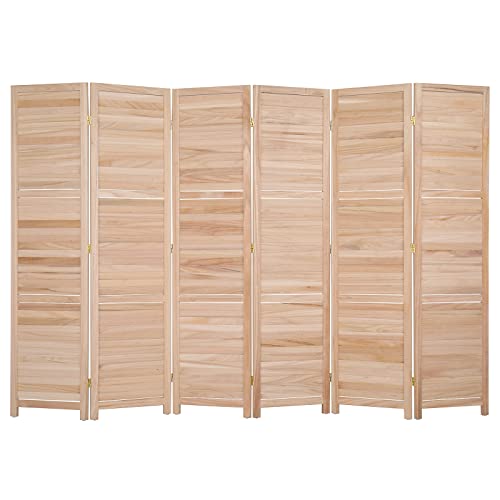
- Best overall for small apartments: Bonnlo Wood Room Divider Privacy Screen, 6 Panel, Natural, 5.9 ft Tall — Check on Amazon
- Tribesigns Wall Room Divider Bookcase with Shelves & Coat Hooks, 71 in, Brown — Check on Amazon
- HOMCOM Room Divider, 8 Panel Folding Privacy Screen, 5.6 ft Tall, Nature Wood — Check on Amazon
- MyGift 6 Panel Room Divider with Vintage Asian Water Village Ink Print, Black Wood Frame — Check on Amazon
- Premium Home 4-Panel Room Divider, Barnwood Brown, K Pattern — Check on Amazon
- West Elm Zeze Room Divider — sold direct by the maker; see the review below for positioning (prose-only pick, no Amazon listing)
Read the full guide ↓
Disclosure: As an Amazon Associate, dailyhomedecorating.com earns from qualifying purchases. Links to Amazon on this page are affiliate links; they cost you nothing extra. Listing details such as price and availability change often, so check the current Amazon listing before you buy.
Hunting for the best room divider for small apartments under $2000 starts with a liberating fact: a small apartment does not need a small divider budget, it needs a divider chosen by apartment arithmetic. In a studio or a one-bedroom, the divider is asked to do the work of a missing wall — to make a bedroom inside a living room, a workday inside a weekend, a guest’s privacy inside your everyday — and it must do it without drilling a landlord’s walls, without eating the floor area it creates, and ideally while storing flat in the same closet as the vacuum cleaner. At a $2000 ceiling, apartment dwellers can buy any freestanding divider worth owning; the discipline is spending it on the properties apartments actually reward: light preservation, storage that replaces furniture, folded footprints measured in inches, and spans that match real studio openings rather than showroom walls.
The verified shortlist below reflects that arithmetic. It leads with a solid wood screen that folds flatter than a ironing board and needs no assembly, includes the one divider in this lot that adds storage instead of consuming it, two light-passing designs for the single-window reality of small apartments, a compact corner screen for the nook every studio has, and — as an honestly labelled prose-only pick — West Elm’s rattan Zeze, sold direct, because apartment modernists will meet it in every design store and deserve a straight account of it. Every linked pick was verified on its Amazon.com listing: dimensions flat and folded, panel counts, materials and weights from the makers’ specification fields. And the budget headline is the friendliest in this lot: every pick sits in the lower or middle bands of $2000, because small apartments reward properties, not price tags — the money you do not spend on the divider is the money for the lamp, rug and blackout curtain that complete the room-within-a-room.
Our apartment-first recommendation is the Bonnlo six-panel screen: 108 inches of solid paulownia privacy, 71 inches tall, no assembly, roughly 27 pounds, folding flat enough to live behind a sofa or under a bed — the divider a studio can own without dedicating a corner to storing it. Studios whose real shortage is storage rather than privacy should start instead with the Tribesigns bookcase divider, the only pick that gives back more floor function than it takes. Below: quick picks, the apartment-specific selection logic, detailed reviews of all six, a comparison table, a renter’s buying checklist, the small-apartment mistakes that cost the most, and the questions studio dwellers actually ask.
In this guide
Quick Picks
Ranked for renters and studio dwellers: standing span versus stored size, light preservation, no-drill freestanding designs and landlord-friendly everything. Linked picks verified on Amazon — check price on Amazon for the current figure.
| Buyer type | Pick | Why it stands out | Link |
|---|---|---|---|
| Best overall for small apartments | Bonnlo 6-Panel Paulownia Screen | 108 flat inches of solid wood privacy that folds flat against a wall and needs zero assembly — check price on Amazon | Check on Amazon |
| Best storage divider for studios | Tribesigns Bookcase Divider, 71 in | The studio’s two-for-one: a divider that is also 10 shelves and 5 coat hooks of storage — check price on Amazon | Check on Amazon |
| Best light-preserving screen | HOMCOM 8-Panel Screen | Eight woven panels that split a studio while its one window still serves both halves — check price on Amazon | Check on Amazon |
| Best fold-away art screen | MyGift 6-Panel Ink Print Screen | Nearly 8 feet of art screen that folds to a 4.7-inch footprint behind a door — check price on Amazon | Check on Amazon |
| Best compact corner screen | Premium Home Barn Door 4-Panel | A compact four-panel screen for the corner a studio actually has, with legs for stability — check price on Amazon | Check on Amazon |
| Best rattan light-filter (prose-only) | West Elm Zeze Rattan Divider | Real rattan from West Elm that filters light and folds the room in two without darkening either half — sold direct | Sold direct — see review |
How These Picks Were Chosen
Apartment criteria reordered the category before price was even considered. First, storage geometry: what does the divider occupy when it is not dividing? Folding screens were credited for flat folded footprints (the MyGift folds to 4.7 inches deep; the Bonnlo folds to a single panel’s width), and the bookcase divider was judged by the opposite ledger — it never stores away, but it replaces a bookcase and a coat rack the studio would otherwise need floor for. Second, light: most small apartments have one good window wall, and any divider that seals it off taxes the whole home, so light-passing designs (woven, rattan, open shelving) were weighted up and light-blocking ones were required to justify themselves with privacy a studio genuinely needs — a bed screened from a front door earns its shadow.
Verification was the second filter, identical across this series. Each linked pick was checked on its Amazon.com listing in the United States — ASIN, dimensions, panel count, materials, weight — with second-retailer cross-checks where they exist (Best Buy for the Tribesigns, Target and Overstock for the HOMCOM). The West Elm Zeze is prose-only by design: a genuine apartment-relevant design piece, sold direct by West Elm with no Amazon listing, its mid-budget positioning recorded from a dated design-roundup sighting in this article’s sources file. Nothing in this guide carries an invented link, an invented dimension or an invented price.
The third filter was renter reality. Every pick is freestanding — no drilling, no ceiling tracks, no landlord negotiation — and every pick can leave the apartment with you: folding flat, rolling away, or, in the Tribesigns’ case, disassembling like the flat-pack furniture it is. We also weighted one-person handling, because apartment dwellers redeploy dividers alone at midnight before guests arrive, and a divider that needs two people and a free afternoon will simply stop being used. We did not test these in our own studios; we compared maker specifications across the category and favoured the dividers whose apartment virtues are measurable: folded depth, weight, standing span, and light behaviour.
The 6 Best Room Dividers for Small Apartments Under $2000
Bonnlo Wood Room Divider Privacy Screen, 6 Panel, Natural, 5.9 ft Tall
Who it suits: Studio and one-bedroom renters who need real privacy — a bed screened from the entry, a dressing area, a work corner that closes — in a divider that stores completely flat.
The Bonnlo earns the apartment crown by solving the storage paradox: it is the biggest privacy here when open and nearly nothing when closed. Six panels of solid paulownia wood give 108 inches of flat width and 71 inches of height, with slatted panels that cannot be seen through, double two-way hinges, protective leg pieces and a water-based finish (ASIN B0BRMHX9XN). It needs no assembly at all — unfold, angle, live — and at roughly 27 pounds one person moves it in seconds. Folded, it is one panel wide and a few inches deep: behind the sofa, under the bed, inside the closet beside the coats. Its positioning sits in the middle band of this budget — check price on Amazon — and for a studio, that buys the complete classic brief: a bedroom wall that exists at night and vanishes by day.
Apartment honesty requires three notes. First, span: angled to stand, the 108 flat inches cover roughly 75–85 inches of opening, which suits a studio’s bed alcove or the end of a living room precisely; measure yours before ordering, because a screen stretched flatter to reach further stands worse and covers less than you hoped. Second, light: the slats block light as completely as sight, so a bed placed behind it in a one-window studio wakes in shade — many renters count that a feature, and those who do not should look at the HOMCOM or the Zeze. Third, paulownia is a light hardwood that dents more readily than dense species; in a small apartment where the screen is moved often, expect honest wear and treat the leg pieces as the floor protection they are. None of this dents the verdict: it is the most apartment-shaped object in the guide. The stricter small-space ranking, judged purely on footprint, is in Best Room Divider For Small Spaces Under $2000.
- Full solid-wood privacy at 71 inches tall, folding to a few inches deep for closet or under-bed storage.
- No assembly and roughly 27 pounds — a midnight redeployment one person can actually do.
- Protective leg pieces and a water-based finish: landlord-friendly on floors and walls alike.
Honest limitation: Slats darken the sleeping side of a one-window studio. Light paulownia dents with frequent moving, and the standing span is about 75–85 inches, not the full 108.
Choose it if you need a real privacy wall for a studio bed or dressing area that stores completely flat. Skip it if your studio’s single window must serve both sides of the division — the HOMCOM or Zeze keeps it working.
Tribesigns Wall Room Divider Bookcase with Shelves & Coat Hooks, 71 in, Brown
Who it suits: Studio dwellers whose scarcest resource is storage, not privacy: the divider that replaces a bookcase and a coat rack while it zones the room.
The Tribesigns asks a different apartment question: what if the divider gave floor back? It is a freestanding bookcase divider, 70.87 inches wide, 70.87 inches tall and 11.81 inches deep, in engineered wood with a metal frame, weighing 88.2 pounds (ASIN B0G63CB6MP) — and across that footprint it provides 10 open shelves in varied sizes, a small display shelf and 5 coat hooks, with a slatted section that zones while passing light and sight lines. In a studio, that is a bookcase, an entry organizer and a room divider for the floor price of one: place it perpendicular to the wall beside the bed and the apartment gains a sleeping zone, a library and a hallway in a single move. Retailer offers place it in the lower-middle band of this budget — check price on Amazon.
The apartment caveats are about commitment and logistics. At 88.2 pounds this is flat-pack furniture: it arrives in a box that must fit your stairwell and door, it assembles in place (two people, an unhurried hour), and it will not be the thing you fold away when friends visit — it is a permanent resident, so its spot must be chosen like a lease, not a whim. The 11.81-inch depth is the other honest cost: in a very small studio that depth is real floor, and the shelves must be styled as display rather than stuffed as storage or the unit reads as a warehouse wall. Chosen deliberately — bed zone on one side, living zone on the other, books and plants as the decoration — it is the highest-function-per-square-foot purchase in this guide, and the pick we would make for a long-lease studio. Short-lease renters who move yearly should weigh the folding picks first.
- Divider, bookcase and coat storage in one 11.81-inch-deep footprint — net floor function gained.
- Open slatted section zones a studio while keeping its one window working for both sides.
- Furniture-weight stability: no wobble, no skating, no folding itself away.
Honest limitation: A permanent, 88-pound assembly: check the delivery path and commit to its placement. In the smallest studios its depth is a genuine floor cost, and open shelves demand styling discipline.
Choose it if your studio lacks storage more than privacy and your lease is long enough to furnish deliberately. Skip it if you move yearly, or the divider must disappear for guests — the Bonnlo folds, this does not.
HOMCOM Room Divider, 8 Panel Folding Privacy Screen, 5.6 ft Tall, Nature Wood
Who it suits: One-window apartments that need zoning without gloom: a work corner in a living room, a play or reading nook, a dining edge in an open studio.
The HOMCOM (model 830-814V02ND, ASIN B0D1TZ2LW2) is an eight-panel folding screen, 5.6 feet tall, with a paulownia frame and a woven polypropylene surface under arched tops — and its apartment virtue is optical. The weave filters daylight rather than stopping it, so a studio’s single window keeps serving both sides of the division, softened; the room stays one bright room with two purposes instead of a bright half and a cave. Eight panels zigzag deeply, which lets the screen turn corners — an L around a desk, a curve around a reading chair — in the irregular geometries small apartments actually have. Retailer offers sit at the accessible end of this guide — check price on Amazon — leaving the apartment budget for everything else a new zone needs.
The trade-offs are height and material candour. At 5.6 feet, the screen hides a seated worker or a sofa zone completely and a standing adult only partially — zoning, not privacy, and wrong for screening a bed from a front door. The weave is polypropylene, not rattan: in an apartment that is mostly good news (it wipes clean, ignores bathroom-adjacent humidity, and will not fray), but it will not develop natural character, and the light frame wants placement out of the main walkway. For the apartment problem it solves — dividing without darkening — nothing else in this guide is as cheaply or as kindly effective. If your studio’s problem is the bed rather than the desk, reverse the priority and start with the Bonnlo.
- Woven panels diffuse the window’s light to both sides — the small apartment’s scarcest resource, preserved.
- Eight panels turn corners and curve: zoning for irregular studio geometry.
- Accessible positioning and a wipe-clean, humidity-proof synthetic weave.
Honest limitation: 5.6 feet is zoning height, not privacy height. The light build wants a calm placement out of the traffic lane.
Choose it if your apartment needs zones, not secrets, and cannot afford to lose daylight. Skip it if you need to screen a bed or a dressing area at standing height — the Bonnlo is built for exactly that.
MyGift 6 Panel Room Divider with Vintage Asian Water Village Ink Print, Black Wood Frame
Who it suits: Renters who divide occasionally — guests, work weeks, photo backdrops — and want the divider to be art while it works and invisible while it does not.
The MyGift is a six-panel folding screen, 94.6 inches wide laid flat and 68.9 inches tall, on a black solid pine frame, with a vintage Asian water-village ink scene printed on both faces of its panels (ASIN B0CJMN3NHL). Its apartment credential is the folded figure: 15.5 inches wide and 4.7 inches deep — a large, room-dividing artwork that stores behind a door, beside a wardrobe, or under a bed in the sliver of space small apartments actually have. Standing, its monochrome ink scene gives a studio a focal wall that happens to move: behind a sofa it reads as art, across a corner it makes a guest’s sleeping nook, and the dual-sided print means no ugly back faces either zone. Its positioning sits in the lower-middle band of this budget — check price on Amazon.
Two honest notes for renters. The scene is a reproduction print: atmospheric across a room, plainly printed up close, so place it as a backdrop rather than a beside-the-chair companion. And a printed screen is a style commitment in a small home — in a studio, the divider is always in view, so its imagery becomes the room’s dominant artwork whether you planned that or not; monochrome ink is the easiest imagery to live with at that scale, which is precisely why this pick, and not a colorful scenic screen, makes an apartment list. Feet lift the panels 2.8 inches clear of the floor, sparing the artwork the dust line and your deposit the scuffed skirting. For a renter who divides twice a month, it is the best ratio of effect to storage in the guide.
- Folds to 15.5 by 4.7 inches — the smallest stored footprint of any full-size screen here.
- Dual-sided monochrome artwork: a focal wall that divides, finished from both sides.
- Solid pine frame on feet that keep panels clear of floor dust and scuffs.
Honest limitation: A print, not a painting — best at backdrop distance. Its imagery will dominate a small room’s décor, so the room must want it.
Choose it if you divide occasionally and need the divider to earn its keep as art between times. Skip it if you divide permanently and prefer the divider to disappear — the Bonnlo or HOMCOM sits quieter.
Premium Home 4-Panel Room Divider, Barnwood Brown, K Pattern
Who it suits: The studio corner: a dressing nook by the wardrobe, a reading chair screened from the door, a pet corner — where a full screen is too much tool and charm is welcome.
The Premium Home is a four-panel wood screen, 72 inches wide and 67 inches tall, in a distressed barnwood-brown finish with a patented barn-door K pattern (US design patent D963352), two-way hinges and detachable legs (ASIN B07WSRY1WK). Small apartments run on corners, and this is the corner pick: its standing span of roughly 50–58 inches is exactly a dressing nook, a chair-and-lamp enclosure, or the visual end of a studio’s entry run, and at 23.7 pounds it moves one-handed when the corner changes jobs. The detachable legs widen its stance — a stability detail most screens skip — and it arrives ready out of the box. Its positioning sits in the lower-middle band of this budget — check price on Amazon.
Do not ask it to split a studio: four panels is a nook tool, and stretching it flatter to fake a wall loses the stability the legs work to provide. The distressed farmhouse finish is the other decision — in a rustic or eclectic apartment it is the warmest object in this guide; in a sleek modern studio it will argue with everything, and the modern-homes ranking in this lot (Best Room Divider For Modern Homes Under $2000) exists for that reader. Within its brief, though, it is the pick with the most personality per stored inch, and its pre-distressed surface forgives the scuffs of small-space life better than any smooth finish here.
- Compact standing span sized for real studio corners and nooks.
- Detachable legs for stability; 23.7 pounds, ready out of the box, one-handed moves.
- Distressed finish forgives small-apartment scuffs and adds genuine warmth.
Honest limitation: A corner tool only — it will not split a room, and stretching it flatter undermines its stance. The farmhouse look clashes with modern schemes.
Choose it if your need is a nook — dressing, reading, entry — with character, in a warm-toned apartment. Skip it if you need a full studio split or a modern finish — the Bonnlo and the modern-homes list answer those.
West Elm Zeze Room Divider
Who it suits: Design-minded renters in bright studios: the divider as a light filter and texture, for apartments that must stay feeling like one airy room.
The West Elm Zeze Room Divider is this guide’s prose-only pick: a rattan screen sold direct by West Elm, with no Amazon listing, included because it is the apartment divider design stores reach for first — a natural rattan weave that divides a studio while passing its light in a softened, patterned form. A dated sighting in a national design roundup placed it in the lower-middle band of this budget; check West Elm’s own store for its current price and availability. In a small apartment, that light behaviour is the whole argument: a rattan screen can stand between a bed and a living area all day without either side reaching for a lamp.
The renter’s caveats are the material’s and the channel’s. Rattan zones rather than privatizes — silhouettes and shapes pass through a weave, so a dressing area behind it is a suggestion, not a secret. Natural rattan varies in tone, wants regular dusting in its weave, and will not love a humid bathroom-adjacent placement. And a direct purchase means the maker’s delivery schedule and return policy, not Amazon’s — measure twice, because returning a screen across a design store’s process is a slower errand than an Amazon return. For the bright studio that divides by day and glows by evening, it remains the prettiest tool in this guide, and the one your guests will photograph.
- Real rattan filters and patterns daylight — a division that never darkens a small apartment.
- Natural texture warms rental-white rooms without a single nail or screw.
- Design-store benchmark for the light-filtering divider, mid-budget positioning.
Honest limitation: Zoning, not privacy: shapes show through a weave. Sold direct only, with maker delivery and returns, and rattan wants dusting and dry air.
Choose it if your bright studio needs a soft, photogenic division that keeps every lumen working. Skip it if you need true privacy or Amazon-speed returns — the Bonnlo and MyGift cover those briefs.
Sold direct by the maker — there is no Amazon listing for this pick, so it carries no Amazon link in this guide.
Comparison Table
| Product | Type | Best use | Link |
|---|---|---|---|
| Bonnlo 6-Panel Paulownia Screen | Solid paulownia wood slatted screen, double-hinged, no assembly | Studio bed and dressing privacy that stores flat | Check on Amazon |
| Tribesigns Bookcase Divider, 71 in | Engineered wood & metal bookcase divider, 10 open shelves, 5 coat hooks | Zoning plus the storage a studio lacks | Check on Amazon |
| HOMCOM 8-Panel Screen | Paulownia frame with woven polypropylene panels, arched tops | Light-preserving zones and corners | Check on Amazon |
| MyGift 6-Panel Ink Print Screen | Solid pine frame, dual-sided printed panels, 94.6 in wide flat | Occasional division; art the rest of the time | Check on Amazon |
| Premium Home Barn Door 4-Panel | Wood barn-door screen, distressed finish, two-way hinges | Dressing and reading nooks | Check on Amazon |
| West Elm Zeze Rattan Divider | Rattan screen — sold direct by West Elm (prose-only) | Bright, soft division for design-led renters (prose-only) | Sold direct — see review |
How to Choose the Best Room Divider for Small Apartments Under $2000
- Do the storage math first. In a small apartment, a divider’s folded footprint is as important as its open span. The MyGift folds to 4.7 inches deep; the Bonnlo to one panel’s width; the Tribesigns never folds — but replaces a bookcase. Measure your closet, under-bed and behind-sofa spaces before you fall for a screen.
- Protect the window. One window wall serves the whole apartment. If the divider crosses its light, choose a passing design — weave, rattan, open shelving — or accept and budget the lamp the dark side will need. Walk the room at midday and mark where the shadow will fall.
- Measure the opening for standing span. Folding screens cover roughly two-thirds to three-quarters of their flat width once angled. A studio bed alcove of 80 inches wants a screen of about 108 flat inches — the Bonnlo’s exact arithmetic. Buy for the standing figure, never the box figure.
- Keep it freestanding and deposit-safe. Every pick here stands without drilling. Protect the floor instead: leg pieces, feet and felt pads are the difference between a divider and a security-deposit deduction on hardwood.
- Match the divider to the tenancy. Yearly movers: folding, light, one-person picks (Bonnlo, MyGift, HOMCOM). Long leases: the Tribesigns’ furniture commitment pays back monthly in storage. The divider you cannot face moving is the divider you will leave behind.
- Give the new zone its own light and textile. A divider alone makes a partition; a divider plus a small rug and a lamp makes a room. The budget you save by shopping this category’s honest center is exactly the budget those finishing pieces need.
- Check the delivery path. Stairwells, elevator cabs and door turns defeat apartment purchases more often than taste does. An 88-pound bookcase box and a 71-inch screen both deserve a tape-measure walk from curb to room before ordering.
- Check the live price on your exact configuration. Panel counts and finishes move prices in this category. Check the current price on Amazon — or the maker’s store for the prose-only Zeze — on the exact model before you commit.
What a Small Apartment Should Actually Spend
The liberating truth of this category is that a small apartment’s perfect divider almost never lives near the $2000 ceiling. The properties apartments reward — folding flat, passing light, weighing under thirty pounds, standing without fixings — are engineering properties, not luxury ones, and the verified picks that have them sit in the lower and middle bands of this budget. The premium band buys hardwood permanence and design-store names, which a renter may rationally want for a long home and just as rationally skip for a two-year lease. Spend where your tenancy points: the divider is a tool for this apartment, not an heirloom audition, unless you want it to be.
What the remaining budget should buy, in order, is the rest of the room-within-a-room: a lamp for the divided side, a rug that draws the new zone’s boundary on the floor, and — if the divider screens a bed — a curtain or canopy layer for the mornings the screen’s shadow is not enough. A studio divided by a mid-band screen and finished with those three pieces will feel more like two rooms than a studio split by the most expensive screen in this guide standing alone. The unfiltered shortlist behind this ranking is Best Room Divider Under $2000, and the previous tier’s apartment picks live at Best Room Divider For Small Apartments Under $1000.
The Studio Layout Playbook: Three Divisions That Work
Studio apartments divide successfully in a small number of proven patterns, and it is worth naming them, because the divider that serves one pattern fails another. The first is the alcove: the bed placed in the studio’s natural recess — beside the bathroom wall, under the window bay’s edge — and a screen run across the recess’s mouth. This is the Bonnlo’s home ground, or the MyGift’s when the division is a nighttime ritual rather than a permanent wall. The alcove works because the room’s own architecture does half the dividing, the screen’s span stays short and deep-angled, and the living area keeps the room’s best light. Measure the recess’s mouth, not the room, and buy for that span.
The second pattern is the perpendicular fin: a divider run out from a long wall at right angles, splitting the studio’s length into sleep and living zones without crossing the window wall. This is the Tribesigns’ pattern — the fin is furniture, its shelves serve both zones, and its slatted section keeps the window’s light flowing down the room’s length to both sides. The fin fails when it is placed mid-room parallel to the window, where it taxes both zones’ light; perpendicular to the long wall, it is the closest a studio gets to a one-bedroom’s logic. The third pattern is the floating zone: no wall-to-wall ambition at all, just a corner claimed by a curved or angled screen — the HOMCOM around a desk, the Premium Home around a reading chair, the Zeze behind a sofa’s back. Floating zones work because small apartments rarely need privacy between their own functions; they need legibility — a place that reads as ‘work’ so the rest can read as ‘rest’.
Choosing between the patterns is a question about your lease and your life, in that order. Short lease, frequent guests, one room that must be three: the alcove with a folding screen, because everything folds away for the move. Long lease, daily work-from-home, a storage shortage: the fin, built once and used hourly. A studio that is almost right and needs one corner explained: the floating zone, the cheapest pattern in money and the richest in effect per inch. Most studios that feel wrong are running the wrong pattern, not the wrong divider — and since every pick in this guide sits in the budget’s lower or middle bands, correcting the pattern costs less than most renters fear.
Sound deserves a straight paragraph in an apartment guide, because renters consistently overestimate what a divider does for it. No freestanding screen in this guide is an acoustic wall: a television in the living zone will be heard in the bed zone, and a sleeper behind the Bonnlo is screened from light and sight, not from the film’s dialogue. What dividers genuinely do is softer and still valuable — they break the direct path of sound, take the visual cue of ‘another room’ seriously enough that households lower their voices across the boundary, and let a sleeper’s side be dark while the living side stays lit, which in practice is what most studio couples are actually negotiating. If true sound separation is the need — a night-shift sleeper, a musician, a baby whose naps are sacred — the honest tools are a door, a heavy curtain layered behind the screen, and a white-noise machine in the sleep zone, in roughly that order of cost. The divider remains the right first purchase, because it solves the sight and light problems completely and the sound problem partially; just buy it with the whole problem named, and the remaining budget — most of it, on this guide’s positioning — covers the curtain and the machine without strain.
Guests are the stress test of every studio division, and worth planning for explicitly. A divider that works for one person can fail a guest night in three specific ways: the guest’s side has no light of its own, no surface for a phone and a glass of water, and no honest privacy at standing height. The picks here cover the three failures in order of cost. Any lamp already in the apartment can migrate to the guest side for the night; a small folding stool or the Tribesigns’ own shelves solve the surface problem permanently; and standing privacy is the Bonnlo’s and MyGift’s home ground, which is why occasional-guest studios should weight those two picks above their everyday ranking. The Versare’s logic from the family guide applies here too — a division that appears for guests and vanishes after is often kinder than a permanent wall in a home that is small for one and smaller for two. Plan the guest configuration once, the first time, with the divider you already own: where it stands, where its lamp comes from, where it sleeps when the guest leaves. A studio that has rehearsed its second room is a studio that can offer it graciously — which, in the end, is what most apartment dividers are really bought for.
Common Buying Mistakes
- Buying a screen by its flat width and discovering the standing span leaves a foot of open gap beside the bed.
- Sealing the studio’s only window behind a solid screen and living in twilight to keep a secret from nobody.
- Choosing a divider with nowhere to store it, so it spends its life folded against the wall it was meant to replace.
- Stretching a screen nearly flat for extra span until a door slam folds it like a book.
- Ordering furniture-scale flat-pack without measuring the stairwell turn.
- Forgetting felt pads and letting a divider’s feet write their autobiography on a landlord’s hardwood.
- Dividing the room and buying no lamp, rug or curtain — a partition, not a room, is what that budget buys.
- Paying design-store prices on a one-year lease for a divider that will not survive the next move’s van.
Final Recommendation
- Most small apartments: Bonnlo Wood Room Divider, 6 Panel, Natural.
- Studios short on storage: Tribesigns Wall Room Divider Bookcase, 71 in.
- One window, two zones: HOMCOM 8 Panel Folding Privacy Screen.
- Divide occasionally, store invisibly: MyGift 6 Panel Room Divider, Ink Print.
- The corner nook: Premium Home 4-Panel Room Divider, Barnwood Brown.
- Bright and design-led: West Elm Zeze Room Divider (sold direct).
Our top two for small apartments are the Bonnlo — the complete studio wall that stores like it was never there, solid wood privacy at mid-budget positioning — check price on Amazon — and the Tribesigns, for the studio whose real shortage is storage, because a divider that hands back a bookcase and a coat rack is the only one that makes a small apartment bigger. Between them: the HOMCOM where the window must keep working, the MyGift where the division is occasional and the art is permanent, the Premium Home where the job is a nook, and the Zeze where the brief is light itself. Measure the opening, measure the closet, walk the delivery path — in a small apartment, those three measurements are the review that matters most, and every pick here passes them for somebody’s studio.
Frequently Asked Questions
What is the best room divider for a studio apartment?
For most studios, a folding solid-wood screen like the Bonnlo: full privacy for the bed zone at 71 inches tall, and a folded footprint slim enough for a closet or under a bed. If the studio’s bigger problem is storage, the Tribesigns bookcase divider is the better answer — it zones the room and replaces a bookcase in the same footprint.
How wide a divider does a studio bed area need?
Measure the opening, then buy for standing span: a folding screen covers about two-thirds to three-quarters of its flat width once angled for stability. An 80-inch alcove wants roughly 108 flat inches of screen. Going one panel wider than the minimum also lets you angle the screen more deeply, which stands more stably and looks more deliberate.
Will a divider make my small apartment feel darker?
Only if you choose a light-blocking design across the window’s path. Woven panels (HOMCOM), rattan (the West Elm Zeze) and open shelving (Tribesigns) all pass or diffuse daylight. Solid slatted screens like the Bonnlo do darken their far side — a virtue for a sleeping zone, a cost for a work zone, and in either case worth one lamp in the budget.
Can I use a room divider in a rental without damaging anything?
Yes — every pick in this guide is freestanding and needs no screws, tracks or adhesive. Your deposit’s real risks are floor scuffs, solved with the leg protection several picks include plus felt pads, and wall marks from a screen stored leaning — store folding screens flat or in a closet instead.
Is a bookcase divider practical in a really small studio?
It is the most practical option when storage is the shortage: at 11.81 inches deep, the Tribesigns occupies about the depth of the bookcase it replaces while also zoning the room. It is the wrong pick when the studio is a short lease or the divider must move often — at 88.2 pounds, assembled, it is a resident, not a visitor.
How do I store a room divider in a small apartment?
By folded footprint: the MyGift folds to 15.5 by 4.7 inches (behind a door or beside a wardrobe), the Bonnlo folds to a single panel’s width (closet or under-bed), and the HOMCOM’s eight panels fold to a slim stack. Measure your storage slot before ordering — in a small apartment, the folded dimension is a headline specification, not a footnote.


