Where to buy
Check the latest price, availability and delivery on Amazon. Orders are placed on Amazon. We may earn a commission from qualifying purchases.
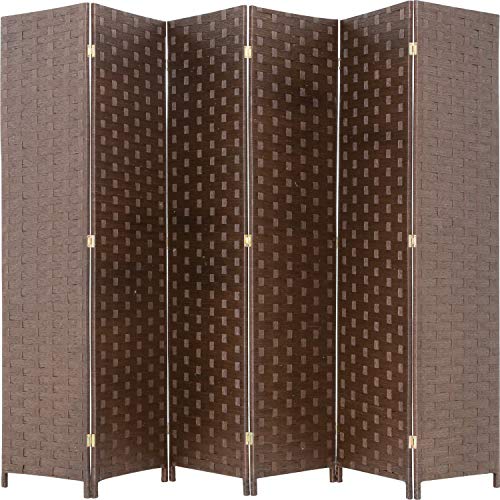
- Best overall: FDW 6-Panel Woven Wood Room Divider, Brown — Check on Amazon
- RANTILA 4-Panel Room Divider, Grey — Check on Amazon
- Premium Home 4-Panel Room Divider, Barnwood Brown K Pattern — Check on Amazon
- Premium Home 6-Panel Room Divider, Barnwood Brown K Pattern — Check on Amazon
- Coaster Roberto 4-Panel Shoji Screen, Black and White (4624) — Check on Amazon
- VEVOR 6-Panel Louvered Wood Room Divider, White — Check on Amazon
Read the full guide ↓
Disclosure: As an Amazon Associate, dailyhomedecorating.com earns from qualifying purchases. Links to Amazon on this page are affiliate links; they cost you nothing extra. Listing details such as price and availability change often, so check the current Amazon listing before you buy.
The best room divider for modern homes under $300 has to do something harder than divide: it has to disappear into a deliberate interior. In a modern living space — clean lines, a restrained palette, open plan — a fussy, ornate screen fights every other object in the room. The screens that work are the ones with a clear geometric idea: a crisp grid, a run of even louvers, a flat plane of fabric in a neutral grey, or a warm woven texture used the way modern rooms use texture, sparingly and on purpose.
This guide reads the category through that design lens. The Coaster Roberto shoji screen, with its black grid over white panels, is the most architectural pick here and the closest to a modern classic. The VEVOR louvered screen in white brings the slatted look that defines current interiors while keeping air moving. The RANTILA’s flat grey fabric is the minimalist’s privacy panel — no pattern, no ornament, just a plane. The woven FDW and the barn-door Premium Home screens are included with honest framing: they are warm and rustic respectively, and we explain exactly which modern rooms they suit — Scandinavian-leaning and warm-minimal spaces — and which they do not. All six sit within budget; check price on Amazon for current figures. Below are quick picks, our design-first criteria, detailed reviews, a comparison, a styling-aware buying guide, mistakes that date a room, and an FAQ.
In this guide
Quick Picks: Best Room Divider for Modern Homes Under $300
Short on time? Each row names the buyer the pick suits best. All six picks sit inside this budget — check price on Amazon for the current figure on any of them.
| Pick | Best for | Panels | Material | Link |
|---|---|---|---|---|
| FDW 6-Panel Woven Wood Room Divider, Brown | Best overall for wide coverage | 6 panels | Wood frame with woven mesh panels | Check on Amazon |
| RANTILA 4-Panel Room Divider, Grey | Best opaque privacy on a budget | 4 panels | Steel frame with anti-UV polyester fabric | Check on Amazon |
| Premium Home 4-Panel Room Divider, Barnwood Brown K Pattern | Best farmhouse look | 4 panels | Wood, rustic barnwood finish | Check on Amazon |
| Premium Home 6-Panel Room Divider, Barnwood Brown K Pattern | Best wide farmhouse coverage | 6 panels | Wood, rustic barnwood finish | Check on Amazon |
| Coaster Roberto 4-Panel Shoji Screen, Black and White (4624) | Best light-filtering shoji style | 4 panels | Solid wood frame with white paper-style panels and grid design | Check on Amazon |
| VEVOR 6-Panel Louvered Wood Room Divider, White | Best airflow-friendly louvered pick | 6 panels | Paulownia wood, louvered slats | Check on Amazon |
How the picks were chosen
For modern homes we weighted silhouette and finish first: flat or gridded planes over carved ornament, neutral or deliberately warm finishes over busy patterns, and hardware that does not draw the eye. We also weighted how a screen photographs against the furniture modern buyers actually own — low sofas, pale oak, black metal, white walls — and we penalized fussy detailing even when the underlying screen was well made. Coverage and stability still had to pass the same bar as our general guide; a beautiful screen that wobbles is a return, not a recommendation.
A room divider looks simple — panels, hinges, done — but the differences that decide whether you keep it for years or fold it into a closet in frustration are specific. Panel count controls coverage: a four-panel screen zigzags across roughly five to seven feet of usable span once you angle it for stability, while a six-panel screen covers eight feet or more and can turn a corner. Height controls sightlines: most screens here stand about six feet tall, enough to block a seated or standing sightline in a living area, but a shorter louvered screen trades a few inches of height for airflow and light. Material controls both look and upkeep: woven wood and paper-style shoji panels filter light and feel warm, solid barn-door panels block views completely and read as furniture, and fabric panels are the most opaque and the easiest to wipe down. Hinges matter more than shoppers expect — two-way hinges let a screen fold in either direction and stand in a zigzag, a U, or a gentle curve, while one-way hinges limit you to a single fold direction. Finally, weight is a genuine trade-off: a very light screen is easy to move for cleaning but easier for a pet, a child, or a draft to nudge, while a heavier wood screen stays put and demands two hands to relocate.
Measure before you order, and measure the span you actually need to block, not the whole room. Stand where the screen will stand and look at the sightline you want to interrupt: from a sofa to a desk, from a doorway to a bed, from the entry to the kitchen counter. Screens lose width to their folds — a screen sold as nine feet wide covers noticeably less once it is angled enough to stand securely — so plan on using roughly three quarters of the stated extended width as your real coverage. Check ceiling height only if you are considering an unusually tall screen; the picks here are standard height and clear ordinary ceilings easily. Also check the folded footprint: every pick in this guide folds flat enough to slide behind a sofa, into a closet, or against a wall, but the folded thickness and width differ, and in a small home that storage slot is worth measuring too. Finally, walk the path the screen will travel from your front door to its spot; a six-panel wood screen is not heavy, but it is awkward, and knowing your turns and doorways in advance saves a scuffed wall.
Detailed reviews
FDW 6-Panel Woven Wood Room Divider, Brown
Who it suits: Best overall for wide coverage. Its six woven panels give the widest coverage in this guide, and the woven mesh filters light rather than blocking it, so a divided room keeps its brightness. The wood frame keeps the look warm and furniture-like, and the whole screen is light enough for one person to reposition. The honest limitation is the flip side of that lightness and weave: it is a visual, light-filtering divider, not a full privacy wall, and it is the easiest screen here to nudge out of place.
Key facts: 6 panels; about 108 in wide fully extended x about 71 in tall; each panel about 17.7 in wide. Material: Wood frame with woven mesh panels. Hinges: Two-way folding hinges. Weight class: Lightweight, under 17 lb class.
Pros: genuine coverage for its class; folds flat for storage; no assembly or mounting required. Honest limitation: see the assessment above — no screen in this guide does everything, and this one’s trade-off is stated plainly rather than buried. Through a modern-design lens, judge this pick on silhouette, finish discipline, and how its back face looks in an open plan.
Choose it if its role matches your room’s main job; skip it if your priority is the opposite trade-off — full opacity versus light, or maximum width versus minimum storage. Check on Amazon for the current listing, finishes, and dimensions before you buy.
In daily use, the setup is simply unfold, angle, and walk away — there is no hardware, no feet to attach, and nothing to level. The woven panels diffuse daylight in a way that flatters living rooms: the divided side stays bright enough to read in, and the screen itself casts a soft texture rather than a hard shadow. When you need the room back, it folds to a slim stack that leans in a closet or slides behind a bookcase. Dust it with a dry cloth; the weave does not want soaking. Over months, the thing owners mention most is flexibility — because it is light, it migrates: across a guest bed one weekend, behind a desk the next, and that mobility is precisely what a heavier screen cannot offer.
RANTILA 4-Panel Room Divider, Grey
Who it suits: Best opaque privacy on a budget. The RANTILA is the privacy specialist: steel-framed fabric panels that block sightlines completely, stand on wide feet, and wipe clean. The grey fabric reads neutral in most rooms and the four-panel run suits a desk corner or a sleeping nook. The honest limitation is light: this screen is opaque, so plan its placement where blocking light is acceptable, and note the fabric look is plainer than wood if the screen is a centerpiece.
Key facts: 4 panels; 136 in W x 20 in D x 71 in H fully extended. Material: Steel frame with anti-UV polyester fabric. Hinges: Hinged fabric panels with wide support feet. Weight class: About 19 lb class with wide feet.
Pros: genuine coverage for its class; folds flat for storage; no assembly or mounting required. Honest limitation: see the assessment above — no screen in this guide does everything, and this one’s trade-off is stated plainly rather than buried. Through a modern-design lens, judge this pick on silhouette, finish discipline, and how its back face looks in an open plan.
Choose it if its role matches your room’s main job; skip it if your priority is the opposite trade-off — full opacity versus light, or maximum width versus minimum storage. Check on Amazon for the current listing, finishes, and dimensions before you buy.
Living with the RANTILA is about the feet and the fabric. The wide feet make it the steadiest-feeling lightweight here on hard floors, and the fabric’s opacity is total — a lamp behind it at night shows as nothing more than a faint glow at the edges. Assembly is a short, simple frame build rather than a pure unfold, so budget a few minutes once, not at every move. The fabric spot-cleans well and resists the scuffs that mark painted wood. Its weakness in daily life is presence: a large grey plane is visually plain, so most owners place it where function leads — a work corner, a sleeping nook — rather than as the room’s decorative centerpiece.
Premium Home 4-Panel Room Divider, Barnwood Brown K Pattern
Who it suits: Best farmhouse look. This is the character pick: a barn-door K pattern in a rustic brown finish that reads as farmhouse furniture, with dual two-way hinges that fold in either direction. It blocks views fully and feels substantial. The honest limitation is stylistic commitment — the rustic look is strong, and in a stark modern interior it will dominate rather than blend.
Key facts: 4 panels; 4-panel barn-door style screen, about 6 ft tall class. Material: Wood, rustic barnwood finish. Hinges: Dual two-way hinges. Weight class: Mid-weight wood screen.
Pros: genuine coverage for its class; folds flat for storage; no assembly or mounting required. Honest limitation: see the assessment above — no screen in this guide does everything, and this one’s trade-off is stated plainly rather than buried. Through a modern-design lens, judge this pick on silhouette, finish discipline, and how its back face looks in an open plan.
Choose it if its role matches your room’s main job; skip it if your priority is the opposite trade-off — full opacity versus light, or maximum width versus minimum storage. Check on Amazon for the current listing, finishes, and dimensions before you buy.
Day to day, this screen behaves like furniture. The barn-door pattern has real visual weight, the hinges swing both ways so you can fold it into a zigzag, an L, or a shallow curve, and the wood construction shrugs off the casual contact that dents lighter screens. It arrives ready to stand — unfold and place — and it stays where you leave it. The trade-off appears when you move it often: it is not the screen to fold and carry daily, and its rustic finish commits the room to a direction. Owners who love it tend to give it a semi-permanent post — flanking a fireplace zone, backing a reading chair — and let it anchor the space.
Premium Home 6-Panel Room Divider, Barnwood Brown K Pattern
Who it suits: Best wide farmhouse coverage. The six-panel sibling of the farmhouse pick, for rooms where four panels simply do not reach. It keeps the same barn-door K pattern, rustic brown finish, and two-way hinges, and adds the span to split a wide living area or turn a corner. The honest limitation is size: folded, it is the bulkiest stack here, and in a small room its coverage is more than the space can use.
Key facts: 6 panels; 6-panel barn-door style screen, about 6 ft tall class. Material: Wood, rustic barnwood finish. Hinges: Dual two-way hinges. Weight class: Heavier wide wood screen.
Pros: genuine coverage for its class; folds flat for storage; no assembly or mounting required. Honest limitation: see the assessment above — no screen in this guide does everything, and this one’s trade-off is stated plainly rather than buried. Through a modern-design lens, judge this pick on silhouette, finish discipline, and how its back face looks in an open plan.
Choose it if its role matches your room’s main job; skip it if your priority is the opposite trade-off — full opacity versus light, or maximum width versus minimum storage. Check on Amazon for the current listing, finishes, and dimensions before you buy.
The six-panel barn-door screen is the one to choose when the run is genuinely wide: across an open-plan living area, around a guest bed, or along a studio’s sleeping side. In place, it reads as a rustic wall — full privacy, real presence, and the same forgiving two-way hinges as its four-panel sibling, which let it turn corners instead of stopping at them. The daily-life cost is handling: it is the heaviest, bulkiest fold here, and moving it is a two-hand, plan-your-route job. Treat it as semi-permanent architecture you can remove in minutes, not as a screen you reposition every morning, and it rewards you with the most complete division in this guide.
Coaster Roberto 4-Panel Shoji Screen, Black and White (4624)
Who it suits: Best light-filtering shoji style. The Coaster Roberto is a classic shoji form: a solid wood frame, a bold grid, and white paper-style panels that glow softly when light sits behind them. At seventy inches it gives real seated and standing privacy while keeping a room bright. The honest limitation is fragility: the paper-style inserts are the most delicate panels in this guide, and this is the pick to keep away from rough play and pet traffic.
Key facts: 4 panels; 70 in tall solid-wood shoji screen. Material: Solid wood frame with white paper-style panels and grid design. Hinges: Folding shoji hinges. Weight class: Mid-weight solid wood.
Pros: genuine coverage for its class; folds flat for storage; no assembly or mounting required. Honest limitation: see the assessment above — no screen in this guide does everything, and this one’s trade-off is stated plainly rather than buried. Through a modern-design lens, judge this pick on silhouette, finish discipline, and how its back face looks in an open plan.
Choose it if its role matches your room’s main job; skip it if your priority is the opposite trade-off — full opacity versus light, or maximum width versus minimum storage. Check on Amazon for the current listing, finishes, and dimensions before you buy.
The Roberto’s daily pleasure is light. Placed between a seating area and a window, its white panels take the daylight and return it softened, so both sides of the room stay usable — the effect no opaque screen can match. The solid wood frame feels a class above the lightest screens, and the grid gives a room instant structure. Care is where honesty is required: the paper-style panels mark if they are poked, splashed, or grabbed, and replacements are not a casual fix. In a calm room — a reading corner, a primary bedroom, a serene living space — that fragility never becomes an issue. In a rough-and-tumble room, choose another pick.
VEVOR 6-Panel Louvered Wood Room Divider, White
Who it suits: Best airflow-friendly louvered pick. The VEVOR takes the louvered route: six paulownia panels whose slats block direct sightlines at seated height while letting air circulate — valuable in rooms that get stuffy when divided. It folds to a compact stack and its white finish suits bright interiors. The honest limitation is partial privacy: angled sightlines through louvers are reduced, not eliminated, and at just under sixty-seven inches it is the shortest screen here.
Key facts: 6 panels; 95.3 in W x 66.9 in H extended; folds to 66.9 x 15.7 x 4.3 in. Material: Paulownia wood, louvered slats. Hinges: Folding louvered panels. Weight class: 18.8 lb.
Pros: genuine coverage for its class; folds flat for storage; no assembly or mounting required. Honest limitation: see the assessment above — no screen in this guide does everything, and this one’s trade-off is stated plainly rather than buried. Through a modern-design lens, judge this pick on silhouette, finish discipline, and how its back face looks in an open plan.
Choose it if its role matches your room’s main job; skip it if your priority is the opposite trade-off — full opacity versus light, or maximum width versus minimum storage. Check on Amazon for the current listing, finishes, and dimensions before you buy.
The VEVOR earns its place in rooms that feel stuffy when closed off: a divided dining area, a home office carved from a warm bedroom, a rental where air barely moves. The louvers cut direct sightlines at seated and standing eye level while the room keeps breathing, and the white finish bounces light instead of absorbing it. It folds to a neat, compact stack and, at under nineteen pounds, one person moves it easily. Its limits are honest ones: it is the shortest screen here, determined peeking at an angle finds gaps, and the louvered look, while current, is a specific style commitment. For airflow-first division, nothing else in this guide does its job.
Room divider types, explained
Everything in this guide is a folding screen, but folding screens split into families that behave very differently. Woven wood screens, like the FDW, hang mesh or woven panels in a wood frame; they are the lightest full-size option, they filter light, and they suit rooms that need definition more than secrecy. Fabric screens, like the RANTILA, stretch opaque cloth over a metal frame; they are the privacy and wipe-clean champions, and the plainest to look at. Solid wood screens — the barn-door Premium Home models are the examples here — behave most like furniture: heaviest, most private, most decorative, and the most committed stylistically. Shoji screens pair a wood grid with translucent panels, trading durability for the best light in the category. Louvered screens split the difference between solid and open, blocking the direct view while passing air. None of these families is best in the abstract; each is best at one job, which is why this guide keeps returning to the same advice: name your job first — privacy, light, air, storage, or style — and the right family names itself.
Two construction details cut across all five families and are worth checking on any listing you consider beyond this guide. The first is hinge direction. Two-way hinges fold in both directions, which is what allows a screen to stand in a zigzag, wrap a corner, or curve gently; one-way hinges are cheaper and limit the shapes you can make, sometimes to the point where the screen only stands in one configuration. The second is panel width. Panel counts get the headlines, but panels range from roughly sixteen to twenty-four inches wide between models, so a four-panel screen from one maker can cover more than a four-panel screen from another. The comparison table in this guide lists the working dimensions we verified for each pick; when you compare anything else, compare those numbers, not the panel count alone.
Comparison table
| Model | Panels | Size | Material | Light behavior |
|---|---|---|---|---|
| FDW 6-Panel Woven Wood Room Divider, Brown | 6 panels | about 108 in wide fully extended x about 71 in tall; each panel about 17.7 in wide | Wood frame with woven mesh panels | Filters light |
| RANTILA 4-Panel Room Divider, Grey | 4 panels | 136 in W x 20 in D x 71 in H fully extended | Steel frame with anti-UV polyester fabric | Blocks light |
| Premium Home 4-Panel Room Divider, Barnwood Brown K Pattern | 4 panels | 4-panel barn-door style screen, about 6 ft tall class | Wood, rustic barnwood finish | Blocks light |
| Premium Home 6-Panel Room Divider, Barnwood Brown K Pattern | 6 panels | 6-panel barn-door style screen, about 6 ft tall class | Wood, rustic barnwood finish | Blocks light |
| Coaster Roberto 4-Panel Shoji Screen, Black and White (4624) | 4 panels | 70 in tall solid-wood shoji screen | Solid wood frame with white paper-style panels and grid design | Filters light softly |
| VEVOR 6-Panel Louvered Wood Room Divider, White | 6 panels | 95.3 in W x 66.9 in H extended; folds to 66.9 x 15.7 x 4.3 in | Paulownia wood, louvered slats | Partial — slatted |
How to choose the right divider for your room
Pick one visual idea and repeat it. A grid screen echoes window frames and shelving; louvers echo slatted wall panels and modern cabinetry; a flat fabric plane echoes upholstery. The screen should rhyme with something already in the room. If nothing in your space is rustic, a barn-door screen will look like a costume piece no matter how well it is made — and the reverse is equally true.
Use the divider as the room’s one texture move, or not at all. In a very minimal room, a woven screen can be the single warm, tactile element that stops the space feeling flat. In a room that already has rattan, jute, and timber, choose the flat or gridded screen instead and let the divider be the calm element.
Measure before you order, and measure the span you actually need to block, not the whole room. Stand where the screen will stand and look at the sightline you want to interrupt: from a sofa to a desk, from a doorway to a bed, from the entry to the kitchen counter. Screens lose width to their folds — a screen sold as nine feet wide covers noticeably less once it is angled enough to stand securely — so plan on using roughly three quarters of the stated extended width as your real coverage. Check ceiling height only if you are considering an unusually tall screen; the picks here are standard height and clear ordinary ceilings easily. Also check the folded footprint: every pick in this guide folds flat enough to slide behind a sofa, into a closet, or against a wall, but the folded thickness and width differ, and in a small home that storage slot is worth measuring too. Finally, walk the path the screen will travel from your front door to its spot; a six-panel wood screen is not heavy, but it is awkward, and knowing your turns and doorways in advance saves a scuffed wall.
Styling playbook: placing a screen in a modern interior
Modern rooms reward restraint, so place the screen the way you would place art: deliberately, with breathing room. A grid shoji screen a short distance off a wall creates a layered backdrop for a low sofa or a console, and the gap lets light model the grid’s shadow — the screen becomes architecture rather than obstruction. A louvered screen works best aligned with the room’s existing lines: parallel to a slatted cabinet, a run of shelving, or the direction of floorboards, so its rhythm reads as intentional. A flat fabric screen earns its place as the quiet element opposite something expressive — behind a sculptural chair, beside a bold artwork — where its plainness is the point. What modern placement avoids is the diagonal, apologetic angle that screams temporary; commit to a straight run or a crisp right angle and even a budget screen looks designed.
Color discipline matters as much as placement. Each screen here brings a strong note — black grid, white louver, grey plane, warm weave, rustic brown — and a modern room can absorb exactly one new note at a time. If the screen introduces the room’s only rustic element or its only black element, repeat that note once, cheaply, elsewhere: a black frame, a timber side table, a grey cushion. That single echo is the difference between a screen that looks chosen and one that looks stored in the open.
Care, moving, and making a divider last
A folding screen has exactly one mechanical system — its hinges — and one enemy: being forced. Open and close panels by moving them, not by dragging the whole screen sideways across the floor, which racks the hinges and loosens frames over time. When you relocate a screen, fold it first, carry it folded, and unfold it in place; carrying an open screen is how panels warp and feet bend. Dust woven and louvered panels with a dry cloth or a soft brush attachment, working with the weave rather than against it. Fabric panels spot-clean with a damp cloth and mild soap; test any cleaner on a hidden edge first. Wood finishes want the same care as any wood furniture — no soaking, no harsh solvents, and felt pads under the frame if the screen lives on a floor that scratches easily.
Placement habits extend a screen’s life as much as cleaning does. Keep any screen out of constant direct sun if you can; fabric and paper-style panels fade and dry out fastest, and even wood finishes lighten unevenly over years of one-sided exposure. In humid rooms — a bathroom-adjacent dressing area, a basement den — favor fabric or finished wood over natural woven materials, which can absorb moisture. And store a screen the way it folds: flat against a wall or in a closet, not leaned at a steep angle for months, which can bow a light frame. Treated this way, a screen in this price class is a decade-long piece of furniture, not a stopgap.
Common mistakes to avoid
Mixing rustic and minimal signals. A barn-door K-pattern screen in a stark white-and-chrome interior does not read as eclectic; it reads as a mistake. Match the screen’s design language to the room’s, or deliberately contrast with a single, confident texture — not a competing theme.
Overlooking the back of the screen. Dividers are seen from both sides, and some look unfinished from behind. In an open plan, the back is a primary view; check product photos of both faces before ordering.
Choosing a screen that is too short for a high-ceilinged modern space. In rooms with tall ceilings, a standard screen can look stunted. It still divides at human height — which is its job — but set expectations: it is a furniture-height element, not a wall.
Verdicts at a glance
FDW 6-Panel Woven Wood — the coverage-and-light verdict: if your room needs a wide, bright division and the screen will move often, this is the default buy. Its weave is a feature in living rooms and a limitation in bedrooms that need true privacy, so let the room’s job make the call.
RANTILA 4-Panel, Grey — the privacy verdict: when the brief is a blocked sightline, a clean call background, and a surface that wipes clean, nothing in this guide answers it more directly or more cheaply. Accept the plain grey plane as the price of that function.
Premium Home 4-Panel K Pattern — the character verdict: buy it when the divider is meant to be seen — a farmhouse living room, a rustic entry, a reading corner with presence. In rooms chasing a quieter look, its pattern will always be the loudest voice present.
Premium Home 6-Panel K Pattern — the wide-rustic verdict: the same farmhouse confidence stretched across a genuinely wide span. It is the most complete division here and the least portable, so buy it for a layout you expect to keep.
Coaster Roberto Shoji — the light verdict: for calm rooms that cannot spare brightness, the shoji grid is the most beautiful answer in this guide. Its delicate panels demand a gentle household; where that condition holds, it has no rival here.
VEVOR 6-Panel Louvered, White — the airflow verdict: choose it where a divided room must keep breathing — warm bedrooms, dining corners, stuffy rentals. Privacy is partial and height is modest, but no other pick solves the stuffiness problem at all.
What this budget actually buys, tier by tier
Shoppers often assume a divider near the top of this budget must be three times better than one near the bottom. In this category that assumption fails, and understanding why will save you money. At the lower tier you find lightweight woven and fabric screens: full-size, genuinely useful dividers whose makers saved money on frame weight and finish refinement. They divide a room on day one exactly as well as anything here; what you give up is heft, presence, and some long-term rigidity. In the middle tier, screens gain solid or better-finished wood, two-way hinges as standard, and dimensions that cover wider spans — this is the tier where most households should shop, because the upgrades are functional rather than cosmetic. At the upper tier of this budget you are paying for design and material presence: a classic shoji form from an established furniture maker, a barn-door screen that reads as a permanent fixture, or extra panels of a quality build. Those are legitimate reasons to spend — a screen is a large, visible object — but they are aesthetic reasons, and no tier in this guide buys meaningfully more privacy than the opaque options at the tier below.
The practical conclusion is liberating: choose by job and by room, not by price anxiety. If your job is a temporary work corner, the lower tier is not a compromise. If the screen will stand in your main living space for years, the middle and upper tiers repay their cost in the way furniture does — you look at it every day. Either way, keep the framing honest: everything in this guide sits under the same ceiling, prices move, and the listing — check price on Amazon — is the only figure that counts on the day you buy.
Before you buy: the five-minute checklist
Run through this list with your tape measure and your room in front of you, and you will almost certainly order once instead of twice. One: the span — measure the gap, then compare it with the usable zigzag span, roughly three quarters of the stated extended width, not the headline number. Two: the sightline — sit and stand in the spots you want screened and note the height your eyes actually need blocked; that tells you whether the shortest pick here is tall enough. Three: the light — decide, room by room, whether the divided side keeps a window, shares one, or loses one, and let that decide opaque versus filtering. Four: the storage slot — measure where the folded screen will live and compare it with the folded dimensions in the reviews. Five: the path — walk from your front door to the placement spot and check the turns; a wide wood screen is light but awkward, and knowing your route prevents the one scuff that annoys you for years. Five minutes, five checks, and the screen that arrives will be the screen you keep.
Final recommendation
Start with the FDW 6-Panel Woven Wood Room Divider, Brown if you want the safest all-round answer in this guide, and let your room’s real job — privacy, light, storage, or style — move you to one of the specialists from there. Every pick here is freestanding, folds away, and sits inside the budget; the differences that matter are the ones the reviews state openly. Check on Amazon to confirm the current listing before you order.
If you take one idea from this guide, let it be commitment: a modern room forgives almost any divider that looks deliberately chosen and placed with conviction, and it forgives none that look apologetic. Pick the screen whose single visual idea — grid, louver, plane, or one warm texture — rhymes with your room, repeat its note once elsewhere, place it straight and sure, and stop second-guessing. The result will not look like a compromise purchase. It will look like the moment the room’s layout finally made sense.
FAQ
What room divider style suits a minimalist home?
A flat fabric plane in a neutral tone, a black-and-white grid shoji, or even white louvers. The common thread is a single geometric idea with no ornament.
Can a woven screen work in a modern room?
Yes, in Scandinavian and warm-minimal rooms where natural texture is part of the palette. In a high-contrast black-and-white interior it usually clashes.
Do louvered dividers look modern?
Louvers are one of the defining details of current interiors. A white louvered screen reads contemporary and has the practical bonus of airflow between zones.
Should a divider match my floor or my walls?
Neither, necessarily — match its design language to the room and its tone to one existing element, such as black window frames, pale timber furniture, or grey upholstery.
Can a room divider look built-in?
A straight, committed run aligned with the room’s lines comes close, especially in grid or louver styles. It will never be a wall, but it can read as architecture.
What colors of divider suit a white modern interior?
White louvers disappear most completely; a black grid adds deliberate contrast. Warm weaves suit Scandinavian palettes specifically.
Should I match the divider to my sofa or my shelving?
Match its language to whichever element it will stand nearest — proximity decides what the eye compares it with.
Related guides
Keep planning your room with these guides from our site:


