Where to buy
Check the latest price, availability and delivery on Amazon. Orders are placed on Amazon. We may earn a commission from qualifying purchases.
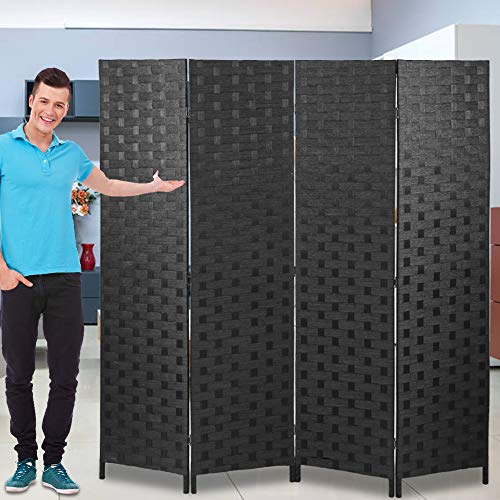
- Best overall for small spaces: FDW 4-Panel Wood Mesh Woven Room Divider, Black — Check on Amazon
- Best for a tight desk nook: Giantex Single Panel Rolling Room Divider, 73 in W x 73 in H, Beige — Check on Amazon
- Best for a dim corner: FDW 4-Panel Oriental Shoji Folding Screen, White — Check on Amazon
- Best movable micro-zone: SUNALLY 4-Panel Room Divider with Lockable Wheels, Black — Check on Amazon
- Best for an alcove: No-Drill Curtain Divider: Tension Rod with a Blackout Curtain Panel — described in the review below (no single listing linked; see the review for what to buy)
- Best full cover in a compact run: VEVOR 4-Panel Room Divider, Grey Fabric — Check on Amazon
Read the full guide ↓
Disclosure: As an Amazon Associate, dailyhomedecorating.com earns from qualifying purchases. Links to Amazon on this page are affiliate links; they cost you nothing extra. Listing details such as price and availability change often, so check the current Amazon listing before you buy.
The best room divider for small spaces under $100 is a study in not overdoing it. A small space — a box room, a landing nook, the corner of a bedroom doing duty as an office, a hallway wide enough to want a purpose — punishes the standard advice. The big six-panel screens that dominate divider roundups physically overwhelm a compact area: too much folded depth, too much visual mass, spans measured for living rooms. What a small space needs is a divider scaled to it — enough height to break a sight line, a footprint that angles into a corner, and a folded size that vanishes into the little storage a small space can offer.
Scale changes which features matter. In a small space you are always close to the divider, so its near-range behaviour dominates: woven mesh that looks airy across a living room shows silhouettes at arm’s length; a fabric screen’s opacity becomes more valuable, not less. You are also close to its edges and hinges, so build quality you can see and touch matters. And because small spaces usually serve two or three purposes in rotation, the divider’s conversion speed — unfold, roll, slide — decides whether the space’s second job actually happens.
All six picks were verified against their live Amazon listings for dimensions, materials and construction, then filtered for compact duty: four panels or fewer (or a single panel), folded footprints a small home can absorb, one-person handling, and heights that block sight lines without looming under low ceilings. No fixed prices appear in this guide — listings change too often — so check the current price on Amazon against the under-$100 frame. The numbers that do not change, panel size and folded size and weight, are the ones the reviews lean on.
The FDW woven screen takes the headline for most small spaces: four modest panels, 11.8 pounds, folds to a few inches thick. But the specialist picks matter more at this scale — the Giantex for a desk nook that needs a flat backdrop, the SUNALLY for a micro-zone that moves, the curtain for an alcove that can take a rod. The reviews below match each pick to the small-space job it genuinely fits.
In this guide
Quick Picks: best room divider for small spaces under $100
The six options at a glance, matched to the job each does best. Every linked pick was verified against its Amazon listing for dimensions and construction; the curtain option is explained without a link in its review.
| Best for | Pick | Why it stands out | Link |
|---|---|---|---|
| Best overall for small spaces | FDW 4-Panel Wood Mesh Woven Room Divider, Black | 4 panels | 72 x 70.2 in | wood, woven mesh | 11.8 lb | no assembly | Check on Amazon |
| Best for a tight desk nook | Giantex Single Panel Rolling Room Divider, 73 in W x 73 in H, Beige | 1 panel | 73 x 73 in | fabric on rolling frame | lockable wheels | no folding | Check on Amazon |
| Best for a dim corner | FDW 4-Panel Oriental Shoji Folding Screen, White | 4 panels | 6 ft tall | wood frame, shoji panels | folds flat | no assembly | Check on Amazon |
| Best movable micro-zone | SUNALLY 4-Panel Room Divider with Lockable Wheels, Black | 4 panels | 88 x 72 in | metal frame, 240gsm polyester | lockable wheels | double hinges | Check on Amazon |
| Best for an alcove | No-Drill Curtain Divider: Tension Rod with a Blackout Curtain Panel | Curtain + tension rod | adjustable span | blackout fabric | no drilling | slides open fully | See review below |
| Best full cover in a compact run | VEVOR 4-Panel Room Divider, Grey Fabric | 4 panels | 34 in per panel x 72.4 in H | iron frame, Oxford fabric | 21.4 lb | splittable run | Check on Amazon |
How picks were chosen
Candidates were verified on their live listings for panel dimensions, height, materials, hinge type and weight, then cut hard on compact criteria: no six-panel room-eaters, no dividers whose folded size needs a garage, nothing requiring two people to move. We also re-checked opacity claims at small-space distances — in a compact area you sit close to the screen, so near-range see-through behaviour is reported honestly in each review.
Ranking favoured conversion speed and storage: in a small space the divider is forever being set up and put away, so seconds and inches outrank raw span. The final six cover woven wood, a single flat panel, shoji, a wheeled screen, a curtain system and one wide fabric option for compact rooms that still need full cover.
Detailed reviews
1. FDW 4-Panel Wood Mesh Woven Room Divider, Black — Best overall for small spaces
Key specs: 4 panels; 72 in W x 70.2 in H fully open; each panel about 15.7 in wide; Wood frame with hand-woven wood mesh panels; 11.8 lb; Metal hinges; folds flat; No assembly required.
The FDW woven screen is the divider most people picture when they first go looking for one under $100, and there is a good reason it keeps showing up at the top of roundups: it solves the basic job — a freestanding visual break that arrives ready to use — without asking for tools, wall fixings or a second pair of hands. The frame is wood, the infill is a hand-woven wood mesh rather than a sheet of fabric, and the whole four-panel run opens to about 72 inches wide by 70.2 inches tall while weighing only 11.8 pounds. That weight matters more than shoppers expect. A divider you can lift with one hand gets moved when the room needs to change; a divider that needs two people and a plan tends to stay wherever it first landed, whether or not that spot still makes sense.
The woven mesh is the defining trade-off of this design. It blocks direct sight lines at standing eye level — you cannot read a screen or make out a face through it — but it passes light and air, and close up, at certain angles, you can make out shapes and movement on the other side. For splitting a living area from a sleeping corner or screening a desk from a sofa, that soft separation is usually exactly right. For changing clothes behind it with a bright window on the far side, it is not a blackout wall, and no honest guide should pretend otherwise.
Stability follows the usual folding-screen rule: it stands best in a gentle zigzag or shallow L, not stretched dead flat. Set flat, any four-panel screen this light can be rocked by a slammed door’s air pressure or a determined cat. Angled, the panels brace each other and it sits calmly on both carpet and hard floors. The hinges fold in one direction on this model, which slightly limits exotic shapes, but the standard zigzag, L and shallow U all work fine.
Because there is no assembly at all — you unfold it and stand it up — it is also the easiest pick here to return, lend, or hand on to someone else when you move, and the folded package slides behind a door or under a bed frame with clearance.
For small spaces: the proportions are the point — four modest panels angle into a corner without swallowing it, and the folded screen all but disappears. At close range remember the weave filters rather than blocks.
Pros:
- No assembly — unfold and stand it up
- Woven mesh keeps the room feeling open while breaking sight lines
- Light enough at 11.8 lb for one person to reposition daily
- Wood frame reads as furniture rather than office equipment
Honest limitation: The woven mesh is not fully opaque: silhouettes and movement can show through at close range or against strong backlight, so it gives visual separation rather than total privacy.
Choose it if the review above matches your room and priorities. Skip it if the limitation is the thing you care about most. Check on Amazon — check price on Amazon on the live listing before you decide.
2. Giantex Single Panel Rolling Room Divider, 73 in W x 73 in H, Beige — Best for a tight desk nook
Key specs: 1 large panel; 73 in W x 73 in H single panel; Fabric panel on a rolling frame; Rolling frame with lockable wheels; No hinges — one flat panel on casters; Assembly required (frame and wheels).
Every other pick in this guide folds. The Giantex does something different: one single, square panel — 73 inches wide and 73 inches tall — mounted on a rolling frame with lockable wheels. There are no hinges, no zigzag, no folded footprint to calculate. What you gain is a clean, flat, uninterrupted surface: a proper backdrop for a desk on video calls, a photography corner, or a bed that needs a plain visual wall behind it, with none of the vertical hinge lines that break up folding screens.
A flat panel also behaves differently in a room. It can stand parallel and close to a wall, slide sideways to open or close a gap, and roll straight into a corner when not needed — but it cannot wrap a corner, form an L, or brace itself in a zigzag, because there is nothing to angle. Its stability comes from the wheeled base alone, so it belongs on reasonably level floors, locks engaged, away from the household’s main traffic slam-points. In return you get the tallest effective block in this guide: 73 inches of continuous height with no gaps at hinge lines.
The beige fabric face is a calmer, warmer choice than the black screens here and suits bedrooms and living rooms that would feel closed-in behind a dark panel. As with any large fabric panel, keep it out of direct harsh sun to slow fading, and spot-clean rather than soaking.
Pick the Giantex when the job is a flat backdrop or a movable wall segment rather than a wrapped enclosure. It is the specialist of the group — less flexible in shape, more capable in the one shape it does.
For small spaces: a single flat panel is the tightest footprint here — it parks against a wall and gives a desk nook a clean, gap-free backdrop with no zigzag depth at all.
Pros:
- One flat, gap-free panel — the best video-call and photo backdrop here
- Full 73 in height with no hinge gaps
- Rolls sideways to open or close a gap in seconds
- Warm beige face suits living spaces better than black fabric
Honest limitation: A single flat panel cannot form an L or zigzag, so it cannot wrap a corner or brace itself — it relies entirely on its wheeled base for stability.
Choose it if the review above matches your room and priorities. Skip it if the limitation is the thing you care about most. Check on Amazon — check price on Amazon on the live listing before you decide.
3. FDW 4-Panel Oriental Shoji Folding Screen, White — Best for a dim corner
Key specs: 4 panels; 6 ft tall; four-panel folding run; Wood frame with shoji-style translucent panels; Lightweight wood construction; Folding hinges; folds flat for storage; No assembly required.
The shoji version of FDW’s screen takes the same folding idea and points it at light instead of texture. The wood frame carries translucent shoji-style panels that glow softly when daylight or a lamp sits behind them, which is why this style has been used for centuries to divide rooms without darkening them. At a full six feet tall it is one of the tallest screens in this price band, and that extra height shows: it blocks standing sight lines more completely than the many 67-inch screens that crowd the under-$100 shelf.
The translucent panels are a deliberate middle ground. They hide detail — you see brightness and vague shadow, not people — while letting a window on the far side of the room keep doing its job. In a one-window studio, that difference decides whether the far half of the room feels like a cave by 3 p.m. or still feels like part of the same home. The white finish also reflects light back into the room instead of absorbing it, which flatters smaller, darker spaces.
The honest costs of the design are fragility and fussiness. Shoji-style panel material is thinner and less forgiving than woven wood or fabric: a chair leg knocked into it or a box corner caught during a move can crease or puncture a panel in a way that woven mesh would shrug off. It also shows dust and scuffs more readily on the white frame, so it rewards a gentler household and a quick wipe-down routine. Treat it as a light-diffusing screen first and a rugged barrier second.
Like the woven FDW, it arrives assembled, folds flat, and stands best with its panels angled. If your priority is a bright, calm division rather than maximum toughness, this is the pick that protects the room’s light while still giving you a real boundary.
For small spaces: in a dim nook the shoji’s glow is transformative — it borrows light from the bright side instead of walling the dark side in. Keep it away from chair legs and passing bags.
Pros:
- Full 6 ft height blocks standing sight lines properly
- Translucent panels pass daylight so neither side goes dark
- Bright white finish suits light, calm interiors
- Arrives assembled and folds flat
Honest limitation: Shoji-style panels are the most delicate infill in this roundup — they crease or puncture more easily than woven wood or fabric if knocked or caught during a move.
Choose it if the review above matches your room and priorities. Skip it if the limitation is the thing you care about most. Check on Amazon — check price on Amazon on the live listing before you decide.
4. SUNALLY 4-Panel Room Divider with Lockable Wheels, Black — Best movable micro-zone
Key specs: 4 panels; 88 in W x 72 in H; Metal frame with 240gsm polyester fabric; Frame with caster wheels; Double hinges; lockable caster wheels and adjustable foot pads; Assembly required (frame, fabric, wheels).
Most dividers assume the room’s layout is settled. The SUNALLY assumes the opposite: it stands on lockable caster wheels, so the boundary itself can move. Roll it out to close off a work corner for the day, unlock and roll it back against the wall for the evening, wheel it between a bed and a desk when guests stay over. For rooms that change jobs between morning and night — which is most small homes — that mobility is not a gimmick, it is the whole point.
The screen itself is a four-panel metal frame opened to 88 inches wide and 72 inches tall, faced with 240gsm polyester fabric. That fabric weight is worth noting: it is heavier than the thin polyester on the cheapest folding screens, hangs flatter, and blocks the view more completely, though like all fabric screens it will still show a bright silhouette if a strong light sits directly behind it. Double hinges let panels fold either way, which makes L-shapes, zigzags and partial folds around furniture noticeably easier than with one-way hinges.
Wheels introduce their own honest compromises. A wheeled screen is only as steady as its locks, so engage all of them once it is placed, and expect a little more rock on thick carpet, where small casters sit less happily than on hard floors. The listing also notes that fabric may arrive with marks that fade after airing in a ventilated space — air it before judging it. Assembly is required: frame, fabric and wheels go together with the included fittings, so set aside proper setup time rather than expecting an unfold-and-done experience.
If your divider will move most days, nothing else in this price band is built for that life. If it will never move, the wheels are hardware you do not need — pick a fixed screen and save the setup effort.
For small spaces: wheels let a tiny room redraw itself — desk zone by day, clear floor by night — but lock every caster, because in a small space every knock reaches the screen.
Pros:
- Lockable wheels make daily repositioning genuinely easy
- Heavier 240gsm fabric hangs flat and blocks views well
- Double hinges fold either way for flexible shapes
- Wide 88 in run covers a generous span
Honest limitation: Wheels need locking every time and feel less planted on thick carpet; it also needs full assembly, unlike the wooden screens.
Choose it if the review above matches your room and priorities. Skip it if the limitation is the thing you care about most. Check on Amazon — check price on Amazon on the live listing before you decide.
5. No-Drill Curtain Divider: Tension Rod with a Blackout Curtain Panel — Best for an alcove
Key specs: Curtain panel on a tension rod; Adjustable — rod spans the gap; panel drops floor-length; Blackout polyester curtain on a floor-to-ceiling or wall-to-wall tension rod; Lightest option here; No hinges — curtain slides or ties back; Rod tensions into place; no drilling.
The sixth option is not a screen at all, and for some rooms it beats every screen in this guide: a blackout curtain panel hung from a no-drill tension rod. The rod either presses wall-to-wall across an alcove or stands floor-to-ceiling as a freestanding frame, the curtain hangs from it, and the division it creates has one unbeatable property — it opens completely. Slide the curtain aside and the room is whole again, with no folded screen to store and nothing standing on the floor.
A blackout panel also does two jobs no folding screen does well. It blocks light properly, so a sleep area behind it stays dark while the other side keeps a lamp on, and the heavy fabric softens sound a little — not silence, but a noticeable muting of television and conversation across the divide. For shift workers, light sleepers, and anyone splitting a studio with a partner on a different schedule, that light control is often the real requirement hiding behind the word ‘divider’.
The limits are structural. A tension rod needs something to press against — opposing walls, or a floor-to-ceiling frame kit — so wide open-plan spans with no anchor points rule it out. The curtain gives zero protection against being pushed through, leaned on or climbed, and it moves in draughts. It also reads as a curtain, which some people love for softness and others find too informal for a living room’s main division.
We list this option prose-only, without a single product link, because rod-and-curtain kits vary enormously in rod strength and fabric quality and the right pairing depends on your exact span and ceiling height — measure first, then buy the rod rated for your width and a panel at least as wide as the span so it hangs in soft folds. Done that way, it is the most complete open-and-close division under $100.
For small spaces: an alcove plus a tension rod is the neatest trick in this guide — a division that opens to literally nothing. Measure the alcove span before anything else.
Pros:
- Opens fully — the room becomes one space again in seconds
- Blackout fabric controls light between zones, unlike any screen
- No floor footprint and nothing to store when open
- No drilling — renter-friendly by design
Honest limitation: Needs walls or a floor-to-ceiling frame to tension against, so it cannot divide wide open spans with no anchor points, and it offers no physical barrier at all.
Choose it if the review above matches your room and priorities. Skip it if the limitation is the thing you care about most. This option is covered prose-only: buy the rod and panel separately to fit your measured span, using the guidance in the review.
6. VEVOR 4-Panel Room Divider, Grey Fabric — Best full cover in a compact run
Key specs: 4 panels; Each panel 34 in W x 72.4 in H; very wide fully-open run — plan on a zigzag span well under the flat figure; Iron frame with Oxford fabric panels; 21.4 lb; Clip joints let the run split into shorter sections; Some assembly of frame and feet.
The VEVOR is the privacy maximalist of this group. Where the woven and shoji screens soften a view, its Oxford fabric panels end it: the fabric is opaque, so no silhouettes, no shadow play, no guessing what is on the other side. If the actual job is a video-call backdrop, a changing area, or a sleep corner in a shared room, that opacity is the feature, and everything else about this divider supports it — a powder-coated iron frame instead of wood, flat bar feet, and panels a generous 34 inches wide and 72.4 inches tall.
Those panel dimensions need honest handling. Multiplied out flat, the run looks enormous on paper, but a hinged screen cannot stand safely dead flat, and nobody should plan a room around the flat number. Angled into a stable zigzag, expect a usable span in the region of 70 inches — still wide for a four-panel screen, and the clip joints add a trick none of the wooden screens here can match: the run splits into shorter sections, so one purchase can become a two-panel desk shield plus a two-panel corner screen, and later rejoin into a single wall.
At 21.4 pounds it is the heaviest pick in this guide, and that cuts both ways. The weight is why it feels planted once positioned, and also why you will not casually drag it around twice a day. Assembly is more involved than the unfold-and-stand wooden screens — frame, fabric and feet need putting together — so budget a quiet half hour and a clear floor for setup.
Choose the VEVOR when privacy is non-negotiable and the divider will mostly live in one place. It is the closest thing here to a temporary wall, with the setup effort and heft to match.
For small spaces: choose it when a compact room still needs total cover — a sleep corner in a shared small room. Its split-run clip joints let you use just two panels where four would crowd.
Pros:
- Fully opaque Oxford fabric — real privacy, not filtered privacy
- Clip joints split the run into two shorter screens when needed
- Iron frame and bar feet feel planted once set up
- Tall 72.4 in panels block sight lines completely
Honest limitation: Heaviest pick here at 21.4 lb and the most assembly of the group — it suits a semi-permanent spot, not daily repositioning.
Choose it if the review above matches your room and priorities. Skip it if the limitation is the thing you care about most. Check on Amazon — check price on Amazon on the live listing before you decide.
The four divider families, compared honestly
Shoppers meet four genuinely different products under the single search term ‘room divider’, and half of all disappointment in this category comes from buying one family while imagining another. The folding wooden screen is the oldest design: hinged panels, no assembly, a footprint that braces itself. Its strengths are immediacy and looks — it is the only family that reads as furniture in every room — and its weakness is that the same hinges that make it flexible make its headline width a polite fiction. Buy it for zoning, soft privacy and rooms where the divider will be seen all day and should look intentional.
The fabric screen on a metal frame is the engineer’s answer: taller, wider, fully opaque, and cheaper per foot of coverage than wood. It trades away the furniture look — nobody mistakes a grey fabric run for a crafted object — and it asks for assembly time and a semi-permanent home, because moving a wide, heavy frame is a two-handed decision. Buy it when the view must actually end: shared bedrooms, changing corners, a work zone that must disappear from family sight at the end of the day.
The wheeled divider, whether a folding screen on casters or a single flat panel, exists for rooms whose plan is a schedule rather than a layout. Its coverage per dollar is unremarkable and its stability depends on locks and level floors, but it converts a room in under a minute, every day, without lifting. In homes where the divider moves daily, that conversion speed is worth more than any spec on the box; in homes where it never moves, the wheels are pure overhead. Be honest about which home is yours before choosing this family.
The curtain system is the outlier: not furniture at all, but a soft wall. It alone blocks light as well as sight, it alone opens to nothing, and it alone asks the room for something in return — anchor points. Where a span exists for a tension rod, or a frame can stand floor-to-ceiling, a blackout curtain delivers the most complete division under $100 and the easiest storage story, because there is nothing to store. Where no anchor exists, it is simply unavailable, and no amount of wishing changes that.
Placement craft matters as much as family choice. Stand any divider so its line finishes the room’s existing geometry — continuing a shelving run, closing a rug zone, aligning with a doorway edge — rather than floating at an unrelated angle. Leave a clear walking route of comfortable width on at least one side; a divider that forces a sideways shuffle will be resented daily and eventually exiled to a wall. And check the view from the room’s main seat and main doorway before settling: those are the two sight lines the divider will actually be judged from, not the listing photograph’s angle.
Finally, expect a divider to change a room’s feel, not its physics. It will not warm a cold corner, silence a television, or turn one legal bedroom into two. What it does — reliably, cheaply, and reversibly — is give each zone of a shared room a visual edge, and with it a measure of calm. Under $100, that is a fair trade, and it is the trade every pick in this guide was judged on.
Comparison table
| Pick | Panels | Size | Material | Stands by |
|---|---|---|---|---|
| FDW 4-Panel Wood Mesh Woven Room Divider, Black | 4 panels | 72 in W x 70.2 in H fully open; each panel about 15.7 in wide | Wood frame with hand-woven wood mesh panels | Zigzag fold / feet |
| Giantex Single Panel Rolling Room Divider, 73 in W x 73 in H, Beige | 1 large panel | 73 in W x 73 in H single panel | Fabric panel on a rolling frame | Zigzag fold / feet |
| FDW 4-Panel Oriental Shoji Folding Screen, White | 4 panels | 6 ft tall; four-panel folding run | Wood frame with shoji-style translucent panels | Zigzag fold / feet |
| SUNALLY 4-Panel Room Divider with Lockable Wheels, Black | 4 panels | 88 in W x 72 in H | Metal frame with 240gsm polyester fabric | Wheels |
| No-Drill Curtain Divider: Tension Rod with a Blackout Curtain Panel | Curtain panel on a tension rod | Adjustable — rod spans the gap; panel drops floor-length | Blackout polyester curtain on a floor-to-ceiling or wall-to-wall tension rod | Tension rod |
| VEVOR 4-Panel Room Divider, Grey Fabric | 4 panels | Each panel 34 in W x 72.4 in H; very wide fully-open run — plan on a zigzag span well under the flat figure | Iron frame with Oxford fabric panels | Zigzag fold / feet |
Reading the table: panels and size set the maximum span, but the zigzag discount applies to every folding row — plan on roughly three quarters of the flat width as real coverage. Material sets opacity: fabric ends the view, shoji diffuses it, woven mesh softens it.
How to choose a room divider that fits your room
Height: the 70-inch rule of thumb
Height decides whether a divider blocks a view or merely suggests one. Screens around 70 inches and taller interrupt sight lines for standing adults a few feet away, which covers most living-room and bedroom jobs. Screens in the low-to-mid 60s still work between seated people — either side of a desk-and-sofa split, for instance — but anyone standing sees over them. Measure your ceiling too: under a standard 8 ft ceiling a 6 ft screen leaves a comfortable gap; under a low or sloping ceiling, check the tallest point of the run before ordering.
Width: plan the zigzag, not the flat line
Every folding screen’s headline width is measured flat, and no hinged screen stands safely flat. Angled into the zigzag that gives it stability, the same screen covers roughly three quarters of that figure in a straight line. So work backwards: tape the line you want to cover, measure it, then choose a screen whose flat width is about a third larger. If the taped line is very long, a curtain system or two screens in sequence will serve you better than one screen stretched to its unstable limit.
Opacity: know which kind you are buying
Dividers come in three honest grades. Opaque fabric ends the view entirely. Translucent shoji shows brightness and vague movement. Woven mesh shows more — shapes and motion at close range, little detail at distance. None of these is ‘better’; they are answers to different questions. Changing, sleeping and video calls want opaque. Zoning a living area wants mesh or shoji. Listings blur these grades with the word ‘privacy’ — judge by material, not by adjectives.
Standing: feet, angles and wheels
A folding screen’s stability comes from its angles: the more zigzag, the steadier and the shorter the span. Flat-bar feet on fabric screens plant the ends but cannot rescue a dead-flat run. Wheels trade a little plantedness for mobility and must be locked after every move. On thick carpet, feet and zigzags behave better than small casters; on hard floors, everything here works if angled honestly.
Lens-specific guidance
Scale the screen to the space, not the catalogue
Tape the divider’s footprint on the floor — including the zigzag depth, not just the line — and live with the tape for a day. If the taped shape cramps the walkway or the chair pull-out, drop a panel size. In small spaces a three- or four-panel screen, or even a split two-panel run, usually beats the full-width option.
Judge opacity at arm’s length
Small-space dividers stand close to people on both sides. Woven mesh and shoji that seem private across a room show movement and silhouette up close. If the job is a changing corner or a call backdrop in a compact room, choose opaque fabric or the flat panel.
Win back the inches
Prefer dividers that store in dead space — behind doors, under beds, flat against a wall — and mechanisms that convert in seconds. In a small space, every object must justify its volume twice: once in use, once in storage.
One divider, several small jobs
In a small space a divider rarely has a single job for long: the screen that zones a desk by day becomes a guest-corner screen by night and a laundry-hiding backdrop on weekends. That rotation is an argument for the middle path — a folding screen light enough to redeploy in seconds beats a marginally better screen that is heavy, fiddly or fragile, because the redeployment actually happens. When you choose between two close picks in this guide, choose the one your household will bother to move; in small spaces, the divider that gets used three ways is worth more than the perfect divider used one way.
Common mistakes
- Importing living-room scale. Six-panel screens overwhelm compact rooms in span, depth and looks. Size down deliberately.
- Forgetting zigzag depth. The footprint of an angled screen is a triangle, not a line. Tape it before buying.
- Trusting distance privacy. Screens that filter views at 10 feet reveal silhouettes at 2 feet. Match opacity to your real distance.
- No storage answer. If the folded screen has no home, it will live unfolded forever, taxing the space it was bought to save.
- Blocking the only light path. In a small space one tall opaque screen can darken everything. Keep light flowing with translucent options or careful placement.
Setup, care and safety basics
Unpack any screen on a clear floor and check panels, hinges and feet before assembly or first use — a bent frame or torn panel is a return on day one, not a quirk to live with. Wooden screens need only unfolding; fabric and wheeled models need their frames, panels and casters fitted snugly, following the maker’s order of steps. Once standing, give the divider a gentle push test at its working angle: it should rock slightly and settle, not walk or tip.
Care is simple but material-specific. Woven wood and shoji frames wipe with a dry or barely damp cloth; never soak wood or paper-style panels. Fabric panels spot-clean with mild soap and a damp cloth, tested on a hidden edge first, and air fully before folding away. Wheels and hinges benefit from an occasional check — a caster full of hair or a loosening hinge screw is the usual cause when a once-steady screen starts to wander or sag.
On safety: a divider is furniture, not a barrier. Keep it out of toddler climbing games, never hang heavy items from panels, keep fabric and wood away from heaters, candles and open flames, and retire a screen whose frame bends or whose hinges no longer hold — a falling screen is the one real hazard this product category has, and it is entirely preventable.
Final recommendation
For most small spaces, the FDW woven screen’s modest scale and flat fold make it the safe headline pick. Specialists beat it in their niches: the Giantex for a desk nook, the shoji for a dim corner, the SUNALLY for a zone that moves, the curtain for an alcove, and the split-run VEVOR where a compact room still needs total cover. Tape the footprint, judge opacity up close, plan the storage — small spaces reward dividers chosen by inches, not by headline width.
FAQ
What size divider is right for a small space?
Usually three or four panels, or a single panel around 6 ft tall. The test is the taped footprint: the angled screen must leave walkways and chair space intact. If it does not, go smaller — a two-panel split run still breaks a sight line.
Can a divider work in a hallway or landing?
Yes — a flat panel against the wall or a short folding run can give a wide hallway a dressing or desk zone. Keep the through-route fully clear and never narrow a fire exit path.
Do small dividers still give privacy?
Opaque fabric and flat panels do, even at close range. Woven and shoji screens give visual softening rather than true privacy, especially up close — choose them for zoning, not screening.
Where does a divider go in a room with no storage?
Choose one that stores in dead space: flat behind a door, under a bed, or — in the curtain’s case — nowhere at all, since it opens flat against its rod.
Related guides
More ways to divide and furnish the same rooms: Best Room Divider Under $100 Best Room Divider For Small Apartments Under $100 Best Accent Chair For Small Spaces Under $100 Best Room Divider Under $50.