Where to buy
Check the latest price, availability and delivery on Amazon. Orders are placed on Amazon. We may earn a commission from qualifying purchases.
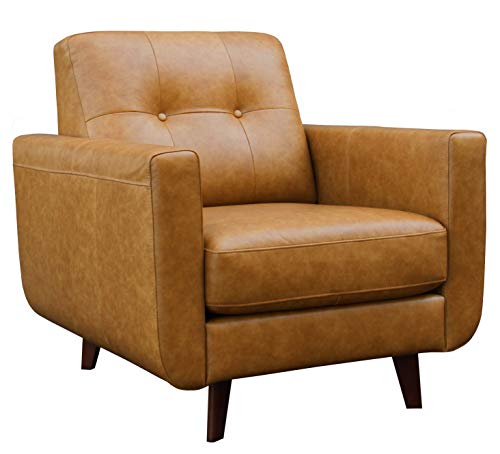
- Best overall reading chair for small spaces: Amazon Brand – Rivet Sloane Mid-Century Modern Leather Armchair, Caramel — Check on Amazon
- CHITA Genuine Leather Swivel Accent Chair, Saddle — Check on Amazon
- POLY & BARK Calle Leather Arm Chair, Cognac Tan — Check on Amazon
- POLY & BARK Lyon Leather Lounge Chairs, Set of 2, Cognac Tan — Check on Amazon
- POLY & BARK Napa Lounge Chair, 42-inch, Cognac Tan — Check on Amazon
- Eames-style lounge chair and ottoman (quality reproduction) — prose-only pick, see the review below for how to vet one
Read the full guide ↓
Disclosure: As an Amazon Associate, dailyhomedecorating.com earns from qualifying purchases. Links to Amazon on this page are affiliate links; they cost you nothing extra. Listing details such as price and availability change often, so check the current Amazon listing before you buy.
Looking for the best reading chair for small spaces under $2000 starts with a reframe: a small space is not a small home. It is the alcove under the stairs, the bay window nobody furnishes well, the corner of a large bedroom that currently holds a chair-shaped laundry pile, the landing wide enough for a chair and a lamp if both are chosen with respect. Houses of every size are full of these under-claimed metres, and a reading chair is the single best use any of them can be put to — because reading needs so little: a chair, a light, a surface, and quiet. The under $2000 ceiling serves this project in a specific way. A nook is looked at closely and used daily, so it rewards genuine materials — full-grain and genuine leather, hardwood frames, structured support — far more than a chair in a large room does; and a premium chair converts a leftover corner into the most contested seat in the house, which is the whole point of claiming the space.
This variant’s filter differs from its small-apartments sibling in one important respect: the constraint here is a single space, not a whole home. Delivery routes run through ordinary houses, rooms have other furniture to coexist with, and the chair’s job is to complete a nook rather than to multi-task for an entire household. So the judging below weights footprint and visual weight — how much floor a chair takes and how much room it appears to take, which are different numbers — alongside the usual reading geometry. Five picks carry verified Amazon listings with published specifications. The sixth, the Eames-style lounge chair, is covered prose-only: the licensed original costs several times this budget, reproduction listings rotate too often to link responsibly, and its chair-plus-ottoman footprint earns it an honest warning in a guide about small spaces.
Every home has a different small space, so this guide names them as it goes — the bay, the alcove, the bedroom corner, the landing — and the sizing routine at the end is written for spaces that are not quite rectangular and not quite empty. If your nook is part of a larger furnishing plan, our guides to Best Reading Chair Under $2000 for the unfiltered shortlist and Best Bookcase Under $2000 for storage that turns a corner into a library are the natural companions. What follows is the shortlist, how it was chosen, and each chair’s honest account of the spaces it fits — and the ones it does not.
In this guide
Quick Picks
In a hurry? This table matches each chair to the small-space job it does best.
| Small-space need | Pick | Why it stands out | Link |
|---|---|---|---|
| Best overall for small spaces | Amazon Brand – Rivet Sloane Leather Armchair, Caramel | 32.7 inches wide on beech legs — the footprint is compact and the visual weight is lighter still | Check on Amazon |
| Best for corners that face two ways | CHITA Genuine Leather Swivel Accent Chair, Saddle | Thirty inches wide and fully assembled, with a hidden swivel for alcoves between window and room | Check on Amazon |
| Best tailored nook piece | POLY & BARK Calle Leather Arm Chair, Cognac Tan | Full-grain aniline leather in a clean upright profile that makes a small corner feel deliberate | Check on Amazon |
| Best for two small spaces | POLY & BARK Lyon Leather Lounge Chairs, Set of 2, Cognac Tan | One budget, two nooks: split the matched pair between a bedroom corner and a living-room bay | Check on Amazon |
| Best for the one big small space | POLY & BARK Napa Lounge Chair, 42-inch, Cognac Tan | A generous bay or alcove can hold the pool’s best reading chair — included with its width stated plainly | Check on Amazon |
| Best design-icon route | Eames-style Lounge Chair and Ottoman (quality reproduction) | The famous recline — prose-only, with the chair-plus-ottoman footprint warning read first | Prose-only — see review |
How These Picks Were Chosen
We did not hands-on test these chairs in a procession of alcoves, and this guide will not pretend otherwise. What we did was run verified premium products through a small-space filter built on two measurements most guides merge: actual footprint — width and depth in inches, against the corners and bays real homes offer — and visual weight, the room a chair appears to consume, which legs, low backs and mid-tone leathers all reduce. Every linked pick has a live Amazon listing from an identifiable brand, a published ASIN, and specifications corroborated against manufacturer or retailer data: leather grade, frame construction, dimensions, assembly state and, where published, weight capacity. On top of the measurements, each pick had to pass the ordinary reading filter — seat geometry for real sessions, arms at book height, construction that justifies the ceiling — because a small space forgives neither a bad chair nor an ugly one.
Safety screening ran as it does across this batch. We checked the category against public CPSC recall notices, and any chair line subject to a recall was excluded entirely — not downgraded, excluded, brand and all. Powered recliners and chairs with electronics in the arm were left out altogether: their bulk is precisely what small spaces cannot absorb, and their mechanisms are the parts of a chair least likely to match a nook’s decade-long horizon. Every pick here is a fixed chair or a simple manual swivel.
Price discipline: each linked pick was sighted inside the under $2000 ceiling in recent listing data, but premium listings move, so check price on Amazon on the live listing before committing. Star ratings and review counts were deliberately not used as evidence — they change constantly and cannot measure a corner. Finally, we weighted claimability: a small-space chair succeeds when the nook becomes a destination, and that depends on the unglamorous trio this guide keeps returning to — the chair, the light and the surface arriving together, sized to the same few feet of floor.
The 6 Best Reading Chairs for Small Spaces Under $2000
Amazon Brand – Rivet Sloane Mid-Century Modern Leather Armchair, Caramel
Who it suits: Almost every small space, which is why it leads this variant. The Sloane’s argument is proportion: 32.7 inches wide — compact by any premium standard — on solid beech legs that lift the chair and return the floor beneath it to the room, so the space it occupies visually is smaller than the space it occupies actually. In a bedroom corner or a living-room bay, that difference is the difference between a nook that breathes and a corner that feels stored. The frame is hardwood, the leather genuine caramel — warm, mid-toned, forgiving — and the mid-century profile is the tailored kind that sits comfortably in traditional and modern rooms alike, which matters in nooks that borrow their style from the larger room around them.
As a reading chair, the Sloane’s posture is the balanced one this pool keeps returning to: a natural lean between upright and lounge, arms at a height that carries forearms and a book through long chapters, a seat deep enough for an evening without swallowing the sitter. As a small-space chair, its virtues compound quietly. It is light enough in presence to pair with a floor lamp and a slim surface without the corner tipping into clutter; its caramel tone reflects what light a corner has rather than absorbing it, as a dark chair in a dim alcove would; and its positioning at the accessible end of this tier leaves budget for the lamp and shelving that complete the nook — a real consideration, since a small space is furnished as a set or not at all. The honest trade is material depth: genuine leather ages gracefully but without the deepening patina of full-grain aniline, and the tailored seat is a sit-in width rather than a curl-across one. For the majority of small spaces, that is the correct trade, knowingly made.
Pros: Compact footprint with even lighter visual weight; hardwood frame, solid beech legs, genuine leather; balanced reading posture; friendliest positioning in the tier leaves budget to finish the nook. Honest limitation: Genuine leather will not develop aniline’s character, and sprawling, sideways readers will find the tailored seat narrow — the Napa exists for them, space permitting. As a house brand it carries no design-trade heritage. Choose it if your small space is a typical corner or bay and you want it solved in one decision. Skip it if curl-up width is the whole point and your space can prove it fits the Napa. See the Rivet Sloane on Amazon and Check on Amazon.
CHITA Genuine Leather Swivel Accent Chair, Saddle
Who it suits: The small space that faces two ways. Alcoves and bays are Janus spaces: the window pulls one way — light, view, morning — and the room pulls the other — conversation, the fire, evening. A fixed chair in such a space is always half-wrong; the CHITA’s hidden 360-degree swivel, concealed in a solid wood base beneath a genuine leather mid-century shell, lets the seated reader turn between the two without standing, dragging, or scuffing the floor the nook shares with the room. At about 33 inches deep by 30 inches wide by 33 inches high, it is also the smallest footprint in this pool — the pick for the genuinely tight corner, the landing’s end, the space between a bookcase and a door swing.
Two further facts suit it to small spaces specifically. It arrives fully assembled: no construction staged in a corner that has no staging room, no packaging lingering in a space measured in single square metres. And its stated capacity is 300 lb — proper headroom in a chair that will inevitably serve guests, children and the household’s every passing sit. The saddle leather is the right tone for dimmer corners: warm and mid-dark, it holds its own in low light without becoming a black hole in the room’s composition. The honest limits are the familiar ones for this shell: thirty inches wide is a sit-in, one-posture embrace — superb for settled reading, wrong for sprawlers — and a swivel’s faint give under shifting weight may register during long, still sessions. In a tight, two-facing space, neither dents the case.
Pros: Smallest premium footprint here; swivel solves two-facing corners without floor damage; fully assembled; genuine leather in a corner-friendly tone with 300 lb stated capacity. Honest limitation: A one-posture chair for larger and cross-legged readers, and the fully assembled delivery means the finished chair must fit the route to its corner — measure doorways, not just the nook. Choose it if your space is tight and torn between window and room. Skip it if you read sideways with legs over an arm. See the CHITA swivel chair on Amazon and Check on Amazon.
POLY & BARK Calle Leather Arm Chair, Cognac Tan
Who it suits: The small space that deserves to look intentional. Some nooks are accidents — a corner that happens to fit a chair — and some are compositions: the space at the end of a hallway, the corner of a primary bedroom, the spot beneath a good window in a quiet room. The Calle is the composition chair: full-grain pure-aniline Italian leather tailored over a clean, upright armchair profile on wood legs, the most disciplined silhouette in this pool. In a small space, where the chair is seen up close and constantly, that tailoring is not vanity — a clean object makes a small corner read as a decision, while a sloppy one makes it read as overflow.
Its reading posture matches its looks: upright-leaning, attentive, the chair for the reader who annotates, reads nonfiction, or simply prefers to sit like a person in a library rather than a person in a nest. The wood legs keep its visual weight low, letting a small corner hold the chair, a lamp and a surface without tipping into furniture-store density. The care contract is aniline’s usual — conditioning, coasters, distance from harsh sun and radiators — and small spaces concentrate both hazards, since corners collect window light and heating alike; check your nook’s sun path before the chair arrives. Because the maker’s published dimensional data for this model is thinner than for its siblings, verify exact measurements on the live listing and against your taped outline; in a small space, two inches is not a rounding error, it is the walkway.
Pros: Top-tier aniline leather in the pool’s cleanest profile; upright posture for attentive reading; low visual weight for composed corners. Honest limitation: Not a curl-up chair, and aniline leather asks its full care routine in precisely the sun-and-radiator corners small spaces offer. Published dimensions are limited — verify on the live listing. Choose it if your nook is a composition and your reading is attentive. Skip it if your reading is a sprawl — the CHITA’s embrace or the Napa’s width serve it better. See the Calle arm chair on Amazon and Check on Amazon.
POLY & BARK Lyon Leather Lounge Chairs, Set of 2, Cognac Tan
Who it suits: The home with two small spaces — which is most homes, once you start looking. A bedroom corner and a living-room bay. A landing and a home-office wall. This pick furnishes both from a single under $2000 budget: a matched pair of full-grain leather lounge chairs that can live apart as two nook chairs or together, side by side at about 49.5 inches wide by 34 inches deep by 31 inches high, as a paired seating moment. Matched leather across two corners also does quiet compositional work: the house feels furnished by one hand, and each small space borrows the other’s intention.
The construction suits a life of being placed and re-placed: eight-way hand-tied seat support under high-density foam and feather fill, a kiln-dried corner-blocked wood frame, rolled arms and diamond button tufting in full-grain leather. The stated capacity is 275 lb per chair — the most modest here, and a firm per-seat limit to respect. The honest flags are stylistic and arithmetical. Tufted traditional detailing is a strong flavour for a small space, where one chair is the whole room’s furniture statement; in warm, traditional or transitional homes it will look like belonging, and in stark modern corners it will look like an heirloom that wandered in — which some households love and others should not buy by accident. And a pair is only wise if both small spaces are real: inventory your corners honestly before choosing this over a single better-placed chair.
Pros: Two nooks furnished inside one ceiling; heirloom construction — hand-tied support, corner-blocked frame; matched leather unifies scattered small spaces. Honest limitation: The 275 lb per-chair capacity is the lowest here, and the traditional styling will dominate a small corner’s whole character. A second chair without a real space is storage, not value. Choose it if you can name both spaces right now. Skip it if you have exactly one corner — the Sloane or CHITA spend the budget better there. See the Lyon chair pair on Amazon and Check on Amazon.
POLY & BARK Napa Lounge Chair, 42-inch, Cognac Tan
Who it suits: The small space that is small only by courtesy — the wide bay window, the deep alcove, the bedroom corner of a generously built house — where “small” describes the area’s role, not its measurements. For those spaces, this guide will not pretend a compact chair is the better answer when the best reading chair in the pool fits: the Napa’s forty-two inches of curl-up width, full-grain pure-aniline Italian leather, feather-blend cushions over a solid wood frame and included bolster pillows make it the chair readers in our unfiltered guide are told to buy first, and a bay that holds it becomes the finest reading seat in the house, full stop.
The conditions, stated as plainly here as in the apartments variant: the footprint is about 38 inches deep by 42 inches wide by 34 inches high, the weight is 66 lb, and the chair needs its hand’s width behind and footstool room in front — measure the bay’s depth, not just its width, because bays are often wide and shallow, which is the one geometry that defeats this chair. Aniline leather in a window bay also meets the sun head-on; conditioning and a throw during the brightest hours are the standing policy, and a sheer curtain is a better long-term answer than either. Run the tape routine below on the actual space, live around the outline for a day, and let the measurements vote. If they vote yes, buy the best chair here without a flicker of guilt. If they vote no, the Sloane gives you premium leather and reading posture in nine fewer inches, and the corner will be better for the honesty.
Pros: The pool’s finest reading comfort, for spaces that can hold it; aniline leather and feather-blend depth turn a bay into the house’s best seat; planted, anchoring presence. Honest limitation: The largest footprint and heaviest piece here; wide-but-shallow bays defeat it on depth; aniline plus window sun is a care commitment, not a detail. This is a conditional pick, and the condition is measured. Choose it if the tape test passes in width and depth both. Skip it if either measurement argues — believe the tape. See the Napa lounge chair on Amazon and Check on Amazon.
Eames-style Lounge Chair and Ottoman — the Design-Icon Route (Prose-Only)
Who it suits: The rare small space with an icon-shaped hole in it — and this guide’s duty is to make you measure that hole twice. The 1956 lounge chair and ottoman remains the most celebrated reading silhouette ever made: moulded plywood shells, deep leather cushions, a recline angle engineered for a reader settling in. In a small space it promises the maximum of design per square foot, and in the right alcove it delivers exactly that. The honesty arrives in two parts, as in our other variants. First: the licensed original from its authorised maker costs several times the under $2000 ceiling, and what the budget reaches is a reproduction field — specialist makers selling direct, marketplace listings rotating between sellers — too unstable for any single ASIN to be verified and linked responsibly; hence prose-only. Second: the design is a chair plus a permanently deployed ottoman, a combined footprint rivalling the Napa’s, and small spaces feel the ottoman’s share most because it cannot be tucked, stacked or stood in a corner when guests arrive.
If the space passes — and some alcoves genuinely are this chair’s natural habitat — vet the reproduction like a collector: seven-ply veneer shells with a real wood face, never printed laminate; a cast aluminium five-star base with the correct tilt geometry; leather named as full-grain or top-grain, because unnamed “leather” at a keen price is bonded material awaiting its first peel; removable cushions; and a seller with a name, a written warranty and a real returns policy. Add the small-space checks: assembled dimensions, ottoman included, against your taped outline, and the delivery route walked in advance. Vetted and fitted, it is a magnificent use of a few square feet. Unmeasured, it is how a small space becomes a storage problem with a famous silhouette.
Pros: The definitive reading recline and unmatched design density per square foot; ottoman integral to the design; quality reproductions exist inside this budget from specialist sellers. Honest limitation: Chair-plus-ottoman footprint rivals the largest pick here; no verified stable Amazon listing exists to link; quality varies enormously between makers, and the licensed original is far outside this budget. Choose this route if your space measurably fits it and you will vet like a collector. Skip it if the corner is merely hopeful — the CHITA and Sloane were sized for real corners.
Comparison Table
| Pick | Best small-space job | Key specification | Space strength |
|---|---|---|---|
| Rivet Sloane, Caramel | The typical corner or bay | 32.7″W; hardwood frame; solid beech legs | Compact footprint, lighter visual weight |
| CHITA Leather Swivel, Saddle | Tight, two-facing corners | 33″D × 30″W × 33″H; 300 lb capacity; fully assembled | Smallest footprint; turns, never drags |
| POLY & BARK Calle | The composed nook | Full-grain aniline leather; wood legs | Clean profile, deliberate look |
| POLY & BARK Lyon, Set of 2 | Two small spaces | 275 lb per chair; pair 34″D × 49.5″W × 31″H side by side | Split the pair, unify the house |
| POLY & BARK Napa 42-inch | The generous bay or alcove | 38″D × 42″W × 34″H; 66 lb; full-grain aniline leather | The best seat, where it fits |
| Eames-style Lounge + Ottoman | The icon alcove | Prose-only; licensed original far above this budget | Design density — footprint first |
Footprint Versus Visual Weight: The Two Measurements of a Small Space
Every chair in this guide has two sizes, and small spaces are governed by the second. The first size is the footprint: width times depth, the floor the chair legally occupies, the number the tape measure reports. The second is visual weight: how much room the chair appears to occupy, judged by the eye that has to live with it. Legs reduce visual weight dramatically — a chair floating on beech legs lets the eye travel beneath it to the wall, and the corner reads as furnished rather than filled, which is why the Sloane and Calle punch below their measurements. Low backs reduce it too, keeping the chair below the room’s sightlines. Mid-tone leathers — caramel, saddle, cognac — sit in the visual middle: present without darkness, warm without glare, where a black chair in a dim corner reads as a hole and a white one reads as an appliance.
Grounded chairs spend visual weight deliberately: the Napa’s low, wide mass is a claim on the space, wonderful where the space is a stage — a bay, an alcove with architecture — and oppressive where it is a passage. The swivel complicates the ledger in your favour: its footprint is fixed, but its functional footprint is smaller than a fixed chair’s, because a fixed chair in a tight corner needs clearance to be dragged and turned by hand, while the CHITA rotates inside its own outline. When you run the sizing routine below, measure both sizes: the tape for the floor, and a day of living around the outline for the eye. Small spaces are furnished successfully by people who respect the second measurement as much as the first.
Reading Posture in Borrowed Corners: Light, Angle and the Second Hour
Small spaces are usually borrowed light: the corner gets what the room’s windows spare, the alcove gets what the doorway admits. Reading posture in borrowed light fails in a specific way — the reader twists toward the source, holds the twist for a chapter, and pays in the neck by evening. The cures in this shortlist are placement and mechanism. Placement: the chair angled diagonally into the corner rather than squared to the wall, so the reader’s shoulder turns toward the light while the back stays supported — a diagonal chair also happens to be how decorators make corners look intentional. Mechanism: the swivel, which lets the chair do the turning the reader’s spine would otherwise do. Either way, add the lamp to the chair’s budget from the start: in a small space the lamp is not an accessory but half the furniture, standing behind the shoulder, aimed at the page, close enough that its light is the corner’s own.
The second hour makes its usual demands, compressed. Lower backs need the lumbar gap filled — a bolster or firm cushion, the small-space reader’s universal adapter, converting any of these chairs into a supported long-session seat and propping the book toward chest height so the neck survives the chapter. Shoulders need arms at true reading height, which every pick here was checked for, because small-space chairs are where makers most often cheat the arm into a decorative suggestion. And the corner needs the reader to be able to leave and return without a furniture negotiation: a chair you must squeeze past is a chair you will stop using, which is why the sizing routine insists on a walk-past test, in the actual space, with the actual household traffic flowing by.
Claiming the Nook: Chair, Light, Surface, Shelf
A reading nook is a system of four pieces, and in a small space they must be bought as a set even if they arrive one at a time. The chair is the anchor and this guide’s subject. The light is the second piece: behind the shoulder, on the page, warm enough to make the corner glow against the room — a lit corner in a dim house is claimed territory that nobody stores boxes in. The surface is the third: slim enough to share the corner’s wall run, large enough for the current book, the next book and a drink on a coaster — see Best End Table Under $2000 for surfaces at this tier that respect a small footprint. The shelf is the fourth, and it is the piece that turns a seat into a library: a bookcase within arm’s reach or along the nook’s wall, holding the to-be-read pile where the reader can see it — Best Bookshelf Under $2000 covers cases built to the same standard as these chairs.
Then defend the claim. Small spaces revert to storage by gravity: the corner that is not visibly a reading corner becomes the corner where things wait. The defences are cheap and mostly symbolic — the lit lamp at the same hour, the current book left open-faced on the seat, the throw that lives on the arm — signals to the household, and to yourself, that this metre of floor has a job. Readers furnishing a corner that must also serve guests will find the wider seating question answered in Best Accent Chair Under $2000; but start here, with the four pieces and the claim, and the smallest space in your home becomes the one everyone asks to sit in.
How to Choose the Best Reading Chair for Small Spaces Under $2000
Name your space before you name your chair. A bay wants width tolerance and sun discipline; an alcove wants a composed profile; a bedroom corner wants quiet looks and easy rising; a landing wants the smallest footprint that still reads as furniture. The picks in this guide map to those spaces almost one-to-one — the matching is the choosing.
Measure footprint, then judge visual weight. Tape gives you the floor; your eye must approve the rest. If the corner is dim or the room beyond it is busy, prefer legs, low backs and mid-tone leather. If the space is a stage — arched, windowed, architectural — a grounded chair can hold it.
Budget the nook, not just the chair. At this ceiling it is tempting to spend everything on the seat, but a small space is completed by its light and surface. The Sloane’s friendlier positioning, or the Lyon’s two-for-one arithmetic, can leave the nook finished rather than the chair stranded — an unfinished nook is how premium chairs end up holding laundry.
Demand the construction vocabulary anyway. Small does not mean lesser: kiln-dried hardwood, corner-blocking, hand-tied or properly engineered support, named leather grades — the words that write a decade into a chair. A nook chair is used daily and looked at closely; it should be built like it.
Will It Fit? A Five-Minute Sizing Routine
First, measure the space’s floor honestly, including its irregularities: bays narrow at the back, alcoves have skirting and radiator pipes, corners are rarely square — record the smallest width and the usable depth, not the flattering ones. Second, add the chair’s entourage: a hand’s width behind for its lean, floor in front for feet or a footstool, and the lamp’s and surface’s shares of the same few feet. Third, run the walk-past test: the route by the chair, at its real width, with the household’s real traffic — a space that fits the chair but not the passing is a corridor with a chair in it. Fourth, sit in a chair you own in the actual space and measure floor to the back of your knee for seat height, and notice where the light falls at your reading hour. Fifth, tape the outline and live around it for a day. Small spaces punish optimism more precisely than large ones, and the tape is the only showroom that knows your corner.
Common Buying Mistakes
Measuring the flattering dimensions. Bay backs, alcove pipes, skirting boards — small spaces shrink at exactly the point the chair is widest. Measure the smallest truth. Forgetting the ottoman’s share. Chair-plus-ottoman designs claim their territory permanently; in a small space that share is the whole argument, as the Eames review states plainly. Buying dark for a dim corner. A black or near-black chair in borrowed light reads as absence; mid-tone leathers exist for these corners. Spending the whole budget on the chair and none on the light. An unlit nook is storage with a premium chair in it. Squaring the chair to the wall by default. Diagonal placement serves light and looks deliberate; the squared default serves neither in a corner. Skipping the walk-past test. The chair fits, the household does not — the most common small-space failure, and the cheapest to prevent with tape.
Making a Premium Reading Chair Last in a Small Space
Small-space chairs are touched more than most — brushed past, leaned on, used as the household’s favourite seat precisely because the nook works — so their care rhythm should be light but regular. Condition leather on the maker’s schedule; corners concentrate sun and radiator heat, the twin ageing forces, so manage both deliberately — beside the light rather than in its all-day path, away from the radiator’s direct breath. Plump feather-blend cushions weekly, rotate your curl direction so fill wears evenly, and check fasteners after the first month, when new furniture settles into its corner and its habits.
Cleaning should be routine rather than rescue: dust leather with a dry cloth, blot spills in the minutes aniline allows, and keep solvents and abrasives away from every finish here. Felt pads under legs protect the floor areas that small spaces expose to constant traffic, and lifting — never dragging — a chair for cleaning preserves both its joints and your deposit or floor finish. Respect stated capacities as working limits, and the frames in this guide will keep their silence for years: no creaks drifting down the hallway, no sags in the corner everyone sees. A nook is a promise a home makes to its readers; a well-kept chair is how the promise is kept.
Small Spaces With Odd Shapes: Bays, Alcoves and Landings
Three shapes account for most small spaces, and each has a favourite in this shortlist. The bay window is wide, shallow and sunlit: it rewards a chair whose depth is disciplined — the Sloane or the CHITA — placed diagonally to catch the light across the page, with sun management for the leather as standing policy; the Napa joins only the rare deep bay, and its review’s depth warning is written for exactly this shape. The alcove is enclosed and often dim: it rewards composition — the Calle’s tailored profile or the CHITA’s warm saddle tone — plus a lamp treated as architecture, since an alcove without its own light is a cupboard with ambitions. The landing is a passage that pauses: it rewards the smallest honest footprint, the CHITA again or a single Lyon from the split pair, placed so the walk-past test passes at the household’s busiest hour, not its quietest. Odd shapes are not failed rooms; they are rooms with instructions. Read the instructions — depth for the bay, light for the alcove, traffic for the landing — and the shortlist above selects itself.
Final Recommendation
For most small spaces, the Rivet Sloane Leather Armchair is the buy: genuine leather and a balanced reading posture in 32.7 inches, on legs that let the corner breathe — the nook solved in one decision, with budget left for its lamp. Tight, two-facing corners should take the CHITA Genuine Leather Swivel Chair and let rotation do what floor space cannot. Homes with two corners should run the Lyon pair maths, and generous bays that pass the tape test deserve the Napa. Whichever you choose, check price on Amazon on the live listing, run the sizing routine in the actual space, and judge the chair after its first full evening in the corner — lamp lit, book open, household flowing past — which is the only review a small space accepts.
Frequently Asked Questions
What size reading chair fits a small space?
Most corners and bays are best served at thirty to thirty-three inches wide — the CHITA at thirty, the Sloane at 32.7 — with depth checked against the space’s usable, smallest measurement. Wider chairs belong in small spaces only when the tape test passes in width and depth, as the Napa’s conditional review explains.
What is the difference between a small space and a small apartment for chair buying?
Scope. A small apartment constrains the whole home — delivery, multi-use, moving — while a small space is one tight area inside any home: a bay, an alcove, a bedroom corner. This guide optimises for the single space: footprint, visual weight and completing the nook. The apartments variant optimises for the whole-home version of the problem.
Do legs really make a chair better for a small space?
Visually, yes — legs return the floor plane to the eye, so the corner reads as furnished rather than filled, and low visual weight is the resource small spaces are shortest on. The Sloane and Calle both exploit this. Grounded chairs like the Napa spend that resource deliberately and should be placed where the space is a stage, not a passage.
Is a swivel chair worth it in a corner?
In two-facing corners — window one way, room the other — it is the single most useful feature available, because the chair turns within its own footprint instead of being dragged through the corner’s limited clearance. The CHITA hides the mechanism in a wood base, so the nook gains the function without the equipment look.
How do I stop a reading corner becoming storage?
Complete it and signal it: chair, light, surface and shelf arriving as a set; the lamp lit at reading hour; the current book visible on the seat. Corners revert to storage when they look unfinished. A completed, lit, book-holding corner is claimed territory, and households respect claims they can see.
Can two small spaces share one chair budget sensibly?
Yes — that is the Lyon pair’s entire argument: two matched full-grain chairs inside one ceiling, one per space, with the house gaining a furnished-by-one-hand coherence. The condition is honesty: both spaces must be real and named before ordering, or the second chair becomes the storage the previous answer warns about.
What construction should a small-space chair at this price have?
The same as any premium chair: solid or kiln-dried hardwood frame, corner-blocking where offered, hand-tied or properly engineered seat support, and a named leather grade. Small spaces are used daily and seen closely; there is no scale at which stapled frames and unnamed materials become a good idea.
What should I check first when the chair arrives?
Before the packaging leaves: that the chair passes the walk-past test in its real space — not the taped hope, the lived one — that it sits level and silent under shifting weight, and that its colour holds up in the corner’s actual light. Then one full evening in the nook. A chair wrong for a small space announces it within the day, while returns are still simple.


