Where to buy
Check the latest price, availability and delivery on Amazon. Orders are placed on Amazon. We may earn a commission from qualifying purchases.
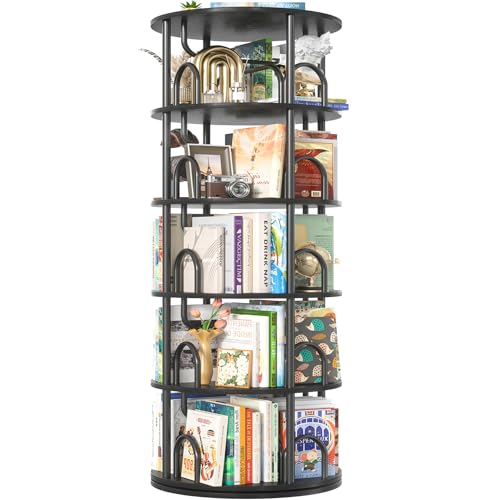
- Best overall for small spaces: Aheaplus 5 Tier Rotating Bookshelf Tower, 360 Display Spinning Bookcase, Narrow Swivel, Black — Check on Amazon
- Furologee White Tall Bookshelf, Narrow Bookcase with 6 Shelves (Model CTBS-008) — Check on Amazon
- VASAGLE 5-Tier Narrow Bookshelf with Steel Frame, Rustic Brown/Black (Model ULLS100B01) — Check on Amazon
- Tribesigns 7-Shelf Corner Bookshelf, Large Modern Corner Bookcase, White — Check on Amazon
See 2 more Amazon options
- IRONCK 81-Inch Corner Bookshelf with Door, 6 Tiers Large Bookcase with Storage Rack, White (Model HK-CWG-02) — Check on Amazon
- Furinno JAYA 5-Tier Book Shelf, Espresso — Check on Amazon
Read the full guide ↓
Disclosure: As an Amazon Associate, dailyhomedecorating.com earns from qualifying purchases. Links to Amazon on this page are affiliate links; they cost you nothing extra. Listing details such as price and availability change often, so check the current Amazon listing before you buy.
The best bookshelf for small spaces under $2000 is an exercise in refusing to waste a single inch. A small space — a box room, a studio corner, a hallway wall, the gap beside a desk — does not need a smaller version of a normal bookcase; it needs a case designed for the exact geometry it will occupy. The best bookshelf for small spaces under $2000 therefore comes in the shapes this guide ranks: a rotating tower that serves four faces from one footprint, towers fifteen inches wide that colonise leftover strips, a corner case in bright white, a corner case with a door, and a tall slim case with a closed back for the one real wall a small room can offer. The generous budget buys the engineering these formats need — rotation mechanisms, steel frames, doors on narrow cases — that the cheapest small shelves leave out.
Small-space buying is measurement buying. Depth decides whether books fit honestly or overhang; width decides whether the case fits the gap or fights it; and the difference between the two narrow towers in this guide — one 10.6 inches deep, one 11.8 — is the difference between display strips and real book storage. Every pick below was verified against its Amazon listing during research for this guide, with stated figures quoted where makers publish them. Check price on Amazon for the current figure before you order, and measure your space twice before you do either.
Our short answer: the black Aheaplus rotating tower leads for pure storage per footprint. The Furologee is the narrowest answer, the VASAGLE narrow the most book-honest gap filler, the white Tribesigns the brightest corner, the IRONCK corner the one that hides things, and the Furinno JAYA the tall slim traditional case. The same tier for whole apartments is ranked in Best Bookshelf For Small Apartments Under $2000, and the general guide is at Best Bookshelf Under $2000.
In this guide
Quick Picks: Best Bookshelf for Small Spaces Under $2000 at a Glance
Short on time? Each row names a buyer type and the bookcase that suits it, with a direct link to the listing. Every product below was verified on Amazon during research for this guide — check price on Amazon for the current figure.
| Buyer type | Pick | Why it stands out | Link |
|---|---|---|---|
| Best overall for small spaces | Aheaplus 5 Tier Rotating Bookshelf Tower, 360 Display Spinning Bookcase, Narrow Swivel, Black | A black five-tier tower that spins 360 degrees — maximum books on a corner-sized footprint, browsed from one spot | Check on Amazon |
| Best narrowest footprint | Furologee White Tall Bookshelf, Narrow Bookcase with 6 Shelves (Model CTBS-008) | Just 15.3 inches wide and 10.6 deep, six shelves, X-bracing and an anti-tip kit in the box | Check on Amazon |
| Best gap filler | VASAGLE 5-Tier Narrow Bookshelf with Steel Frame, Rustic Brown/Black (Model ULLS100B01) | 15.7 inches wide but a book-honest 11.8 inches deep, on a steel frame rated 91.5 lb total as listed | Check on Amazon |
| Best corner in white | Tribesigns 7-Shelf Corner Bookshelf, Large Modern Corner Bookcase, White | Seven bright tiers climbing a 23.62-inch corner footprint — lightens the junction it fills | Check on Amazon |
| Best corner with hidden storage | IRONCK 81-Inch Corner Bookshelf with Door, 6 Tiers Large Bookcase with Storage Rack, White (Model HK-CWG-02) | Six L-shaped tiers plus a farmhouse door, 81 inches tall — the corner that hides as well as holds | Check on Amazon |
| Best tall and slim with a closed back | Furinno JAYA 5-Tier Book Shelf, Espresso | 71.2 inches tall in a 24.5-inch width, three adjustable shelves and a closed back panel | Check on Amazon |
How These Picks Were Chosen
Small-space criteria are unforgiving, and they screened this list. Every pick had to fit a real leftover geometry: a corner junction, a sub-16-inch strip, a rotating footprint, or a slim wall run under 25 inches wide. Standard bookcases were excluded regardless of quality. Listings had to state dimensions we could verify, and stated loads are quoted exactly as makers publish them — 30 lb per shelf on the Furologee, 91.5 lb total on the VASAGLE, as listed — with their absence noted on the picks whose makers do not headline a figure.
We did not hands-on test these bookcases. The comparison rests on published specification plus small-space reasoning: footprint area against tier count, depth against real book sizes, corner shelf geometry, the rotating tower’s swing and load balance, included stability hardware, and closed versus open backs — a closed back, like the JAYA’s, matters in small spaces because the case is seen up close and from more angles. Assembly-in-room feasibility was required of every pick.
The six are six small-space strategies: rotate, narrowest, gap-fill, bright corner, hiding corner, and tall-slim-traditional. Style-led small rooms are covered in Best Bookshelf For Modern Homes Under $2000, and the footprint-first thinking continues at lower tiers in Best Bookshelf For Small Spaces Under $1000.
The 6 Best Bookshelves for Small Spaces Under $2000, Reviewed
Aheaplus 5 Tier Rotating Bookshelf Tower, 360 Display Spinning Bookcase, Narrow Swivel, Black
Best for: Best overall for small spaces
The Aheaplus 5-tier rotating bookshelf tower in black is the narrow-swivel version of the spinning format: five tiers on a revolving base, turning 360 degrees so every face of the tower is reachable from one standing spot. The black finish gives the tower a sharper, more graphic presence than the white version — it reads as a deliberate object in a modern room rather than disappearing into it — and the narrow footprint is aimed squarely at the leftover corners and alcoves where a conventional bookcase cannot turn its face to the room at all. It is a bookcase designed around access: you do not walk to the shelf, the shelf comes to you.
In a small space the rotating tower’s black finish does something the white version does not: it makes the tower a deliberate object, a piece of equipment for books, which suits studios and studies where the corner is a working corner. The format’s arithmetic is unbeatable in tight rooms — five tiers, four faces, one footprint — and browsing a collection by turning the case instead of sidling along a wall is a genuine daily pleasure in a room where sidling is the problem. Balance the load, keep the bottom tier heaviest, leave the swing clear, and a dead corner becomes the room’s library.
The rotating format’s disciplines apply in full. Load the tiers evenly so the tower spins true, keep the heaviest books on the lowest tier, and give the swing a clear radius of floor — a spinning tower hemmed in by furniture is just a tower. Aheaplus does not headline a per-shelf load figure for this model in its listing summary, so load by paperback-and-display judgement and verify against the current listing. And because it turns freely, households with climbing toddlers should weigh a fixed, anchored case instead. For a reader with a corner and a collection, it is the cleverest footprint in this guide.
Pros
- Four faces of storage on a single compact footprint — the best ratio here
- 360-degree swivel brings the shelf to you in rooms with no browsing space
- Black finish reads as a deliberate, graphic object in modern small rooms
- Five tiers take a serious paperback collection
Honest limitation: Needs a clear turning circle and even loading; no per-shelf load is headlined, so keep tiers at paperback-and-display weight and verify on the listing.
Choose this if your small space has one usable corner and more books than wall.
Skip this if the corner cannot offer a clear swing, or the household includes climbing toddlers — a fixed anchored case is safer.
Check on Amazon to see the current listing, sizes and availability.
Once you have measured your wall, check on Amazon once more before ordering — finishes and stock move around in this tier.
Furologee White Tall Bookshelf, Narrow Bookcase with 6 Shelves (Model CTBS-008)
Best for: Best narrowest footprint
The Furologee 6-tier narrow bookshelf in white (model CTBS-008) is the slimmest tower in this guide: 15.3 inches wide, 10.6 inches deep and 59.6 inches tall, with six shelves on a metal-and-wood frame, X-bar bracing at the back, adjustable feet for uneven floors and an anti-tip kit in the box. Furologee rates each shelf at up to 30 lb — a respectable figure for so narrow a case, earned by the short spans. The white finish and open frame keep it visually light, so it can stand in a hallway, a bathroom doorway wall or the strip beside a bookcase without reading as clutter itself.
The Furologee is the pick for the space that is barely a space: the 15.3-inch strip beside a door frame, the end of a hallway, the wall fragment between window and corner. At that width, engineering details stop being details — the X-braces keep the tall frame true, the adjustable feet level it on the sloping floors small old rooms specialise in, and the included anti-tip kit acknowledges what a tall narrow case in a tight, high-traffic room must have. Its white finish keeps the strip from darkening. Think of each shelf as a vignette — books, a plant, one beautiful object — and six vignettes stack into the room’s most efficient wall.
Narrowness is both the talent and the limit. A 15.3-inch shelf takes a short row of books — think a dozen paperbacks, a small plant and a framed photo per tier, arranged as vignettes rather than a library run — and the open sides mean books need bookends or neighbours to stay upright at a row’s end. The 30 lb per-shelf rating also asks for judgement: fine for its intended vignettes, not for a full tier of atlases. Assembled carefully with its X-bars snug and its anchor fitted, it converts the most common leftover strip in a home into six tiers of working storage.
Pros
- 15.3 inches wide — the narrowest complete bookcase in this guide
- X-brace reinforcement and adjustable feet for uneven small-room floors
- Anti-tip kit included, as tall narrow cases in tight rooms require
- 30 lb per shelf as listed — strong for the width
Honest limitation: Rows are vignette-length, open sides need bookends, and the 30 lb shelf figure suits its intended loads, not a tier of atlases.
Choose this if your leftover space is a strip other furniture measured in feet cannot touch.
Skip this if you need full-depth, full-length book rows — the VASAGLE narrow or the JAYA fits books more honestly.
Check on Amazon to see the current listing, sizes and availability.
Once you have measured your wall, check on Amazon once more before ordering — finishes and stock move around in this tier.
VASAGLE 5-Tier Narrow Bookshelf with Steel Frame, Rustic Brown/Black (Model ULLS100B01)
Best for: Best gap filler
The VASAGLE 5-tier narrow bookshelf (model ULLS100B01) is the gap specialist: 15.7 inches wide, 11.8 inches deep and 60.2 inches tall, with five tiers of rustic brown shelves on a black steel frame. VASAGLE rates the whole unit at 91.5 lb total — a figure to respect by loading the lower tiers heaviest — and the steel frame gives the narrow tower a rigidity that all-board narrow cases often lack. Its depth is its quiet advantage: at 11.8 inches it takes full-size books more honestly than the 9-inch-deep towers, so the gap beside a sofa or desk becomes real book storage rather than a display-only strip.
The VASAGLE narrow is the connoisseur’s gap filler, because of one number: 11.8 inches of depth. Most narrow towers shave depth to 9 inches and quietly stop fitting real books; this one keeps an honest depth in a 15.7-inch width, so the gap beside a sofa or between desk and wall becomes genuine book storage rather than a display strip. The steel frame gives the tower a rigidity all-board rivals lack, and the maker’s 91.5 lb total rating, as listed, tells you exactly how to load it: respect the total, keep the encyclopedias on the bottom tier or in another case, and the gap works as hard as any wall in the room.
The limits are arithmetic. Five tiers at 15.7 inches wide is a modest total row length, and the 91.5 lb total rating means the case should not be asked to hold a full hardcover library — spread the weight, keep encyclopedias low or elsewhere, and anchor the tower as VASAGLE intends. The open frame also shows the wall behind it, which suits most rooms but not those wanting a finished back. Within its brief — the dead strip of floor between two pieces of furniture — it is the most book-honest narrow case in this guide.
Pros
- 11.8-inch depth fits full-size books — rare in a 15.7-inch-wide tower
- Steel frame rigidity that all-board narrow cases lack
- 91.5 lb total rating published by the maker — a clear loading rule
- Five tiers turn a furniture gap into real storage
Honest limitation: The total rating caps the whole case, so a full hardcover library exceeds its brief; the open frame shows the wall behind it.
Choose this if the gap beside your sofa or desk deserves real books, not just display.
Skip this if your collection is heavy hardcovers end to end — a wider, higher-rated case belongs on your main wall.
Check on Amazon to see the current listing, sizes and availability.
Once you have measured your wall, check on Amazon once more before ordering — finishes and stock move around in this tier.
Tribesigns 7-Shelf Corner Bookshelf, Large Modern Corner Bookcase, White
Best for: Best corner in white
The Tribesigns 7-shelf corner bookshelf in white takes the same corner geometry as its rustic sibling — a 23.62 by 23.62 inch footprint standing 78.84 inches tall, seven tiers, metal frame — and finishes it bright, so the tower lightens a corner instead of darkening it. In white, the case suits modern, coastal and Scandinavian rooms where the rustic brown version would read too heavy, and it makes a natural plant-and-books tower beside a window, where the white frame keeps the display airy. Seven tiers is a lot of vertical storage to win from a corner that most floor plans write off entirely.
Small spaces are often dark spaces, and the white corner tower is the pick that adds storage without subtracting light. Seven tiers climb the junction to 78.84 inches, but in white the tower reads as part of the wall rather than an object in front of it — the corner stays bright, and the plants and pale ceramics small-room styling loves get a gallery. It is the corner choice for north-facing rooms, white schemes and anywhere the rustic version would land as a dark column. Dust it on the same round as the skirting boards and it stays as bright as the day it was anchored.
The format’s limits travel with the finish. Corner shelves take shorter, angled runs of books rather than long rows; the per-shelf load on this frame family is a display-weight figure, so heavy reference rows belong on a straight case elsewhere; and a white finish shows dust and scuffs sooner than rustic brown, asking for a regular wipe to stay bright. Tribesigns does not headline the load figure in this listing’s summary, so check the current listing before loading. Anchored and styled with air between objects, it turns a blank corner into the room’s lightest storage wall.
Pros
- Seven tiers on a 23.62-inch square corner footprint
- White finish keeps a small room’s corner bright
- Tall, light proportions suit plants and pale display
- Metal frame keeps the tower visually weightless
Honest limitation: Corner geometry takes angled, shorter book runs; white shows dust sooner than rustic finishes and wants regular wiping.
Choose this if your small space is pale or north-facing and its corner should store without darkening.
Skip this if you want the corner to hide clutter — the IRONCK corner’s door does that job.
Check on Amazon to see the current listing, sizes and availability.
Once you have measured your wall, check on Amazon once more before ordering — finishes and stock move around in this tier.
IRONCK 81-Inch Corner Bookshelf with Door, 6 Tiers Large Bookcase with Storage Rack, White (Model HK-CWG-02)
Best for: Best corner with hidden storage
The IRONCK 81-inch corner bookshelf with door (model HK-CWG-02) is the tallest pick in this guide and the only corner case with a closed section: six tiers of L-shaped corner shelving with a farmhouse-style door closing part of the storage, in a white finish, at a substantial 117 lb of furniture. That weight is a feature in a corner case — mass is stability — and the door answers the corner shelf’s usual weakness, which is that everything on it is always on show. Here the everyday clutter can go behind the door while the open tiers carry the display, and the 81-inch height uses the full vertical of the corner junction.
In a small space, the corner is often the only storage address available — and the IRONCK corner is the only pick that lets that address keep secrets. The farmhouse door closes a section of its six L-shaped tiers, so the space’s least displayable necessities live in the corner too, out of sight, while the open tiers carry the books and objects. At 81 inches it claims the junction’s full height, and its substantial build is the steadiest corner presence here. The discipline it demands is permanence: build it in the room, anchor it, and accept that the corner is now furnished for good.
Height and weight set the terms. At 81 inches, measure your ceiling and your doorway path before ordering — this case must be built in the room it will live in, and at 117 lb it will not be casually moved afterwards. IRONCK does not headline a per-shelf load figure for this model in its listing summary, so load the open tiers as display-and-books weight, heaviest low, and verify against the current listing. The L-shaped shelves, like all corner formats, take angled shorter runs rather than long straight rows. Anchored into the corner it was designed for, it is the most complete corner storage here.
Pros
- Farmhouse door hides a section of corner storage — unique in this guide
- 81 inches tall: the full height of the corner, used
- Six L-shaped tiers shaped to the junction
- Substantial build — the steadiest corner case here
Honest limitation: It must be built in place and is not casually moved; no per-shelf load is headlined, so keep open tiers at display weight with heavy items low.
Choose this if your small space’s corner must store the hidden layer as well as the books.
Skip this if you rearrange often, or your ceiling is too low for an 81-inch case — measure first.
Check on Amazon to see the current listing, sizes and availability.
Once you have measured your wall, check on Amazon once more before ordering — finishes and stock move around in this tier.
Furinno JAYA 5-Tier Book Shelf, Espresso
Best for: Best tall and slim with a closed back
The Furinno JAYA 5-tier book shelf in espresso is the tall, slim traditionalist: 24.5 inches wide, 9.5 inches deep and 71.2 inches tall, with five tiers — three adjustable and two fixed — behind a closed back panel. The closed back is its signature in a field of open frames: books cannot slide through, the case looks finished from every angle, and the panel adds the rigidity that lets a 9.5-inch-deep case stand 71 inches tall without a wobble. The espresso finish is a deep, warm brown that suits traditional rooms and hides the visual noise of a mixed book collection behind a calm frame.
Some small spaces have exactly one real wall, and the JAYA is the pick for spending it wisely: 71.2 inches of height in a 24.5-inch width, with a closed back that makes the case look finished at the close range small rooms force on furniture. Three of its five shelves adjust, so the wall can be zoned — tall shelf for the art books, tight rows for paperbacks — and the espresso finish gives a small room a calm, traditional anchor that hides the visual noise of a mixed collection. It is the most conventional case here, and in a small traditional room that conventionality is precisely the virtue.
The JAYA’s honesty notes are about capacity and adjustability. Only three of its five shelves adjust, so the fixed tiers set some of your shelf heights for you; the 9.5-inch depth takes standard books well but not the deepest art volumes; and Furinno does not headline a per-shelf load figure for this model, so load it as a sensible bookcase — heavy rows low — and check the current listing for its guidance. Assembly is a conventional flat-pack build. What it returns is the most conventional tall-bookcase behaviour in the smallest footprint here: closed, tall, adjustable where it counts.
Pros
- 71.2 inches tall in just 24.5 inches of width — a real wall, fully used
- Closed back panel: finished look and added rigidity, books cannot slide through
- Three adjustable shelves for zoning tall and standard rows
- Espresso finish calms a mixed collection in traditional small rooms
Honest limitation: Only three of five shelves adjust, the 9.5-inch depth excludes the deepest art books, and no per-shelf load is headlined — load heavy rows low.
Choose this if your small space has one proper wall and traditional taste.
Skip this if you need corner or strip geometry, or doors to hide a clutter layer.
Check on Amazon to see the current listing, sizes and availability.
Once you have measured your wall, check on Amazon once more before ordering — finishes and stock move around in this tier.
Comparison Table
Every figure below comes from the maker’s own listing — dimensions and stated load — so you can compare the six on facts rather than adjectives. Where a listing does not publish a load figure, the table says so instead of guessing.
| Bookcase | Dimensions (D x W x H) | Stated load | Back / doors | Best for |
|---|---|---|---|---|
| Aheaplus Rotating 5-Tier, Black | Compact tower footprint — see listing | See listing for current guidance | Open, 360-degree access | Spinning tower, narrow swivel |
| Furologee 6-Tier Narrow, White | 10.6″D x 15.3″W x 59.6″H | 30 lb per shelf, as listed | Open, X-braced | The narrowest tower here |
| VASAGLE 5-Tier Narrow | 11.8″D x 15.7″W x 60.2″H | 91.5 lb total, as listed | Open, steel frame | Gap-filler between furniture |
| Tribesigns 7-Shelf Corner, White | 23.62″D x 23.62″W x 78.84″H | See listing for current guidance | Open corner format | Seven tiers, bright white finish |
| IRONCK 81-Inch Corner with Door | 81″H corner format — see listing for footprint | See listing for current guidance | Farmhouse door plus open tiers | Corner storage with a closed section |
| Furinno JAYA 5-Tier | 9.5″D x 24.5″W x 71.2″H | See listing for current guidance | Closed | Tall, slim and fully backed |
How to Choose a Bookshelf for a Small Space
Measure the space in three dimensions, then measure the books. Small-space buying fails on millimetres. Record the gap’s width, the wall’s height and the depth the case may occupy without stealing walkway — then measure your books’ depths. A case 9.5 inches deep fits standard books; the VASAGLE’s 11.8 inches fits nearly all of them; if your art books run deeper, they need a different home than any narrow tower. The case that fits both the gap and the books is the only candidate list that matters.
Rank by shelves per square foot — then by honesty of depth. Rotating and corner formats win the ratio; narrow towers win the leftover strips. But a tower that wins the ratio with 9-inch shelves may lose your books. Use the ratio to shortlist, then check each survivor’s depth against your largest everyday books, not your largest book ever.
Give the moving parts their room. A rotating tower needs a clear circle; a doored corner case needs its door arc plus your hand; a ladder or tower in a walkway needs you to pass without turning. In small spaces these clearances are the design. If the clearance does not exist, the format does not fit, whatever the footprint says.
Anchor like the room is small — because it is. Tall narrow cases are the most tip-prone furniture format, and small rooms guarantee close contact: elbows, bags, children, pets. Fit the anti-tip hardware every time — the Furologee includes its kit — load the heaviest tier at the bottom, and re-tighten fixings after the first month.
Decide what the small space must hide. A small space with no other storage needs a door somewhere: the IRONCK corner provides the only hidden section in this guide. If the space is purely a reading corner, open formats give more book per inch. Match the case to the clutter, not just the collection.
Fitting Books Into Small Spaces: A Short Field Guide
Small-space collections need editing systems, not just shelves. The first system is zoning by format: paperbacks in the narrow towers and rotating case, where short rows and shallow shelves suit them; hardcovers concentrated on the lowest, strongest tiers of the tallest case you own; art books lying flat in short stacks that double as display plinths. The second system is rotation: a small space holds a current collection, with the reserve in a closet box — swap seasonally and the shelves always look curated rather than crammed.
The third system is vertical discipline. Use the full height — the corner towers here climb past 78 inches because small rooms have the same ceilings as big ones — but keep the top tiers for light, rarely touched things: the plant, the beautiful spine, the box of letters. What you reach for daily belongs between knee and shoulder. Follow those three systems and a small space stops feeling like a compromise; it starts feeling like a library that was designed, which, inch by measured inch, it was.
Matching Each Format to the Small Space You Actually Have
Small spaces differ, and the honest way to finish this guide is to match format to the spaces readers actually describe. The studio corner, where bed meets sofa and neither owns the junction: that is rotating-tower ground, the black Aheaplus serving both zones from one footprint, its turn marking the change of room more gently than any screen. The hallway strip, too narrow for furniture and too long to waste: Furologee ground, six vignettes turning a passage into a gallery, with its adjustable feet forgiving the hallway’s slope. The gap beside the desk in a box-room study, fifteen inches of dead air between desk and wardrobe: VASAGLE ground, because that gap deserves real books at honest depth, within arm’s reach of the chair.
The pale spare room that doubles as a guest room twice a year: the white corner tower, bright and quiet, holding the household’s overflow without making the room feel like storage. The small living room whose corner must take the television’s entourage of boxes, consoles and cables: the IRONCK corner, its door closing on the whole electronic layer while the open tiers carry the books that make the room a living room. And the one true wall in a small traditional room — behind the sofa’s end, beside the fireplace that no longer burns: the JAYA, closed-backed and calm in espresso, spending the wall’s full height on five zoned shelves.
Two threads run through every match. The first is that each format was chosen by the space’s geometry before its style — the corner chose the corner case, the strip chose the tower — and style was then selected within the format, by finish. The second is that every match leaves the space’s circulation untouched: you can pass, open, turn and reach everything without negotiation. A small space furnished on those two principles does not feel small in the way that matters. It feels considered — and the books, at last, have somewhere proper to live.
A Note on Ceiling Height, the Forgotten Dimension
Small-space guides talk about floor area endlessly and ceiling height almost never, which is odd, because the tallest picks in this guide — the corner cases at 78.84 and 81 inches — live or die by it. Standard ceilings forgive everything here. Low ceilings, sloped loft ceilings and rooms with deep crown moulding do not: an 81-inch case under a 84-inch ceiling leaves no room to tilt the case upright during assembly, and a corner tower under a slope may fit the junction at its low side and fail at its high side. Measure the ceiling at the exact spot the case will stand, not at the room’s centre, and remember the assembly tilt: a tall case is raised from flat, and its diagonal during the lift is longer than its height.
Where height runs short, the guide’s mid-height formats take over gracefully — the Furologee at 59.6 inches and the VASAGLE at 60.2 leave air above them in any room, and that air is itself a small-space asset, because a case that stops well below the ceiling keeps a tight room feeling open. Height, like width and depth, is a measurement to take before the order, and the only one that cannot be fixed afterwards by moving the case six inches to the left.
When One Case Is Not Enough: Pairing Small Formats
Small spaces often end up needing two cases, and pairing them well is a skill this guide should leave you with. The rule is division of labour, never duplication. Pair a display format with a workhorse: the rotating tower or a corner case for the books you browse, and the JAYA or a narrow tower for the reference layer you consult. Or pair by depth: the honest-depth VASAGLE for real books, the shallow Furologee for the paperback overflow and objects. Two cases with different jobs read as a system; two identical narrow towers side by side read as an apology for the wide case you actually needed.
Finish discipline matters more in small rooms than large ones, because both cases are always in view. Repeat one material across the pair — black frames, say, on both the tower and the corner case — and let the second finish, if any, be the room’s existing wood tone. Heights should either match or differ decisively; two towers a few inches apart in height look like a measuring error, while a tall corner case beside a low console looks like composition.
And keep the pair honest about growth. A small space that gains a second case has usually gained its last one: from here, the collection grows by rotation, not by furniture. That is not a limitation to mourn. It is the point at which a small space becomes a curated one — every book present because it earned its inches, which is more than most large rooms can say.
Common Mistakes When Buying a Bookshelf for a Small Space
Measuring the wall but not the books. A 9-inch-deep tower in a gap is a triumph until the books overhang every shelf. Depth against your real collection is the check that decides whether a narrow case works at all.
Blocking the swing or the door arc. Rotating towers and doored corners need their clearances. A case that cannot open or turn in its space is furniture fighting its owner daily.
Leaving a tall narrow case unanchored. Small rooms mean constant close contact, and tall narrow is the tip-prone format. Anchor first, load second — with the heaviest tier at the bottom.
Cramming instead of rotating. A small-space shelf packed spine-to-spine to the last millimetre reads as overflow. Edit to a current collection, store the reserve elsewhere, and let a little air make the shelves look designed.
Buying for the space you wish you had. An 81-inch corner case in a room with 78-inch ceilings, a wide case for a strip wall — measure the actual geometry, including ceiling height and the delivery path, before the order, not at the door.
Final Recommendation
For most small spaces, the black Aheaplus rotating tower is the best bookshelf under $2000: four faces of books from one footprint, browsed without moving, in a finish that reads as a deliberate object. Choose the Furologee for the narrowest strips, the VASAGLE narrow when the gap must hold real books at honest depth, the white Tribesigns corner to brighten a junction, the IRONCK corner when the corner must hide things, and the JAYA when one slim wall deserves a traditional closed-back case. Measure the space and the books, anchor before loading, keep the heavy tier low — and check price on Amazon before you order. Whole-apartment versions of the same discipline at a lower tier are ranked in Best Bookshelf For Small Apartments Under $1000.
Shortlist it down to two geometries and measure both against your space: the Aheaplus 5 Tier Rotating Bookshelf Tower, Black for the corner that must hold everything, or the Furologee White Tall Bookshelf, Narrow Bookcase with 6 Shelves for the strip nothing else fits — compare both listings side by side before you commit.
Frequently Asked Questions
What is the smallest footprint a real bookshelf can have?
In this guide, the narrow towers: the Furologee occupies 15.3 by 10.6 inches of floor for six shelves, and the VASAGLE narrow 15.7 by 11.8 for five deeper ones. Rotating towers use a compact square footprint but serve four faces, which makes their effective footprint per book the smallest of all.
Are rotating bookshelves practical or a gimmick?
Practical, with conditions. They genuinely multiply storage per footprint and make browsing effortless, but they must be loaded evenly, kept at paperback-and-display weight per tier, and given a clear turning circle. In a corner that meets those conditions, nothing fixed stores as much.
How deep should a small-space bookshelf be?
Standard books need about 9.5 inches; nearly all everyday books fit 11.8 inches, which is why the VASAGLE narrow’s depth matters. Measure your books: if most run deeper than the case you are eyeing, the case will annoy you daily no matter how well it fits the wall.
Can a corner bookshelf hold heavy books?
Lightly. Corner formats publish modest per-shelf figures and their geometry suits paperbacks, plants and display. Keep any dense hardcover rows on the lowest tier, or give heavy books to a straight case — in this guide the JAYA’s low tiers — and let the corner do what it is shaped for.
How do I stop a tall narrow bookshelf from wobbling?
Anchor it to the wall, level it — the Furologee’s adjustable feet exist for uneven floors — tighten X-braces and fixings after the first weeks, and load the heaviest tier at the bottom. Wobble is usually a levelling or anchoring problem before it is a construction problem.
Should a small-space bookshelf have a closed back?
A closed back, like the JAYA’s, keeps books from sliding through, adds rigidity and looks finished at the close range small rooms impose. Open frames look lighter and suit display. In very small spaces the closed back’s tidiness usually wins for a main case, with open formats as accents.


