Where to buy
Check the latest price, availability and delivery on Amazon. Orders are placed on Amazon. We may earn a commission from qualifying purchases.
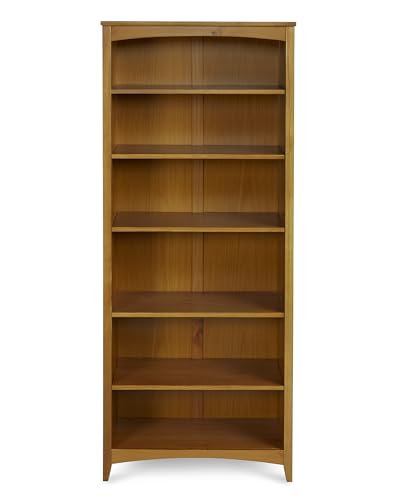
- Best overall for families: Camaflexi Shaker Style 6-Shelf Bookcase, Solid Wood, 72 Inch, Cherry — Check on Amazon
- Sauder Barrister Lane 10-Cubby Bookcase, Scribed Oak — Check on Amazon
- Concepts in Wood 5-Shelf Storage Cabinet Bookcase, 30 x 72 Inch, Cherry — Check on Amazon
- SIMPLIHOME Amherst Multi-Cube Bookcase, Solid Wood, 44 Inch, Black — Check on Amazon
- Palace Imports Solid Wood 6-Tier Bookcase, Stackable Modular, 71.5 Inch, Gray — Check on Amazon
- IRONCK Triple Wide 5-Tier Bookshelf, Industrial, 69.3 Inch — Check on Amazon
Read the full guide ↓
Disclosure: As an Amazon Associate, dailyhomedecorating.com earns from qualifying purchases. Links to Amazon on this page are affiliate links; they cost you nothing extra. Listing details such as price and availability change often, so check the current Amazon listing before you buy.
Finding the best bookcase for families under $2000 is a different exercise from finding a bookcase for a quiet study. A family bookcase gets climbed toward, bumped by ride-on toys, loaded with board games that were never designed to stack, and re-purposed every few years — picture books at toddler height today, school projects tomorrow, a teenager’s paperbacks and trophies after that. It has to be safe before it is beautiful, and it has to organize a household, not just shelve novels.
Safety comes down to three physical facts. Height and weight distribution decide how a case behaves when a child pulls on a shelf edge, so anchoring to the wall is non-negotiable for any tall unit and is treated as part of assembly throughout this guide. Construction decides whether shelves stay level under the point loads of game boxes and storage bins, which is why solid wood and braced, fixed shelves dominate this shortlist. And format decides whether the daily flood of family objects — bins, puzzles, art supplies, sports gear — has a compartment to land in, or ends up in a landslide at the bottom of an open bookcase.
Our family short answer: the Camaflexi Shaker is the safest all-round buy, a solid-pine case with a closed back and an included anti-tip kit whose adjustable shelves can start low for picture books and rise with your children. The Sauder Barrister Lane cubby case is the organizing champion — ten cubbies that swallow bins and games, in a low, inherently stable format. The Concepts in Wood cabinet hides everything behind doors, which any parent who has tidied for guests in nine minutes will understand instantly. The SIMPLIHOME Amherst is the low, legged, solid-wood option for a child’s room or a play corner; the Palace Imports case is the modular system that grows as the family does; and the IRONCK triple-wide is for the big shared wall in a family room or finished basement. If your budget is smaller, the same family criteria are applied at a lower ceiling in our Best Bookcase For Families Under $1000 guide, and households that prefer open shelving can compare the Best Bookshelf For Families Under $2000.
In this guide
Quick Picks
In a hurry? This table matches each bookcase to the job it does best in this guide.
| Buyer type | Pick | Why it stands out | Link |
|---|---|---|---|
| Best overall for families | Camaflexi Shaker Style 6-Shelf Bookcase, Solid Wood, 72 Inch, Cherry | Solid pine, real depth, adjustable plus fixed shelves | Check on Amazon |
| Best for toys and bins | Sauder Barrister Lane 10-Cubby Bookcase, Scribed Oak | Ten cubbies plus a display top in a low, wide case | Check on Amazon |
| Best for hiding clutter | Concepts in Wood 5-Shelf Storage Cabinet Bookcase, 30 x 72 Inch, Cherry | Five shelves hidden behind doors — calm and dust-free | Check on Amazon |
| Best low and sturdy | SIMPLIHOME Amherst Multi-Cube Bookcase, Solid Wood, 44 Inch, Black | Solid wood cube case on tapered legs, just 44 inches tall | Check on Amazon |
| Best to grow with the family | Palace Imports Solid Wood 6-Tier Bookcase, Stackable Modular, 71.5 Inch, Gray | Solid wood modular system that grows into a wall | Check on Amazon |
| Best for a big shared wall | IRONCK Triple Wide 5-Tier Bookshelf, Industrial, 69.3 Inch | Fourteen open sections across nearly 70 inches | Check on Amazon |
How These Picks Were Chosen
Every pick here was screened through a family filter before its other merits were considered. Anchoring: tall cases must include or accept a wall anchor, and low cases had to be inherently stable by format. Load honesty: shelves were judged on maker ratings and construction, not marketing, because family shelves carry bins and game stacks, not just evenly distributed books. Edges and finishes: painted and laminate surfaces were assessed for how they hide scuffs and wipe clean, and solid wood scored for repairability — a case a child has decorated with a marker should be sandable, not ruined.
We also weighted format heavily. Families do not store books; they store a changing inventory of objects in roughly book-sized units, so cubbies, doors and adjustable shelves each had to be represented by a genuinely good example. Dimensions, shelf counts and model details were verified against manufacturer and retailer listings, and the sources are recorded in the notes published alongside this guide. Prices on large furniture move too often to print responsibly, so each pick links to its live Amazon listing — check the current price, finish and delivery options there before you buy, and confirm the anchor hardware is in the box when your case arrives.
We also screened for what might be called the grandparent test: could a visiting grandparent, a babysitter and a tired parent all use this storage safely and find things without instructions? That favoured labelled cubbies over anonymous shelves, doors that open fully over doors that stick, and shelf heights a seated adult can reach for the everyday items. It is a small thing, but family furniture is used by the whole family, including the members who never read the manual — which, in most houses, is all of them.
The 6 Best Bookcases for Families Under $2000
Camaflexi Shaker Style 6-Shelf Bookcase, Solid Wood, 72 Inch, Cherry
The Camaflexi Shaker Style 6-Shelf Bookcase is the pick that most clearly shows what a generous ceiling buys you in this category: real wood. The whole frame is solid pine sourced from renewable plantations, not a veneer over particleboard, and that changes how the piece ages. Edges can be sanded, dings can be touched up, and the shelves do not have the hollow, drummy feel of flat-pack panels when you slide a heavy row of hardcovers onto them. At 72 inches tall and 30 inches wide it is a classic single-bay library case, and the 13-inch depth is deeper than the 11- to 12-inch shelves on most budget cases, so art books, binders and storage boxes sit fully supported instead of overhanging the front edge.
Six shelves divide the height, four of them adjustable on pegs and two fixed for structural rigidity. That mix matters more than it sounds. The fixed shelves brace the case so it stays square, while the adjustable ones let you set a tall opening for atlases or vinyl at the bottom and tighter rows for paperbacks above. The back is fully closed rather than open or a thin dust panel, which keeps books from being pushed through, stops the case racking side to side, and gives the whole unit a finished, furniture-like feel from the front. A wall-mounted anti-tip kit is included in the box, and on a case this tall you should treat fitting it as part of assembly, not an optional extra.
The Shaker styling is deliberately plain: flat rails, square posts, no applied ornament. In cherry finish it reads traditional, but the same plainness is why it survives style changes — it is a background piece that lets the books be the decoration. Assembly is a real job rather than a ten-minute task; solid pine panels are heavier than particleboard, and you will want a second person for standing the case up and for the wall anchor step.
Who it suits: the family’s main bookcase — the one in the living room or hallway that will hold picture books now and reference shelves later. Choose it if you want one safe, repairable, long-life case; set the adjustable shelves low for little readers and raise them as the children grow. Skip it if your storage is mostly toys and games; cubbies organize those better.
What we like:
- Solid pine throughout — repairable, sandable, no veneer to chip through
- Four adjustable shelves plus two fixed bracing shelves
- Closed back adds rigidity and keeps books from pushing through
- Anti-tip kit included, and the 13-inch depth swallows art books and binders
Honest limitation: Solid pine is a softwood: it is far tougher than particleboard, but a dropped hardcover corner or a dragged metal bookend will mark it in a way hardwood would shrug off, and the 30-inch width means serious libraries will need two units side by side.
Sauder Barrister Lane 10-Cubby Bookcase, Scribed Oak
The Sauder Barrister Lane 10-Cubby Bookcase turns the bookcase on its side. Instead of a tall tower it is a low, wide credenza of storage: 53.15 inches across, just 47.52 inches tall, divided into ten cubbyholes. That format solves problems the tall cases cannot. The top surface becomes a gallery ledge at standing eye level for framed photos, plants and a lamp. The cubbies swallow fabric bins, board games, vinyl records, photo boxes and the family clutter that never fits gracefully on open book shelves. Sauder even includes ID label tags for the cubbies, a small admission that this piece is really an organizing system.
Because it is low, it fits where tall cases cannot go: under a window, beneath a wall-mounted television, along a half-wall in an open-plan space, or at the foot of a staircase wall. It is also the most inherently stable format in this guide — a wide, low case with its weight spread across 53 inches of floor is far less tip-prone than a 72-inch tower, though anchoring is still good practice where children climb. The Scribed Oak finish gives the engineered-wood panels a planked, cottage character that hides everyday scuffs better than a flat gloss would.
The honest limitations follow from the format. Cubbies are fixed, so a tall atlas or an oversized coffee-table book may fit in none of them; measure your largest items against the cubby openings before you buy. Engineered wood with a laminate finish cannot be refinished if it is damaged, and a low case gives you display and organizing capacity rather than maximum book linear footage — a serious library still needs a tall case or two beside it.
Who it suits: the playroom, the family room and the under-TV wall — anywhere bins of toys, games and craft supplies need a home with a label on it. Choose it if tidying speed matters; ten cubbies plus fabric bins is the fastest tidy-up system in this guide. Skip it if the shelf is mainly for tall books, which the fixed cubbies cannot take standing.
What we like:
- Ten cubbies organize bins, games, records and clutter that open shelves handle badly
- Low 47.5-inch height fits under windows and TVs; top doubles as a display ledge
- Wide, low stance is inherently stable; ID label tags included
- Scribed Oak cottage finish hides scuffs and suits relaxed interiors
Honest limitation: Fixed cubbies cannot adapt to oversized books, and engineered wood cannot be sanded or refinished — it is an organizer first and a bookcase second.
Concepts in Wood 5-Shelf Storage Cabinet Bookcase, 30 x 72 Inch, Cherry
The Concepts in Wood 5-Shelf Storage Cabinet is the only pick in this guide that hides its contents, and for many rooms that is the entire point. Behind its doors are five shelves in a 30-inch-wide, 72-inch-tall cabinet, so the visual result in the room is a calm, closed piece of furniture rather than a wall of spines, board games, photo albums and charging cables. Concepts in Wood builds its cases with wood construction and solid wood trim rather than the paper-laminate panels of the cheapest cabinets, and the cherry finish gives it the warm, traditional presence of a pantry or library cabinet.
Closed storage changes how a bookcase gets used day to day. Dust settles on the top of the cabinet instead of on every book. Visual clutter disappears behind doors, which matters in open-plan rooms where the living area is also the office, the playroom and the guest room. Inside, adjustable shelving lets you divide the cabinet between tall items below — board games, binders, a printer paper stash — and ordinary book rows above. It is equally at home as a kitchen or laundry cabinet, which is a useful second life for a piece bought for a living room today.
The compromises are built into the concept. Doors mean you cannot see or grab a book without opening the cabinet, so it suits reference collections, archives and clutter better than the books you read nightly. A closed cabinet this tall also concentrates its visual weight; it reads as a solid block of furniture and needs a little breathing room around it. And like every tall case in this guide, it must be anchored to the wall — a loaded, door-fronted cabinet is exactly the profile anti-tip guidance was written for.
Who it suits: open-plan homes where the family room is also the entertaining room. Choose it if you want the games, chargers and clutter to vanish behind doors when guests arrive, and dust to stay off everything in between. Skip it if your children are at the stage of pulling every door open twenty times a day — you will spend the year closing it.
What we like:
- Doors hide clutter and keep dust off books and stored items
- Five shelves in a standard 30-inch bay — easy to place and to pair
- Wood construction with solid wood trim, warm cherry finish
- Works beyond the living room: pantry, laundry or office storage in a second life
Honest limitation: Closed doors add a step between you and your books, so it is the wrong pick for a reading chair’s everyday library, and the solid, blocky front needs visual breathing room in a small room.
SIMPLIHOME Amherst Multi-Cube Bookcase, Solid Wood, 44 Inch, Black
The SIMPLIHOME Amherst Multi-Cube Bookcase is the compact solid-wood option in this guide, and its proportions are its argument. At 44 inches tall it stands on tapered legs like a piece of mid-century furniture rather than a storage tower, and its cube compartments are sized for the way living rooms actually accumulate things: a stack of coffee-table books here, a basket there, a speaker, a plant, a row of novels. SIMPLIHOME builds the Amherst line from solid wood, so despite its smaller footprint it has the material honesty of the big Camaflexi and Palace cases rather than the laminate panels of most compact organizers.
The raised, legged design earns its keep in real rooms. Air circulates underneath, a robot vacuum can pass below, and the piece can sit over a floor register or against a wall with baseboard heating without the trapped-dust gap a plinth base creates. The black finish and clean transitional lines make it the easiest pick here to drop into a modern scheme, and at 44 inches it slides under most windowsills and below wall-mounted art without competing with it. Fixed cube shelves keep the structure rigid — there is nothing to wobble out of adjustment — and the whole unit is light enough for one person to reposition when a room gets rearranged.
Capacity is the obvious trade. This is a bookcase for a curated shelf or two, not a library; a household with hundreds of books will fill it in an afternoon. The fixed cubes share the cubby limitation of the Sauder — very tall books must lie flat in a stack rather than stand — and the open compartments offer no dust protection. Treat it as the quality compact anchor in a room, possibly one of a pair, rather than a whole storage plan.
Who it suits: a child’s bedroom or a reading corner, where a low, solid, legged case keeps books at child height and off the floor. Choose it if you want solid wood at a scale a small room can take. Skip it if it must serve as the household’s only bookcase; its capacity is deliberately modest.
What we like:
- Solid wood construction in a compact, legged furniture format
- 44-inch height fits under windows and art; robot-vacuum-friendly clearance
- Black transitional styling drops straight into modern schemes
- Light enough to move and rearrange single-handed
Honest limitation: The smallest capacity in this guide by a wide margin — a curated display piece, not a library — and fixed cubes force oversized books to lie flat.
Palace Imports Solid Wood 6-Tier Bookcase, Stackable Modular, 71.5 Inch, Gray
The Palace Imports Solid Wood 6-Tier Bookcase comes from a maker that builds exclusively from solid wood, and it shows in the details. The frame is 100 percent Brazilian pine, kiln-dried and made in Brazil, with no MDF or particleboard anywhere in the structure. At 32 inches wide and 71.5 inches tall it gives you a slightly wider bay than the standard 30-inch case, and the six tiers — four of them adjustable — are deep, square-edged shelves that suit a mix of books and display pieces.
What really separates this case from the others here is that it belongs to a modular system. The unit is designed to stack and to combine with matching pieces from the same line, including versions with doors and drawer organizers, so a single case today can become a two- or three-case wall later without a style mismatch. For anyone furnishing gradually, or who knows a collection will keep growing, that expandability is worth more than a slightly lower price on a dead-end design. The gray finish on this version is the contemporary option in the range: it lightens the visual weight of a tall case and sits comfortably next to the painted cabinetry and pale upholstery common in newer interiors.
Because the wood is solid, the case carries weight the way furniture used to: shelves can be loaded with full rows of books rather than a decorative scattering. The trade-offs are the honest ones that come with any real-wood flat-pack — assembly takes care and time, pine can arrive with visible grain variation and the occasional knot, and the finish is a painted surface that should be treated like painted furniture, not knocked about with metal storage bins.
Who it suits: the family planning a wall that evolves — one case now, a matching door unit for games later, a second case when the collection doubles. Choose it if you think in five-year increments. Skip it if you need the finished wall this month; modular systems reward patience, not urgency.
What we like:
- 100% solid Brazilian pine — no MDF or particleboard in the frame
- Modular and stackable: grows into a wall system with matching door and drawer units
- Slightly wider 32-inch bay with four adjustable shelves
- Gray finish lightens a tall case for contemporary rooms
Honest limitation: As a painted solid-wood piece it asks for gentler handling than a laminate case — metal bins and dragged objects can scuff the finish — and grain and knot variation between units means a later add-on may not match an earlier one perfectly.
IRONCK Triple Wide 5-Tier Bookshelf, Industrial, 69.3 Inch
The IRONCK Triple Wide 5-Tier Bookshelf answers a different question from the traditional cases above: not “how do I store books beautifully in one bay?” but “how do I fill a whole wall?” It stretches 69.3 inches wide — more than double a standard bookcase — and divides that width into three columns and five tiers, giving fourteen open sections to arrange. At 69.3 inches tall it stops short of the ceiling-hugging height of the 72-inch cases, which makes the top shelf reachable without a step stool for most adults.
Construction is a powder-coated metal frame with P2-grade MDF boards, and the maker rates each shelf at up to 66 pounds, which is a serious figure for an open etagere and enough for full rows of hardcovers on the lower tiers. Each shelf carries a low front baffle — a raised lip that stops books, boxes and ornaments from sliding off the front edge, a small detail you appreciate the first time you bump the frame while vacuuming. The open sides and back keep the piece visually light for its size; a solid case this wide would dominate a room, while the IRONCK reads as a grid you see through as much as at.
Be clear-eyed about the materials, because this is the one pick here that is not solid wood. MDF boards in a steel frame are strong in compression and perfectly serviceable for books, but they will not take refinishing, they dislike standing water from overwatered plants, and the industrial look — black frame, wood-tone boards — commits your room to a direction. Within that direction, though, nothing else in this guide gives you this much organized wall per purchase, and the flat-pack delivery is far easier to get up stairs and through doorways than a one-piece wide case would be.
Who it suits: the finished basement, the big family room, the household with teenagers whose books, games, consoles and trophies all need a section. Choose it if one wide grid can give every family member territory. Skip it if toddlers will be climbing in your home; any open tall grid must be anchored and, in the climbing years, is better placed in a teen or adult zone.
What we like:
- Nearly 70 inches of width and fourteen sections in a single unit
- Maker-rated 66 lb per shelf — genuinely book-capable for an open etagere
- Front baffles stop books and decor sliding off the shelf edges
- Open frame stays visually light despite the size; flat-pack is stair-friendly
Honest limitation: MDF boards cannot be refinished and must be kept dry, and at 11.8 inches deep the shelves are shallower than the solid-wood cases here — oversized art books and deep storage boxes will overhang.
Comparison Table
| Pick | Dimensions | Material | Shelves | Standout feature |
|---|---|---|---|---|
| Camaflexi Shaker Style 6-Shelf Bookcase, Solid Wood, 72 Inch, Cherry | 30″W x 13″D x 72″H | 100% solid pine | 6 (4 adjustable, 2 fixed) | Deep shelves; anti-tip kit included |
| Sauder Barrister Lane 10-Cubby Bookcase, Scribed Oak | 53.15″W x 12.13″D x 47.52″H | Engineered wood, Scribed Oak finish | 10 cubbyholes | Gallery display top; ID label tags; model 414724 |
| Concepts in Wood 5-Shelf Storage Cabinet Bookcase, 30 x 72 Inch, Cherry | 30″W x 72″H | Wood construction, cherry finish | 5, behind doors | Concealed storage; model KT613B-3072-C |
| SIMPLIHOME Amherst Multi-Cube Bookcase, Solid Wood, 44 Inch, Black | 44″H multi-cube | Solid wood | Fixed cube shelves | Low cube organizer format |
| Palace Imports Solid Wood 6-Tier Bookcase, Stackable Modular, 71.5 Inch, Gray | 32″W x 71.5″H | 100% solid Brazilian pine | 6 (4 adjustable) | Part of a modular system; made in Brazil |
| IRONCK Triple Wide 5-Tier Bookshelf, Industrial, 69.3 Inch | 69.3″W x 11.8″D x 69.3″H | Metal frame, P2-grade MDF boards | 14 open sections, 5 tiers | 66 lb per shelf (maker rating) |
How to Choose
Measure for the family you will have in three years, not the one you have today. Picture-book shelves need low, deep openings; school years need a shelf that takes binders and project boxes; teenagers need ordinary book rows plus display space. Adjustable shelving — four of six shelves on both the Camaflexi and the Palace — is what lets one case follow that arc. Fixed cubbies are the opposite bet: brilliant for the bin years, indifferent to everything after, which is why the Sauder works best paired with, not instead of, an adjustable case.
Then do the safety arithmetic. Any case taller than about 30 inches in a home with small children gets anchored — no exceptions, no “it feels heavy enough.” Put the heaviest items on the lowest shelf to lower the centre of gravity, keep climbable arrangements (stools, toy boxes) away from tall cases, and never place a television on top of a bookcase that was not designed for it. Check doors and drawers for the finger traps of your child’s current age, and prefer finishes you can wipe: family shelves will meet juice, glue and marker, in that order.
Safety First: Anchoring, Loading and the Climbing Years
Most bookcase injuries in homes follow the same pattern: a tall case, an unanchored frame, a child treating shelves as a ladder, and weight stored high. Every element of that pattern is preventable at purchase and setup time. Choose cases with closed backs or bracing shelves where you can — the Camaflexi’s fixed shelves and full back make it a rigid box rather than a folding frame. Fit the anchor the day the case is assembled, into a stud where possible, before a single book goes on it. Load heavy-low as a household rule, and re-teach it whenever shelves are rearranged.
Format is a safety tool too. The low cases in this guide — the Sauder at under 48 inches and the Amherst at 44 — put storage at heights children can use themselves, which removes the motive to climb. Giving a child their own low shelf, with their books and a bin that is theirs, is the single most effective anti-climbing measure available, and it has the side effect of making tidying a job they can actually do. Reserve tall cases for adult-managed storage until the climbing years are past, and keep the step stool in a different room from the library wall.
One Case, Many Ages: Reconfiguring as Children Grow
The best family bookcase is really three bookcases wearing the same frame. In the toddler configuration, the lowest shelf sits a few inches off the floor with board books standing in a short row and a bin of soft toys beside them; everything a small child may touch is within their reach, and everything above is adult territory. The adjustable shelves on the Camaflexi and the Palace make this a ten-minute rearrangement rather than a new purchase, and the anchor stays exactly where it is — the configuration changes, the safety does not.
The school-age configuration moves the centre of gravity of childhood upward: a shelf for binders and project boxes, a cubby row — this is the Sauder’s moment — for art supplies, kits and games, and a display spot for the current trophy, fossil or robot. Children this age tidy what has an obvious home and abandon what does not, which is why compartments beat shelves for everything except books themselves. Label the cubbies, as Sauder’s included tags invite you to do, and the system maintains itself with only occasional parental audits.
The teenage configuration is mostly books, technology and privacy. The open case becomes a real library plus a charging shelf; the cabinet — the Concepts — starts earning its keep as the place where family clutter goes so a teenager’s room-adjacent spaces can look like their own. By this stage the low Amherst often migrates to a hallway or a parent’s reading corner, which is the quiet advantage of buying solid wood at the start: the piece is still worth moving, refinishing and reassigning fifteen years after it first held board books.
Plan these migrations when you buy. Choose the case whose shelves adjust across the full height, keep the spare shelf boards and the second anchor strap in a labelled bag inside the cabinet, and photograph each configuration that works — when the next stage arrives, you will be glad of the record. Family storage fails when it is static; the six picks here were chosen because each of them has a second and third act.
Setting Up the Family Bookcase Safely
Setup day in a family home has an audience, so plan it like a project: children elsewhere for the assembly hours, parts counted before the box is broken down for the recycling pile they will want to climb into, and the anchor hardware set aside in a cup where small hands cannot redistribute it. Assemble the case in its room, because a finished tall case moved through a house collects door frames and loosens joints — and because the anchor step should happen in the same hour as the stand-up, not on a someday list.
Anchor into a stud wherever the wall allows it; a stud finder is a small tool that makes a large difference, and where the case must sit between studs, use the heaviest-duty wall anchors rated for the load rather than the lightest ones in the kit. Fit the strap with the case empty, pull it snug, then load. Test the result the way a child will: a firm two-handed pull on the top front edge should move nothing but your own balance. If the case rocks, the answer is shims and strap tension, not hope.
Load by the family rules from the first day, because first arrangements become permanent ones. Heaviest items — the atlas, the game with the metal pieces, the full storage bin — on the bottom shelf. Children’s own books and bins at their height, where using them needs no climbing and no adult. Breakables, keepsakes and anything with small parts above adult chest height or behind the cabinet’s doors. Chargers and cables routed behind the case, never draped where a toddler can haul on them.
Then schedule the two follow-ups nobody does. After one week of real loading, re-check the level and the strap tension; floors and carpets settle under new weight. After every rearrangement — and family shelves are rearranged constantly — repeat the heavy-low check, because the teenager who reorganizes the library will not know the rule unless it is restated. Write it on a label inside the cabinet door if you must. Safety systems in family homes survive on reminders, not intentions.
Common Buying Mistakes
Leaving the anchor in the box. The anti-tip kit is not packaging. Tall cases get anchored on assembly day, into a stud, before loading. Every other safety feature on this page is secondary to that one strap.
Storing heavy items up high. Encyclopedias on the top shelf raise the centre of gravity and turn a bump into a tip. Heavy goes low — always, in every room, whoever loaded the shelf.
Buying only for the toddler years. Fixed toddler-height storage is outgrown in four years. Adjustable shelves and modular systems cost the same money and follow the child; fixed cubbies should be the second case, not the only one.
Putting the TV on a bookcase. A bookcase top is not a TV stand unless the maker says so. The vibration, the overhang and the pull of cables all work against stability. Use the low Sauder as the media base only within its rated, flat top surface — or better, wall-mount the screen above it.
Forgetting the floor. A loaded case on thick carpet settles unevenly and can lean a degree at a time. Check level after a week of loading, shim or adjust, and re-check the anchor tension at the same time.
Final Recommendation
For most families, the Camaflexi is the buy: solid pine you can repair after the marker years, a closed back, an included anchor kit, and shelves that rearrange as fast as your children change. Add the Sauder cubby case when the toy inventory outgrows it — the pair covers books and everything else a household actually stores. Choose the Concepts cabinet instead if your living room must double as a guest-ready space, and the Palace if you are building a wall in stages.
Whatever you order, treat setup day as part of the purchase: anchor first, load heavy-low, give the children a low shelf of their own, and check the level again after a week. A family bookcase bought at this level should survive toddlers, teenagers and at least one house move — and with the anchor fitted and the shelves adjusted as they grow, each of these six can.
One last family consideration: involve the children in the small decisions. Let them choose which cubby is theirs, where the library books live, and what sits on the display spot this month. A bookcase a child has helped arrange is furniture they use; a bookcase imposed on them is furniture they route around. The investment in this guide is not really the case — it is the household habit of books having a home, children knowing where it is, and a family wall that grows up in public, one rearranged shelf at a time. Buy the case that makes that habit easiest to keep, and the rest of this guide is just carpentry.
Start with the top pick — Check on Amazon — or the runner-up format, the Check on Amazon.
Frequently Asked Questions
What is the safest bookcase for a home with toddlers?
A low, wide case is safest by format — the Sauder cubby case and the 44-inch Amherst keep everything at child height. If you buy tall, anchoring to a wall stud is what makes it safe; the Camaflexi includes its anti-tip kit and has the rigid, closed-back construction you want. No tall case should stand unanchored in a toddler’s home.
How do I stop children climbing a bookcase?
Remove the motive and the means: give children their own low shelf they are allowed to use freely, keep stools and climbable boxes away from tall cases, store tempting items low or behind doors, and anchor every tall case so that a climb, if it happens, does not become a tip-over.
Are cube and cubby bookcases good for families?
For the non-book half of family storage, they are the best format there is — bins, games, puzzles and craft kits all fit cubbies better than open shelves, and the Sauder’s included label tags make tidy-up a system children can follow. Pair them with one adjustable-shelf case for the actual books.
Should a family bookcase have doors?
Doors help twice: they hide clutter in shared rooms, and they slow down a toddler’s access to contents that are not theirs. The Concepts in Wood cabinet is the doors pick here. The trade-off is convenience for everyday reading books, which are better kept on a small open case.
How long should a family bookcase last?
Bought at this level, a decade or more. Solid-wood cases like the Camaflexi and Palace can be repaired, re-shelved and moved between rooms as needs change; that adaptability, not the finish, is what you are paying for. Plan on re-anchoring after every move and checking level after every reload.
Where should the family bookcase go?
Where the books will actually be read — usually the family room, not a formal space. Keep tall cases out of toddler sleeping rooms unless anchored and loaded adult-only, and put the children’s own low case where they play, at their height, with their name effectively on it.
What bookcase features help children tidy up themselves?
Compartments at their height, with a bin or a label making the right home obvious. The Sauder’s ten labelled cubbies are the strongest system here for under-tens; open shelves work for books, which have a natural order children can see, and fail for loose objects, which do not.
When can a tall bookcase move into a child’s bedroom?
When the child is past the climbing stage, the case is anchored to a stud, and the loading is sensible — books and light items, nothing heavy up high, nothing tempting on top. For most families that is a primary-school judgement, made child by child rather than by birthday.
How often should I check the anchor and level?
After the first loaded week, after every house move, and after any major reload or rearrangement. It takes two minutes: sight along the top for level, tug the strap for tension, and confirm the heaviest items are still on the lowest shelves.


