Where to buy
Check the latest price, availability and delivery on Amazon. Orders are placed on Amazon. We may earn a commission from qualifying purchases.
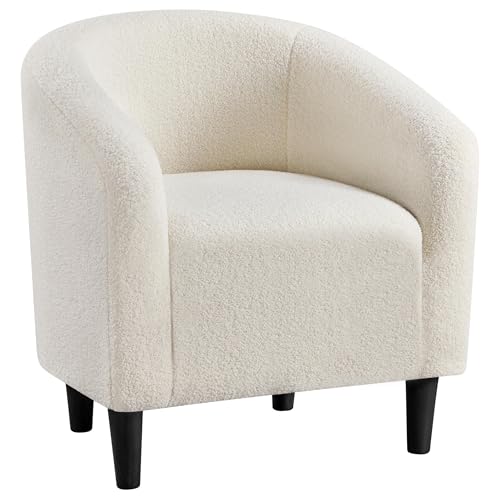
- Best overall for small spaces: Yaheetech Accent Barrel Chair, Boucle Club Chair, Ivory — Check on Amazon
- Yaheetech Barrel Chair, Velvet Armchair Club Chair, Black — Check on Amazon
- CHITA Swivel Barrel Chair, Faux Leather, Stone Grey — Check on Amazon
- COLAMY Modern Wingback Living Room Chair, Beige — Check on Amazon
See 2 more Amazon options
- VASAGLE EKHO Accent Chair, Metal Frame Sling Chair, Caramel Brown — Check on Amazon
- Christopher Knight Home Monroe Velvet Swivel Club Chair — Check on Amazon
Read the full guide ↓
Disclosure: As an Amazon Associate, dailyhomedecorating.com earns from qualifying purchases. Links to Amazon on this page are affiliate links; they cost you nothing extra. Listing details such as price and availability change often, so check the current Amazon listing before you buy.
The best armchair for small spaces under $700 is not really a furniture problem — it is a geometry problem with a comfort requirement attached. Small spaces are everywhere, and they are rarely whole rooms: the dead corner of a living room that nothing fits, the bay window that begs for a seat, the bedroom corner where a chair would turn getting dressed into sitting down, the landing, the alcove, the narrow end of an open-plan room, the home office whose second chair must not swallow the desk’s light. Each of those spaces has an awkward shape, a traffic line running through it, or a bigger piece of furniture it must not fight — and a standard armchair, designed for a standard empty rectangle, fails them in ways that have nothing to do with its quality.
What a small space needs is a chair designed around economy of form: a barrel curve that puts a full adult seat inside 26 to 28 inches of width, a swivel that turns in its own footprint instead of demanding dragging room, a wingback that spends its size upward, or an open frame the eye can see through so the space still reads as space. The under-$700 budget is well matched to that brief, because the compact end of the market is where the clever forms live — and at this ceiling you can have the clever form and a serious frame, a 300 lb capacity, and upholstery with real texture, rather than choosing between small and good.
Our short answer: the Yaheetech boucle barrel is the small-space chair to beat — 28 inches wide, 26 deep, with an honest 19-by-20-inch seat and a softness that turns a leftover corner into the room’s favourite spot. Its velvet sibling is the sleek alternative for tighter, smarter corners. The CHITA faux leather swivel is the pick for small living rooms, where turning beats dragging; the COLAMY wingback owns bedroom and office corners by going tall instead of wide; the VASAGLE EKHO sling is the visually lightest chair here, for spaces that cannot spare the sightlines; and the Monroe is the compact swivel for a conversation nook that still wants to look tailored.
In this guide
Quick Picks
| Pick | Best for | Style / type | Key spec | Link |
|---|---|---|---|---|
| Yaheetech Accent Barrel Chair, Boucle | Best overall small space | Boucle barrel | 28″W × 26″D × 29″H; seat 19″ × 20″; 300 lb | Check price on Amazon |
| Yaheetech Barrel Chair, Velvet | Best sleek compact | Velvet barrel | 27.8″W × 25.6″D × 28.5″H; seat height 17.7″; 300 lb | Check price on Amazon |
| CHITA Swivel Barrel Chair, Faux Leather | Best for small living rooms | Swivel barrel | 350 lb capacity; 360° swivel; fully assembled | Check price on Amazon |
| COLAMY Modern Wingback Chair | Best tall corner chair | Wingback accent | Model 2237; rubberwood legs; high-density foam | Check price on Amazon |
| VASAGLE EKHO Accent Chair | Best visually light | Steel-frame sling chair | Open steel frame; synthetic leather; model ULAC014K01 | Check price on Amazon |
| Christopher Knight Home Monroe | Best tailored nook swivel | Tufted velvet swivel club | 360° rotation; iron base; thick cushion | Check price on Amazon |
How These Picks Were Chosen
Every chair in this guide is a verified Amazon listing whose ASIN, dimensions and materials we confirmed against the manufacturer’s published specifications. The small-space filter then ran in a specific order. First, footprint honesty: overall width and depth from the maker’s own figures, with the compact core of the guide at or under roughly 28 inches wide and 26 inches deep. Two picks — the swivels — exceed that width, and they are here on the working-footprint principle: a chair that turns in place needs no clearance to be repositioned, so its real claim on the room is its turning circle, not its width plus dragging space. Each such pick’s review says so plainly rather than hiding behind the tape measure.
Second, seat honesty. Small-space chairs fail in one unforgivable way — by shrinking the sitter’s share. Every pick here keeps a seat around 19 to 21 inches wide and about 20 inches deep, which is a real adult seat; chairs that achieve tiny footprints by offering a 16-inch perch were excluded however charming their photographs. Third, visual weight: in a small space, a chair’s apparent size matters as much as its measured size, so we favoured forms that let light and sightlines move — raised legs, open frames, pale textures, curves instead of blocks. Fourth, the sit itself, because a small-space chair is usually a room’s second seat and gets chosen for the longest sits: the book chair, the laptop chair, the quiet chair. A chair that wins the corner and loses the evening is a failed pick.
One boundary worth stating: if your “small space” is a whole small apartment, our companion guide to the Best Armchair For Small Apartments Under $700 applies the same discipline to delivery, assembly and moving day, which matter more there. This guide is about the space itself — the corner, the nook, the narrow room — wherever in the home it happens to be. Reading-specific corners are covered in depth in our Best Reading Chair For Small Spaces Under $700 roundup.
The 6 Best Armchairs for Small Spaces Under $700
Yaheetech Accent Barrel Chair, Boucle Club Chair, Ivory
The Yaheetech Accent Barrel Chair in ivory boucle is the small-space ideal drawn in one object: 28 inches wide, 26 inches deep, 29 inches high, and yet the seat inside the curve is 19 inches wide by 20 inches deep — full size where the person goes, compact everywhere else. The barrel form is the oldest space-saving trick in chair design, because a curve has no corners to waste, and the boucle upholstery adds the second small-space trick: softness that makes a leftover corner feel chosen.
Who it suits. Anyone with a corner that currently holds a plant and a sense of waste: bedroom corners, bay windows, the end of a hallway wide enough for a seat, the quiet side of a living room. It suits readers and morning people — boucle at a window with first light on it is a small daily luxury — and it suits anyone furnishing a guest room that must feel welcoming in very little floor.
The details that matter. The frame combines solid and manufactured wood with a stated capacity of 300 lb, so the compact size is not a fragility warning. The seat height is 18 inches, the easiest height in this guide to rise from, which makes the chair suitable for older relatives in a way lower lounge chairs are not. The short legs keep the profile low and the chair visually settled, and its light weight means the corner is negotiable — the chair can follow the sun, the season or a rearrangement without a second pair of hands. Assembly is minimal. The ivory boucle will brighten a dark corner measurably, which in small, north-facing spaces is a functional benefit, not just a style one.
Pros. Full-size seat in a 28-inch footprint. Soft boucle turns leftovers into destinations. 18-inch seat height suits everyone. 300 lb capacity. Light and easy to reposition.
Honest limitation. Boucle is the delicate surface here: loops can catch pet claws, ivory shows marks, and a small space that doubles as a snack zone will test it. For high-traffic small spaces, take the velvet version below or the wipeable CHITA.
Living with it. A boucle barrel in a corner changes the room’s habits out of proportion to its size. It becomes the phone-call chair, the shoe-putting-on chair, the five-minutes-with-a-book chair — the seat for the day’s small pauses — because it is both the most inviting object in the room and the one that asks for no rearrangement to use. Keep a small cushion in a deeper tone on it if the corner needs anchoring; ivory on ivory can float, and one grounded colour makes the softness look deliberate. In a guest room it performs the kindest trick of all: visitors read it as hospitality, a chair provided for them, rather than as furniture that happened to fit.
Choose it if your small space deserves to become the favourite seat in the house. Skip it if the space is a thoroughfare for pets, children and drinks. Check on Amazon
Yaheetech Barrel Chair, Velvet Armchair Club Chair, Black
The Yaheetech Barrel Chair in black velvet is the same barrel intelligence in a sleeker finish, and fractionally smaller still: 27.8 inches wide, 25.6 inches deep, 28.5 inches high — the tightest footprint in this guide — with the same 19-by-20-inch seat at a 17.7-inch seat height and the same 300 lb stated capacity.
Who it suits. Smarter small spaces: the dressing corner of a bedroom, the end of a sofa run where a full chair would crowd, a home office’s guest seat, a narrow living room that needs a second chair without a second presence. Black velvet is the small-space stylist’s friend — it reads as a deliberate silhouette, anchors pale schemes, and makes the chair’s curve the whole design.
The details that matter. The velvet pile gives the compact form a richness that flat fabrics cannot, and in a small space that richness is efficient: one small, luxurious object lifts a whole corner the way three ordinary accessories cannot. The tapered legs keep the base visually open so floor shows beneath — a sightline trick that makes the space read larger. The chair is light enough to move one-handed between its posts, which in practice is how small-space chairs live: in the corner by day, pulled to the conversation by evening, at the desk when a second screen appears. The velvet asks for a brush now and then and will show pet hair; in return it hides the minor scuffs of a busy corner better than pale boucle does.
Pros. The smallest footprint in this guide. Full adult seat. Velvet richness in a tiny form. Visually open base. Effortlessly movable.
Honest limitation. The compact seat is a single, upright-ish sit — no sideways curling, no sharing — and very broad sitters will find it neat rather than generous. Black velvet shows dust and lint in bright light, the mirror image of ivory’s problem.
Choose it if the space is tight and the taste is smart. Skip it if you curl up, share, or want a pale, soft look — that is the boucle above. Check on Amazon
CHITA Swivel Barrel Chair, Faux Leather, Stone Grey
The CHITA Swivel Barrel Chair is this guide’s answer to the small living room, where the problem is rarely the chair’s width — it is the chair’s immobility. A fixed chair in a tight room gets dragged to face the screen, dragged back for conversation, and wedges the room’s traffic each time. The CHITA turns instead: 360 degrees on a flat base, inside its own circle, so the room keeps its walking lines and the floor keeps its finish.
Who it suits. Small living rooms and open-plan corners where one chair serves screen, sofa and window; households that rearrange often; anyone who wants a main-quality seat — this is a substantial chair with a 350 lb stated capacity — without reserving manoeuvring space around it.
The details that matter. The overall size is 32.3 inches wide by 31.5 inches deep by 28.7 inches high, with a seat 20.9 inches wide and 21.7 inches deep at 16.9 inches high — the most generous seat in this guide, delivered by the turning-circle logic described above. The frame is FSC-certified, the faux leather wipes clean (a small-room virtue: one chair doing every job meets every spill), and the chair arrives fully assembled, so its footprint story begins with no build space required. The stone grey is the neutral that small rooms use to stay calm, and the barrel’s continuous arms give the sitter a held, comfortable posture for long evenings.
Pros. Turns instead of dragging — protects floors and traffic lines. Most generous seat here. 350 lb capacity. Fully assembled. Wipe-clean surface for a multi-job chair.
Honest limitation. It is the widest pick in the guide, so a truly tiny corner still belongs to the Yaheetech barrels; and the low 16.9-inch seat is a lounge height that some sitters, particularly older ones, will find low for daily rising.
Living with it. In a small living room the CHITA quietly becomes the room’s pivot. Morning coffee happens facing the window; the working day, in homes where the chair doubles as the second desk seat, faces the light; the evening turns to the screen — and the room never once has to be rearranged, which in a small space is the difference between a room that flows and a room that is a daily furniture puzzle. The faux leather’s wipe-clean calm suits this multi-job life: it is the chair most likely to host breakfast, a laptop and a film in the same day, and the only one of the three it treats as a spill risk is met with a cloth, not a cleaner and a prayer.
Choose it if your small space is a living room and the chair must face everything. Skip it if the space is a single static corner under 30 inches wide. Check on Amazon
COLAMY Modern Wingback Living Room Chair, Beige
When a small space cannot go wide, it can go tall. The COLAMY Modern Wingback (model 2237) spends its volume vertically — a high, winged back that gives head and shoulder support and a genuine sense of enclosure — while keeping a compact floor footprint and raised legs that let the room’s light travel underneath.
Who it suits. Bedroom corners, office nooks, and any small space whose job is upright: reading, working, dressing, thinking. The wings make a psychological room inside the physical one, which is why wingbacks have owned corners for three centuries — in a small space shared with other activities, that sense of a separate place is the entire point.
The details that matter. The seat and back use multi-layer high-density foam, the upholstery is a breathable beige fabric that disappears politely into most schemes, and the legs are solid rubberwood — hardwood that tolerates being the chair in the corner that everyone also leans on, stands beside and occasionally perches a foot against while tying a shoe. Legs-only assembly keeps the chair movable between rooms and homes. In a small space the raised-leg design is worth more than it sounds: the eye measures a room by its visible floor, and a chair that shows floor beneath itself costs the room far less apparent size than a chair of identical dimensions sitting as a block.
Pros. Vertical presence, compact footprint. Upright support for reading and work. Raised legs preserve visible floor. Hardwood legs. Legs-only assembly.
Honest limitation. A sit-up chair only: no lounging depth, no curl-up width, and the tall back can overwhelm a very low-ceilinged nook — check the back height against the space’s proportions, especially under stairs or eaves.
Choose it if your small space is for reading, working or quiet. Skip it if the space is for sprawling, or sits under a low slope. Check on Amazon
VASAGLE EKHO Accent Chair, Metal Frame Sling Chair, Caramel Brown
The VASAGLE EKHO Accent Chair (model ULAC014K01) attacks the small-space problem from the visual side: its steel frame is open, its synthetic-leather cushions are slung panels rather than a solid body, and you can see the room through it. In a small space, a chair you can see through barely spends any of the room’s apparent size at all — which makes the EKHO the pick for spaces that are already furnished and cannot take another solid object.
Who it suits. Tight living rooms needing a second seat, studio corners, offices and reading spots in rooms with a modern or industrial lean. Its reclined sling posture suits readers and loungers who sit back rather than up, and its smooth panels suit anyone who wants the small-space chair to be the easy-clean one.
The details that matter. The construction is a polished steel frame carrying three cushioned sections in caramel synthetic leather with visible stitching and poly-fibre fill. The recline is built into the form — there is no mechanism — so nothing protrudes and nothing needs clearance beyond the chair’s own outline, a rare virtue among relaxed chairs. The caramel tone warms small pale rooms without a coloured fabric’s maintenance. Assembly is a frame build, the most involved in this guide, and worth doing methodically: a sling chair’s comfort lives in its panels’ even tension. Once built, it is light for its size and moves easily when the small space needs to become a different small space for the evening.
Pros. See-through frame spends almost no visual space. Reclined comfort with no mechanism or clearance needs. Wipe-clean panels. Warms pale rooms. Light to reposition.
Honest limitation. The lean-back posture is fixed: poor for upright work, perching, or sitters who struggle to rise from a reclined seat. It also offers no enclosed, cocooning feel — the opposite of the barrel picks — so a cosy corner brief should look elsewhere in this guide.
Living with it. The EKHO’s gift to a small room is that it behaves like light furniture and sits like a lounger. It is the chair that gets pulled out for a guest without a production, the one that migrates to the window in winter when the sun moves, and the one that never makes a furnished room feel finished-to-bursting. In a home office it earns a particular affection: an open frame does not block the room’s sightlines on video calls, and the reclined posture is the correct antidote to a day spent upright at a desk. Wipe the panels, check the frame bolts once a season, and it asks nothing else.
Choose it if the space is full but a seat is needed, and the sitter sits back. Skip it if you need upright support or a cocoon. Check on Amazon
Christopher Knight Home Monroe Velvet Swivel Club Chair
The Christopher Knight Home Monroe is the small-space chair for people who refuse to let a nook look like a compromise: a button-tufted velvet barrel on an iron swivel base, with a thick seat cushion and a tailored, deliberate presence that makes a conversation corner look designed rather than squeezed in.
Who it suits. Small living rooms and snug conversation areas; a pair of Monroes facing a sofa is the classic small-room arrangement, sociable in a way fixed pairs cannot be because each chair turns to its speaker. It also suits a bedroom corner that doubles as a dressing seat and a reading seat in one.
The details that matter. The 360-degree rotation runs on an iron pedestal base, which is the visually smallest base in this guide — the eye reads the floor around a pedestal as free — and the most stable-feeling under a turning sitter. The tufted back holds its shape across the barrel curve and gives the surface a crafted rhythm that photographs and candlelight both flatter. The thicker seat cushion keeps the posture supportive, so the Monroe doubles as a work-from-chair seat better than the softer barrels. As a swivel, its claim on the room is its turning circle; place it with that circle clear of the coffee table’s corner and it will never need dragging, lifting or apologising for.
Pros. Tailored look elevates a nook instantly. Iron pedestal is stable and visually minimal. Supportive thick cushion. Swivel sociability for conversation corners.
Honest limitation. Velvet plus tufting is the highest-upkeep finish in this guide — pile to brush, folds to dust — and its glamour can overpower a very plain, tiny space rather than complete it. In the smallest, plainest nooks, the quieter Yaheetech velvet wears better.
Choose it if your small space hosts conversation and wants to look tailored. Skip it if upkeep must be zero or the space is strictly minimal. Check on Amazon
Reading a Small Space Before You Buy
Small spaces punish assumptions, so spend ten minutes reading yours before ordering. Start with the traffic line: every room has a route people actually walk, and a chair that clips it will be bumped, resented and finally blamed for the room. Stand in the doorway and walk the route; the chair belongs outside that line, in the still water beside it. Next, read the light. A chair in a small space usually lives against a wall or under a window, and the light decides the fabric: strong sun fades and heats dark velvet, a dim corner begs for pale boucle, and raking evening light is what tufting and texture are for. Then read the neighbours: the chair will be seen against the sofa’s arm, the desk’s edge or the bed’s foot, and its back height should sit in a calm relationship with theirs — near-equal heights look composed, a deliberate tall accent looks designed, and a random few inches’ difference looks like a mistake.
Finally, tape it. Masking tape is the small-space buyer’s best tool: mark the footprint, mark a swivel’s turning circle or a recliner’s open reach if relevant, and walk the room for a day. Small spaces forgive a chair that is slightly plain; they never forgive one that is slightly too big, because “slightly” is the difference between a walking line and an obstacle course. The tape costs nothing and has saved more small rooms than any style advice ever written.
Small Spaces Around the House: A Room-by-Room Note
The bedroom corner is the most common small space in any home, and it rewards the softest picks in this guide: the boucle barrel for a dressing-and-reading corner, the COLAMY when the corner doubles as a work seat. Keep the chair’s colour within the bedding’s family and the corner reads as part of the room’s restfulness rather than an addition to it. The home office’s second chair wants the opposite discipline — it is sat in by visitors and by you when the desk chair palls — so an upright, supportive pick like the COLAMY or the firmer Monroe serves better than a lounge form, and its footprint should be measured against the door’s swing, the small-space trap nobody tapes until the first collision.
Living-room corners divide by light. A bright corner near a window can take the dark velvet barrel, whose silhouette will read crisply against the light; a dim corner needs the pale boucle or the linen-toned wingback to avoid becoming a dark mass the room must work around. Landings and wide hallways — the most neglected small spaces in houses — suit the visually light EKHO or a single barrel with a wall light above it: a landing chair with a light is a reading place that costs no room at all, and it is often the seat that guests remember. Nurseries and spare rooms ask for the wipeable CHITA and a swivel’s flexibility, since those rooms change jobs more often than any others. And if the small space is really a whole seating area being built from nothing, the chair is only the first decision — our Best Accent Chair Under $700 guide covers the accent-chair field that pairs with these picks, and a compact chair plus the right small sofa beats two large pieces in every small room we have ever measured.
Comparison Table
| Chair | Type | Overall size (W × D × H) | Seat | Capacity | Small-space trick |
|---|---|---|---|---|---|
| Yaheetech Boucle Barrel | Barrel | 28″ × 26″ × 29″ | 19″W × 20″D, 18″H | 300 lb | Curve wastes no corners |
| Yaheetech Velvet Barrel | Barrel | 27.8″ × 25.6″ × 28.5″ | 19″W × 20″D, 17.7″H | 300 lb | Smallest footprint here |
| CHITA Faux Leather Swivel | Swivel barrel | 32.3″ × 31.5″ × 28.7″ | 20.9″W × 21.7″D, 16.9″H | 350 lb | Turns in its own circle |
| COLAMY Modern Wingback 2237 | Wingback | Compact footprint, tall back | Lounge seat, high-density foam | See listing | Spends size upward |
| VASAGLE EKHO Sling Chair | Sling chair | Open frame format | Reclined sling seat | See listing | See-through frame |
| Christopher Knight Home Monroe | Swivel club | Club format | Thick cushion, tufted | See listing | Pedestal base reads as floor |
Dimensions and capacities are the manufacturers’ published figures at the time of writing; check the current listing for the colourway you choose.
How to Choose an Armchair for a Small Space
Identify the space’s type before its size. A corner, a nook, a bay, a narrow room and a whole studio are different problems. Corners want curves (barrels). Nooks that host conversation want swivels. Spaces under eaves or stairs want low profiles. A narrow room wants visual lightness — legs, open frames, pale fabric. Name the type and half the catalogue eliminates itself.
Protect the seat, shrink the silhouette. The floor for an adult armchair seat is about 19 inches wide and 20 deep. Below that you are buying an occasional chair, and in a small space an unused chair is the most expensive object per hour of use in the home. Every pick in this guide keeps the seat honest and saves space in the frame, the back or the base instead — which is where space should be saved.
Spend size in the direction the space can spare. Wide-but-shallow, tall-but-narrow, low-but-deep: every small space can spare one dimension. Wingbacks spend height, barrels spend nothing, sling chairs spend a reclined depth but repay it in visual lightness, and swivels spend width but repay it in turning. Match the chair’s extravagance to the space’s surplus.
Keep the floor visible. Apparent size is floor you can see. Raised legs, flat disc bases and open frames all return floor to the eye; blocks that sit to the ground take it away. In a small space, choose the base before the fabric — it decides whether the room shrinks. Our Best Armchair Under $700 guide shows the same principle at full size, where the stakes are lower and the lesson is clearer.
Give the chair one job and light it for that job. A small-space chair with a defined job — reading, conversation, dressing, quiet — plus a small table and the right light becomes a place. A chair bought “for the corner” with no job becomes the corner’s storage. Decide the job, then buy the chair whose review in this guide is written for it.
Test the sit like a main chair, because it will be one. Small-space chairs are bought as second seats and used as first ones — the corner chair becomes the favourite, the office chair becomes the call chair, the bedroom chair becomes the reading chair. So judge foam, back support and arm height by main-chair standards: sit (in imagination, from the specifications) for two hours, not two minutes. A seat depth near 20 inches, arms that meet your forearms without shrugging, and a back that reaches your shoulder blades are the numbers of a chair that survives promotion to favourite.
Common Buying Mistakes
Shrinking the seat to fit the space. The classic small-space error. A tiny seat fits the corner and fits nobody, and the chair becomes expensive décor within a month.
Measuring the chair, not the turning circle. Swivels and recliners claim space in motion. Tape the circle or the open footprint, not just the resting outline, or the chair will meet the coffee table every day of its life.
Blocking the traffic line. A chair that clips the room’s walking route gets bumped a hundred times a month and blamed for the room. Place it in the still water beside the route.
Choosing a floor-block silhouette. A chair that sits as a solid block to the floor visually halves a small space. Legs, pedestals and open frames exist precisely to prevent this.
Forgetting the space’s light. Dark fabric in a dim corner disappears into gloom; pale fabric in harsh sun fades and glares. Read the light before the colour chart.
Measure the Journey, Not Just the Room: Doors, Halls and Stairs
More small-space armchairs fail at the front door than in the room they were bought for. Before ordering any pick in this guide, walk the chair’s whole journey with a tape measure: the front door’s clear width with the door open at its real angle, any inner hallway door, the tightest turn between them, and the final doorway into the room. Record the smallest number — that is your ceiling — and compare it against the chair’s smallest dimension, remembering that a chair can travel on its side or back if one dimension allows it. The two Yaheetech barrel chairs, at roughly 28 inches wide and under 30 inches tall, pass through most standard doorways with room to spare; the CHITA swivel barrel is the wide load of the group at about 32 inches across, so its journey deserves the tape measure most — balanced by the fact that it arrives fully assembled, so the doorway is its only obstacle, with no flat-pack stage to plan for.
Assembly location is the second half of the journey. Chairs that arrive in parts should be built in the room they will live in whenever the route is tight, because a chair assembled in the hall has to make the last turn fully built. Keep the packaging until the chair has sat in its place for a day — returns of furniture are a logistics event, and the original box is the difference between a courier collection and a problem. Finally, measure the destination with the same honesty: seat height against the sitter’s knees, the footprint against the rug and the walkway, and the swing or swivel clearance — the CHITA and the Christopher Knight Home Monroe both rotate a full 360 degrees, which is a gift for conversation and a hazard for the side table placed exactly where a knee will sweep. A chair that fits the room but not the route, or the route but not the room, fits nowhere; the tape measure, used twice, is what makes a small space feel chosen rather than cramped.
Fabric and Care: Living With Boucle, Velvet, Faux Leather and PU
In a small space the armchair is never across the room — it is beside you, under you, in your light — so upholstery care stops being housekeeping trivia and becomes part of the purchase. The ivory boucle on the Yaheetech accent barrel is the forgiving fashion choice: its looped texture hides crumbs, lint and minor marks better than any flat weave, and it wants a vacuum with an upholstery brush weekly and a damp cloth, blotted rather than rubbed, for spills. Velvet — the black Yaheetech barrel and the Monroe club chair — asks for the opposite technique: brush with the nap, steam lightly to lift pile marks left by cushions and elbows, and expect the colour to shift with light and touch, which is velvet’s charm rather than a defect. Keep both fabrics out of hard, direct sun where a small room allows it; a window-side chair in a south-facing studio will fade unevenly, one arm first.
The leather-look pair plays by different rules. The CHITA’s faux leather and the VASAGLE EKHO’s PU upholstery wipe clean with a damp cloth, shrug off the spills that would stain boucle, and suit households with children, dogs or red wine — but they dislike heat and harsh cleaners, which dry and crack the surface, so keep them away from radiators and clean them with mild soap only. The EKHO’s sling form adds one more consideration: its seat is a suspended hammock of material on a steel frame, wonderfully airy in a small room, and it will soften and settle with use in a way a foam seat does not. The COLAMY wingback’s high-density foam and fabric sit between the camps — spot-clean promptly, rotate the seat cushion if it is loose, and give foam a day to recover after long sits. None of this is demanding; all of it is the difference between a chair that looks bought-last-year for five years and one that looks tired by spring.
Final Recommendation
For most small spaces, buy the Yaheetech Boucle Barrel: a full-size seat folded into 28 inches of width, a softness that redeems leftover corners, and a price position that leaves room in the under-$700 budget for the lamp and table that complete the spot. Take the velvet version when the space is tighter or smarter, the CHITA swivel when the space is a living room that must turn, the COLAMY when it can spare height instead of width, the EKHO when it cannot spare sightlines, and the Monroe when the nook hosts conversation and wants to look tailored doing it. Small spaces do not need small comfort — they need honest geometry, and every chair here was chosen to provide it.
Frequently Asked Questions
What is the best armchair shape for a small space?
The barrel, for most spaces: its curved back flows into the arms, wasting no material on square corners, so a full 19-to-20-inch seat fits inside a 26-to-28-inch width. Wingbacks are the answer when the space can spare height rather than width, and open-frame sling chairs when the space cannot spare sightlines.
How small is too small for an armchair seat?
Below about 19 inches of seat width and 20 inches of depth, an armchair becomes an occasional chair that adults avoid for long sits. In a small space that is the worst outcome — the chair occupies the room without serving it. Shrink the frame, the back or the base; never the sitter’s share.
Does a swivel chair save space or waste it?
It saves working space. A swivel turns within its own circle, so it needs no dragging clearance and can serve several directions from one spot. Measured statically it can be wider than a compact fixed chair, but in a living small space — where chairs get repositioned daily — its real footprint is smaller.
What colours make a small space feel bigger?
Pale, textured fabrics — ivory boucle, light linen — reflect light and soften edges, so the chair reads as part of the room’s brightness rather than an obstacle in it. One dark chair can also work as a deliberate silhouette in a pale room, but two dark, bulky pieces will close a small space down.
Can a recliner fit a small space?
Only with planning. A manual pushback recliner avoids cords and levers, but it still needs clear floor behind it to open. If the space has a corner with that clearance, it can work; if every wall is flush and full, choose a barrel or swivel instead and put your feet on an ottoman or a cushion.
Where is the best place for an armchair in a small room?
In the still water beside the traffic line: a corner out of the walking route, angled slightly toward the room rather than flat against the wall, with its own small table and light. Angling a barrel or swivel chair a few degrees off the wall makes a small space feel arranged rather than stored — the cheapest design trick there is.
What about a small chair for a bedroom or dressing corner?
Prioritise softness and a dining-compatible seat height, because a bedroom chair is sat in briefly and often — dressing, reading, winding down — rather than for whole evenings. The boucle barrel is this guide’s bedroom pick: compact, soft, brightening in a dim corner, and high enough at 18 inches to sit in while putting on shoes without a struggle. If the corner doubles as a work seat, the COLAMY’s upright wingback serves both jobs better.
How do I stop a small-space chair looking lost or apologetic?
Give it the full place treatment at small scale: a rug or mat that defines its patch, a table within arm’s reach even if it is a stool-sized one, light of its own, and one textile — a cushion or throw — that connects it to the room’s scheme. A chair with a place looks intentional at any size; a chair merely present in a corner looks like storage at any size too.
Will a barrel chair actually save space compared with a normal armchair?
Usually, yes — but measure the footprint, not the silhouette. A barrel chair’s curved back wraps the sitter, so it delivers a generous seat inside a shallower depth than a square-armed chair of the same seat width: the Yaheetech pair here pair a 19-inch-wide seat with depths around 26 inches. What a barrel does not save is visual width at arm height, so in a very narrow room place it at an angle in a corner, where the curve reads as intentional, rather than flat against a wall where it can look like it is waiting to be moved.
How do I protect a small room’s floor from a swivel or metal-frame chair?
Put something between every foot and the floor from day one: felt pads under the VASAGLE EKHO’s steel frame and the COLAMY’s rubberwood legs, and for the swivel chairs — the CHITA and the Monroe, both on rotating bases — a low-pile rug or a chair mat sized to the full sweep of the base, because a swivel grinds grit into wood and laminate with every turn. Check pads monthly; in a small home the chair moves often, pads wander, and the first scratch always arrives before the first replacement pad does.


