Where to buy
Check the latest price, availability and delivery on Amazon. Orders are placed on Amazon. We may earn a commission from qualifying purchases.
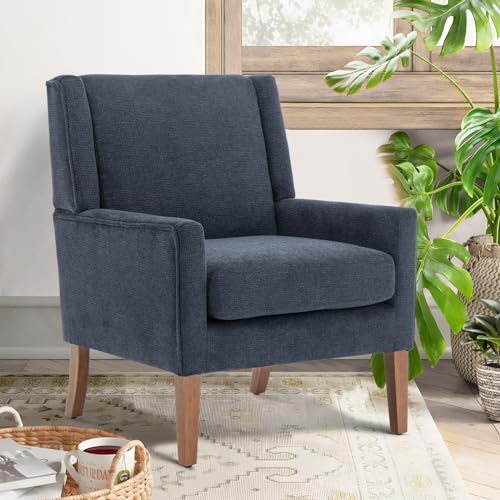
- Best overall: COLAMY Wingback Accent Chair, Model 2237 — Check on Amazon
- CHITA Swivel Barrel Chair, Faux Leather, Stone Grey — Check on Amazon
- Yaheetech Mid-Century Accent Armchair, Linen-Look Fabric, Beige — Check on Amazon
- Yaheetech Bouclé Accent Chair with Ottoman, Ivory — Check on Amazon
- Karl home Mid-Century Accent Chair, Linen Fabric, Beige — Check on Amazon
- Yaheetech Velvet Barrel Chairs, Set of 2, Blue — Check on Amazon
Read the full guide ↓
Disclosure: As an Amazon Associate, dailyhomedecorating.com earns from qualifying purchases. Links to Amazon on this page are affiliate links; they cost you nothing extra. Listing details such as price and availability change often, so check the current Amazon listing before you buy.
The best armchair under $400 has a harder job than the price suggests. It is the seat a household actually fights over: the reading chair, the TV chair, the chair a guest is waved into and a cat annexes by week two. Under $400 is also the most contested band in furniture — above the flat-pack disposable tier, below the heirloom brands — which means the difference between a good buy and a regret is not the label but a handful of verifiable things: a frame with a stated weight capacity, dimensions that fit a real body and a real room, upholstery chosen for the life it will actually live, and construction details like solid wood legs that separate furniture from scenery.
This guide therefore works from verified facts only. Every pick below is a real chair sold on Amazon, with its ASIN checked and its key specifications — dimensions, seat height, weight capacity, materials — taken from the maker’s own listing data. Where a specification could not be verified, we say so rather than guess. Prices move constantly, so we print none: each pick says check price on Amazon, and the under-$400 figure in the title is the budget ceiling every pick was selected against, not a promise about today’s tag.
Our short answer: start with the COLAMY Wingback 2237 if you want the classic all-rounder — verified compact dimensions, an easy 19.29-inch seat height and a solid wood frame. Take the CHITA swivel if your room works in several directions, the Yaheetech linen chair if you want mid-century looks with money left for the rest of the corner, and the velvet Yaheetech pair if you are furnishing two spaces at once. The six detailed reviews below explain who each chair suits, where each one honestly falls short, and how to choose between them.
In this guide
Quick Picks
In a hurry? This table matches each chair to the job it does best.
| Buyer type | Pick | Why it stands out | Link |
|---|---|---|---|
| Best overall | COLAMY Wingback 2237 | Verified compact footprint for a full wingback — under 29 inches wide | Check on Amazon |
| Best swivel | CHITA Swivel Barrel Chair | 360-degree swivel — one chair serves several directions | Check on Amazon |
| Best value mid-century | Yaheetech Linen Mid-Century Armchair | Linen-look texture reads tailored rather than budget | Check on Amazon |
| Best for lounging | Yaheetech Bouclé Chair with Ottoman | Matching ottoman included — a true feet-up lounge setup | Check on Amazon |
| Best for larger sitters | Karl home Mid-Century Chair | 330 lb verified capacity — real frame margin | Check on Amazon |
| Best matched pair | Yaheetech Velvet Barrel Chairs (Set of 2) | Two matched chairs inside one under-$400 budget | Check on Amazon |
How These Picks Were Chosen
We built the shortlist from chairs genuinely sold as armchairs and accent chairs on Amazon, then filtered hard. A pick had to have a verifiable ASIN and a listing with real specifications — dimensions and materials at minimum, a stated weight capacity wherever the maker publishes one. Chairs with no capacity figure, no dimensions, or listings that contradicted themselves were cut, however good they looked in photographs.
We then balanced the six slots across the ways people actually use an armchair under $400: a classic fixed chair, a swivel, a mid-century fabric chair, a lounge chair with an ottoman, a high-capacity chair, and a matched pair. Six versions of the same chair would have been easier to write and useless to read. Within each slot we favoured substance you can verify — solid wood and rubberwood, FSC-certified frames, published capacities of 300 lb and above — over decorative claims no listing can prove.
Finally, every pick was checked against the ceiling honestly. These are chairs that belong in the under-$400 conversation as complete purchases; the two set-of-two picks are priced as pairs, which is how we describe them. Star ratings and review counts were deliberately ignored as selection evidence — they change constantly and say little about whether a chair fits your body or your room. Dimensions, capacity and materials do.
Best armchair under $400
Six chairs, six different answers to the same budget. Each review states who the chair suits, the verified details that matter, its honest limitation, and a plain choose-or-skip verdict.
COLAMY Wingback Accent Chair, Model 2237
Best overall. Start here if you want one chair that does the classic armchair jobs — reading, conversation, a corner that looks finished — without a single compromise that needs explaining. The COLAMY’s 19.29-inch seat height is the quiet star: it is the height at which most adults sit down and stand up without thinking about it, which is exactly what a household’s main accent chair gets asked to do, several times a day, by everybody. Its footprint is verified and modest, so it earns its floor space, and the wingback form gives a living room the tailored, upright note that slouchier chairs cannot. If this guide had to be one chair, it would be this one.
The verified numbers first: this chair measures 28.94 inches deep, 28.74 inches wide and 36.22 inches high, with a seat 21.65 inches wide and 19.88 inches deep at a seat height of 19.29 inches. COLAMY rates it to 300 lb. The frame is solid wood and the tapered legs are rubberwood, a genuine hardwood that is noticeably denser than the pine or plastic feet common on chairs at the accessible end of the market. The wingback shape is the oldest in this guide, updated here with a cleaner, mid-century-leaning line: a high winged back, a thick padded seat and curved, padded arms.
In daily use, the wingback’s virtues compound quietly. The upright back supports a full evening’s reading without the slump a deep lounge chair induces, the wings block the draught from a hallway door in winter, and the seat height means standing up mid-chapter to answer the door is a non-event. It is also the chair guests choose when they want to talk rather than sprawl, which makes it the natural second seat in a conversation pair. Care is simple: vacuum the fabric weekly, brush crumbs out of the seat seam, and let the rubberwood legs do their work on felt pads if your floor is wood.
- Verified compact footprint for a full wingback — under 29 inches wide
- 19.29-inch seat height is easy to stand up from
- Solid wood frame and rubberwood legs at a 300 lb rating
- Wings make a corner feel sheltered for reading
Honest limitation: The seat is 19.88 inches deep, which is a lounge seat rather than a perch: shorter sitters may want a small cushion behind the lower back so their feet rest flat, and the fixed wings mean it will never feel as open or sprawling as a barrel chair.
The verdict. Choose the COLAMY Wingback 2237 if the strengths above match your room and your household; skip it if its honest limitation is the one thing your space cannot accept. Check on Amazon
CHITA Swivel Barrel Chair, Faux Leather, Stone Grey
Best swivel. Choose the CHITA when your room asks one chair to face several directions. Open-plan living is the normal case now — the chair faces the TV at eight, the sofa conversation at nine, the window on Sunday morning — and a 360-degree swivel answers that without the felt-pad screech of dragging a fixed chair around. The fully-assembled delivery deserves emphasis in a general guide: this is the only pick that asks nothing of your Saturday. Add the 350 lb rating and wipe-clean faux leather and you have the most low-maintenance ownership experience in the roundup, at the cost of the widest footprint here.
The CHITA is a barrel chair — back and arms in one continuous curve — mounted on a 360-degree swivel base. Verified dimensions are 31.5 inches deep, 32.3 inches wide and 28.7 inches high, with a seat 21.7 inches deep and 20.9 inches wide at a low 16.9-inch seat height. It is rated to 350 lb, the frame is FSC-certified, the upholstery is stone grey faux leather, and it arrives fully assembled: unbox, place, sit. The swivel is the functional heart of the design — the sitter turns to face the sofa, the TV or the window without dragging legs across the floor.
Living with a swivel changes small habits. You stop standing up to join a conversation across the room; you turn. You stop dragging the chair to the window for morning light; you rotate. The faux leather asks for a damp cloth now and then and nothing else, and because the chair arrives assembled, ownership starts at sitting rather than at a parts inventory. Two honest notes from the design itself: the low seat makes it a chair you sink into, so pair it with a side table at the right height for drinks, and give the base a clear circle — a swivel that bumps a table leg twice a day stops feeling like a feature.
- 360-degree swivel — one chair serves several directions
- Arrives fully assembled, nothing to build
- 350 lb capacity, the highest verified rating in this guide
- Faux leather wipes clean with a damp cloth
Honest limitation: At 32.3 inches wide it is the broadest chair in this guide, and the 16.9-inch seat height is low: relaxing for lounging, but anyone with knee or hip trouble should try the measurement against a chair they already find easy before ordering.
Choose it / skip it. Choose the CHITA Swivel Barrel Chair when its best quality is the one your room is missing; skip it when the limitation above describes your daily life too closely. Check on Amazon
Yaheetech Mid-Century Accent Armchair, Linen-Look Fabric, Beige
Best value mid-century. The Yaheetech linen chair is the pick for buyers who want the mid-century look done properly — woven texture, splayed legs, tailored proportions — while keeping as much of the $400 ceiling as possible in their pocket for the rest of the room. A chair is never the whole corner: the side table, the lamp and the rug are what make it a place, and this pick’s restraint on price is what funds them. Beige is a feature, not a failure of imagination; it is the colour that lets the chair survive the next sofa, the next rug and the next paint colour unchanged.
Yaheetech’s mid-century armchair in beige is the classic recipe of the style: a tailored fabric seat and back, linen-look upholstery with a visible woven texture, and splayed wooden legs that angle outward in the mid-century manner. Beige is the deliberate choice here — it is the colour that disappears into the widest range of existing rooms, working over wood floors, grey sofas and patterned rugs alike without arguing with any of them. Yaheetech builds at volume, which is exactly why this design sits comfortably inside an under-$400 budget while wearing a fabric that reads more expensive than flat polyester.
Day to day, this is the chair that disappears into the room’s life in the best way. The linen-look weave shrugs off the visual noise of daily use — a crease here, a cushion mark there — better than flat fabrics, and beige forgives the pale dust of a lived-in home between vacuums. It is light in character rather than in build: easy to angle toward the light for reading, easy to pull into a conversation circle, easy to move rooms when the household rearranges, as households do. Keep a fabric brush by it and attend to spills promptly, and it will look composed for years.
- Linen-look texture reads tailored rather than budget
- Beige works with almost any existing sofa and rug
- Splayed wooden legs give the true mid-century silhouette
- A safe, proven design from a high-volume maker
Honest limitation: Light beige linen-look fabric is the least forgiving surface in this guide for spills and pet hair — it brushes and vacuums well, but a dark drink spill needs attention immediately, not after the film ends.
Bottom line. The Yaheetech Linen Mid-Century Armchair earns its place when its pros solve your problem; its limitation is stated plainly so you can judge whether it touches yours. Check on Amazon
Yaheetech Bouclé Accent Chair with Ottoman, Ivory
Best for lounging. Most armchairs under $400 ask you to sit. This one asks you to stay. The matching ottoman converts an upright accent chair into a genuine lounge seat, and that conversion is the difference between a chair used for guests and a chair used every evening by the household itself. Bouclé’s texture makes the pair look like a considered design purchase rather than a bundle deal. Choose it for the reading-and-series corner of the main living room — and accept the ivory upkeep honestly: a weekly vacuum is the rent this much comfort charges.
This Yaheetech pairs a bouclé-upholstered accent chair with a matching ottoman, both in ivory. Bouclé — the looped, textured yarn that defines so much current furniture — is doing real work here: its nubby surface catches light, hides minor marks better than flat weaves, and makes a simple chair shape look deliberately designed. The ottoman is the second half of the proposition. It turns the chair into a feet-up lounge seat, works as a spare perch when guests arrive, and can stand in as a side surface with a tray on top.
The daily rhythm of this set is feet up, every evening, without negotiation — the ottoman is already there, matched, at the right height. That sounds like a small thing until you have lived with a chair that makes lounging the default rather than the exception. The ottoman also absorbs the household’s overflow: the tray with tea, the folded throw, the guest who arrives when the sofa is full. Bouclé care is the standing cost — a weekly pass with the upholstery tool, crumbs shaken out of the loops — and in return the pair keeps the soft, composed look that made you buy it.
- Matching ottoman included — a true feet-up lounge setup
- Bouclé texture is the defining fabric of current interiors
- Ottoman doubles as guest seating or a tray table
- Ivory brightens darker rooms
Honest limitation: Ivory bouclé is a commitment: the textured loops hold dust and crumbs more than smooth fabrics, so it wants a weekly vacuum with an upholstery tool, and it is the wrong choice directly beside a toddler’s snack zone or a muddy-pawed dog’s favourite route through the room.
The verdict. Choose the Yaheetech Bouclé Chair with Ottoman if the strengths above match your room and your household; skip it if its honest limitation is the one thing your space cannot accept. Check on Amazon
Karl home Mid-Century Accent Chair, Linen Fabric, Beige
Best for larger sitters. Weight capacity is the specification buyers are politest about and should be bluntest about. A chair rated to 330 lb carries a frame with real engineering margin, and for taller, larger sitters — or households where the chair will be shared, borrowed and occasionally occupied by two people and a dog — that margin is the difference between a chair that feels solid in year three and one that creaks by Christmas. The Karl home pairs that substance with inoffensive, versatile mid-century looks, which is the right combination: strength you feel, styling you forget.
Karl home’s mid-century accent chair in beige linen fabric carries the highest verified weight rating among this guide’s fixed fabric chairs: 330 lb. That number matters because capacity is a proxy for frame substance — a chair engineered and tested to 330 lb is built with more margin than one rated at the bare minimum. The design itself is the familiar, likeable mid-century formula: a tailored linen-fabric seat, clean lines and wooden legs, in the beige that coordinates with the widest range of sofas and rugs.
The daily experience of this chair is confidence. It sits solid — no flex, no creak, none of the subconscious bracing a flimsy chair teaches you — and that solidity is the 330 lb engineering making itself felt in the most ordinary way. The beige linen keeps it visually quiet while it does so, which suits a chair bought for substance: it can anchor a reading corner, serve as the household’s spare seat at the table, and host the largest guest without a flicker of doubt. A washable throw over the seat is the one accessory worth adding from day one.
- 330 lb verified capacity — real frame margin
- Linen fabric in the most versatile colour available
- Mid-century lines suit modern and transitional rooms
- A confident choice for taller and larger sitters
Honest limitation: Like the other beige linen chair in this guide, the light fabric asks for prompt spill care, and the mid-century formula is deliberately unfussy — buyers wanting a dramatic statement piece should look at the velvet or green picks instead.
Choose it / skip it. Choose the Karl home Mid-Century Chair when its best quality is the one your room is missing; skip it when the limitation above describes your daily life too closely. Check on Amazon
Yaheetech Velvet Barrel Chairs, Set of 2, Blue
Best matched pair. One armchair is a seat; two are a room plan. This velvet pair is for the buyer furnishing a living room properly — flanking a fireplace, facing a sofa, defining a conversation area — who wants the finished, symmetrical result without doubling the budget line. Blue velvet supplies the colour confidence most rooms lack, and because both chairs arrive together, in the same dye lot and the same condition, the pair will age together evenly. It is the most decorative pick in this guide and, per chair, among the most economical ways to fill two spaces at once.
A matched pair of barrel chairs in blue velvet. Velvet is the fabric that does the most decorative work per dollar in furniture: its pile catches light differently across a curve, so a barrel back shifts between deep and bright tones as you move around the room, and a saturated blue pair becomes the deliberate focal point of a neutral scheme. As with the PU pair in this guide, the set-of-two format is the value story — a symmetrical, finished-looking arrangement from a single order, inside the under-$400 ceiling for both chairs together.
A velvet pair changes how a room is used: people sit facing each other more, because the chairs invite it, and the conversation area becomes the room’s centre of gravity. Velvet asks for a minute’s ritual — a brush of the pile in one direction when you tidy — and repays it by looking freshly upholstered long after flat fabrics have gone tired. Blue is a forgiving colour for daily life, hiding the pale lint and pet hair that ivory shows, and the barrel curve means the colour shifts as you cross the room, so the pair never looks static.
- Two matched chairs inside one under-$400 budget
- Blue velvet is an instant focal point in neutral rooms
- Velvet pile plays with light across the barrel curve
- Instant symmetry either side of a fireplace or sofa
Honest limitation: Velvet shows pressure marks and needs its pile brushed in one direction to look its best, and a matched pair is a stronger visual commitment than a single chair — measure the room for two chairs, not one, before ordering.
Bottom line. The Yaheetech Velvet Barrel Chairs (Set of 2) earns its place when its pros solve your problem; its limitation is stated plainly so you can judge whether it touches yours. Check on Amazon
What Under $400 Buys You — and What It Does Not
At this ceiling, the money buys real furniture: solid wood and certified-wood frames, weight capacities of 300 lb and more, high-density foam, and fabrics with genuine character — bouclé, velvet, linen-look weaves. It buys mechanisms too: a smooth 360-degree swivel, and pairs of chairs sold as a set. Assembly, where it exists at all, is usually legs and a back rather than a afternoon of panels.
What it does not buy is full-grain leather, eight-way hand-tied springs, or made-to-measure anything. The leather-look chairs here are faux or PU leather and are described as such; the fabrics are synthetic or synthetic-blend and earn their place by durability rather than pedigree. Knowing that trade is the whole skill of shopping this band: spend on frame, foam and fit, and let the surface be a good honest imitation.
Comparison Table
| Pick | Best for | Key verified detail |
|---|---|---|
| COLAMY Wingback 2237 | Best overall | Solid wood frame and rubberwood legs at a 300 lb rating |
| CHITA Swivel Barrel Chair | Best swivel | 350 lb capacity, the highest verified rating in this guide |
| Yaheetech Linen Mid-Century Armchair | Best value mid-century | Splayed wooden legs give the true mid-century silhouette |
| Yaheetech Bouclé Chair with Ottoman | Best for lounging | Ottoman doubles as guest seating or a tray table |
| Karl home Mid-Century Chair | Best for larger sitters | Mid-century lines suit modern and transitional rooms |
| Yaheetech Velvet Barrel Chairs (Set of 2) | Best matched pair | Velvet pile plays with light across the barrel curve |
An Armchair Sitting Test You Can Do in Ten Minutes
Most armchair disappointment is measurable before purchase, and most of it hides in three numbers: seat height, seat depth and arm height. Take ten minutes with a tape measure and a dining chair. Sit in the dining chair and measure from the floor to the top of your thigh at the knee; that is roughly the seat height your body is built for, and it is why this guide prints seat heights wherever makers publish them — 19.29 inches for the COLAMY, 16.9 for the CHITA. The difference between those two chairs is the difference between perching and sinking, and neither is wrong: they are different chairs for different evenings.
Seat depth is the second test. Sit with your back against the chair back and check the gap between the seat edge and the back of your knee: two or three fingers is right. The COLAMY’s seat is 19.88 inches deep, a lounge-leaning depth that taller sitters love and shorter sitters solve with a cushion at the lower back — which is why the Karl home green chair’s included lumbar pillow, in the modern-homes guide of this series, is a more meaningful feature than it sounds. If you are under average height, budget the cushion into any deep-seated pick.
Finally, arms. Rest your forearms on the dining chair’s arms — or on books stacked to arm height — and notice your shoulders. If they shrug upward, the arms are too high; if your elbows hang, too low. Wingback arms, barrel arms and wide flat arms all solve this differently, and the right answer is the one your shoulders vote for. Ten minutes of this unglamorous measuring prevents the most common armchair return reason there is: ‘it just wasn’t comfortable,’ said about a chair whose numbers were available all along.
Armchair, Accent Chair, Club Chair: What the Names Mean
Shoppers meet three overlapping names in this price band, and the differences are worth a minute. An armchair is the general term: a single seat with arms and a supportive back, meant for real sitting. An accent chair is an armchair bought partly as decoration — bolder fabric, stronger silhouette — and the risk in the category is chairs styled past the point of comfort, which is why this guide checks seat dimensions and heights rather than trusting the look. A club chair is the low, deep, enveloping branch of the family, ancestor of the barrel chairs in this guide.
The barrel chair itself is a specific geometry: back and arms formed in one continuous curve, wrapping the sitter. It suits conversation and reading with a drink at hand, and its curve wastes less corner than square arms do. The wingback is the opposite philosophy — tall, upright, sheltered at the head — built for readers and for rooms with draughts and high ceilings. The swivel and the rocker are not shapes but motions, added to shapes: each buys flexibility or calm at the price of floor clearance.
None of these labels guarantees quality, which is why this guide keeps returning to the unglamorous evidence: a published weight capacity, verified dimensions, named materials like solid wood, rubberwood and FSC-certified frames. A chair that tells you those things is an armchair in the full sense, whatever its subtitle says. A chair that tells you none of them is an accent in the worst sense — all accent, no chair.
How Long Will It Last? Frame, Foam and Fabric
An armchair’s lifespan is decided by three components wearing out at three different speeds. The frame is the slowest: solid wood and certified-wood frames of the kind in this guide are measured in decades, and a published weight capacity is the buyer’s best evidence that the frame was engineered rather than assembled hopefully. When a frame does eventually complain, it announces itself with creaks and flex long before failure — a chair that starts talking to you is asking for its fixings to be checked, not for its replacement to be ordered.
Foam is the middle clock. Seat foam softens with use, fastest in the first year, then settles into a long plateau. High-density foam — the specification worth looking for in a listing — holds its plateau for years of daily sitting; low-density foam keeps descending until the sitter meets the frame. You cannot see foam quality in a photograph, which is precisely why this guide weights makers who publish their materials. Rotating a chair’s role in the house — main seat one year, bedroom chair the next — is the owner’s way of spreading the foam’s work across its life.
Upholstery is the fastest clock and the most manageable. Smooth faux and PU leather wear by surface: kept from harsh sun and wiped clean, they hold their appearance for years, then tire at the contact points. Velvet and bouclé wear by pile and loop — brushing and vacuuming genuinely extend them, because grit in a pile is an abrasive, not just dirt. Linen-look weaves wear by soiling, answered by prompt spill care and the occasional throw. The practical conclusion: at under $400 you are buying a decade-class frame, a multi-year foam plateau, and a fabric whose life your habits will set. Choose the frame by its published numbers, and the fabric by your willingness to keep the small weekly promises it asks.
Setting Up the Corner: Table, Lamp and Rug
An armchair alone is a seat; an armchair with a surface and a light is a destination. The side table wants to sit at or just below arm height, close enough that a drink is set down without leaning — leaning is how drinks meet upholstery. The lamp wants the opposite quality: height and reach, its light falling over the reader’s shoulder onto the page. Floor lamps earn their footprint here; a table lamp on the side table works when the table is tall enough to lift the shade to shoulder height.
The rug is the corner’s border. Front legs on, back legs off is the proportion that ties the chair to the room, and in an open plan the rug is what declares this patch of floor a room of its own. Choose the rug after the chair, not before: the chair’s fabric sets the texture conversation, and the rug should answer in a quieter voice. Add one object — a throw in the room’s accent colour, the current book — and then exercise the discipline this guide keeps recommending: stop. A finished corner, like a finished sentence, is one where nothing else is required.
How to Choose an Armchair Under $400
1. Measure the space, then the chair
Write down the footprint you can give up — width and depth, including walking room — before you look at a single listing. Then compare it with the chair’s verified overall dimensions, not the seat size. A chair that fits its tape outline but blocks a door swing or a walkway will annoy you daily.
2. Match seat height to the sitter
Seat height decides comfort more than cushion softness. Around 19 inches suits most adults and anyone who stands up carefully; lounge chairs sit lower, near 17 inches, which is relaxing but harder to leave. Measure a chair you already like and buy close to that number.
3. Check the capacity, not just the look
A published weight capacity — 300 lb, 330 lb, 350 lb in this guide — is the most honest structural clue a listing gives. No published figure is itself information: treat unrated chairs as light-duty guest seating.
4. Choose upholstery for your actual life
Bouclé and velvet are beautiful and need vacuuming and brushing; linen-look fabrics are versatile and show spills; faux and PU leather wipe clean and dislike harsh sun. The right fabric is the one that matches your household’s spill rate, pets and sunlight — not the one in the prettiest photograph.
5. Decide the chair’s job before its style
Reading chair, TV chair, conversation pair, lounge nest: the job picks the form. Wingbacks shelter readers, swivels serve open-plan rooms, ottomans make loungers, pairs make rooms. Style second, job first, and the chair will still be earning its place in five years.
Common Buying Mistakes
Buying the photograph instead of the dimensions
Listings photograph chairs in empty, warehouse-scale rooms. A 32-inch-wide chair is generous; the same chair drawn from a photo looks modest. Always judge by the printed dimensions against your tape measure — the COLAMY in this guide is under 29 inches wide, the CHITA over 32, and that difference is a hallway’s worth of walking room.
Ignoring seat height until delivery day
A beautiful chair you cannot get out of gracefully is a daily irritation. Low lounge seats are a style choice with a physical cost, especially for older guests and anyone with knee trouble. Check the seat height figure; where we verified it, we printed it.
Assuming a pair costs what a single does — or the reverse
Two of this guide’s picks are sets of two chairs inside the budget. Shoppers regularly misread set listings in both directions: expecting two and receiving one, or budgeting for two singles when a set would have cost less. Read the quantity line before anything else.
Putting coated upholstery in hard sun
Faux and PU leather are practical, wipe-clean surfaces with one real enemy: relentless direct sunlight, which dries and cracks coatings over time. A sunny bay window is a fabric chair’s spot; give the leather-look chairs the shaded side of the room.
Skipping the capacity figure
It is tempting to treat weight capacity as fine print. It is the frame’s résumé. Chairs in this guide publish 300–350 lb ratings; a chair with no rating at all is asking you to take its strength on faith, and faith is not a furniture material.
Final Recommendation
If you buy one chair from this guide, buy the COLAMY Wingback 2237. It has the most complete verified specification in the roundup — compact dimensions, a 19.29-inch seat height, a 300 lb rating, solid wood and rubberwood — wrapped in the most timeless shape an armchair can take. It will read as the deliberate choice in almost any living room, and it asks the least compromise of the widest range of sitters.
Buy the CHITA instead if your room works in several directions or assembly is a deal-breaker; buy the Yaheetech bouclé pair-with-ottoman if the chair’s real job is evening lounging; and buy the velvet pair if you are furnishing a whole conversation area at once. Every pick here was chosen because its facts could be checked — check the current price on Amazon, measure your space once more, and order with confidence.
One last discipline before ordering: re-read your chosen chair’s verified dimensions against your taped footprint, and its seat height against the chair you measured in the sitting test. Most returns in this category are not quality failures; they are arithmetic that was available before purchase and consulted after delivery. The six chairs here were selected so that the arithmetic exists — every important number in this guide came from the maker’s own listing, and the ones we could not verify are the ones we declined to invent.
Buy with that same standard and the under-$400 armchair stops being a gamble. It becomes what it should be: the seat the household defaults to, the corner that looks finished, the purchase you stop thinking about because it simply works. That quiet outcome — not the delivery-day photograph — is what this guide was written to get you.
Ready to decide? Start with our top pick — Check on Amazon — or compare the runner-up — Check on Amazon — before you order.
Frequently Asked Questions
Is $400 enough for an armchair that will last?
Yes, if the money goes to frame and foam rather than decoration. At this ceiling you can buy solid wood frames, published capacities of 300 lb or more and durable upholstery — the three things that decide lifespan. What $400 does not buy is genuine full-grain leather or bespoke construction, which is why this guide’s leather-look picks are honestly labelled faux and PU.
What seat height should I choose?
For most adults, 18 to 19.5 inches is the easy range for sitting down and standing up. The COLAMY in this guide sits at 19.29 inches. Lounge and barrel chairs sit lower — the CHITA at 16.9 inches — which suits relaxed sitting but not sitters with knee or hip difficulties. When in doubt, measure a chair you already find comfortable and match it.
Swivel, fixed or rocking — which is best?
None universally. A swivel suits open-plan rooms where the chair faces different directions through the day. A fixed chair is the most durable and the most tailored-looking, and is the right default against a wall. A rocker suits nurseries and readers who like motion. Pick by the room’s job, not by novelty.
How much space does an armchair need around it?
At minimum, the chair’s own footprint plus a walkway you can pass without turning sideways — roughly 24 inches of clear passage on the traffic side. Swivel chairs need their full turning circle clear of side tables; rockers need clear floor in front of and behind the runners.
Is faux leather a bad choice at this price?
No — it is a practical one. Modern faux and PU leather wipe clean, resist stains and look consistent for years. Their limits are honest ones: no patina, a warmer feel in summer, and a dislike of harsh direct sun. Kept out of all-day sun, they are among the lowest-maintenance surfaces in this guide.
Should I buy one good armchair or a pair of cheaper ones?
It depends on the room’s job. One great armchair beats two mediocre ones if one person does most of the sitting. A matched pair — like the velvet set in this guide — is better for conversation areas and symmetry, and a set inside one budget is often better value than two separate singles. Avoid two chairs from the very bottom of the market; the savings are real but so is the sagging.
How long should an armchair at this price last?
With ordinary care, plan on years of daily use from the frame-and-foam picks here. Upholstery is the wear item: smooth faux leather and tight weaves usually outlast bouclé and velvet in busy households. Weekly vacuuming, prompt spill care and keeping any chair out of harsh direct sun do more for lifespan than any single buying decision after the frame.
Do armchairs under $400 need assembly?
Most need some — typically attaching legs and sometimes the back — while a few, like the CHITA swivel in this guide, arrive fully assembled. Check the listing’s assembly line before ordering if tools or time are scarce, and keep the fixings: a chair that can be partly dismantled is a chair that moves house gracefully.
What is the difference between an armchair and an accent chair?
In practice, intent. An armchair is bought to be sat in; an accent chair is bought to be sat in and to carry a room’s style. The overlap is almost total — every pick here is both — but the label is a warning to check comfort specifications on anything sold mainly as an accent.


