Where to buy
Check the latest price, availability and delivery on Amazon. Orders are placed on Amazon. We may earn a commission from qualifying purchases.
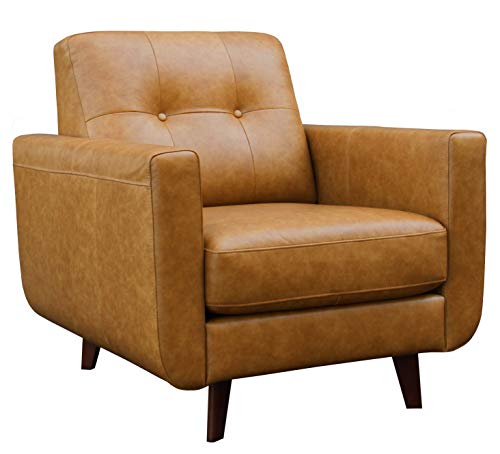
- Best overall: Amazon Brand – Rivet Sloane Mid-Century Modern Leather Armchair, 32.7″W, Caramel — Check on Amazon
- Signature Design by Ashley Soletren Chair and a Half, Off-White Chenille — Check on Amazon
- Christopher Knight Home Auden Wingback Accent Chair, Brown Velvet — Check on Amazon
- KINWELL 34″ Wide Sherpa Swivel Barrel Chairs, Set of 2, Beige — Check on Amazon
See 2 more Amazon options
- Signature Design by Ashley Puckman Mid-Century Modern Leather Accent Chair, Brown — Check on Amazon
- CANMOV Pushback Recliner Chair, Faux Leather, Chocolate — Check on Amazon
Read the full guide ↓
Disclosure: As an Amazon Associate, dailyhomedecorating.com earns from qualifying purchases. Links to Amazon on this page are affiliate links; they cost you nothing extra. Listing details such as price and availability change often, so check the current Amazon listing before you buy.
Finding the best accent chair under $1000 is a different exercise from finding a cheap one. Below this budget ceiling, the market splits into two very different products wearing the same name. At one end sit flat-pack chairs built to photograph well and survive a season or two of occasional use. At the other end — and this is where a four-figure budget should put you — sit chairs with hardwood frames, real or high-grade leather, dense foam that recovers instead of packing flat, and proportions designed by people who thought about how a body actually sits. The gap between those two groups is not visible in a product photo. It shows up in the frame joinery, in whether the seat cushion is attached or reversible, in the stated weight capacity, and in how the chair feels in month eighteen rather than week one. This guide exists to keep your money on the right side of that split.
An accent chair also has a harder job than a sofa. A sofa is allowed to be comfortable and quiet; an accent chair has to earn its floor space twice — once as a seat someone genuinely chooses, and once as the piece that gives a room its character. It is the chair guests gravitate to, the reading corner’s whole reason for existing, the place a laptop, a book and a drink converge on a Sunday morning. Under $1000, you can legitimately expect all of that: a chair that anchors a room visually, supports a long read without numbing your legs, and is built well enough that reupholstering it someday is a real option rather than a joke. What you should not accept at this budget is mystery foam, unstated weight limits, particleboard frames pretending to be hardwood, or dimensions copied from a different chair entirely — all of which still appear in listings at surprisingly high prices.
Our short answer: for most living rooms, start with the Rivet Sloane in caramel leather. It is the most complete package here — genuine mid-century proportions, a hardwood frame with solid beech legs, and leather that will age better than any fabric on this list. If you want maximum lounging volume, the Ashley Soletren chair and a half is the seat everyone will fight over. If your accent chair is really a reading chair, the Christopher Knight Home Auden wingback is the one to beat. The pages below review all six picks in detail, explain the measurements and materials that separate a $1000-worthy chair from an overpriced one, and flag the mistakes we see buyers make most often at this budget. If your budget is actually lower, our companion guide to Best Accent Chair Under $700 covers the tier below, and if the chair is part of a wider room refresh, Best Armchair Under $1000 looks at more traditional armchair silhouettes.
In this guide
Quick Picks: best accent chair under $1000
In a hurry? This table matches each chair to the job it does best. Every pick sits under the $1000 ceiling — check the live listing for the current price before you buy.
| Buyer type | Pick | Why it stands out | Link |
|---|---|---|---|
| Best overall | Rivet Sloane Leather Armchair, Caramel | Hardwood frame, solid beech legs and leather upholstery in true mid-century proportions (32.7″W) | Check on Amazon |
| Best oversized lounge seat | Signature Design by Ashley Soletren Chair and a Half | A genuine 52″W chair and a half in chenille — room for a reader, a child and a cat at once | Check on Amazon |
| Best reading chair | Christopher Knight Home Auden Wingback | Wingback profile, 400 lb stated capacity and a 44 lb build that feels planted, not flimsy | Check on Amazon |
| Best swivel pair | KINWELL 34″ Sherpa Swivel Barrel Chairs, Set of 2 | Two wide boucle swivel barrels, no assembly, toss pillows included, 300 lb capacity each | Check on Amazon |
| Best leather value | Signature Design by Ashley Puckman Leather Accent Chair | Leather mid-century frame at 29″W with a 20-inch seat height that suits taller sitters | Check on Amazon |
| Best reclining accent | CANMOV Pushback Recliner, Chocolate Faux Leather | A pushback recliner that reads as a classic accent chair until you lean back | Check on Amazon |
How we chose these accent chairs
Every chair in this guide had to clear the same bar, and several well-known listings did not. First, the frame: at this budget we required a stated hardwood, solid wood or engineered-wood-and-metal frame from the manufacturer — not an unspecified “sturdy construction.” Second, honest numbers: each pick publishes its overall dimensions and, where the maker states one, a weight capacity, so you can check the chair against your room and your household instead of guessing. Third, upholstery you can verify: leather described as leather, fabrics named by type (chenille, boucle/sherpa, velvet, polyester), so care expectations are clear before the box arrives. Fourth, the chair had to be a genuine accent chair — a single statement seat — rather than a dining chair or office chair wearing a costume.
We also weighed the things listings bury. Seat height and seat depth decide comfort more than any styling word: a 16.5-inch seat height lounges, a 20- to 21-inch seat height sits upright and stands up easily, and a seat depth beyond about 24 inches needs a lumbar pillow for shorter readers. Assembly mattered too — two picks here arrive with no assembly at all, which at this size of furniture is a real feature, not a footnote. Finally, we deliberately mixed silhouettes: a leather mid-century armchair, an oversized chair and a half, a wingback, swivel barrels, a compact leather frame and a recliner. An accent chair is a style decision as much as a seating one, and a guide that only lists six versions of the same chair would not be doing its job. Prices move constantly on furniture, so instead of printing numbers that go stale, we ask you to check the current price on Amazon — every pick was listed under the $1000 ceiling when we verified it.
The 6 best accent chairs under $1000, reviewed
1. Rivet Sloane Mid-Century Modern Leather Armchair, Caramel — best overall
The Rivet Sloane in caramel leather is what the under-$1000 accent chair budget is for. Rivet is Amazon’s own furniture brand, and the Sloane is its mid-century flagship: 32.7 inches wide, a hardwood frame on solid beech wood legs, button-tufted leather upholstery and the tapered, slightly splayed stance that defines the period style. It looks like the chair in a design magazine because, dimensionally and materially, it is built like one — the width gives it presence beside a full-size sofa, and the leather gives it the one thing no fabric chair can fake: a surface that improves with use, developing patina instead of pills.
Who it suits: buyers furnishing a living room they plan to keep, mid-century and transitional interiors, and anyone choosing one hero chair rather than a rotating cast of cheap ones. The caramel tone works as the warm note in grey, navy and white rooms alike.
Pros: genuine leather upholstery at this tier; hardwood frame with solid beech legs; proportions (32.7″W) that hold their own next to a three-seat sofa; a silhouette that has stayed current for years and will not date quickly.
Honest limitation: leather is a commitment. It wants occasional conditioning, it shows scratches from pet claws honestly rather than hiding them, and the caramel color is a definite warm statement — if your room runs cool and monochrome, the same chair in a fabric finish may sit easier, and either way this is a firm, structured sit rather than a sink-in lounge.
Choose it if you want the single best all-round accent chair under $1000. Skip it if you need a recliner, a swivel, or a seat two people can share. Check on Amazon
2. Signature Design by Ashley Soletren Chair and a Half — best oversized lounge seat
The Ashley Soletren plays a different sport. At 52 inches wide, 40 inches deep and 39 inches high, it is a chair and a half in the true sense: one person can curl sideways with a blanket and a paperback, or an adult and a small child can share it for story time without negotiation. The off-white chenille upholstery is soft and casual, the seat depth is a generous 23 inches, and the seat height of 21 inches keeps it from feeling like a beanbag you need a plan to escape. At 96 pounds it is also honestly built — this is furniture, not flat-pack.
Who it suits: larger living rooms, media rooms, households where the accent chair is really the household’s favorite seat, and readers who sit cross-legged or sideways rather than upright.
Pros: the most usable seating volume on this list; chenille is forgiving and family-friendly in texture; 21-inch seat height suits taller users; Ashley’s dealer network means the model is a long-running line, not a disappearing listing.
Honest limitation: size is the whole point and the whole problem. The listing itself notes a 36-inch minimum door width, and at 52 inches wide it will swallow a small room whole. Measure your doorway, your hallway turn and the intended corner before ordering — and the off-white chenille will need prompt attention to spills.
Choose it if you have the floor space and want the chair everyone migrates to. Skip it if your room is under about 12 feet wide or your doors are narrow. Check on Amazon
3. Christopher Knight Home Auden Wingback Accent Chair — best reading chair
The Christopher Knight Home Auden is a modern wingback: 31.25 inches wide, 32.25 inches deep and 33 inches high, upholstered in velvet over a wood frame, with tapered legs and a curved, wrapping backrest. The wings are not decoration — they give your head somewhere to rest at an angle and cut the sense of exposure that makes open chairs less relaxing in a busy room. The maker states a 400 lb maximum weight recommendation, the chair itself weighs a reassuring 44.1 pounds, and the arm height of 23.25 inches lands where a reader’s elbows actually want to be when holding a book or a tablet.
Who it suits: dedicated readers, bedroom-corner and library setups, and anyone who wants an accent chair with a traditional outline softened by modern velvet colors.
Pros: the highest stated capacity in this guide; wingback shape genuinely supports long reading sessions; substantial item weight signals a real frame; some assembly only, with tools and instructions included per the listing.
Honest limitation: velvet — including the polyester velvet used here — shows pressure marks and needs a brush or steamer to look its best, and the wingback profile is visually heavier than the open mid-century chairs, so in a very minimal room it can read more classic than you intended.
Choose it if the chair’s main job is reading in comfort for an hour at a time. Skip it if you want a low, lounging seat or a swivel base. Check on Amazon
4. KINWELL 34″ Wide Sherpa Swivel Barrel Chairs, Set of 2 — best swivel pair
The KINWELL swivel barrel chairs solve the conversation problem: a pair of chairs that can turn toward the sofa, toward each other, or toward the TV without dragging legs across the floor. Each chair is 34 inches wide, 32.7 inches deep and 29 inches high, upholstered in boucle (sherpa-style) fabric over a solid pine frame with a broad metal swivel base, and each arrives fully assembled with a removable toss pillow for lumbar support. The seat is a generous 24.8 by 24.8 inches at a loungey 16.5-inch height, and the stated capacity is 300 lb per chair. Sold as a set of two, the pair still lands under the $1000 ceiling — check the current price on Amazon.
Who it suits: open-plan rooms, conversation seating opposite a sofa, boucle and Scandinavian-style interiors, and buyers who want a matched pair without doubling the budget.
Pros: two chairs for the budget of one premium chair; true 360-degree swivel on a wide, stable base; zero assembly; the low, rounded profile keeps sightlines open across a room.
Honest limitation: the 16.5-inch seat height is low — wonderful for lounging, less kind to anyone with knee trouble getting up — and light boucle fabric shows soil more readily than mid-tone fabrics, so the beige set is happiest in a shoes-off, no-red-wine household.
Choose it if you want flexible seating for conversation and a soft, sculptural look. Skip it if you need a tall seat, arms at typing height, or a single formal chair. Check on Amazon
5. Signature Design by Ashley Puckman Leather Accent Chair — best leather value
The Ashley Puckman is the other leather route in this guide: a mid-century modern frame at 29 inches wide, 31.5 inches deep and 34.25 inches high, with a 20-inch seat height and 20-inch seat depth that suit longer legs better than most accent chairs. Where the Sloane is tufted and tailored, the Puckman is cleaner and more architectural — an exposed-frame look that reads almost like a lounge chair from a Scandinavian catalog. It is the pick for buyers who want leather’s durability and aging character in a slightly smaller footprint than the Sloane’s.
Who it suits: smaller living rooms that still want a premium material, taller sitters, and modern or mid-century rooms where an exposed wood frame is part of the design language.
Pros: leather upholstery in a 29-inch footprint; 20-inch seat height makes standing up easy; clean lines pair with both sofas and desks; Ashley model with a published full dimension set, so what you measure is what arrives.
Honest limitation: the seat is comparatively upright and firm — it is a sit-and-talk chair more than a curl-up chair — and leather care applies here just as with the Sloane: keep it out of harsh direct sun and condition it occasionally.
Choose it if you want leather, clean lines and a moderate footprint. Skip it if you want deep, soft lounging or a reclining function. Check on Amazon
6. CANMOV Pushback Recliner Chair, Chocolate — best reclining accent
The CANMOV pushback recliner hides its trick well. Upholstered in chocolate faux leather with rivet detailing on the arms, it presents as a classic club-style accent chair — then you lean back, the mechanism engages, and the footrest rises without any lever, handle or electric motor. For households where a full recliner’s bulk would wreck the room but a straight accent chair leaves the TV-watching experience incomplete, this is the compromise that actually works, and the faux leather surface wipes clean in seconds.
Who it suits: TV rooms, readers who like their feet up, households with kids or pets where wipe-clean upholstery beats delicate fabric, and anyone replacing a bulky recliner with something that looks like furniture.
Pros: reclining function with no visible mechanism or power cord; faux leather shrugs off spills and pet hair; classic profile blends with traditional sofas; pushback operation is intuitive for guests.
Honest limitation: a pushback recliner needs wall clearance behind it to open fully — plan the placement rather than discovering it — and faux leather, however practical, will not develop the patina of the real leather picks above; heavy daily reclining will also work the mechanism harder than occasional use.
Choose it if reclining is non-negotiable but a recliner silhouette is. Skip it if the chair must sit flush against a wall or you want genuine leather. Check on Amazon
Comparison table
| Pick | Overall size (W x D x H) | Upholstery | Seat height | Stated capacity | Best for |
|---|---|---|---|---|---|
| Rivet Sloane, Caramel | 32.7″W (depth/height per listing) | Leather | Per listing | Per listing | Best overall, mid-century rooms |
| Ashley Soletren Chair and a Half | 52″ x 40″ x 39″ | Chenille | 21″ | Per listing | Oversized lounging, sharing |
| Christopher Knight Home Auden | 31.25″ x 32.25″ x 33″ | Velvet | Per listing (arm height 23.25″) | 400 lb | Reading, wingback support |
| KINWELL Swivel Barrel (x2) | 34″ x 32.7″ x 29″ each | Boucle / sherpa | 16.5″ | 300 lb each | Conversation pairs, swivel |
| Ashley Puckman | 29″ x 31.5″ x 34.25″ | Leather | 20″ | Per listing | Leather in a smaller footprint |
| CANMOV Pushback Recliner | Per listing | Faux leather | Per listing | Per listing | Reclining, wipe-clean care |
Read the capacity and size columns the way an engineer would: they are the difference between a chair that fits your life and a chair that fits the photograph. If a measurement matters to you and a listing states it as “per listing” here, that is your cue to confirm it on the live Amazon page — dimensions do get revised between production runs.
How to choose an accent chair under $1000
Start with the seat, not the silhouette. Sit-ability is three numbers. Seat height: roughly 16–17 inches lounges low and suits relaxed reading with feet up; 18–19 inches is the versatile middle; 20–21 inches sits upright, pairs with a side table at dining-like height, and is far easier for older guests to leave. Seat depth: 20–22 inches supports most adults with their back against the chair; beyond 24 inches, plan on a lumbar pillow or accept the slouch. Seat width between the arms decides whether the chair is a perch or a nest — under 20 inches is a perch, 23 inches and up is a nest. Match these to the tallest and shortest regular users, not to the showroom photo.
Spend the budget on frame and foam. At under $1000, the money should be visible in the structure: hardwood or solid wood frames, corner blocking, legs that are part of the frame or bolted steel rather than glued dowels, and foam dense enough that the maker will name it. A simple test in listings: chairs that publish their item weight tend to be honestly built — the 44 lb Auden and 96 lb Soletren in this guide are examples — while suspiciously light “premium” chairs usually are not. Weight capacity is the other tell. A stated 300–400 lb rating signals a frame engineered with margin; silence on capacity at this price is a choice, and not a reassuring one.
Choose upholstery for your actual household. Leather (the Sloane, the Puckman) ages gracefully, resists odors and wipes clean, but wants conditioning and shows claw marks. Chenille and boucle are soft, forgiving of crumbs and visually warm, but light colors show soil. Velvet looks rich and photographs beautifully while demanding a brush now and then. Faux leather is the pragmatic pick for kids, pets and snacks, accepting a shorter cosmetic lifespan. None of these is “best” — the right answer is the one that matches your tolerance for maintenance, which is why this guide includes all four families. If the chair will sit beside a sunny window, remember that UV fades fabric and dries leather; a performance fabric or a rotation habit earns its keep. Our guide to Best Accent Chair For Families Under $1000 goes deeper on the kid-and-pet end of this trade-off.
Measure three things before ordering. The corner the chair will occupy (width plus a few inches of breathing room, and swing clearance if it swivels or reclines), the route into the room (door widths, hallway turns, stairwell angles — the Soletren’s 36-inch door note exists for a reason), and the relationship to neighboring furniture: an accent chair’s seat height should land within about two inches of your sofa’s, or conversation feels like talking up or down a step. Tape the footprint on the floor with painter’s tape and live with it for a day; it is the cheapest design tool there is. Finally, leave room for the supporting cast — a side table within reach and a lamp behind the shoulder turn a chair into a destination. If you are furnishing the whole seating area, Best Coffee Table Under $1000 and Best End Table Under $1000 cover the matching pieces at the same budget tier.
Common mistakes when buying a premium accent chair
Buying the photograph instead of the dimensions. Furniture photography uses wide lenses and small rooms. A chair that looks delicate online can be 52 inches wide in your hallway. Every pick in this guide publishes dimensions — use them, with tape, before the order, not after the delivery.
Assuming “under $1000” guarantees quality. The ceiling filters out the worst, not all of the bad. Listings exist at this tier with unspecified frames and no stated capacity. The price is a budget, not a certification; the specs are the certification.
Ignoring seat height until grandma visits. Low lounge chairs are wonderful for the young and flexible. If the chair will host older guests, a 16.5-inch seat is a small cruelty. Keep at least one seat in the room at 19 inches or higher.
Forgetting the recline and swivel clearances. A pushback recliner needs space behind it; a swivel barrel needs a circle, not a rectangle. Chairs that move need more floor than chairs that sit still, and floor plans drawn with static rectangles lie about this.
Matching everything. An accent chair that exactly matches the sofa is a missed opportunity — it is called an accent chair because it is allowed to differ in color, texture or period. The caramel Sloane beside a grey sofa, or boucle barrels against a leather couch, is the room working as designed. If you want the safer end of contrast, change the texture and keep the color family.
Skipping the return terms on a 96-pound chair. Big furniture returns are a logistics event. Read the listing’s return and delivery terms before ordering the heavy picks, and keep the packaging until you have sat in the chair for a few evenings.
Final recommendation
For most people, the answer is the Rivet Sloane leather armchair: it spends the budget where it counts — frame, leather, proportions — and it will still look deliberate in ten years. If your household’s accent chair is really its favorite seat, step up in size to the Ashley Soletren chair and a half and give it the corner it deserves. Readers should take the Auden wingback, conversation rooms the KINWELL swivel pair, and anyone who reclines the CANMOV. Whichever you choose, measure first, tape the footprint, and check the current price on Amazon before you buy — then the only surprise left will be how much time you spend in it.
Accent chair styles, explained
Shopping this category is easier once the silhouettes have names, because the name predicts how the chair sits. Mid-century armchairs like the Sloane and the Puckman pair a structured seat with tapered or exposed wood legs and a slightly reclined back. They sit more upright than they look, which makes them good conversation chairs and good desk-adjacent chairs, and their raised legs keep a room feeling open because you can see floor underneath. Wingbacks like the Auden wrap the sitter: the wings block drafts and peripheral distraction, the back is usually the tallest in the category, and the whole chair signals “reading happens here.” They are the most traditional silhouette in this guide and the most forgiving of mixed furniture, because a wingback looks intentional next to almost any sofa.
Barrel chairs — the KINWELL pair — curve the back and arms into one continuous shell. The shape is inherently sociable and inherently loungey: you sit in a barrel chair, not on it, and the low profile suits rooms where a tall chair back would chop the space in half. Swivel bases complete the type, turning the chair into the room’s most flexible seat. Chairs and a half like the Soletren are sofas in miniature: maximum width, maximum sprawl, and a footprint that must be planned like a loveseit’s. They are the right answer when “accent” is a polite fiction and the chair is really a primary seat. Recliners in disguise, represented here by the CANMOV, trade a fixed back for a mechanism; the pushback format keeps the silhouette clean at the cost of needing rear clearance. None of these types is superior — they are answers to different questions about how the seat will be used, and choosing the type first narrows the field faster than any brand comparison.
One more axis matters as much as silhouette: visual weight. A chair can be physically large and visually light (the Puckman’s exposed frame, raised legs and open sides) or physically modest and visually heavy (a skirted, fully upholstered club chair). Small and medium rooms usually want visual lightness even when they have floor space, because the chair shares sightlines with everything else. Large, high-ceilinged rooms can absorb — and often need — visual weight to keep a single chair from looking lost. When in doubt, photograph your room from the doorway and imagine the chair’s outline in the corner; the doorway view is the one you will live with most.
Making the corner work: light, tables and textiles
An accent chair succeeds or fails as part of a small system. The first element is light: a reading-worthy chair needs a lamp positioned behind and slightly above the shoulder of your dominant side, at a height that puts the light source out of your direct line of sight while it falls on the page or screen. A chair stranded in a dim corner becomes a clothes rack within a month, no matter how good it is. The second element is a surface: a side or end table within easy reach, tall enough that you set a drink down rather than reaching down — ideally within a couple of inches of the chair’s arm height. The third element is textiles: a throw within arm’s reach extends the chair’s season into winter evenings, and a small cushion tunes seat depth for different sitters, effectively making one chair fit two bodies.
Underfoot matters too. On hard floors, a rug that extends at least a foot beyond the chair on all sides defines the corner as a place rather than a parking spot, and it protects the floor from leg pressure and swivel bases. On carpet, check that swivel and recline mechanisms still move freely; deep pile can stall a swivel base and make a pushback recliner feel broken when it is merely outmatched by shag. Finally, leave the chair a small margin from walls and curtains — upholstery that rubs a wall every time someone sits will wear a shiny stripe into both surfaces within a year.
Care and longevity at this price tier
A chair bought at this level should be maintained like the long-term furniture it is. Leather picks want dusting with a dry cloth weekly and a conditioner roughly twice a year, more often in dry or sunlit rooms; small scratches in genuine leather usually buff into the patina rather than needing repair. Fabric picks want vacuuming with an upholstery tool on the same weekly rhythm — grit worked into chenille and boucle is what dulls them — and spills blotted, never rubbed, with the maker’s cleaning code as the authority. Velvet benefits from a clothes steamer and a soft brush to lift pressure marks. Faux leather asks least of all: a damp cloth, no solvents, and distance from radiators, whose heat is its main enemy.
Structure needs attention too. Tighten leg bolts after the first month of use and twice a year after; most “wobbly chair” complaints are hardware relaxing, not frames failing. Rotate how the chair is used if it is a household favorite — foam recovers better with rest days — and flip reversible cushions where fitted. Keep the maker’s stated weight capacity in mind as a real limit rather than a suggestion: the frame, the foam and the mechanism are all engineered around it. Treated this way, every chair in this guide should give a decade of service, which is precisely the math that justifies the tier: cost per year, the under-$1000 accent chair is the cheapest seat in the house.
What the under-$1000 tier buys you — and what it does not
It helps to know where this budget sits in the wider market. Below it, the mid-tier covered by our under-$700 guide buys competent chairs with engineered frames, decent foam and honest fabrics — good seats that make sensible compromises on materials. The under-$1000 tier is where those compromises start disappearing: genuine leather becomes available instead of exclusively faux, hardwood replaces generic “wood frame” language, capacities are published and generous, and established furniture brands — Ashley’s Signature Design line in this guide — compete directly with direct-to-consumer labels. Construction details that are invisible in photos, like eight-way hand-tied springs in traditional builds or high-resilience foam that survives a decade of evenings, live in this tier and the one above it.
Above this tier, designer and heritage brands charge multiples more for provenance, hand-finishing and name. Some of that premium is real — bench-made joinery and full-grain hides are genuinely costly — and some of it is the name itself. The honest summary is that the under-$1000 ceiling captures most of the functional quality available in an accent chair while leaving the purely collectible premium unpaid. What this tier does not buy you: custom upholstery programs, made-to-order dimensions, or white-glove everything as a standard. It also does not exempt you from checking specs — as this guide’s selection process showed, vague listings exist at every price, and the discipline of verifying dimensions, materials and capacities matters as much here as it does at a third of the budget.
One practical consequence: because chairs at this level are worth keeping, they are also worth buying carefully the first time. Choose the neutral or classic version of a chair rather than the fashionable one if it will be your primary seat — upholstery trends cycle faster than frames wear out — and keep the receipt, the assembly hardware spares and the maker’s care instructions in one place. If you are splitting the budget between two chairs instead of one, a pair of mid-tier chairs often serves a conversation layout better than a single hero; the KINWELL set in this guide exists precisely for that strategy, and our lower-tier guides cover the pair-friendly options in more depth.
Accent chair, armchair or lounge chair? Sorting the vocabulary
The category names overlap enough to confuse anyone, and listings exploit the confusion. An accent chair is defined by role: a single, visually distinct seat that complements a sofa rather than matching it. It may or may not have arms, and its dimensions run the full range in this guide, from slipper chairs to chairs and a half. An armchair is defined by construction: arms are mandatory, the back is structured, and the posture is comparatively upright — the Sloane and the Auden are armchairs that also serve as accent chairs. A lounge chair is defined by posture: a deeper seat, a more reclined back angle and usually a lower seat height, designed for staying rather than visiting; the KINWELL barrels and the Soletren lean lounge. A club chair is the lounge’s traditional cousin — deep, low, fully upholstered arms — and a slipper chair is an armless, low accent seat originally designed for bedrooms, which is why armless models keep appearing in the small-space guides in this series.
Why does the vocabulary matter? Because search results mix all of them, and the chair that delights you is the one whose definition matches your intended use. If the seat is for guests and conversation, shop armchairs and upright accent chairs. If it is for your own evenings, shop lounge geometry — deeper, lower, softer — even if the listing calls it something else. Read the dimensions before the label, every time: seat height and depth describe the experience more honestly than any category word the marketing team chose.
Delivery, assembly and the first-week check
Chairs at this size arrive in three formats. Fully assembled pieces (the KINWELL pair) need only unboxing and a level floor. Legs-only assembly (most picks here) is a ten-to-twenty-minute job with the included hardware — do it on a rug or blanket to protect both floor and finish, and tighten in a cross pattern rather than one leg at a time. Compressed or flat-packed foam chairs need expansion time; give them the maker’s stated hours before judging the seat, because foam judged at hour one is foam at half its intended loft. Whichever format you receive, keep the box and packaging until the chair has survived a week of real use — returns without packaging range from awkward to impossible at this size.
The first-week check takes five minutes and catches nearly every problem while it is still the seller’s problem. Sit and shift your weight side to side: movement should come from the cushion, not the frame, and any creak localized to a joint deserves a bolt check before it deserves a complaint. Run a hand along seams and welting for skipped stitching. Check that swivel bases rotate a full circle without a catch, that recliner mechanisms open and return smoothly several times in a row, and that all four legs (or the whole base) meet the floor without rocking — a rock on a hard floor often means a glide needs adjusting, not that the chair is warped. Photograph the chair on arrival day, too; if a finish flaw emerges later, a dated photo settles whose problem it is. None of this is pessimism — it is the same five minutes a furniture store’s delivery team spends, done by the person who cares most about the outcome.
FAQ
Is it worth spending up to $1000 on an accent chair? It can be, if the money buys structure: a hardwood frame, quality upholstery and published capacity ratings, as with the picks above. A well-built chair lasts a decade or more and can be reupholstered; a cheap chair is replaced repeatedly. The value collapses if the price buys only styling, which is why specs matter more than the tier itself.
What seat height is most comfortable for an accent chair? For general use, 18–19 inches suits the widest range of adults. Lower seats (16–17 inches) lounge better; higher seats (20–21 inches) are easier to stand from and suit taller users. Match the chair to its main user and keep it within about two inches of your sofa’s seat height.
Leather or fabric for a living room accent chair? Leather for durability, easy cleaning and graceful aging — with occasional conditioning and care around pet claws. Fabric for softness, color range and a quieter look, with more attention to spills. Households with young kids often land on performance fabrics or wipe-clean faux leather as the practical middle.
How much space does an accent chair need? The chair’s footprint plus roughly 18–24 inches in front for legs and traffic, swing room for swivels, and recline clearance behind recliners. Tape the full footprint — including movement — on the floor before ordering.
Can an accent chair be the main reading chair? Yes — pick for it deliberately: a supportive back (the Auden’s wingback), arms at a natural book-holding height, a seat depth your back can reach with a pillow if needed, and place a lamp and side table with it. Several picks in this guide were chosen with exactly that job in mind.
Should an accent chair match the sofa? It should relate to the sofa, not replicate it. Sharing one element — a color family, a leg finish, a period — is enough; changing the texture or silhouette is what makes it an accent. If everything matches exactly, the room reads as a furniture set rather than a designed space, and you lose the flexibility to move the chair to another room later.
Where should I look for matching pieces? Start with the seating group: a console table for the wall behind the chair, and Best Accent Chair Under $300 if you need a second, thriftier seat to balance the room.


