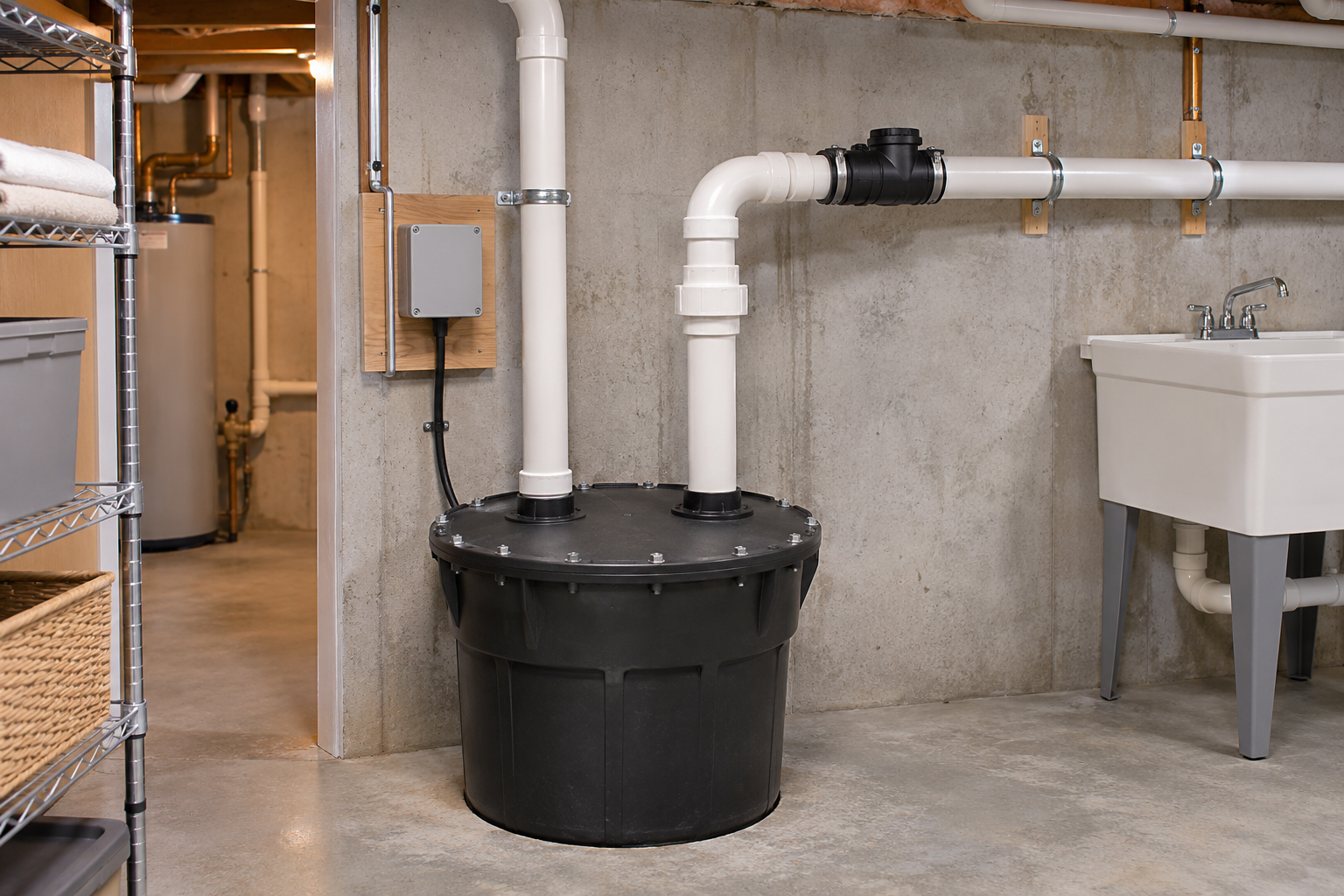
Amazon product examples to compare
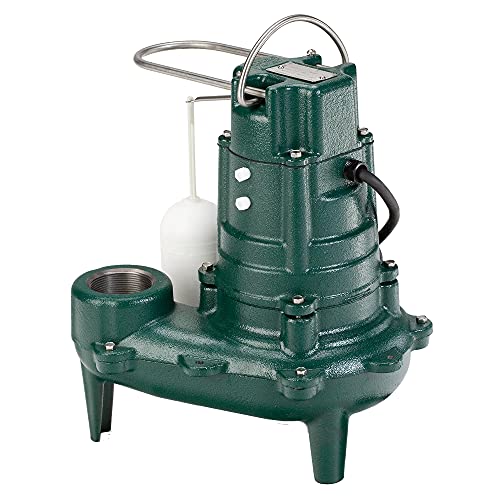
ASIN: B003Y5F7J2View on Amazon
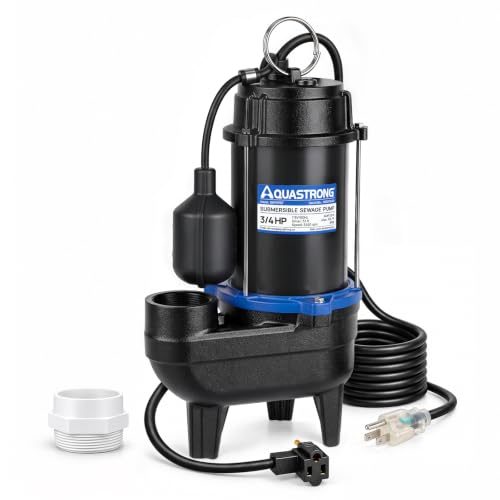
ASIN: B0HJBVVHN4View on Amazon
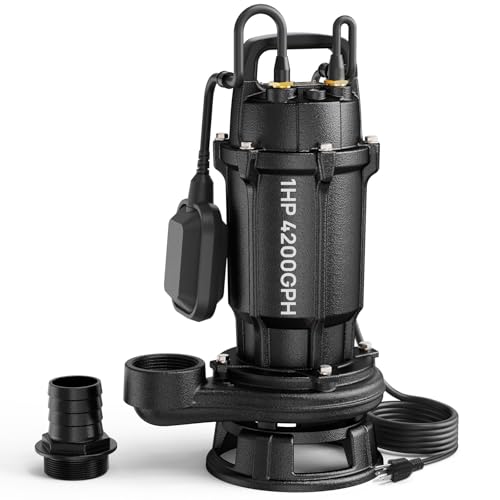
ASIN: B0HGFSYRJ5View on Amazon
Certain content that appears on this site comes from Amazon. This content is provided “as is” and is subject to change or removal at any time. Product examples and images are supplied through Amazon Creators API; check the current listing for specifications and availability.
As an Amazon Associate, DailyHomeDecorating.com earns from qualifying purchases.
A sewage ejector pump exists for one situation: a bathroom, laundry, or utility sink below the level of the home’s main sewer or septic line, where gravity cannot do the drainage work. Wastewater collects in a sealed basin below the floor, and the pump lifts it into the main line whenever the basin fills. When the system is sized and installed well, a basement bathroom works like any other. When it is not, the failures are among the least pleasant a homeowner can face — sewage backing up, odors from an unvented basin, or a pump jamming on material it was never designed to pass.
Shopping for the best sewage ejector pumps therefore starts with distinctions, not brands. You need to know how this pump differs from a sump pump and a grinder pump, what size of solid it must pass, how far it must lift, and how the basin, vent, switch, and check valve work together. This guide explains those decisions in plain terms, without rankings or invented claims, so you can plan a safe installation and know which parts belong to a licensed professional.
What to Look for First
Judge a sewage ejector pump by the waste it must move and the lift it must make, in that order. A pump that cannot pass the solids in toilet waste will fail no matter how strong its motor sounds, and a pump that cannot reach the main line against real resistance will fail just as surely.
Solids Handling: The Defining Specification
A true sewage ejector pump is designed to pass solid waste through its impeller and discharge without grinding it first. As a general standard for residential sewage service, look for a pump rated to handle spherical solids up to 2 inches in diameter, and a discharge pipe sized to match that ability rather than narrowing the path. That 2-inch capability is what separates sewage service from ordinary wastewater pumping: toilet paper and human waste must pass freely, cycle after cycle, without lodging in a small passage.
Read solids claims carefully. A pump rated only for smaller solids, or described for effluent or sump service, belongs in a different job. The system should receive only waste and toilet paper: wipes — including products marketed as flushable — sanitary products, and grease are common causes of jams, and no ejector pump should be expected to digest them.
Flow Rate: Keeping Up With Fixtures
Flow, in gallons per minute, must cover fixtures draining into the basin together: a toilet flush plus a shower, or a washing machine discharging its full cycle. The basin buffers incoming water between cycles, but a pump that moves less than the fixtures deliver will fall behind during busy periods. Choose a pump that clears the basin comfortably faster than they fill it.
Head: The Lift to the Main Line
Head is the work the pump does against gravity and friction. Measure the vertical lift from the basin’s normal pumping level up to the point where the discharge joins the main sewer or septic line, then account for the horizontal run, elbows, the check valve, and the gate valve, all of which add resistance. Judge the pump by the flow it still delivers at your total lift, using the manufacturer’s flow-versus-head information where published, not by its maximum flow at no lift. A pump running near its shut-off head — the lift at which it can move no water at all — will run long, hot, and ineffectively. Leave real margin.
Power, Materials, and Build Quality
Motor size matters mainly as it supports the flow-at-head and solids duties above. More useful checks are construction and serviceability. Sewage is corrosive and the basin is permanently damp, so corrosion-resistant housings suited to sewage service, sealed motors, and cords and switches rated for the environment matter for service life. Thermal overload protection is basic and worthwhile, and the impeller should be designed to pass solids without clogging. A pump your plumber can lift out and reseat without destroying the plumbing will actually be serviced.
Types Explained: Ejector, Grinder, and Sump Pumps
These three pumps live in similar-looking basins and are constantly confused with one another. They are not interchangeable, and using the wrong one is the most expensive mistake in this category.
Sewage Ejector Pumps
The ejector pump is the standard choice for a below-grade bathroom draining to a sewer or septic line. It does not chop waste; it passes solids up to its rated size — generally 2 inches in residential service — through a wide discharge. It sits in a sealed, vented basin, runs only when the float switch calls, and lifts raw sewage a relatively modest height into the main line. For most basement bathrooms and below-slab laundry installations, this is the pump the job calls for.
Grinder Pumps
A grinder pump shreds solids into a slurry that can be pushed through smaller-diameter pipe, over longer distances or higher lifts, including into pressurized sewer systems. Grinders cost more, their cutters can be damaged by wipes and stringy material, and service is more specialized. Choose a grinder because your distance, lift, or sewer authority requires one — not because grinding sounds stronger for an ordinary basement bathroom.
Sump Pumps — and Why They Do Not Belong Here
A sump pump is built for groundwater: relatively clear water entering a pit from drainage tile or a rising water table. It is not designed, rated, or permitted for raw sewage, typically cannot pass 2-inch solids, and its basin is not the sealed, vented arrangement sewage requires. Never substitute a sump pump for an ejector, and never route sewage into a sump pit.
Effluent Pumps
Between those categories sits the effluent pump, used to move septic tank effluent — liquid that has already passed through a septic tank and shed most solids — or gray water. Its solids rating is smaller than a sewage pump’s because the waste has been pre-treated. It is a legitimate pump in its own job, and the wrong pump for raw toilet waste.
Key Features That Actually Matter
Float Switch Design and Reliability
The float switch often decides whether the system works on a given night. Tethered, vertical, and diaphragm or piggyback arrangements each behave differently. What matters is that the switch keeps the basin from overflowing while giving the pump a reasonable run each cycle, cannot easily snag on the basin wall or pump, and — in a piggyback arrangement — lets you test the pump manually and replace a failed switch without replacing the whole pump.
Basin, Sealed Cover, and Vent Connections
The basin is part of the pump system, not a bucket it sits in. It must be large enough for the fixtures served and for proper switch operation, strong enough for its buried or floor-level installation, and fitted with a gas-tight sealed cover. The system must be vented through the home’s plumbing vent system so sewer gases go to the roof, not into the room, and so the basin can breathe as its level rises and falls. An unsealed or unvented sewage basin is an odor and health problem by design, no matter how good the pump inside it is.
Check Valve and Shutoff Valve
A check valve in the discharge line stops the lifted sewage from flowing back into the basin when the pump stops, which would otherwise cause repeated re-pumping of the same waste and extra wear. A shutoff or gate valve, installed so the check valve and pump can be serviced, lets a plumber close the line before opening it. Confirm the valves specified for your system are rated for sewage service and oriented and positioned as the design requires.
High-Water Alarm
Because a failed ejector pump announces itself as a sewage backup, an alarm is close to essential. A high-water alarm with its own sensor warns you when the basin level rises beyond the normal on-level — meaning the pump has failed, jammed, or lost power — while there is still time to stop using the fixtures and call for service. An alarm with an audible signal you can actually hear from living areas, and ideally a visible indicator, turns a disaster into an inconvenience.
How to Choose by Use Case
Basement Bathroom Below the Sewer Line
This is the core application: a toilet, shower or tub, and sink draining into one sealed basin. Prioritize true 2-inch solids handling, flow at your measured lift that covers fixtures running together, a basin sized for a toilet installation, and a vent connection planned as part of the bathroom project itself. Build in the alarm from the start.
Laundry and Utility Rooms Below Grade
A laundry-only basin handles gray water without toilet solids, but if there is any realistic chance a toilet will be added later, install the sewage-rated system now; retrofitting a basin under a finished floor costs far more than the difference between pumps. Remember that a washing machine discharges a large volume quickly, so basin capacity and pump flow need to absorb that surge.
Septic System Installations
Where the ejector lifts waste to a septic tank, confirm the arrangement with your local authority and septic professional. Nothing about the ejector changes what should be flushed — grease, wipes, and chemicals that harm septic biology still harm it.
Whole-House or Long-Distance Pumping
If the entire home’s sewage must be pumped, or the lift and distance are large, you are at or beyond the edge of a simple residential ejector decision. This is where a grinder system, a duplex arrangement with two alternating pumps, or an engineered package may be required by code or by plain reliability. Treat this as a professional design job rather than a product choice.
Safety: Hygiene, Gas, and Electricity
Sewage work carries risks clear-water pumping does not. Sewer gas from an improperly sealed or vented basin can be harmful and is at minimum a sign the system is open where it must be closed. Keep covers sealed, maintain the vent path, and treat persistent odor as a defect to fix, not a smell to mask.
For hygiene, treat any contact with basin water or a used pump as contact with raw sewage: wear protective gloves and eye protection when servicing, avoid touching your face, wash thoroughly afterward, and clean or safely dispose of contaminated materials. Stop using every fixture draining to the basin as soon as a failure or alarm is noticed — continued use is what converts a pump failure into a floor-level sewage spill.
Electrically, shut off power at the breaker before opening the basin or handling the pump, and confirm it is off, because a float switch can start the pump at any moment. The pump should be grounded and supplied through the protection local code requires — including ground-fault circuit interrupter (GFCI) protection where code or the manufacturer directs it. Given the sewage, venting, and electrical requirements combined, basin installation is work for licensed professionals in most jurisdictions, and permits commonly apply. Check yours before work begins.
Installation Tips That Prevent Problems
Most ejector problems are installation problems that appear months later. The basin must be set at the correct depth so drains reach it with proper slope, bedded so it cannot shift, with inlet, discharge, and vent connections made gas-tight. Confirm the vent path before the basin goes in; a fitted basin with no workable vent route is a project stopped at its most expensive point.
On the discharge side, fit the check valve, provide a shutoff valve, and support piping so vibration does not work joints loose. Every elbow adds resistance to the head you calculated. Before sealing the cover, fill the basin with clean water, watch several complete cycles, confirm the check valve holds, no joint leaks, and the float travels freely, and test the alarm. Only then seal the cover — and leave workable access for future service.
Care and Maintenance
Test the system periodically by running clean water through a fixture until the pump cycles, and confirm the alarm works. Listen for changes: a pump that runs longer than it used to, hums without discharging, or vibrates is reporting a developing problem — a failing switch, a blocked discharge, a check valve no longer holding, or material the impeller cannot pass.
Have the basin and pump inspected on a schedule your plumber recommends for your usage level, and sooner after any backup or alarm event. Switches live a hard life in sewage and are a common first failure; replacing a tired switch is inexpensive insurance compared with a backup. Keep a simple record of installation details — pump type, switch settings, basin size, and service dates — in the home’s paperwork. And maintain the household rule that protects the whole system: only human waste and toilet paper go down any drain connected to the basin, no exceptions for wipes of any description.
Common Mistakes to Avoid
The gravest mistake is installing the wrong category of pump: a sump or small-solids effluent pump under a toilet. It may work briefly, which makes it worse, because it fails after the floor is finished and the bathroom is in use. The second is treating the basin casually — unsealed cover, no vent, or a basin too small for the switch to travel — producing odor, gas, short cycling, and overflow from a system whose pump was blameless.
Other frequent errors include sizing by maximum flow instead of flow at the actual lift, omitting the check valve or fitting one that cannot be serviced, skipping the high-water alarm to save a small amount on a system protecting against a sewage spill, and burying the installation with no service access. At the household level, the recurring mistake is flushing wipes, sanitary products, and grease into a pumped system and expecting the pump to solve what behavior created. Finally, many failures become damage because early warnings — odor, slow cycles, one alarm — were ignored while fixtures kept being used. With sewage, stopping use early is the cheapest repair there is.
Frequently Asked Questions
What is the difference between a sewage ejector pump and a sump pump?
An ejector pump passes raw sewage, including solids generally up to 2 inches, from a sealed and vented basin up to the main sewer line. A sump pump moves relatively clear groundwater from an open pit and is neither designed nor permitted for sewage. They are not interchangeable.
Do I need a grinder pump instead of an ejector pump?
Only when your situation requires one — typically a long distance, high lift, small-diameter pressure line, or a pressurized sewer system that specifies it. For an ordinary basement bathroom lifting a short distance to a gravity main line, a standard ejector pump is the usual and simpler choice.
How large a solid should a sewage ejector pump handle?
For residential sewage service, generally 2-inch spherical solids. That rating, matched with an appropriately sized discharge, is what allows toilet waste to pass without clogging. A pump rated for smaller solids is an effluent or drainage pump, not a sewage ejector.
Why does my basement bathroom need a vent for the pump basin?
The vent lets sewer gases escape safely through the home’s vent system instead of into the room, and it lets air move as the basin fills and empties so the fixtures drain and the pump work properly. A sewage basin must be both sealed and vented; one without the other does not work.
What should I do if the high-water alarm sounds?
Stop using every fixture that drains to the basin immediately, check whether the pump has power, and do not open the basin yourself if you are not equipped to handle raw sewage safely. If power is present and the pump is not running or not keeping up, call a plumber promptly — the basin holds only a limited buffer.
Can I install a sewage ejector pump myself?
The plumbing, venting, gas-tight sealing, and electrical requirements are regulated in most places, and the health consequences of a poor installation are serious. Many homeowners leave basin setting and final connections to licensed professionals and hold a permit and inspection. Check your local requirements before deciding.
Sewage Ejector Pump Models to Compare
- Zoeller M267: A 1/2 HP automatic sewage pump with a 2-inch discharge and 2-inch spherical-solids handling; select the correct voltage and switch configuration. Search Amazon by exact model · Manufacturer specifications.
- Zoeller Model 267 nonautomatic: The same pump family is available in nonautomatic configurations for systems using an external float or controls. Search Amazon by exact model · Manufacturer model range.
Sewage basin, venting, check valve, and electrical installation should follow local plumbing and electrical codes.
Conclusion
The best sewage ejector pumps fit a clearly defined job: true sewage service with 2-inch solids handling, enough flow at your measured lift to stay ahead of your fixtures, and a system around the pump — sealed basin, working vent, free-traveling switch, check valve, and high-water alarm — installed and tested as one unit. Keep the categories straight, protect the system with honest habits about what gets flushed, and use licensed help where code demands it. Shortlist pumps that meet those criteria and compare their manuals and basin packages. A system chosen that way stays sealed, quiet, and out of mind — exactly what it is for.