Amazon product examples to compare
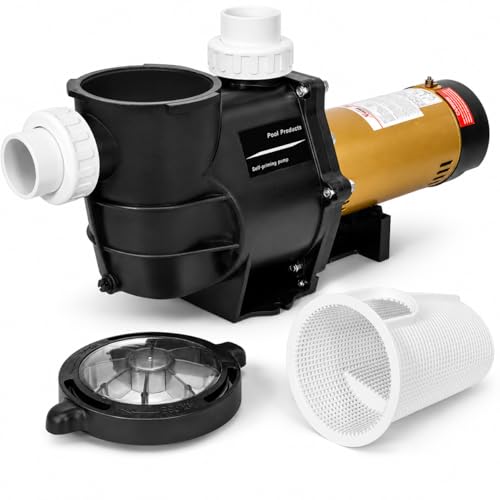
ASIN: B01AAWQRUYView on Amazon

ASIN: B0DZNVKPS9View on Amazon

ASIN: B0BNTRRTMGView on Amazon
Certain content that appears on this site comes from Amazon. This content is provided “as is” and is subject to change or removal at any time. Product examples and images are supplied through Amazon Creators API; check the current listing for specifications and availability.
As an Amazon Associate, DailyHomeDecorating.com earns from qualifying purchases.
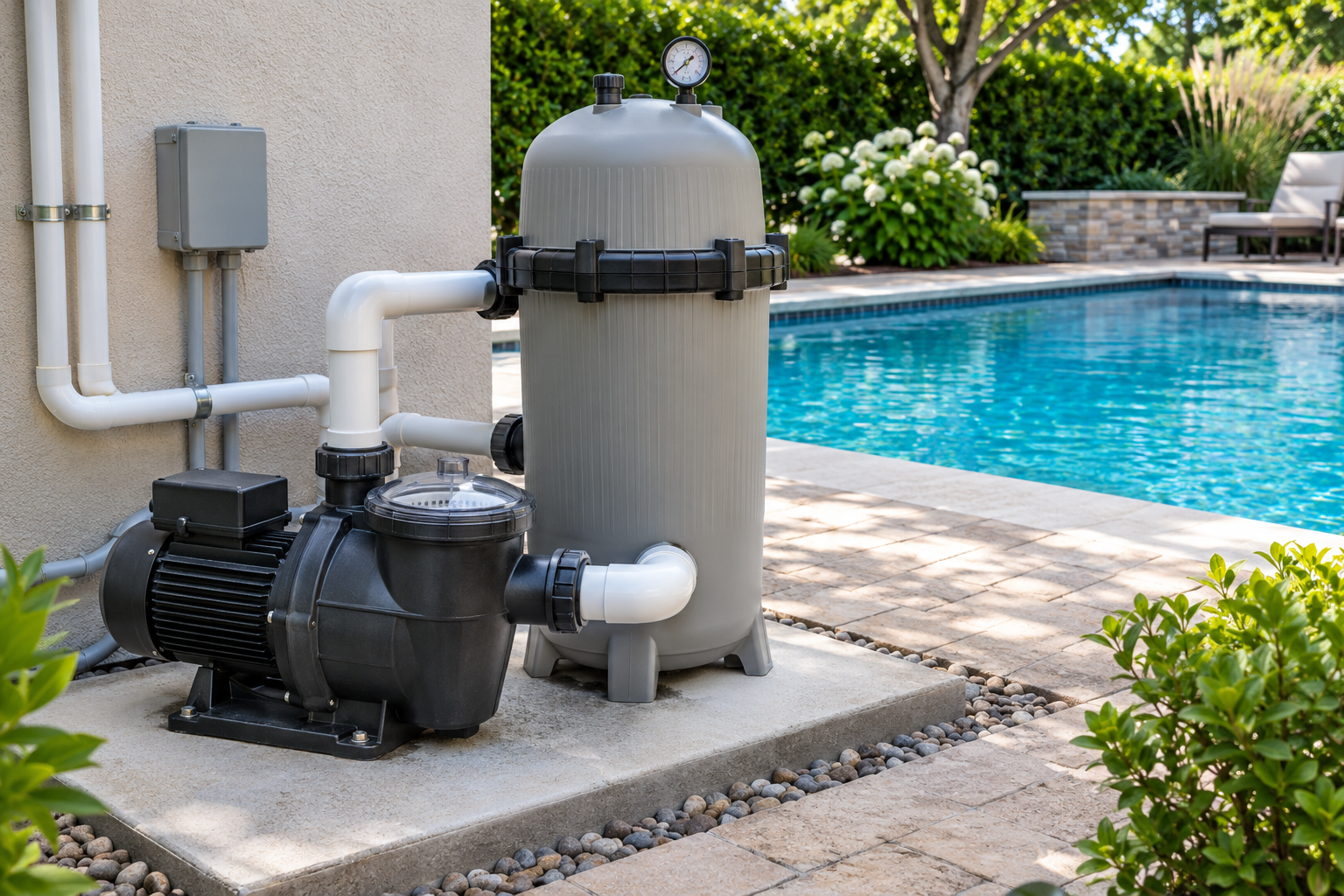
An inground pool pump is not a portable accessory you swap in and out for a weekend. It is a permanently installed part of a fixed system: hard plumbing, a filter that stays in place season after season, skimmers and main drains built into the shell, and often a heater, chlorinator, or cleaning system plumbed into the same loop. That permanence changes what matters when you shop.
This guide takes a specific angle: types and features. Instead of ranking models, it explains the pump designs you will actually encounter for an inground pool, what self-priming really means in practice, how single-speed, dual-speed, and variable-speed operation differ, and which durability features separate a pump that lasts from one that becomes a recurring repair.
What to Look for First
Before you compare types, ground yourself in the four criteria that decide whether any inground pump will work in your system at all. A pump that fails on flow or head will disappoint no matter how impressive its feature list looks.
Flow Rate
Flow rate is how much water the pump moves in a given time, usually gallons per hour or gallons per minute. For an inground pool, flow has to do several jobs at once: pull water from skimmers and the main drain, push it through the filter at a rate the filter can handle, and return it through the jets with enough movement to distribute heat and sanitizer evenly.
More flow is not automatically better. A filter has a maximum flow it is designed for, and forcing water through it faster than that can reduce filtration quality and stress seals and internal parts. Heaters and other inline equipment also have flow ranges they work within. The right target is a pump that delivers the turnover your pool volume needs while staying inside the limits of the equipment already plumbed into your pad.
Head Height and System Resistance
Head describes the resistance the pump works against: the lift involved, the length and diameter of the pipe runs, every elbow and valve, and the filter and heater themselves. Inground installations often have longer, more complex plumbing than simpler setups, with equipment pads set some distance from the pool. That resistance is why a pump’s maximum flow, measured with almost no resistance, tells you so little about what it will deliver in your yard.
Look for performance information that shows flow at different levels of resistance, sometimes called a pump curve, and judge a pump by what it delivers against resistance similar to your system. A pump that has to strain at its limit to overcome your plumbing will run hotter, louder, and wear sooner than one working comfortably in the middle of its range.
Power and Speed Control
Power and control are linked. A pump’s motor has to be strong enough for your flow and head needs, but how that power is delivered matters just as much. Running full speed all day for gentle filtration wastes energy, because moving water gently for longer usually filters as well or better than blasting it for a short burst.
Also check the electrical requirements before you fall in love with any option. Inground pumps may require a specific voltage and a dedicated circuit, and the replacement you want has to match what your equipment pad can safely supply, or be installed by a qualified electrician who can change it properly. Never assume a new pump is a simple wire-for-wire swap.
Materials and Build Quality
An inground pump lives outdoors, in sun, rain, heat, and a chemical environment, often for many years. Housing material matters: look for sturdy, weather-resistant, corrosion-resistant construction that will not become brittle after a few summers of ultraviolet exposure. Seals, gaskets, and the shaft seal in particular live a hard life in chlorinated water, and their quality strongly influences how long the pump runs before it starts to weep or leak.
Inspect the practical details. The strainer basket should be substantial and easy to remove, the lid should seal positively and be openable by hand without tools, and the drain plugs should be accessible for winterizing where freezing is a risk. A pump that is easy to open, clean, and drain will actually get that care.
Types of Inground Pool Pumps Explained
Inground pumps are usually described in two ways at once: by how they prime, and by how their speed is controlled. Understanding both labels prevents the common confusion of comparing a priming feature against a speed feature as if they were alternatives.
Self-Priming Pumps
Most pumps made for inground pools are self-priming, and for this installation type that feature is close to non-negotiable. A self-priming pump sits above the waterline of the pool, at the equipment pad, and can pull water up through the suction lines and expel air from them when it starts.
In practice, self-priming means the pump can recover after the basket is opened for cleaning, after air gets into a suction line, or after the system is drained for service, without you having to manually fill long pipe runs. It does not mean the pump can run dry safely.
Single-Speed Pumps
A single-speed pump runs at one fixed speed whenever it is on. This is the oldest and simplest design: mechanically straightforward, usually the least complex to understand, and with fewer electronic parts to fail. The trade-off is inflexibility. Filtration, vacuuming, running a water feature, and backwashing all get the same full-speed output, even though only some of those tasks need it.
Dual-Speed Pumps
A dual-speed pump offers a high speed and a low speed. High speed handles priming, vacuuming, and other demanding tasks, while low speed handles daily filtration more quietly and with less energy. For owners who want some of the benefit of speed control with simpler controls, this can be a sensible middle ground.
Variable-Speed Pumps
A variable-speed pump lets you set the speed across a range, often through a built-in control panel or an automation connection. That fine control is why this type has become the default recommendation for many inground pools.
The trade-offs are higher complexity and more electronics living outdoors on the pad. Controls should be legible in bright light, protected from weather, and understandable enough that you will actually program them rather than leaving the pump on one default speed forever. If your pool uses an automation system, check compatibility before buying, because the value of variable speed multiplies when the pump, heater, and sanitizer are scheduled together instead of fighting each other.
Key Features That Actually Matter
Once the type is settled, a short list of features decides day-to-day satisfaction with a permanent installation.
Strainer Basket and Lid Design
You will open this basket more than any other part of the system. A large basket means less frequent emptying during leaf season and better protection for the impeller. A lid that seals with a proper gasket, opens without tools, and lets you see the water and debris inside saves time at every single service visit, yours or a professional’s.
Programmability and Automation
Timers and schedules matter because inground pools run every day, whether you remember or not. Built-in programming on the pump, or clean integration with a pool automation system, keeps filtration consistent, coordinates the pump with heating and sanitizing equipment, and prevents the expensive mistake of a pump and heater working against each other.
Noise and Vibration
Equipment pads often sit near patios, windows, or a neighbor’s fence. Motor design, speed, and mounting all affect noise. Running slower is the single easiest noise reduction, which is another point in favor of speed control. A solid, level pad, secure mounting, and plumbing that does not transmit vibration into a wall all help as well, and they are worth fixing during installation rather than tolerating for years.
Serviceability and Parts
A permanent installation should be serviceable in place. Look for unions in the plumbing that let the pump be removed without cutting pipe, a motor that can be separated from the wet end for seal replacement, and drain plugs positioned so winterizing does not require tipping the pump.
How to Choose by Use Case
Standard Inground Pool With a Fixed Filter
For the typical residential setup — one filter, skimmers, a main drain, and no major water features — prioritize a self-priming variable-speed or dual-speed pump sized to your filter’s flow limit and your pool’s turnover need. Program long, slow daily filtration and reserve higher speeds for cleaning days. This is the use case where matching the pump to existing fixed equipment matters most, because the filter, not the pump’s headline flow, sets the ceiling.
Pools With Heaters, Cleaners, and Water Features
Added equipment adds flow demands at specific times. A pressure-side cleaner may need a stronger flow window, a heater needs its required flow whenever it fires, and features like waterfalls are flow-hungry by nature. Variable speed earns its keep here: schedule each task at the speed it actually needs instead of sizing the whole day around the most demanding hour.
Large Pools and Long Plumbing Runs
Bigger volume and longer pipe runs raise both flow and head requirements. Focus on the pump’s delivered flow against realistic resistance rather than its maximum rating, and consider that a pump working comfortably in its mid-range will usually outlast a smaller one running at its limit. If you are unsure, having a pool professional estimate your system’s resistance is money well spent before a permanent purchase.
Replacement in an Existing Installation
When you are replacing rather than building new, measure what you have: pipe sizes, the space on the pad, the electrical supply, and the filter’s limits. A replacement that matches the plumbing footprint and unions can be far cheaper to install than a nominally better pump that forces re-plumbing.
Safety: Electricity and Water
An inground pump combines substantial electrical power with water and wet surroundings, permanently. Treat safety as part of the purchase, not an afterthought. The pump and its circuit should be protected by a ground-fault circuit interrupter (GFCI), which cuts power quickly if current leaks along an unintended path. If you do not know whether the equipment circuit has GFCI protection, have an electrician check before the new pump goes in, not after.
Always switch power off at the breaker before opening the pump, changing wiring, or servicing any part of the system, and confirm it is off rather than trusting a timer or a switch position. Bonding and grounding of pool equipment are specialized, code-governed work; leave wiring changes, bonding questions, and any sign of damaged cables, corrosion at terminals, or repeated breaker or GFCI tripping to a licensed electrician. Never operate a pump with a damaged cord or cable, a cracked housing near electrical parts, or standing water inside a control enclosure. And keep the dry-running warning in mind: a pump that loses prime and runs without water can damage itself and overheat, so a system that frequently loses prime needs diagnosis, not repeated restarts.
Installation Notes for a Permanent Setup
Inground pump installation is plumbing and electrical work in one, and many owners reasonably hand it to a professional. If you are planning it, the principles are these. Set the pump on a solid, level pad that drains away from the equipment.
Prime the pump properly at first start: fill the strainer housing with water, secure the lid, and let the pump pull the air from the lines while you watch. Check every joint for leaks under pressure, confirm the filter pressure looks sensible for your system, and verify flow at the returns and skimmers rather than assuming it.
Care and Maintenance
Routine care for an inground pump is short, regular, and mostly about the basket, the seals, and the filter it feeds. Empty the strainer basket as often as your trees demand, and check the lid gasket each time, cleaning debris from the sealing surface and replacing the gasket if it is flattened or cracked, since a poor lid seal is a classic source of air leaks and priming trouble.
Watch the filter pressure gauge. A rising pressure trend means the filter is loading up and needs cleaning or backwashing by its own instructions, and a pump pushing against a clogged filter delivers less and less flow to the pool.
Common Mistakes to Avoid
The most common mistake in this category is choosing by type label or headline flow alone: buying variable speed and then running it at one high speed forever, or buying the highest-flow pump available and forcing a filter to live beyond its design limit. A close second is treating self-priming as run-dry protection and letting a pump grind away without water while you look for a leak at leisure.
Other frequent errors include ignoring the electrical match between pump and pad, skipping GFCI verification, reusing a worn lid gasket on a brand-new pump, and hard-plumbing a replacement in without unions so the next seal change becomes a plumbing project. Finally, many owners never record a clean-filter pressure baseline, which removes their best early warning of problems and turns every later judgment call into a guess.
Frequently Asked Questions
Does an inground pool pump have to be self-priming?
In practice, yes for almost every standard installation. The pump sits at an equipment pad above the pool’s waterline and must pull water up through the suction lines and clear air from them after service. Self-priming design, with a strainer housing that holds a reserve of water, is what makes that reliable. A non-self-priming pump belongs below water level in a flooded-suction layout, which is not how typical inground pads are built.
Is variable speed worth it for an inground pool?
For most owners, yes, because daily filtration does not need full speed. Running longer at lower speed usually filters well, runs more quietly, and uses less energy, while higher speeds remain available for vacuuming, cleaners, heaters, and water features. The value depends on actually programming the speeds, though. A variable-speed pump left on a single fast default gives up most of its advantage.
How do I know if a pump is too strong for my filter?
Compare the flow the pump will actually deliver in your system with the maximum flow your filter is designed for. If the pump can push beyond that limit, either choose a smaller pump or, with a variable-speed model, set and keep speeds that stay within the filter’s range. Watch the pressure gauge and filtration quality after installation; persistently excessive pressure is a warning sign, not a badge of power.
Why does my pump keep losing prime?
Common causes are a low pool water level letting a skimmer draw air, a lid gasket that no longer seals, a loose or cracked suction fitting, or a suction line leak. Because a self-priming pump can only work with the water reserve in its housing, anything that keeps introducing air defeats it. Fix the air source rather than repeatedly refilling and restarting, and never let the pump run dry while you troubleshoot.
Can I replace a single-speed pump with a variable-speed pump on the same plumbing?
Often yes, and it is a popular upgrade, but check three things first: the physical footprint and plumbing connections, the electrical supply and circuit requirements, and compatibility with any automation you use. Unions and adaptable fittings make many swaps straightforward, but wiring or circuit changes belong to a qualified electrician, and local rules may affect what can be installed.
How long should an inground pool pump last?
Lifespan varies widely with climate, run hours, water chemistry, and maintenance, so be wary of any specific promise. What you control is the environment and the care: a pump that is correctly sized, kept primed, protected from standing water, and serviced when small noises or leaks first appear will generally serve far longer than one that is oversized, run dry, or ignored. Durable materials and available replacement parts matter precisely because they stretch that service life.
Inground Pool Pump Models to Compare
- Pentair IntelliFlo3 VSF 1.5 HP (011065): Variable-speed and flow control with 115/208–230 V input; confirm the hydraulic curve and electrical compatibility for your pool. Search Amazon by exact model · Manufacturer specifications.
- Pentair IntelliFlo3 VSF 3 HP (011075): A higher-capacity configuration with 208–230 V input; size by flow and total dynamic head, not horsepower alone. Search Amazon by exact model · Manufacturer specifications.
Conclusion
Choosing among the best inground pool pumps comes down to fit for a permanent system. Start with the fundamentals: flow that serves your pool without exceeding your filter, enough strength for your plumbing’s resistance, and an electrical match for your pad.