Where to buy
Short on time? This shortlist for the best freezer storage containers for meal prep under $150 is the place to start — check the latest price, availability and delivery on Amazon. Orders are placed on Amazon. We may earn a commission from qualifying purchases.
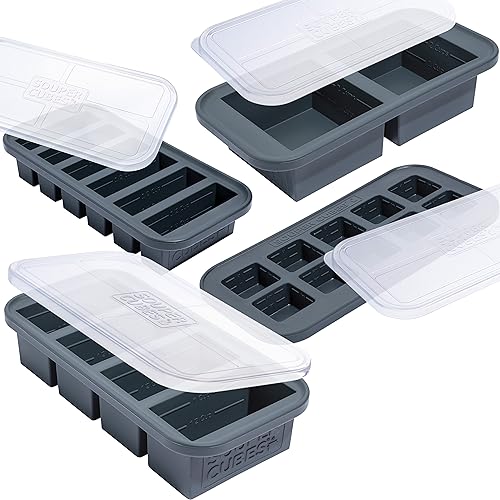
- Best complete portioning system: Souper Cubes Silicone Freezer Tray Gift Set (2 Tbsp, 1/2, 1 and 2 Cup Trays) — Check on Amazon
- Prep Naturals Glass Meal Prep Containers, 36 oz, 8-Pack — Check on Amazon
- Rubbermaid Brilliance Glass Food Storage Containers, Set of 9 — Check on Amazon
- Rubbermaid Brilliance Food Storage Containers, 7 Containers (14-Piece Set) — Check on Amazon
- Rubbermaid Brilliance 9.6-Cup Containers, 3-Pack — Check on Amazon
- Rubbermaid Premier Easy Find Lids Food Storage Containers, Set of 10 (20 Pieces) — Check on Amazon
Read the full guide ↓
Disclosure: As an Amazon Associate, dailyhomedecorating.com earns from qualifying purchases. Links to Amazon on this page are affiliate links; they cost you nothing extra. Listing details such as price and availability change often, so check the current Amazon listing before you buy.
Finding the best freezer storage containers for meal prep under $150 is really a search for a seal you can trust at 0°F, in sizes that match the food you actually cook, at a count your freezer habits will not exhaust by Wednesday. This guide works through six picks at this budget, judged on seal quality, freezer-rated materials, stacking geometry and honest capacity, and it is written specifically for freezer meal prep.
Freezer meal prep is a manufacturing process disguised as cooking: one session produces five to fourteen identical meals that must freeze evenly, stack densely, thaw predictably and reheat in the same container they froze in. Uniformity is therefore the first virtue in this guide — identical containers portion identically, and identical portions behave identically at every later step.
The second virtue is the seal, because prepped meals are stored longer than leftovers: a lunch frozen for three weeks from now needs gasket-level protection, not a snap lid and optimism. The picks below are ordered for the prep workflow — portioning tools first, sealed uniform containers second, compartment glass for the plate-style preppers — and each review speaks to batch size honestly.
A $150 budget opens up the formats that solve freezing properly: gasket seals that keep freezer burn off food for months, glass that goes from freezer to oven, portion trays that turn soup into stackable bricks, and deli systems in counts that absorb a whole batch day. The six picks below are ordered by how completely they solve the whole job for freezer meal prep, not by price within the tier.
If you are still deciding which budget level fits, the wider series helps: start with Best Freezer Storage Containers For Families Under $75 for a neighbouring budget in this same group, then come back here for the picks tuned to freezer meal prep.
In this guide
Quick Picks: the best freezer storage containers for meal prep under $150 at a glance
Six picks, six different strengths. The table pairs each situation with the one product in this guide that fits it best; the detailed reviews below explain the trade-offs behind each row.
| Best for | Pick | Why it stands out | Link |
|---|---|---|---|
| Best complete portioning system | Souper Cubes Silicone Freezer Tray Gift Set (2 Tbsp, 1/2, 1 and 2 Cup Trays) | Complete silicone portioning tray system with lids; seal: Snug silicone lids on every tray | Check on Amazon |
| Best large glass portions | Prep Naturals Glass Meal Prep Containers, 36 oz, 8-Pack | Borosilicate glass containers with snap-lock lids; seal: Snap-lock lids with silicone seal ring — airtight | Check on Amazon |
| Best glass system | Rubbermaid Brilliance Glass Food Storage Containers, Set of 9 | Glass containers with gasket-sealed locking lids; seal: Four-latch lids with silicone gasket — airtight and leakproof; Smart Lid system fits across Brilliance sizes | Check on Amazon |
| Best sealed Tritan system | Rubbermaid Brilliance Food Storage Containers, 7 Containers (14-Piece Set) | Gasket-sealed Tritan containers with four-latch lids; seal: Four-latch lids with silicone gasket — airtight and leakproof | Check on Amazon |
| Best large sealed batches | Rubbermaid Brilliance 9.6-Cup Containers, 3-Pack | Large gasket-sealed containers; seal: Four-latch lids with silicone gasket — airtight and leakproof | Check on Amazon |
| Best premium nesting set | Rubbermaid Premier Easy Find Lids Food Storage Containers, Set of 10 (20 Pieces) | Tritan premium containers with Easy Find lids; seal: Easy Find lids; each lid fits multiple bases | Check on Amazon |
How these picks were chosen
Every pick had to pass the same five tests, weighted for freezer meal prep. We verified each model against maker and retailer listings before including it — model names, materials, capacities and seal designs in the reviews come from those listings, and the sources file published with this article records them pick by pick. Products we could not verify were left out, however often they appear in round-ups. Where a format honestly does not exist at this budget, the guide says so and covers the nearest step-up in prose instead of inventing a listing.
Uniformity of portions. Identical containers freeze, thaw and reheat at identical rates, which is what makes a week of lunches predictable. Uniform sets and portion trays ranked above graduated sets for this guide.
Seal quality for multi-week storage. Prepped meals wait weeks, not days. Gasketed and sealed lids were weighted heavily; snap lids only where the format compensates, such as bricks moved into bags.
Stacking density. Fourteen meals must fit a real freezer alongside everything else. Flat, rectangular, grid-friendly formats beat deep or round ones for prep.
Freeze-to-reheat path. The container is the serving dish: microwave vents, oven-safe glass and lids that survive the cycle all counted toward the ranking.
Batch throughput. How many meals one purchase lets you freeze in a single session — the honest ceiling on a prep day — is stated for every pick.
Finally, we weighted the results for freezer meal prep specifically. A container can be excellent in general and wrong for this guide’s reader; the ordering below reflects the criteria above as they apply to freezer meal prep, which is why sibling guides in this series — written for other situations at the same budget — rank some of the same products differently.
Detailed reviews: the best freezer storage containers for meal prep under $150, pick by pick
1. Souper Cubes Silicone Freezer Tray Gift Set (2 Tbsp, 1/2, 1 and 2 Cup Trays) — Best complete portioning system
Who it suits: Readers whose freezing matches its strength — four tray sizes in one set: 2-tablespoon (herbs, garlic, stock concentrate), 1/2-cup, 1-cup and 2-cup portions — and who value its sealing approach: snug silicone lids on every tray. If that sounds like your kitchen’s routine, this is one of the most satisfying ways to spend this budget.
Start with the format: a complete silicone portioning tray system with lids in food-grade silicone with steel-reinforced rims. Its seal is the heart of the matter — snug silicone lids on every tray — and in a freezer, the seal decides how the food tastes in week six, which is the only week that separates freezer containers from fridge containers.
The gift set is the whole Souper Cubes idea in one box: every portion a home freezer actually uses. The 2-tablespoon tray freezes herbs in oil, garlic, ginger, stock concentrate and coffee; the half-cup does sauces; the 1-cup does soups and stocks; the 2-cup does whole meals. Bought together they turn freezing from container Tetris into a portioning system with a unit for everything, and the trays share the reinforced rims and lids across sizes. For a household building a freezer system from scratch — or gifting one — this is the single most complete purchase in this guide.
Capacity, stated as you will actually use it: four tray sizes in one set: 2-tablespoon (herbs, garlic, stock concentrate), 1/2-cup, 1-cup and 2-cup portions. Treat that as a working description rather than a maximum — freezing needs headspace, so the honest usable volume of any liquid load is a little below the headline figure, and the reviews in this guide assume you will leave that room.
Glass and plastic fail differently in the cold. Plastic flexes and can absorb knocks, but cheap plastic turns brittle and cracks; glass is dimensionally stable and never stains, but a frozen glass dish dropped on a hard floor is finished. Neither is universally better — the guide assigns each material to the jobs its failure mode tolerates.
Care is part of the value. Wash containers warm and soapy after every use and dry them fully before storing with lids ajar or snapped to bases — a sealed container stored damp grows the stale smell that later gets blamed on the freezer. Gaskets deserve a fingertip run to clear crumbs from the channel, because a single crumb bridge is a vapour leak. Construction — food-grade silicone with steel-reinforced rims — sets the long-term expectation: looked after as described, this is a multi-cycle tool, and its end of life, when it comes, will be visible and gradual rather than a surprise failure full of soup.
Pros:
- Every useful portion size in one purchase
- The 2 Tbsp tray alone transforms herb and stock-concentrate freezing
- Consistent system: same rims, lids and release across sizes
- Bricks from all trays stack into one organised freezer
- Format and contents: Gift set with trays and lids in four portion sizes; Charcoal colourway
Honest limitation: The highest-commitment Souper Cubes purchase — households unsure about tray freezing should start with the 1-cup 2-pack. Bricks still need bags or containers for long-term storage.
Choose it if its sizes and seal match the food you actually freeze and the space you actually have. Skip it if your routine is dominated by loads its format handles badly — very long storage in a snap lid, bulk volume in a five-piece set, or oven-bound dishes in plastic. Decide by your freezer’s real contents, not by the photograph. — Check on Amazon
2. Prep Naturals Glass Meal Prep Containers, 36 oz, 8-Pack — Best large glass portions
Who it suits: Readers whose freezing matches its strength — eight 36-ounce glass containers — large single meals and family portions, uniform across the pack — and who value its sealing approach: snap-lock lids with silicone seal ring — airtight. If that sounds like your kitchen’s routine, this is one of the most satisfying ways to spend this budget.
Start with the format: a borosilicate glass containers with snap-lock lids in borosilicate glass with plastic snap-lock lids. Its seal is the heart of the matter — snap-lock lids with silicone seal ring — airtight — and in a freezer, the seal decides how the food tastes in week six, which is the only week that separates freezer containers from fridge containers.
Prep Naturals built its name on borosilicate: glass formulated to shrug off thermal shock, so a container can move from freezer toward oven with far less drama than ordinary glass. The 36-ounce 8-pack is the big-portion glass option — eight identical containers for the cook who preps full meals, freezes them in glass rather than plastic, and reheats in the same vessel. The snap-lock lids carry a silicone seal ring, which puts these a class above snug-lid glass for freezer-burn protection, and the uniform size stacks into a tidy freezer grid.
Capacity, stated as you will actually use it: eight 36-ounce glass containers — large single meals and family portions, uniform across the pack. Treat that as a working description rather than a maximum — freezing needs headspace, so the honest usable volume of any liquid load is a little below the headline figure, and the reviews in this guide assume you will leave that room.
Labels are a quality instrument, not tidiness theatre. Frozen food quality declines on a curve measured in weeks, and the only way to eat food near the top of its curve is to know when it went in. Name, date and portion count on tape is the entire system; everything fancier is decoration.
Care is part of the value. Silicone trays ask for almost nothing: wash, dry, and store flat or upright in a file. If a tray picks up a lingering onion or garlic note, a paste of baking soda and water left on for an hour before washing clears it without harsh chemicals. Construction — borosilicate glass with plastic snap-lock lids — sets the long-term expectation: looked after as described, this is a multi-cycle tool, and its end of life, when it comes, will be visible and gradual rather than a surprise failure full of soup.
Pros:
- Borosilicate glass resists thermal shock
- Sealed snap-lock lids — better freezer protection than snug lids
- Eight identical 36 oz containers stack in a grid
- Freezer, oven, microwave and dishwasher rated
- Format and contents: 8 containers + 8 lids; 36 fl oz each; multi-compartment options in the range
Honest limitation: Eight large glass containers are heavy and claim a full shelf. Lids are plastic and stay out of the oven. Glass still chips if dropped frozen onto hard floors.
Choose it if its sizes and seal match the food you actually freeze and the space you actually have. Skip it if your routine is dominated by loads its format handles badly — very long storage in a snap lid, bulk volume in a five-piece set, or oven-bound dishes in plastic. Decide by your freezer’s real contents, not by the photograph. — Check on Amazon
3. Rubbermaid Brilliance Glass Food Storage Containers, Set of 9 — Best glass system
Who it suits: Readers whose freezing matches its strength — nine glass containers: (3) 1.3-cup, (2) 2-cup, (2) 3.2-cup, (1) 4.7-cup, (1) 8-cup — and who value its sealing approach: four-latch lids with silicone gasket — airtight and leakproof; smart lid system fits across brilliance sizes. If that sounds like your kitchen’s routine, this is one of the most satisfying ways to spend this budget.
Start with the format: a glass containers with gasket-sealed locking lids in glass bases (oven-safe to 450°f) with plastic stainshield lids. Its seal is the heart of the matter — four-latch lids with silicone gasket — airtight and leakproof; smart lid system fits across brilliance sizes — and in a freezer, the seal decides how the food tastes in week six, which is the only week that separates freezer containers from fridge containers.
Brilliance Glass puts the line’s gasketed lid system on glass bases, and for freezer-to-oven cooking that combination is close to ideal: freeze the casserole in the dish, bake it in the same dish (bases are oven-safe to 450°F), serve, and store the remainder back in the freezer — one vessel, no transfers, no extra washing. Glass never stains, never holds last month’s curry, and does not flex in the cold. The Smart Lid system means these lids fit same-size Brilliance containers across materials, so a mixed glass-and-Tritan freezer still runs one lid logic.
Capacity, stated as you will actually use it: nine glass containers: (3) 1.3-cup, (2) 2-cup, (2) 3.2-cup, (1) 4.7-cup, (1) 8-cup. Treat that as a working description rather than a maximum — freezing needs headspace, so the honest usable volume of any liquid load is a little below the headline figure, and the reviews in this guide assume you will leave that room.
Freezer burn is not burning and not a safety failure — it is sublimation. Ice at the food’s surface turns directly into vapour, migrates to the coldest nearby surface (often the inside of a loose lid, where it appears as frost), and leaves the food dry, pale and leathery in patches. Every defence in this guide is the same defence stated three ways: less air in contact, a tighter seal against vapour escape, and steadier temperature.
Care is part of the value. Glass asks for temperature manners rather than effort: do not move a dish directly from freezer to a hot oven unless the maker rates it for that shock — borosilicate tolerates far more than soda-lime glass — and let a frozen dish stand a few minutes before the oven. Lids go on the top rack or get hand-washed to keep their shape. Construction — glass bases (oven-safe to 450°f) with plastic stainshield lids — sets the long-term expectation: looked after as described, this is a multi-cycle tool, and its end of life, when it comes, will be visible and gradual rather than a surprise failure full of soup.
Pros:
- Freeze, bake and serve in one dish — bases oven-safe to 450°F
- Glass never stains or retains odours
- Full Brilliance gasket seal against freezer burn
- Lids interchange with same-size Brilliance containers
- Format and contents: 18 pieces total; bases oven-safe to 450°F; lids top-rack dishwasher
Honest limitation: Glass is heavy and can chip if a frozen dish is dropped on tile. Lids are plastic and never go in the oven. Cost per container is the highest in this guide.
Choose it if its sizes and seal match the food you actually freeze and the space you actually have. Skip it if your routine is dominated by loads its format handles badly — very long storage in a snap lid, bulk volume in a five-piece set, or oven-bound dishes in plastic. Decide by your freezer’s real contents, not by the photograph. — Check on Amazon
4. Rubbermaid Brilliance Food Storage Containers, 7 Containers (14-Piece Set) — Best sealed Tritan system
Who it suits: Readers whose freezing matches its strength — seven graduated containers — the mid-size brilliance set covering portions through family leftovers — and who value its sealing approach: four-latch lids with silicone gasket — airtight and leakproof. If that sounds like your kitchen’s routine, this is one of the most satisfying ways to spend this budget.
Start with the format: a gasket-sealed tritan containers with four-latch lids in tritan plastic, bpa-free. Its seal is the heart of the matter — four-latch lids with silicone gasket — airtight and leakproof — and in a freezer, the seal decides how the food tastes in week six, which is the only week that separates freezer containers from fridge containers.
The 14-piece Brilliance set is the size most households settle on: seven gasket-sealed containers in a graduated spread that covers a week of freezing without rationing. Everything said about the seal in the 10-piece review applies — four latches, silicone gasket, genuine leakproofing — with two more containers and a better size ladder. The modular footprints stack in aligned columns in the freezer, and the lids snap to the bases for storage, so the set stays a set. If the freezer-burn argument persuades you, this is the set that makes it a system rather than a sample.
Capacity, stated as you will actually use it: seven graduated containers — the mid-size brilliance set covering portions through family leftovers. Treat that as a working description rather than a maximum — freezing needs headspace, so the honest usable volume of any liquid load is a little below the headline figure, and the reviews in this guide assume you will leave that room.
Liquids expand as they freeze — water by roughly nine percent — and that expansion is a seal-breaking force. A container filled to the brim will lift its own lid as the contents freeze, opening exactly the air gap the lid was meant to close. Headspace is not wasted space; it is the room the food needs to freeze without defeating its own container.
Care is part of the value. Deli tubs are semi-consumables and should be managed like it: retire any tub whose rim has warped (it will never seal again), any lid that has cracked at the flex point, and any piece that has gone cloudy and rough, because rough surfaces harbour residue. The system’s cheapness is what makes this discipline affordable. Construction — tritan plastic, bpa-free — sets the long-term expectation: looked after as described, this is a multi-cycle tool, and its end of life, when it comes, will be visible and gradual rather than a surprise failure full of soup.
Pros:
- Seven gasket-sealed containers — a real system, not a sample
- Same leakproof Brilliance seal across every size
- Modular footprints stack in aligned freezer columns
- Lids snap to bases for storage
- Format and contents: 14 pieces total; rectangular modular footprints
Honest limitation: Still a premium per-container price. Rectangular shapes are ideal for shelves but less natural for round freezers baskets; measure your space. Lids prefer top-rack or hand washing for longest gasket life.
Choose it if its sizes and seal match the food you actually freeze and the space you actually have. Skip it if your routine is dominated by loads its format handles badly — very long storage in a snap lid, bulk volume in a five-piece set, or oven-bound dishes in plastic. Decide by your freezer’s real contents, not by the photograph. — Check on Amazon
5. Rubbermaid Brilliance 9.6-Cup Containers, 3-Pack — Best large sealed batches
Who it suits: Readers whose freezing matches its strength — three 9.6-cup containers — family-size batches: the double soup, the casserole remainder, the marinating joint — and who value its sealing approach: four-latch lids with silicone gasket — airtight and leakproof. If that sounds like your kitchen’s routine, this is one of the most satisfying ways to spend this budget.
Start with the format: a large gasket-sealed containers in tritan plastic, bpa-free. Its seal is the heart of the matter — four-latch lids with silicone gasket — airtight and leakproof — and in a freezer, the seal decides how the food tastes in week six, which is the only week that separates freezer containers from fridge containers.
Large containers are where seals go to fail: the lid span is long, the contents heavy, the gasket line easy to warp. The 9.6-cup Brilliance answers with the same four-latch design as the small sizes, clamping the gasket evenly around a long perimeter, and it is the large freezer container we trust with a double batch of anything liquid. Three of them cover the family-batch layer of a freezer: one in use, one frozen, one in the wash. The clear Tritan keeps a frozen casserole identifiable without opening, and the three stack loaded without the bottom lid flexing.
Capacity, stated as you will actually use it: three 9.6-cup containers — family-size batches: the double soup, the casserole remainder, the marinating joint. Treat that as a working description rather than a maximum — freezing needs headspace, so the honest usable volume of any liquid load is a little below the headline figure, and the reviews in this guide assume you will leave that room.
Flat food freezes faster, and faster freezing means smaller ice crystals. Small crystals do less damage to cell structure, which is why a shallow layer of soup thaws back into soup while the centre of a deep tub thaws back watery. The shallow rectangles and flat bricks praised in this guide are not a storage aesthetic — they are a texture technology.
Care is part of the value. Wash containers warm and soapy after every use and dry them fully before storing with lids ajar or snapped to bases — a sealed container stored damp grows the stale smell that later gets blamed on the freezer. Gaskets deserve a fingertip run to clear crumbs from the channel, because a single crumb bridge is a vapour leak. Construction — tritan plastic, bpa-free — sets the long-term expectation: looked after as described, this is a multi-cycle tool, and its end of life, when it comes, will be visible and gradual rather than a surprise failure full of soup.
Pros:
- Gasket seal stays even across a large lid span
- 9.6 cups swallows family-size batches whole
- Stacks loaded without lid flex
- Same Brilliance ecosystem as the portion sizes
- Format and contents: 6 pieces total (3 containers + 3 lids); 9.6-cup capacity each
Honest limitation: Three large containers claim real freezer and cupboard volume. Too big for portions — this is a layer of a system, not the system.
Choose it if its sizes and seal match the food you actually freeze and the space you actually have. Skip it if your routine is dominated by loads its format handles badly — very long storage in a snap lid, bulk volume in a five-piece set, or oven-bound dishes in plastic. Decide by your freezer’s real contents, not by the photograph. — Check on Amazon
6. Rubbermaid Premier Easy Find Lids Food Storage Containers, Set of 10 (20 Pieces) — Best premium nesting set
Who it suits: Readers whose freezing matches its strength — ten containers in graduated sizes with lids — the premium, crystal-clear tier of the easy find family — and who value its sealing approach: easy find lids; each lid fits multiple bases. If that sounds like your kitchen’s routine, this is one of the most satisfying ways to spend this budget.
Start with the format: a tritan premium containers with easy find lids in tritan plastic bases, shatterproof, stain-resistant. Its seal is the heart of the matter — easy find lids; each lid fits multiple bases — and in a freezer, the seal decides how the food tastes in week six, which is the only week that separates freezer containers from fridge containers.
Premier is Easy Find grown up: Tritan bases that stay crystal clear and resist stains and odours the way ordinary plastic never does, on the same snap-together lid system, with lids that fit multiple bases to cut the matching problem down. The bases are shatterproof — a real freezer virtue, since frozen drops are how rigid containers die — and the set is rated dishwasher- and freezer-safe with microwave-safe bases. For freezing, Tritan’s clarity is practical, not cosmetic: you can identify contents through the wall at freezer temperature without opening anything.
Capacity, stated as you will actually use it: ten containers in graduated sizes with lids — the premium, crystal-clear tier of the easy find family. Treat that as a working description rather than a maximum — freezing needs headspace, so the honest usable volume of any liquid load is a little below the headline figure, and the reviews in this guide assume you will leave that room.
A freezer works hardest at holding 0°F (-18°C), the temperature at which bacterial growth effectively stops and quality decline slows to its minimum. Every degree warmer shortens good storage life noticeably, and a freezer packed with flat, dense containers holds its temperature through door openings far better than one full of air gaps and round tubs.
Care is part of the value. Silicone trays ask for almost nothing: wash, dry, and store flat or upright in a file. If a tray picks up a lingering onion or garlic note, a paste of baking soda and water left on for an hour before washing clears it without harsh chemicals. Construction — tritan plastic bases, shatterproof, stain-resistant — sets the long-term expectation: looked after as described, this is a multi-cycle tool, and its end of life, when it comes, will be visible and gradual rather than a surprise failure full of soup.
Pros:
- Tritan bases resist stains, odours and shattering
- Crystal clarity identifies frozen contents at a glance
- Lids fit multiple bases — less matching
- Freezer and dishwasher safe; microwave-safe bases
- Format and contents: 20 pieces total (10 containers + 10 lids); grey lids
Honest limitation: Premium material at a premium per-container cost — this is a quality-over-count purchase. Ten containers is a modest count for batch freezing; pair with a deli system for volume.
Choose it if its sizes and seal match the food you actually freeze and the space you actually have. Skip it if your routine is dominated by loads its format handles badly — very long storage in a snap lid, bulk volume in a five-piece set, or oven-bound dishes in plastic. Decide by your freezer’s real contents, not by the photograph. — Check on Amazon
Comparison table
The six picks side by side. Read the seal column first — it decides how food tastes in week six — then capacity, then format.
| Pick | Format | Material | Seal | Link |
|---|---|---|---|---|
| Souper Cubes Silicone Freezer Tray Gift Set (2 Tbsp, 1/2, 1 and 2 Cup Trays) | Complete silicone portioning tray system with lids | Food-grade silicone with steel-reinforced rims | Snug silicone lids on every tray | Check on Amazon |
| Prep Naturals Glass Meal Prep Containers, 36 oz, 8-Pack | Borosilicate glass containers with snap-lock lids | Borosilicate glass with plastic snap-lock lids | Snap-lock lids with silicone seal ring — airtight | Check on Amazon |
| Rubbermaid Brilliance Glass Food Storage Containers, Set of 9 | Glass containers with gasket-sealed locking lids | Glass bases (oven-safe to 450°F) with plastic StainShield lids | Four-latch lids with silicone gasket — airtight and leakproof; Smart Lid system fits across Brilliance sizes | Check on Amazon |
| Rubbermaid Brilliance Food Storage Containers, 7 Containers (14-Piece Set) | Gasket-sealed Tritan containers with four-latch lids | Tritan plastic, BPA-free | Four-latch lids with silicone gasket — airtight and leakproof | Check on Amazon |
| Rubbermaid Brilliance 9.6-Cup Containers, 3-Pack | Large gasket-sealed containers | Tritan plastic, BPA-free | Four-latch lids with silicone gasket — airtight and leakproof | Check on Amazon |
| Rubbermaid Premier Easy Find Lids Food Storage Containers, Set of 10 (20 Pieces) | Tritan premium containers with Easy Find lids | Tritan plastic bases, shatterproof, stain-resistant | Easy Find lids; each lid fits multiple bases | Check on Amazon |
How to choose the best freezer storage containers for meal prep under $150 for your kitchen
Step 1: inventory what you freeze. Open your freezer and list the last ten things you froze, with rough volumes. That list — not a catalogue photo — is your size ladder. Most households discover two sizes do eighty percent of the work; buy depth in those and coverage in the rest.
Step 2: decide your storage horizon. Food eaten within two or three weeks forgives a snap lid. Food stored for two or three months needs a gasket seal or glass with a sealed lid. Match the seal to the horizon and you will neither overspend nor taste freezer burn.
Step 3: measure the freezer, not the cupboard. Record shelf depth, shelf spacing and door-bin dimensions, and compare them with the formats in each review. Freezers fail purchases by geometry more often than by quality: a perfect container that stands half an inch too tall is a doorstop.
Step 4: weight the choice for freezer meal prep. Re-read the criteria section above and rank the five tests by your own routine. The best pick in this guide is the one whose strengths line up with the test you ranked first, which is why the Quick Picks table is organised by situation rather than by a single winner.
Step 5: check the current listing before ordering. Set contents, size mixes and lid counts differ between listings of the same model family. Confirm the exact contents and dimensions on the live listing, and check price on Amazon at that moment rather than relying on any figure quoted elsewhere.
Two related guides in this series are worth a look while you decide: Best Freezer Storage Containers For Small Kitchens Under $150 covers a neighbouring situation at this budget, and Best Freezer Storage Containers For Families Under $10 looks at the same problem from a different angle. For the dry-goods side of storage, Best Freezer Storage Containers For Pantry Organization Under $15 is the natural companion read.
Freezer burn, headspace and the science of a good freeze
The frost on the inside of a container tells you where the air was. Heavy frost above the food line means generous headspace air gave up its moisture; frost throughout means the seal leaks vapour continuously. Reading frost is the quickest audit of a container you already own — the picks above were chosen so their frost report stays boring.
Thawing is part of container performance. A flat brick of soup thaws in cold water in under an hour and overnight in the fridge without drama; a deep quart of the same soup needs planning a day ahead. Households that freeze flat report eating their frozen food more and wasting less of it, simply because thawing stops being a project.
Glass and plastic fail differently in the cold. Plastic flexes and can absorb knocks, but cheap plastic turns brittle and cracks; glass is dimensionally stable and never stains, but a frozen glass dish dropped on a hard floor is finished. Neither is universally better — the guide assigns each material to the jobs its failure mode tolerates.
Applied to freezer meal prep, the science reduces to three habits: fill containers to a sensible line rather than a hopeful one, choose the tightest seal your storage horizon needs, and keep the freezer cold and steadily cold. Every pick in this guide was chosen to make those three habits easy rather than heroic.
Common mistakes to avoid
Prepping into mismatched containers. Different sizes freeze and thaw at different rates, so Wednesday’s lunch is perfect and Friday’s is icy in the middle. One uniform set is the cheapest upgrade a prepper can make.
Freezing complete plates in single-compartment tubs. Sauce migrates, textures merge, and the meal reheats as a stew. Compartment containers or portion bricks keep components separate until serving.
Sealing warm meals. Lidding a warm meal traps steam that condenses and freezes as surface frost — instant freezer-burn conditions. Cool meals fully before lidding and freezing.
Prepping more than the freezer rotates. A heroic twenty-meal session that outlasts your eating rotation becomes freezer archaeology. Prep to the rotation you actually keep — for most people five to ten meals — and let quality stay high.
Ignoring the thaw plan. A frozen brick with no thaw plan becomes a skipped meal. Portion sizes that thaw overnight in the fridge, and a container that goes from fridge to microwave, are part of the system, not afterthoughts.
Labelling, rotation and thawing: the system around the containers
Label like you mean it. Every container gets three facts before it enters the freezer: what it is, when it froze, and how many portions it holds. Painter’s tape and a marker on the front face is the most reliable technology available — it survives the cold, peels cleanly in the wash, and reads at a glance in a stacked shelf. For freezer meal prep, this ten-second habit is worth more than any single product upgrade in this guide, because the best container in the world cannot tell you what is inside it.
Rotate first-in, first-out. New food goes behind or beneath the old, never in front of it. Keep a running list on the freezer door if your household freezes in volume; cross items off as they leave. The goal is a freezer where the oldest item is always the most visible one, so quality is eaten at its peak instead of discovered at its worst.
Thaw with a plan. The safe routes are the fridge overnight, cold water changed every half hour for flat packages, or the microwave’s defrost setting for food that will be cooked immediately. Flat containers and portion bricks thaw dramatically faster than deep tubs on every route — one more reason the formats in this guide lean flat. Never thaw on the counter for hours, and cook thawed food promptly rather than returning it to the freezer raw.
One last ownership note for freezer meal prep: containers are the hardware of a freezer, but the habits above are its software. Households that label, rotate and thaw deliberately report the same experience regardless of which pick they bought — the freezer stops being an archive of regrets and becomes what it was meant to be: a pantry that keeps food at its best until the day it is wanted.
Final recommendation
For most readers of this guide, start with the Souper Cubes Silicone Freezer Tray Gift Set (2 Tbsp, 1/2, 1 and 2 Cup Trays): it best matches the criteria that matter for freezer meal prep at this budget — a seal that protects food for the storage horizon that matters, freezer-rated materials, and sizes described honestly rather than hopefully. It is the pick we would buy first with $150 and the one against which the others in this guide are alternatives for specific situations.
If your freezer argues for a different format — a different shelf geometry, a longer storage horizon, a load the top pick handles badly — the Prep Naturals Glass Meal Prep Containers, 36 oz, 8-Pack is the alternative we would choose, for the reasons set out in its review. Every other pick in this guide earns its place the same way: not as a runner-up, but as the right answer to a specific version of the problem.
Whichever you choose, leave headspace, label with a date, and rotate oldest-first. Those three habits matter more to how frozen food tastes than any single product decision in this guide.
Related guides
Frequently asked questions
What container size is best for freezer meal prep?
For most adults a 3-to-4-cup (roughly 24-to-32-ounce) container holds a complete meal; the 1-cup and 2-cup portion trays suit components — grains, sauces, soups — that get assembled at serving time. The reviews flag which pick serves which style.
How long do prepped frozen meals stay good?
In a well-sealed container at 0°F, most cooked meals taste their best within two to three months. Gasket-sealed and glass picks sit at the top of that range; meals in snap-lid tubs are best eaten within a month.
Should I freeze meals in glass or plastic?
Glass reheats most evenly and never stains from sauces, and compartment glass keeps a plate structured. Plastic is lighter for commuting and cheaper to own in prep quantities. Many preppers freeze in plastic and keep two glass dishes for home reheating.
Are portion trays worth it alongside containers?
For component preppers, yes: freezing grains, sauces and soups as bricks lets you assemble varied meals from a small library of parts, and bricks stack far denser than tubs. Tray users still need a few sealed containers for complete meals.
How do I stop prepped meals getting freezer burn by week three?
Cool before lidding, fill containers fully to minimise air, choose gasket-sealed picks for the longest storage, and keep the freezer at a steady 0°F — temperature swings from door-open browsing do as much damage as loose lids.
Still comparing? These related guides on the same site cover the neighbouring ground: Best Airtight Food Storage Containers For Pantry Organization Under $30, Best Freezer Storage Containers For Families Under $75 and Best Freezer Storage Containers For Small Kitchens Under $150.


