Where to buy
Short on time? This shortlist for the best freezer storage containers under $15 is the place to start — check the latest price, availability and delivery on Amazon. Orders are placed on Amazon. We may earn a commission from qualifying purchases.
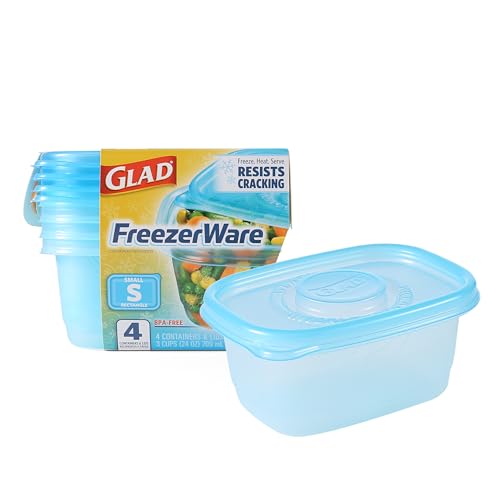
- Best freezer-first plastic: Glad FreezerWare Food Storage Containers, Small 24 oz, 4 Count — Check on Amazon
- Rubbermaid Easy Find Lids Food Storage Containers, 6-Piece Set (3 Containers) — Check on Amazon
- Freshware Food Storage Deli Containers, 16 oz, 36 Sets — Check on Amazon
- Glad GladWare Medium Rectangle Food Storage Containers, 24 oz, 5 Count — Check on Amazon
- AOZITA Deli Food Containers with Lids, 24 Sets Variety Pack (8, 16 and 32 oz) — Check on Amazon
Some picks in this guide are covered in prose only, without a purchase link, because no listing we could verify honestly belongs in this budget tier. Those picks are still reviewed in full below, and the reason is stated plainly rather than hidden.
Read the full guide ↓
Disclosure: As an Amazon Associate, dailyhomedecorating.com earns from qualifying purchases. Links to Amazon on this page are affiliate links; they cost you nothing extra. Listing details such as price and availability change often, so check the current Amazon listing before you buy.
Finding the best freezer storage containers under $15 is really a search for a seal you can trust at 0°F, in sizes that match the food you actually cook, at a count your freezer habits will not exhaust by Wednesday. This guide works through six picks at this budget, judged on seal quality, freezer-rated materials, stacking geometry and honest capacity, and it is written specifically for everyday home freezing.
A freezer container has one job that fridge containers do not: protect food from air for weeks at 0°F while surviving being knocked, stacked and dropped at temperatures that make plastic brittle. That is why this guide judges every pick on seal quality first, freezer-rated materials second, and geometry third — a beautiful container with a loose lid is a freezer-burn machine with good marketing.
The six picks below span the four honest formats of home freezing: deli tubs (cheap, uniform, space-efficient), gasket-sealed plastic (the freezer-burn defence), glass (permanent, oven-going, heavier) and silicone portion trays (the portioning layer that feeds the other three). Most good freezers end up using two of the four together; the reviews explain which combinations make sense so you can buy once and stop improvising with takeaway tubs.
At $15 the category becomes real but narrow: freezer-rated starter sets, dedicated freezer tubs and deli systems are the honest formats here, while gasket-sealed flagships still sit above this tier. Every linked pick below is a product that genuinely lives at this level, chosen because its seal and materials solve freezing — the thing budget tubs most often get wrong — rather than because it photographs well.
If you are still deciding which budget level fits, the wider series helps: start with Best Freezer Storage Containers For Meal Prep Under $25 for a neighbouring budget in this same group, then come back here for the picks tuned to everyday home freezing.
In this guide
Quick Picks: the best freezer storage containers under $15 at a glance
Six picks, six different strengths. The table pairs each situation with the one product in this guide that fits it best; the detailed reviews below explain the trade-offs behind each row.
| Best for | Pick | Why it stands out | Link |
|---|---|---|---|
| Best freezer-first plastic | Glad FreezerWare Food Storage Containers, Small 24 oz, 4 Count | Crack-resistant freezer-specific plastic containers; seal: Glad Lock Tight snap seal | Check on Amazon |
| Best starter set | Rubbermaid Easy Find Lids Food Storage Containers, 6-Piece Set (3 Containers) | Small nesting plastic set with vented snap-on lids; seal: Easy Find lids that snap to bases and to each other; built-in microwave vent on the larger sizes | Check on Amazon |
| Best deli pints | Freshware Food Storage Deli Containers, 16 oz, 36 Sets | Round polypropylene deli containers with lids; seal: Press-on airtight deli lids | Check on Amazon |
| Best flat-freezing rectangles | Glad GladWare Medium Rectangle Food Storage Containers, 24 oz, 5 Count | Everyday rectangular plastic containers with interlocking lids; seal: Glad Lock Tight snap seal; lids interlock with each other | Check on Amazon |
| Best size variety | AOZITA Deli Food Containers with Lids, 24 Sets Variety Pack (8, 16 and 32 oz) | Three-size round deli container variety pack; seal: Press-on airtight deli lids (size-specific) | Check on Amazon |
| Step-up: portion freezing | Souper Cubes Silicone Freezer Trays, 1-Cup, 2-Pack | Silicone portion freezer trays with lids; seal: Snug silicone lids; portions pop out and store in bags or containers | Prose only — see review |
How these picks were chosen
Every pick had to pass the same five tests, weighted for everyday home freezing. We verified each model against maker and retailer listings before including it — model names, materials, capacities and seal designs in the reviews come from those listings, and the sources file published with this article records them pick by pick. Products we could not verify were left out, however often they appear in round-ups. Where a format honestly does not exist at this budget, the guide says so and covers the nearest step-up in prose instead of inventing a listing.
Seal quality and freezer-burn defence. Freezer burn is surface dehydration: moisture leaves the food and frost appears inside the package wherever air circulates. A gasketed or genuinely airtight lid is therefore the single biggest quality difference in this category, and it is weighted first in every ranking here.
Freezer-rated materials. Plastic turns brittle in the cold. We only included containers whose makers rate them for freezer use, and we favoured crack-resistant formulations, Tritan, borosilicate and tempered glass where the budget allows.
Geometry: flat, stackable, space-honest. Freezers are volume puzzles. Flat rectangles and uniform tubs use shelf space fully; deep round tubs waste corners and freeze slowly. Each review states the shape plainly so you can picture your own shelves.
Portion logic. The right container size is the size you will reheat. We favoured sets whose sizes map to real portions — a cup of stock, a pint of soup, a family casserole — over sets padded with sizes nobody uses.
Reheat and care path. A freezer container earns its keep twice: once going in, once coming out. Microwave vents, oven-safe glass, dishwasher tolerance and lids that survive repeated washing all counted.
Finally, we weighted the results for everyday home freezing specifically. A container can be excellent in general and wrong for this guide’s reader; the ordering below reflects the criteria above as they apply to everyday home freezing, which is why sibling guides in this series — written for other situations at the same budget — rank some of the same products differently.
Detailed reviews: the best freezer storage containers under $15, pick by pick
1. Glad FreezerWare Food Storage Containers, Small 24 oz, 4 Count — Best freezer-first plastic
Who it suits: Readers whose freezing matches its strength — four 24-ounce (3-cup) rectangular containers — the classic single-meal soup, sauce and leftover size — and who value its sealing approach: glad lock tight snap seal. If that sounds like your kitchen’s routine, this is one of the most satisfying ways to spend this budget.
Start with the format: a crack-resistant freezer-specific plastic containers in bpa-free plastic, crack-resistant freezer formulation. Its seal is the heart of the matter — glad lock tight snap seal — and in a freezer, the seal decides how the food tastes in week six, which is the only week that separates freezer containers from fridge containers.
FreezerWare is Glad’s freezer-first line: the same Lock Tight lids as standard GladWare on a crack-resistant plastic formulated to stay forgiving at freezer temperatures, which is exactly where ordinary thin containers split when knocked or dropped. The 24-ounce rectangle is the size freezer veterans buy repeatedly — a generous single portion of soup, a meal’s worth of sauce, a serving of stew with headspace left for expansion. They stack flat, the lids interlock with other GladWare, and when one eventually dies it does so cheaply and without ceremony.
Capacity, stated as you will actually use it: four 24-ounce (3-cup) rectangular containers — the classic single-meal soup, sauce and leftover size. Treat that as a working description rather than a maximum — freezing needs headspace, so the honest usable volume of any liquid load is a little below the headline figure, and the reviews in this guide assume you will leave that room.
Labels are a quality instrument, not tidiness theatre. Frozen food quality declines on a curve measured in weeks, and the only way to eat food near the top of its curve is to know when it went in. Name, date and portion count on tape is the entire system; everything fancier is decoration.
Care is part of the value. Glass asks for temperature manners rather than effort: do not move a dish directly from freezer to a hot oven unless the maker rates it for that shock — borosilicate tolerates far more than soda-lime glass — and let a frozen dish stand a few minutes before the oven. Lids go on the top rack or get hand-washed to keep their shape. Construction — bpa-free plastic, crack-resistant freezer formulation — sets the long-term expectation: looked after as described, this is a multi-cycle tool, and its end of life, when it comes, will be visible and gradual rather than a surprise failure full of soup.
Pros:
- Crack-resistant plastic designed specifically for freezer temperatures
- 24 oz size is the sweet spot for single portions of soup and stew
- Lock Tight lids interlock for tidy stacking
- Inexpensive enough to replace without regret
- Format and contents: 4 containers with lids; 24 fl oz each; model BB13460
Honest limitation: Snap lids are not gasketed, so truly liquid loads should travel upright and freeze flat only once the lid is fully seated. Walls are thinner than premium Tritan sets and will stain with long-stored tomato sauces.
Choose it if its sizes and seal match the food you actually freeze and the space you actually have. Skip it if your routine is dominated by loads its format handles badly — very long storage in a snap lid, bulk volume in a five-piece set, or oven-bound dishes in plastic. Decide by your freezer’s real contents, not by the photograph. — Check on Amazon
2. Rubbermaid Easy Find Lids Food Storage Containers, 6-Piece Set (3 Containers) — Best starter set
Who it suits: Readers whose freezing matches its strength — two 3-cup and one 5-cup container — a starter trio sized for single portions, half batches of soup and small leftovers — and who value its sealing approach: easy find lids that snap to bases and to each other; built-in microwave vent on the larger sizes. If that sounds like your kitchen’s routine, this is one of the most satisfying ways to spend this budget.
Start with the format: a small nesting plastic set with vented snap-on lids in bpa-free plastic. Its seal is the heart of the matter — easy find lids that snap to bases and to each other; built-in microwave vent on the larger sizes — and in a freezer, the seal decides how the food tastes in week six, which is the only week that separates freezer containers from fridge containers.
The Easy Find Lids idea is organisational before it is anything else: every lid snaps onto the bottom of its own container and onto the other lids, so the set stores as one connected unit instead of a drawer of strangers. For freezer use the relevant facts are the thick BPA-free walls, the freezer-safe rating Rubbermaid gives the whole line, and lids that stay seated when plastic turns stiff in the cold. The two 3-cup containers are the natural single-serving soup and stew size; the 5-cup takes a small casserole or a double portion. The vent built into the larger lids lets you reheat from the fridge without prising a frozen-stiff lid off first.
Capacity, stated as you will actually use it: two 3-cup and one 5-cup container — a starter trio sized for single portions, half batches of soup and small leftovers. Treat that as a working description rather than a maximum — freezing needs headspace, so the honest usable volume of any liquid load is a little below the headline figure, and the reviews in this guide assume you will leave that room.
Freezer burn is not burning and not a safety failure — it is sublimation. Ice at the food’s surface turns directly into vapour, migrates to the coldest nearby surface (often the inside of a loose lid, where it appears as frost), and leaves the food dry, pale and leathery in patches. Every defence in this guide is the same defence stated three ways: less air in contact, a tighter seal against vapour escape, and steadier temperature.
Care is part of the value. Deli tubs are semi-consumables and should be managed like it: retire any tub whose rim has warped (it will never seal again), any lid that has cracked at the flex point, and any piece that has gone cloudy and rough, because rough surfaces harbour residue. The system’s cheapness is what makes this discipline affordable. Construction — bpa-free plastic — sets the long-term expectation: looked after as described, this is a multi-cycle tool, and its end of life, when it comes, will be visible and gradual rather than a surprise failure full of soup.
Pros:
- Lids snap to bases and each other — the set never separates in a drawer
- Freezer, microwave and dishwasher safe across the whole set
- Thick walls resist the cracking that kills thin bargain tubs in the cold
- Vented lids on the larger containers for splatter-free reheating
- Format and contents: 6 pieces total (3 containers + 3 lids); containers nest and lids snap together for storage
Honest limitation: Three containers is a starter quantity, not a freezer system — batch cooks will outgrow it in one session. The lids seal well for storage but this is not a gasketed leakproof line like Brilliance, so transport liquids upright.
Choose it if its sizes and seal match the food you actually freeze and the space you actually have. Skip it if your routine is dominated by loads its format handles badly — very long storage in a snap lid, bulk volume in a five-piece set, or oven-bound dishes in plastic. Decide by your freezer’s real contents, not by the photograph. — Check on Amazon
3. Freshware Food Storage Deli Containers, 16 oz, 36 Sets — Best deli pints
Who it suits: Readers whose freezing matches its strength — thirty-six 16-ounce (pint) containers — the classic deli pint for soups, stocks, sauces and portioned ingredients — and who value its sealing approach: press-on airtight deli lids. If that sounds like your kitchen’s routine, this is one of the most satisfying ways to spend this budget.
Start with the format: a round polypropylene deli containers with lids in bpa-free polypropylene. Its seal is the heart of the matter — press-on airtight deli lids — and in a freezer, the seal decides how the food tastes in week six, which is the only week that separates freezer containers from fridge containers.
Deli containers are the freezer format professional kitchens settled on decades ago, and this 36-set Freshware pack is why: one size, one lid, translucent walls you can write on with a marker, and a price per container so low that handing food away in one stops hurting. The 16-ounce pint is the unit of serious freezing — a pint of stock, a pint of soup, a pint of beans — and identical pints stack in stable columns, nest to almost nothing when empty, and go from freezer to microwave to dishwasher without complaint. Freshware’s walls are a step sturdier than the thinnest takeout tubs, which matters at the tenth reuse, not the first.
Capacity, stated as you will actually use it: thirty-six 16-ounce (pint) containers — the classic deli pint for soups, stocks, sauces and portioned ingredients. Treat that as a working description rather than a maximum — freezing needs headspace, so the honest usable volume of any liquid load is a little below the headline figure, and the reviews in this guide assume you will leave that room.
Liquids expand as they freeze — water by roughly nine percent — and that expansion is a seal-breaking force. A container filled to the brim will lift its own lid as the contents freeze, opening exactly the air gap the lid was meant to close. Headspace is not wasted space; it is the room the food needs to freeze without defeating its own container.
Care is part of the value. Wash containers warm and soapy after every use and dry them fully before storing with lids ajar or snapped to bases — a sealed container stored damp grows the stale smell that later gets blamed on the freezer. Gaskets deserve a fingertip run to clear crumbs from the channel, because a single crumb bridge is a vapour leak. Construction — bpa-free polypropylene — sets the long-term expectation: looked after as described, this is a multi-cycle tool, and its end of life, when it comes, will be visible and gradual rather than a surprise failure full of soup.
Pros:
- The deli pint is the most space-efficient freezer unit there is
- 36 identical containers and lids — zero sorting, zero matching
- Translucent walls take marker labels directly
- Nests to almost nothing when empty; stacks solid when full
- Format and contents: 36 containers + 36 lids; 16 fl oz each; round deli format that nests when empty
Honest limitation: Round tubs waste some shelf corner space compared with rectangles. Lids are press-on rather than locking, so a dropped frozen pint can pop its lid — freeze liquids with headspace and handle frozen tubs over the counter, not the floor.
Choose it if its sizes and seal match the food you actually freeze and the space you actually have. Skip it if your routine is dominated by loads its format handles badly — very long storage in a snap lid, bulk volume in a five-piece set, or oven-bound dishes in plastic. Decide by your freezer’s real contents, not by the photograph. — Check on Amazon
4. Glad GladWare Medium Rectangle Food Storage Containers, 24 oz, 5 Count — Best flat-freezing rectangles
Who it suits: Readers whose freezing matches its strength — five 24-ounce rectangular containers, 6.49 x 4.86 x 2.98 inches each — portion-sized rectangles that tile a freezer shelf without gaps — and who value its sealing approach: glad lock tight snap seal; lids interlock with each other. If that sounds like your kitchen’s routine, this is one of the most satisfying ways to spend this budget.
Start with the format: a everyday rectangular plastic containers with interlocking lids in bpa-free plastic. Its seal is the heart of the matter — glad lock tight snap seal; lids interlock with each other — and in a freezer, the seal decides how the food tastes in week six, which is the only week that separates freezer containers from fridge containers.
The medium rectangle is GladWare’s workhorse geometry: a flat, shallow 24-ounce box that freezes fast because the contents sit in a thin layer, thaws fast for the same reason, and tiles edge-to-edge on a freezer shelf with none of the wasted corners round tubs leave behind. Five identical containers with identical interlocking lids means a week of portions stacks into one column. The listing rates them microwave, dishwasher and freezer safe, and the shallow profile is genuinely better for freezing than deep tubs — thin layers freeze through before ice crystals grow large.
Capacity, stated as you will actually use it: five 24-ounce rectangular containers, 6.49 x 4.86 x 2.98 inches each — portion-sized rectangles that tile a freezer shelf without gaps. Treat that as a working description rather than a maximum — freezing needs headspace, so the honest usable volume of any liquid load is a little below the headline figure, and the reviews in this guide assume you will leave that room.
Flat food freezes faster, and faster freezing means smaller ice crystals. Small crystals do less damage to cell structure, which is why a shallow layer of soup thaws back into soup while the centre of a deep tub thaws back watery. The shallow rectangles and flat bricks praised in this guide are not a storage aesthetic — they are a texture technology.
Care is part of the value. Silicone trays ask for almost nothing: wash, dry, and store flat or upright in a file. If a tray picks up a lingering onion or garlic note, a paste of baking soda and water left on for an hour before washing clears it without harsh chemicals. Construction — bpa-free plastic — sets the long-term expectation: looked after as described, this is a multi-cycle tool, and its end of life, when it comes, will be visible and gradual rather than a surprise failure full of soup.
Pros:
- Shallow rectangle freezes and thaws faster than deep tubs
- Identical containers tile a freezer shelf with no wasted space
- Interlocking lids stack into one stable column
- Microwave, dishwasher and freezer safe per the listing
- Format and contents: 5 containers with lids; 24 fl oz each; 6.49 x 4.86 x 2.98 in per listing
Honest limitation: The snap seal is storage-tight, not travel-leakproof; keep liquid loads level. Like all GladWare the plastic is a consumable-grade material — expect to retire stained or warped pieces over time rather than hand them down.
Choose it if its sizes and seal match the food you actually freeze and the space you actually have. Skip it if your routine is dominated by loads its format handles badly — very long storage in a snap lid, bulk volume in a five-piece set, or oven-bound dishes in plastic. Decide by your freezer’s real contents, not by the photograph. — Check on Amazon
5. AOZITA Deli Food Containers with Lids, 24 Sets Variety Pack (8, 16 and 32 oz) — Best size variety
Who it suits: Readers whose freezing matches its strength — 24 sets across 8 oz (sauces, dips, baby portions), 16 oz (pints) and 32 oz (quarts) — the full deli ladder in one box — and who value its sealing approach: press-on airtight deli lids (size-specific). If that sounds like your kitchen’s routine, this is one of the most satisfying ways to spend this budget.
Start with the format: a three-size round deli container variety pack in bpa-free polypropylene. Its seal is the heart of the matter — press-on airtight deli lids (size-specific) — and in a freezer, the seal decides how the food tastes in week six, which is the only week that separates freezer containers from fridge containers.
AOZITA’s variety pack is the deli system as a starter kit: the 8-ounce size most variety packs skip — the right tub for a sauce, a portion of berries, a baby-food batch, the last of the gravy — alongside the standard pint and quart. The containers are rated airtight with freezer, dishwasher and microwave use, and the three sizes nest inside each other when empty, so the whole system stores in the footprint of its largest tub. For a first deli purchase it answers the only real question — which sizes will I actually use? — by letting your own cooking answer it.
Capacity, stated as you will actually use it: 24 sets across 8 oz (sauces, dips, baby portions), 16 oz (pints) and 32 oz (quarts) — the full deli ladder in one box. Treat that as a working description rather than a maximum — freezing needs headspace, so the honest usable volume of any liquid load is a little below the headline figure, and the reviews in this guide assume you will leave that room.
A freezer works hardest at holding 0°F (-18°C), the temperature at which bacterial growth effectively stops and quality decline slows to its minimum. Every degree warmer shortens good storage life noticeably, and a freezer packed with flat, dense containers holds its temperature through door openings far better than one full of air gaps and round tubs.
Care is part of the value. Glass asks for temperature manners rather than effort: do not move a dish directly from freezer to a hot oven unless the maker rates it for that shock — borosilicate tolerates far more than soda-lime glass — and let a frozen dish stand a few minutes before the oven. Lids go on the top rack or get hand-washed to keep their shape. Construction — bpa-free polypropylene — sets the long-term expectation: looked after as described, this is a multi-cycle tool, and its end of life, when it comes, will be visible and gradual rather than a surprise failure full of soup.
Pros:
- Includes the underrated 8 oz size for sauces and small portions
- Three sizes nest inside each other for compact storage
- Airtight lids; freezer, dishwasher and microwave rated
- Ideal first deli pack for learning your own size habits
- Format and contents: 24 sets total across three sizes, each with lids; model 8/16/32 Set
Honest limitation: 24 sets split three ways means only a handful of each size — heavy users of one size should follow up with a single-size bulk pack. Three lid sizes to keep sorted.
Choose it if its sizes and seal match the food you actually freeze and the space you actually have. Skip it if your routine is dominated by loads its format handles badly — very long storage in a snap lid, bulk volume in a five-piece set, or oven-bound dishes in plastic. Decide by your freezer’s real contents, not by the photograph. — Check on Amazon
6. Souper Cubes Silicone Freezer Trays, 1-Cup, 2-Pack — Step-up: portion freezing
Who it suits: Readers whose freezing matches its strength — each tray freezes four 1-cup portions (with fill lines at 1/2 and 1 cup) — eight portioned cups per 2-pack — and who value its sealing approach: snug silicone lids; portions pop out and store in bags or containers. If that sounds like your kitchen’s routine, this is one of the most satisfying ways to spend this budget.
Start with the format: a silicone portion freezer trays with lids in food-grade silicone with steel-reinforced rim. Its seal is the heart of the matter — snug silicone lids; portions pop out and store in bags or containers — and in a freezer, the seal decides how the food tastes in week six, which is the only week that separates freezer containers from fridge containers.
Souper Cubes changed how serious cooks freeze: instead of freezing a whole container of soup, you freeze it in perfect 1-cup bricks, pop them out, and store the bricks in a bag — the tray goes back to work the same day. The steel-reinforced rim is the detail that makes it usable: a full tray of liquid can be carried level to the freezer in one hand. Fill lines at half and full cup make portions honest, the silicone releases frozen bricks with a push, and the bricks stack like building blocks, using freezer space no round tub can match. Every other pick in this guide stores food in the freezer; this one manufactures the units the rest of your system stores.
Capacity, stated as you will actually use it: each tray freezes four 1-cup portions (with fill lines at 1/2 and 1 cup) — eight portioned cups per 2-pack. Treat that as a working description rather than a maximum — freezing needs headspace, so the honest usable volume of any liquid load is a little below the headline figure, and the reviews in this guide assume you will leave that room.
The frost on the inside of a container tells you where the air was. Heavy frost above the food line means generous headspace air gave up its moisture; frost throughout means the seal leaks vapour continuously. Reading frost is the quickest audit of a container you already own — the picks above were chosen so their frost report stays boring.
Care is part of the value. Deli tubs are semi-consumables and should be managed like it: retire any tub whose rim has warped (it will never seal again), any lid that has cracked at the flex point, and any piece that has gone cloudy and rough, because rough surfaces harbour residue. The system’s cheapness is what makes this discipline affordable. Construction — food-grade silicone with steel-reinforced rim — sets the long-term expectation: looked after as described, this is a multi-cycle tool, and its end of life, when it comes, will be visible and gradual rather than a surprise failure full of soup.
Pros:
- Freezes soup, stock and sauces in perfect stackable 1-cup bricks
- Steel-reinforced rim — carry a full liquid tray one-handed
- Portions pop out; the tray returns to work immediately
- Fill lines make portions accurate for recipes and tracking
- Format and contents: 2 trays with lids; 1-cup wells; steel-reinforced rim keeps the tray rigid when full
Honest limitation: It is a freezing tool, not long-term storage by itself: bricks should move into bags or sealed containers for storage beyond the first days. Two trays portion one batch at a time — big stock days may want a second pack.
Choose it if its sizes and seal match the food you actually freeze and the space you actually have. Skip it if your routine is dominated by loads its format handles badly — very long storage in a snap lid, bulk volume in a five-piece set, or oven-bound dishes in plastic. Decide by your freezer’s real contents, not by the photograph. — check price on Amazon if you shop for it there (this pick is covered in prose only in this guide, for the tier reason explained above)
Comparison table
The six picks side by side. Read the seal column first — it decides how food tastes in week six — then capacity, then format.
| Pick | Format | Material | Seal | Link |
|---|---|---|---|---|
| Glad FreezerWare Food Storage Containers, Small 24 oz, 4 Count | Crack-resistant freezer-specific plastic containers | BPA-free plastic, crack-resistant freezer formulation | Glad Lock Tight snap seal | Check on Amazon |
| Rubbermaid Easy Find Lids Food Storage Containers, 6-Piece Set (3 Containers) | Small nesting plastic set with vented snap-on lids | BPA-free plastic | Easy Find lids that snap to bases and to each other; built-in microwave vent on the larger sizes | Check on Amazon |
| Freshware Food Storage Deli Containers, 16 oz, 36 Sets | Round polypropylene deli containers with lids | BPA-free polypropylene | Press-on airtight deli lids | Check on Amazon |
| Glad GladWare Medium Rectangle Food Storage Containers, 24 oz, 5 Count | Everyday rectangular plastic containers with interlocking lids | BPA-free plastic | Glad Lock Tight snap seal; lids interlock with each other | Check on Amazon |
| AOZITA Deli Food Containers with Lids, 24 Sets Variety Pack (8, 16 and 32 oz) | Three-size round deli container variety pack | BPA-free polypropylene | Press-on airtight deli lids (size-specific) | Check on Amazon |
| Souper Cubes Silicone Freezer Trays, 1-Cup, 2-Pack | Silicone portion freezer trays with lids | Food-grade silicone with steel-reinforced rim | Snug silicone lids; portions pop out and store in bags or containers | Prose only |
How to choose the best freezer storage containers under $15 for your kitchen
Step 1: inventory what you freeze. Open your freezer and list the last ten things you froze, with rough volumes. That list — not a catalogue photo — is your size ladder. Most households discover two sizes do eighty percent of the work; buy depth in those and coverage in the rest.
Step 2: decide your storage horizon. Food eaten within two or three weeks forgives a snap lid. Food stored for two or three months needs a gasket seal or glass with a sealed lid. Match the seal to the horizon and you will neither overspend nor taste freezer burn.
Step 3: measure the freezer, not the cupboard. Record shelf depth, shelf spacing and door-bin dimensions, and compare them with the formats in each review. Freezers fail purchases by geometry more often than by quality: a perfect container that stands half an inch too tall is a doorstop.
Step 4: weight the choice for everyday home freezing. Re-read the criteria section above and rank the five tests by your own routine. The best pick in this guide is the one whose strengths line up with the test you ranked first, which is why the Quick Picks table is organised by situation rather than by a single winner.
Step 5: check the current listing before ordering. Set contents, size mixes and lid counts differ between listings of the same model family. Confirm the exact contents and dimensions on the live listing, and check price on Amazon at that moment rather than relying on any figure quoted elsewhere.
Two related guides in this series are worth a look while you decide: Best Freezer Storage Containers For Small Kitchens Under $30 covers a neighbouring situation at this budget, and Best Freezer Storage Containers For Families Under $75 looks at the same problem from a different angle. For the dry-goods side of storage, Best Freezer Storage Containers For Pantry Organization Under $150 is the natural companion read.
Freezer burn, headspace and the science of a good freeze
A freezer works hardest at holding 0°F (-18°C), the temperature at which bacterial growth effectively stops and quality decline slows to its minimum. Every degree warmer shortens good storage life noticeably, and a freezer packed with flat, dense containers holds its temperature through door openings far better than one full of air gaps and round tubs.
The frost on the inside of a container tells you where the air was. Heavy frost above the food line means generous headspace air gave up its moisture; frost throughout means the seal leaks vapour continuously. Reading frost is the quickest audit of a container you already own — the picks above were chosen so their frost report stays boring.
Thawing is part of container performance. A flat brick of soup thaws in cold water in under an hour and overnight in the fridge without drama; a deep quart of the same soup needs planning a day ahead. Households that freeze flat report eating their frozen food more and wasting less of it, simply because thawing stops being a project.
Applied to everyday home freezing, the science reduces to three habits: fill containers to a sensible line rather than a hopeful one, choose the tightest seal your storage horizon needs, and keep the freezer cold and steadily cold. Every pick in this guide was chosen to make those three habits easy rather than heroic.
Common mistakes to avoid
Freezing in containers that are not freezer-rated. Thin takeaway tubs and fridge-only containers crack at freezer temperatures — usually at the moment of maximum inconvenience, full of soup. If the maker does not rate it for the freezer, do not freeze in it.
Filling to the brim. Liquids expand as they freeze. A container filled to the lid will push the lid up, break the seal and frost everything around it. Leave headspace — roughly half an inch in a pint, more in a quart — every time.
Using one giant container for a week’s food. A single huge tub freezes slowly, thaws slower, and forces you to thaw four portions to eat one. Portion-sized containers freeze faster, thaw faster and waste less.
Skipping labels because you will remember. You will not remember. Every unlabelled frozen block looks identical by week three. A strip of tape and a date takes ten seconds and saves the mystery-meat lottery entirely.
Refreezing thawed food in the same tired container. Thawed food that is not eaten should be cooked and frozen fresh in a clean container, not refrozen raw in the old tub. Container hygiene is part of freezer safety, not fussiness.
Labelling, rotation and thawing: the system around the containers
Label like you mean it. Every container gets three facts before it enters the freezer: what it is, when it froze, and how many portions it holds. Painter’s tape and a marker on the front face is the most reliable technology available — it survives the cold, peels cleanly in the wash, and reads at a glance in a stacked shelf. For everyday home freezing, this ten-second habit is worth more than any single product upgrade in this guide, because the best container in the world cannot tell you what is inside it.
Rotate first-in, first-out. New food goes behind or beneath the old, never in front of it. Keep a running list on the freezer door if your household freezes in volume; cross items off as they leave. The goal is a freezer where the oldest item is always the most visible one, so quality is eaten at its peak instead of discovered at its worst.
Thaw with a plan. The safe routes are the fridge overnight, cold water changed every half hour for flat packages, or the microwave’s defrost setting for food that will be cooked immediately. Flat containers and portion bricks thaw dramatically faster than deep tubs on every route — one more reason the formats in this guide lean flat. Never thaw on the counter for hours, and cook thawed food promptly rather than returning it to the freezer raw.
One last ownership note for everyday home freezing: containers are the hardware of a freezer, but the habits above are its software. Households that label, rotate and thaw deliberately report the same experience regardless of which pick they bought — the freezer stops being an archive of regrets and becomes what it was meant to be: a pantry that keeps food at its best until the day it is wanted.
Final recommendation
For most readers of this guide, start with the Glad FreezerWare Food Storage Containers, Small 24 oz, 4 Count: it best matches the criteria that matter for everyday home freezing at this budget — a seal that protects food for the storage horizon that matters, freezer-rated materials, and sizes described honestly rather than hopefully. It is the pick we would buy first with $15 and the one against which the others in this guide are alternatives for specific situations.
If your freezer argues for a different format — a different shelf geometry, a longer storage horizon, a load the top pick handles badly — the Rubbermaid Easy Find Lids Food Storage Containers, 6-Piece Set (3 Containers) is the alternative we would choose, for the reasons set out in its review. Every other pick in this guide earns its place the same way: not as a runner-up, but as the right answer to a specific version of the problem.
Whichever you choose, leave headspace, label with a date, and rotate oldest-first. Those three habits matter more to how frozen food tastes than any single product decision in this guide.
Frequently asked questions
How long does food keep in these containers?
Quality, not safety, is the limit: a well-sealed container at a steady 0°F keeps soups and stews tasting right for roughly three months, cooked meats for two to three, and vegetables for eight to twelve. Gasket-sealed picks sit at the long end of those ranges; loose lids shorten them.
Is glass or plastic better for freezing?
Glass is permanent, stain-free and oven-going, but heavier and breakable if dropped frozen. Plastic is lighter, cheaper per container and — in gasketed Tritan form — seals better. Most households do best with plastic for volume freezing and glass for freeze-to-oven dishes.
Why does freezer burn happen and how do containers prevent it?
Freezer burn is moisture escaping from the food surface into circulating cold air, leaving dry, pale patches. An airtight seal, minimal headspace air and flat, full containers all reduce it. It is a quality defect, not a safety one — the food is safe, just dried out.
Can I put hot soup straight into the freezer?
Cool it first — ideally chill it in the fridge, then freeze. Hot food raises the freezer temperature around neighbouring packages and condenses moisture that becomes frost. Portion trays and shallow containers cool fastest.
Do I need special containers, or will any tub do?
For a week, almost any tub does. For a month or more, freezer-rated materials and real seals are the difference between food that tastes like the day it was made and food that tastes like the freezer.
Still comparing? These related guides on the same site cover the neighbouring ground: Best Airtight Food Storage Containers For Pantry Organization Under $30, Best Freezer Storage Containers For Meal Prep Under $25 and Best Freezer Storage Containers For Small Kitchens Under $30.


