Best Solar Water Pumps: Off-Grid Pumping for Gardens and Ponds
The best solar water pumps make sense where water is needed and mains electricity is not: a garden at the far end of a property, a pond without an outdoor outlet nearby, a livestock trough away from the barn, or a remote plot where running cable would cost more than the pump itself. In those places, a solar-powered system offers a practical bargain. Sunlight does the work of moving water during the day, without fuel deliveries, long extension cords, or trenching for power. When the system is matched well to the job, it can feel almost effortless. When it is matched poorly, it can disappoint in predictable ways, delivering a weak trickle at noon, stopping whenever a cloud passes, or lifting water far less effectively than the headline numbers suggested.
That gap between expectation and performance is why buying a solar pump requires a slightly different approach from buying a plug-in pump. You are not choosing a pump alone. You are choosing a small system: the pump itself, the solar panel or panels that feed it, any controller that manages power, and, in many setups, a battery that stores energy for cloudy periods or for pumping outside peak sun. This guide explains how to compare the best solar water pumps as complete systems, using flow rate, head height, power supply, noise, and materials, and how to match them to gardens, ponds, livestock watering, and other off-grid uses. It avoids invented model rankings and unverified performance claims, and it focuses instead on the questions that determine whether a system will work at your site, in your seasons, with your water.
Disclosure: As an Amazon Associate, Daily Home Decorating earns from qualifying purchases made through links in this article, at no extra cost to you. Product details are based on published manufacturer specifications.
Quick Picks
| Pick | Product | Best For |
|---|---|---|
| 1 | ECO-WORTHY 25W Solar Fountain Water Pump Kit | Best Complete Kit for Ponds and Features |
| 2 | AISITIN 6.5W Solar Fountain Pump with 1500mAh Battery | Best Small Fountain With Battery Backup |
| 3 | Amarine Made ZQB-12 DC 12V Farm & Ranch Solar Submersible Pump | Best for Livestock Troughs at Modest Lift |
| 4 | Amarine Made 12V DC Submersible Deep Well Pump (SPX-12-12) | Best for Deeper Wells |
| 5 | SHYLIYU DC 24V Solar Submersible Well Pump, 260W (ZQB-24DC-260W) | Best Higher-Power 24V Well Pump |
| 6 | SHYLIYU DC 12V Solar Submersible Pump, 130W (ZQB-12DC-130W) | Best Value 12V Working Pump |
Our Picks
1. ECO-WORTHY 25W Solar Fountain Water Pump Kit — Best Complete Kit for Ponds and Features
This is the most complete starting point in the list: a 25W monocrystalline panel and a submersible pump rated around 410 GPH, sold as one matched kit with nozzles and panel stakes, so there is no guesswork about pairing panel wattage to pump. It suits fish ponds, fountains, water features, pond aeration, and hydroponic circulation in sunny spots, running hardest at midday and easing off in cloud, as direct-drive systems do. There is no battery, so it will not pump at night. Choose it when you want a single purchase that circulates a real pond feature all through a bright day.
2. AISITIN 6.5W Solar Fountain Pump with 1500mAh Battery — Best Small Fountain With Battery Backup
Most small solar fountains stop the moment a cloud crosses the sun. This AISITIN pairs a 6.5W panel with a built-in 1500mAh battery, so the spray smooths out through passing shade and keeps running for a while after the light fades. Six nozzles change the spray pattern, and the floating design drops straight into bird baths, small ponds, and garden bowls with no plumbing at all. Output is decorative rather than agricultural — this will not fill a trough — but for its actual job it is well judged. Choose it for bird baths and small features where steadiness matters more than volume.
3. Amarine Made ZQB-12 DC 12V Farm & Ranch Solar Submersible Pump — Best for Livestock Troughs at Modest Lift
This is where the list turns from decoration to work. The ZQB-12 is a 12V DC submersible pump made for farm and ranch use — livestock watering, irrigation, and remote tanks — with a maximum lift of about 26 feet and high flow at low head, in a corrosion-resistant body. It is pump-only: you supply a suitably sized solar panel, and a battery if you want watering to continue through dull spells, which makes it a building block for off-grid systems rather than a kit. Choose it for troughs and garden tanks near the water source, where lift is modest and dependability matters.
4. Amarine Made 12V DC Submersible Deep Well Pump (SPX-12-12) — Best for Deeper Wells
Shallow-lift solar pumps cannot help a deep well, and this Amarine is built for exactly that gap. The slim stainless submersible fits 4-inch well casings, delivers about 3.2 GPM, and is rated to lift from depths up to roughly 230 feet on 12V solar or battery power. That makes it a realistic option for remote cabins, livestock water from a drilled well, and off-grid homes filling a storage tank slowly through the day. Panel and battery are supplied by you, and sizing them to your depth is the critical step. Choose it when the water is genuinely deep.
5. SHYLIYU DC 24V Solar Submersible Well Pump, 260W (ZQB-24DC-260W) — Best Higher-Power 24V Well Pump
Stepping up to 24V buys flow and headroom. This 260W SHYLIYU submersible, with a 1-inch outlet and a maximum flow around 15 GPM at low lift, is aimed at farm, ranch, garden, and aquaculture work where a 12V unit would be running at its limit all day. As with the other working pumps here, it is the pump only, so your array and any battery bank need to be sized for a 24V system from the start. Choose it when you are building a new off-grid pumping setup rather than adding to a 12V one, and daily volume is a serious requirement.
6. SHYLIYU DC 12V Solar Submersible Pump, 130W (ZQB-12DC-130W) — Best Value 12V Working Pump
This 130W SHYLIYU covers the same farm-and-ranch ground as the other 12V working pumps — wells, ponds, troughs, and garden irrigation — with a stainless build, a 1-inch outlet, and a maximum lift of about 26 feet, usually at a friendlier cost of entry. It runs from a 12V panel setup, with a battery added if you need water outside peak sun. Expect output to fall as lift rises, as with every pump in this class, so it suits shallow sources and elevated tanks of modest height. Choose it when the job is real but the budget is not.
Key Buying Criteria for Solar Water Pumps
Flow Rate: Daily Volume Matters More Than Peak Flow
Flow rate still describes how much water a pump can move in a given time, but with solar power you should think in terms of total daily volume as well as moment-to-moment flow. A pump that runs strongly for several bright hours may deliver more useful water over a day than a pump with a higher peak rate that only performs well in perfect midday sun. Your real need might be filling a trough once or twice a day, keeping a pond circulating during daylight, supplying drip irrigation for a set period, or topping up a storage tank that then feeds other uses by gravity.
Start by estimating how much water you need on a typical day and on a demanding day, such as a hot, dry stretch when plants and animals need more and evaporation is higher. Then consider when you need it. A garden can often accept water whenever the sun provides it, especially if a tank stores the surplus. Livestock, by contrast, need dependable access, so timing and storage matter more. As with any pump, actual flow falls as lift and resistance increase, so a flow figure measured under ideal sun with no lift should not be treated as the flow you will see pushing water uphill through a long hose in late afternoon.
Head Height: Lift, Distance, and Storage Tanks
Head height is how high the pump can push water vertically, and it is especially important in solar setups because many off-grid water sources sit low: a pond below a garden, a well or tank at the bottom of a slope, or a stream below a trough. Measure from the water surface at its lowest expected level to the highest point in the delivery line. If you pump into an elevated storage tank, that inlet height counts, even if the water later flows downhill. Pumping into elevated storage is often the smartest solar strategy, because it turns daytime sunshine into water available on demand, but it only works if the pump has enough head to fill the tank comfortably.
Power Source: Panels, Controllers, and Battery Storage
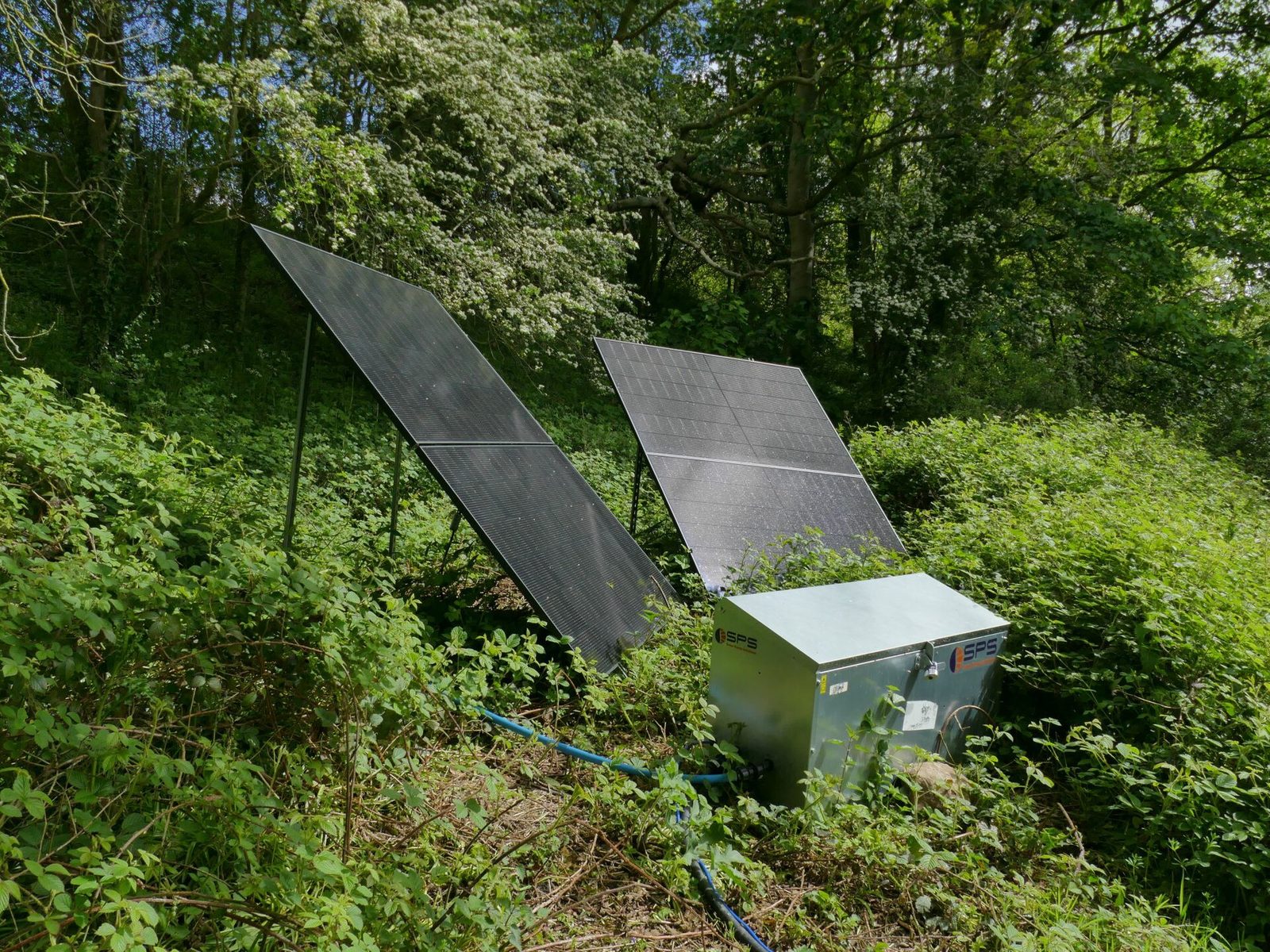
In a solar pump, the power source is the system design itself. Some compact kits run the pump directly from a panel: when the sun shines, the pump runs, and when light fades, it slows or stops. That direct approach is simple, has fewer parts to maintain, and suits jobs that naturally follow the sun, such as daytime pond circulation, decorative features, and filling a storage tank whenever conditions allow. Its limit is obvious: no sun means no pumping, and passing clouds can mean uneven flow.
Systems with battery storage add flexibility. A battery can smooth out cloudy intervals, allow pumping early or late in the day, and support uses where timing matters more. The trade-offs are cost, complexity, and maintenance: batteries need correct charging, suitable placement, and eventual replacement, and the controller that manages panel, battery, and pump becomes an important part of reliability. Whether a system includes a battery or can add one later is therefore a major buying decision, not a minor accessory question. Check compatibility carefully. Panel, controller, battery, and pump must be intended to work together in voltage and function. Improvising mismatched electrical parts in an outdoor water system is poor practice and can damage equipment or create safety risks. Favor clear system documentation that explains what is included, what is optional, and how the parts connect.
Noise: Quiet Running for Ponds and Living Areas
Many solar pumps run near places people and animals spend time: beside a pond, in a garden, or near a trough where livestock should stay calm. Noise in these settings is rarely about a loud motor alone. Vibration against a tank, resonance in a mounting, air in the line, and a pump straining against too much lift can all make a setup more noticeable than expected. Because solar pumps often run for long daylight stretches rather than short bursts, even a modest hum or rattle becomes tiring over a full day.
Materials and Weather Resistance
A solar water system lives outdoors, often in full sun, rain, dust, and temperature swings, and its materials must tolerate all of it. For the pump, consider housing, seals, impeller, intake screen, and cable quality in relation to your water. Pond water with organic debris, garden water with grit, and trough water that may carry feed particles or sediment each impose different wear. A pump intended for clean water should not be assigned to silty or debris-heavy water simply because it is sold with a panel.
Sunlight, Season, and Realistic Expectations
No honest guide to solar pumping can skip the central variable: your sunlight. The same system can perform generously in a bright summer and modestly in a short, overcast winter. Before buying, think about the season when you need water most and whether that season aligns with good sun at your site. Gardens usually align well, since demand rises in sunny growing months. Year-round livestock water in a cloudy winter climate is a harder brief and may require more storage, more panel capacity, a battery, or a backup plan.
Types of Solar Water Pumps Explained
Surface Solar Pumps
Surface pumps sit outside the water and draw water through an intake hose or pipe. They can be easier to access for inspection and cleaning, and they keep the pump itself out of a pond or trough environment. They suit shallow sources, transfer jobs, and setups where the pump can be placed close to the water at a suitable height. Their limitations center on suction: they need airtight intake connections, correct placement relative to the water level, and priming as directed. A surface pump placed too far from or too high above the source may perform poorly no matter how strong the panel is.
Direct-Drive Solar Kits
Direct-drive kits connect panel and pump without battery storage. They are often the simplest and most affordable route into solar pumping and work well for daytime-only duties. Small fountain and pond circulation kits commonly follow this pattern, as do simple tank-filling setups where it does not matter exactly when water arrives. When evaluating a direct-drive kit, pay close attention to how it behaves in partial sun if that information is provided, how the panel should be positioned, and whether the flow in bright conditions still meets your need after lift is accounted for.
Solar Systems With Battery and Controller
Systems that add a battery and controller aim for steadier and more flexible operation. They can keep a pond circulating through a cloudy spell, water a garden at a chosen time, or provide more dependable trough filling. They also require more decisions: where the battery will live, how it will be protected from weather and temperature extremes, how charging is managed, and what happens when components eventually need replacement. For buyers whose water need is genuinely time-sensitive, that extra complexity can be worthwhile. For a decorative feature that only needs to run in sunshine, it may be unnecessary cost and upkeep.
How to Choose by Use Case
Gardens and Irrigation Away From an Outlet
For gardens, the most reliable pattern is often to pump into storage when the sun shines and then water from storage when plants need it. That approach separates pumping time from watering time and makes modest flow more useful. If you pump directly to irrigation, match flow and pressure expectations carefully to the irrigation method, and recognize that long lines, filters, and multiple outlets reduce what reaches the plants. Drip systems, soaker lines, and direct hose delivery each interact with a small solar pump differently, so confirm compatibility rather than assuming any pump will feed any layout. Panel placement near the garden should avoid shade from the very plants and structures the garden contains as the season changes.
Ponds, Fountains, and Wildlife Water
Pond use usually rewards steady circulation over raw power. Choose flow and head based on the height of any waterfall or filter and the volume of water you want to turn over during daylight, without expecting a compact solar setup to behave like a large mains system running around the clock. If fish or other aquatic life depend on circulation and aeration, be especially careful: a solar-only system without storage will slow or stop at night and in prolonged dull weather, and you should plan the pond’s overall care around that reality rather than discovering it during a warm, still spell when oxygen matters most. For purely decorative fountains and wildlife drinking spots, direct-drive simplicity is often a virtue, and easy intake cleaning will matter every week of the season.
Livestock Watering and Remote Troughs
Livestock watering is the use case where dependability matters most and where storage is your best friend. A solar pump that fills an elevated tank or keeps a trough topped up during daylight can work well, provided the stored volume bridges nights, cloudy periods, and the animals’ peak drinking times. Size the system for demanding days, protect hoses and cables from hooves and rubbing, and position panels and controls where animals cannot damage them. Also plan a visible, simple way to check that water is present and the system is running, because a failure noticed late is a welfare problem, not just an equipment problem. Where winters are cold, add freeze protection to the plan for pipes, troughs, and the pump itself.
Installation and Setup
Begin installation with site observation. Watch where sunlight actually falls across the day, note shade that moves, and choose a panel position that gets the strongest practical sun in the season of greatest need. Mount the panel securely at the angle and orientation the guidance recommends for your location, and keep its surface accessible for cleaning, because dust, pollen, and bird droppings reduce output. Route cables with slack where needed, protection where they cross ground or edges, and no strained connections.
Place the pump according to its type. Submersible pumps should sit stably, with intakes clear of bottom sediment and debris, and with enough submergence to operate as directed. Surface pumps should be close to the source, level, protected from weather as required, and primed carefully with airtight suction connections. Keep delivery lines as direct as practical, support long runs, and avoid unnecessary bends and restrictions. If you pump to an elevated tank, confirm overflows and vents are handled so filling the tank does not create a new water problem.
Care and Maintenance
Solar systems reward small, regular attention. Keep the panel clean and inspect it after storms for damage, shifting mounts, or new shade from growing vegetation. A panel that was perfectly placed in spring can be partly shaded by midsummer growth, so seasonal checks matter. Inspect cables and connections for wear, animal damage, corrosion, and water entry, and keep enclosures closed and ventilated as designed.
For the pump, clean intake screens and filters on a schedule based on your water, not just when flow visibly drops. Remove algae, leaves, and sediment before they harden or overload the pump. Check hoses and pipes for cracks, sun damage, blockages, and leaks, and confirm mounts and supports have not loosened. If the system has a battery, follow its specific care and replacement guidance, keep terminals and housing in the condition the instructions require, and do not ignore a battery that no longer holds charge as expected, because a failing battery can make an otherwise sound pump and panel look unreliable.
Common Mistakes to Avoid
The most frequent mistake is buying a pump by its best-case flow figure and forgetting that solar output, lift, and season all reduce what you actually get. A close second is ignoring storage. Buyers who expect a small direct-drive kit to provide water on demand at any hour are setting themselves up for frustration. Storage, whether as water in a tank or energy in a battery, is how solar systems become dependable, and skipping it where the use case needs it is a false economy.
Frequently Asked Questions
Do solar water pumps work on cloudy days?
They can work at reduced output, depending on the system and how heavy the cloud cover is. Direct-drive pumps slow down as light falls and may stop in very dull conditions. Systems with battery storage can keep running for a period using stored energy. Planning with water storage, battery storage, or both is the practical way to handle cloudy spells.
Do I need a battery with a solar water pump?
Not always. If your job naturally happens in sunshine, such as daytime pond circulation, decorative features, or filling a storage tank whenever sun is available, a battery may be unnecessary. If you need pumping early, late, on a schedule, or through cloudy intervals, battery storage becomes much more valuable. The decision should follow the timing of your water need, not a general preference for more features.
How high can a solar pump lift water?
It depends on the specific pump and system design, and flow falls as lift increases. What matters is not only the maximum head figure but how much water the system still delivers at your actual lift, in your actual sunlight. Measure your lift carefully, leave margin, and be cautious with any setup that must work close to its maximum to meet a daily need.
Can a solar pump water livestock reliably?
Yes, when the system is designed around storage and demanding days rather than average days. Pumping to a tank or maintaining a trough with enough reserve for nights and dull weather is the reliable pattern. Protect the installation from animal damage, check it regularly, and have a backup plan for prolonged poor weather or equipment failure, because livestock cannot wait for a repair the way a garden often can.
What maintenance does a solar pump system need most?
Keep the panel clean and unshaded, clean the pump intake and any filters, inspect cables, connections, hoses, and mounts, and follow battery care guidance if a battery is fitted. Most small-system problems trace back to shade, blockage, damaged connections, or a neglected battery, all of which regular brief checks can catch early.
Conclusion
The best solar water pumps are best understood as balanced systems: a pump matched to your flow and lift, a panel placed for real sunlight rather than hoped-for sunlight, controls and storage chosen for how time-sensitive your water need is, and materials that can live outdoors with your water type. Gardens and ponds often thrive on simple direct-drive designs, especially with water storage. Livestock and other dependable-supply uses usually justify more storage, more margin, and more careful protection. Start with daily volume, measured lift, season, and timing, then compare complete systems on how they handle those four facts. Chosen that way, a solar pump is not a novelty. It is a quiet, practical way to put water where the sun already reaches and the power grid does not.
Word count (body, excluding front matter): 2,811 words.